The Volkswagen Multivan (T6) 2.0 TDI (204 Hp) 4MOTION: A European Icon of Versatility
The Volkswagen Multivan (T6) represents the sixth generation of Volkswagen Commercial Vehicles’ highly successful Transporter line, a lineage that traces its roots back to the legendary Type 2 “Bus.” Launched in 2015, the T6 Multivan built upon the strong foundation of its T5 predecessor, refining its design, enhancing its technology, and improving its efficiency. While the Multivan is not a common sight on American roads, where the market for large, premium passenger vans differs significantly, it holds an iconic status and serves as a benchmark in Europe and other international markets for its unparalleled blend of passenger comfort, cargo versatility, and robust engineering. The specific variant under review, the Volkswagen Multivan (T6) 2.0 TDI (204 Hp) 4MOTION, stood out as a top-tier offering, combining a potent diesel engine with Volkswagen’s renowned all-wheel-drive system, positioning it as a capable and sophisticated family hauler or executive shuttle from its production start in 2015 until its conclusion in 2018.
Engine and Performance of the Volkswagen Multivan (T6)
At the heart of this particular Volkswagen Multivan (T6) variant lies a sophisticated 2.0-liter TDI (Turbocharged Direct Injection) diesel engine, a powerplant celebrated for its impressive balance of power, torque, and fuel economy. With an engine displacement of 1968 cm³ (120.09 cu. in.), this inline four-cylinder unit, designated by the engine code CXEB, delivers a robust 204 horsepower at 4000 rpm. This output is channeled through a precise 6-speed manual transmission, offering drivers an engaging and direct connection to the vehicle’s capabilities.
Perhaps even more critical for a vehicle of the Multivan’s stature is its torque output. The 2.0 TDI engine generates a substantial 450 Nm (331.9 lb.-ft.) of torque, available across a broad and highly accessible rev range, specifically from 1400 to 2400 rpm. This wide torque band is instrumental in providing effortless acceleration, strong pulling power for heavy loads, and confident highway cruising, minimizing the need for frequent downshifts. The inclusion of a turbocharger and intercooler further optimizes the engine’s performance, ensuring responsive power delivery across various driving conditions.
Performance figures for the Volkswagen Multivan (T6) 2.0 TDI (204 Hp) 4MOTION are noteworthy for a large minivan. It can accelerate from 0 to 60 mph in a respectable 9.5 seconds, with a maximum speed of 123.65 mph (199 km/h). These numbers underscore its ability to keep pace with conventional passenger cars, despite its considerable size. What truly sets this variant apart is its 4MOTION all-wheel-drive architecture. This permanent all-wheel-drive system actively distributes power between the front and rear axles, enhancing traction and stability, particularly in challenging weather conditions, on loose surfaces, or when towing. This makes the Multivan a more versatile choice for those who might venture beyond paved roads or require superior grip.
Despite its powerful output and all-wheel-drive system, the 2.0 TDI engine also demonstrates commendable fuel efficiency, adhering to the strict Euro 6 emission standards. The combined fuel consumption is rated at 32.7 US mpg (7.2 l/100 km), breaking down to 25 US mpg (9.4 l/100 km) in urban driving and an impressive 39.2 US mpg (6 l/100 km) on the extra-urban cycle. With CO2 emissions of 188 g/km and a particulate filter system, the Multivan (T6) was designed with environmental responsibility in mind, a critical factor in the European market.
Design and Features
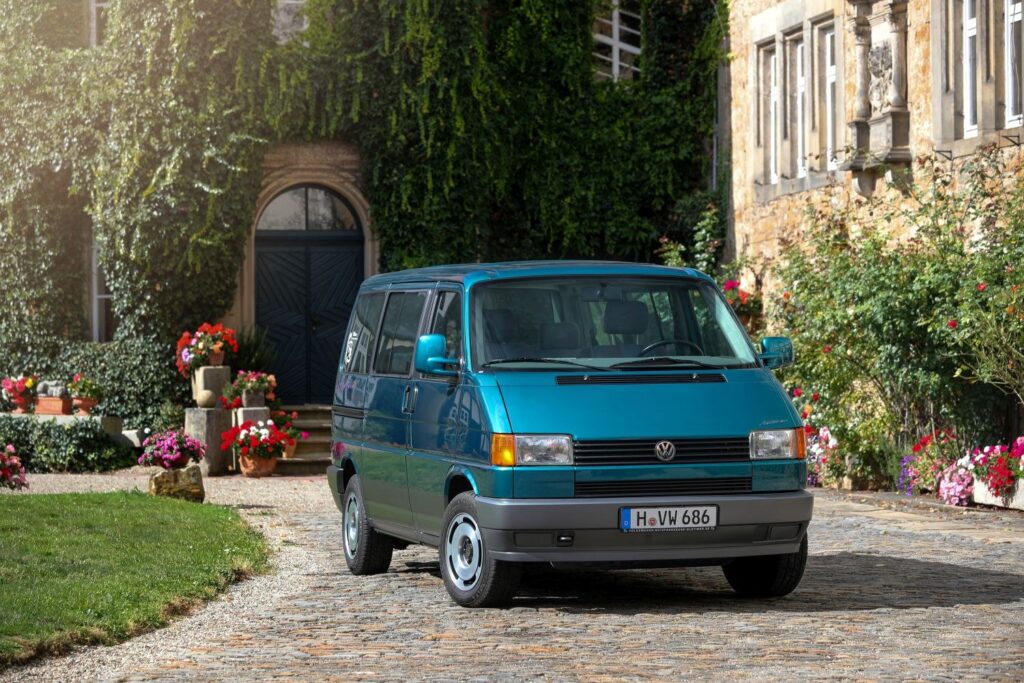
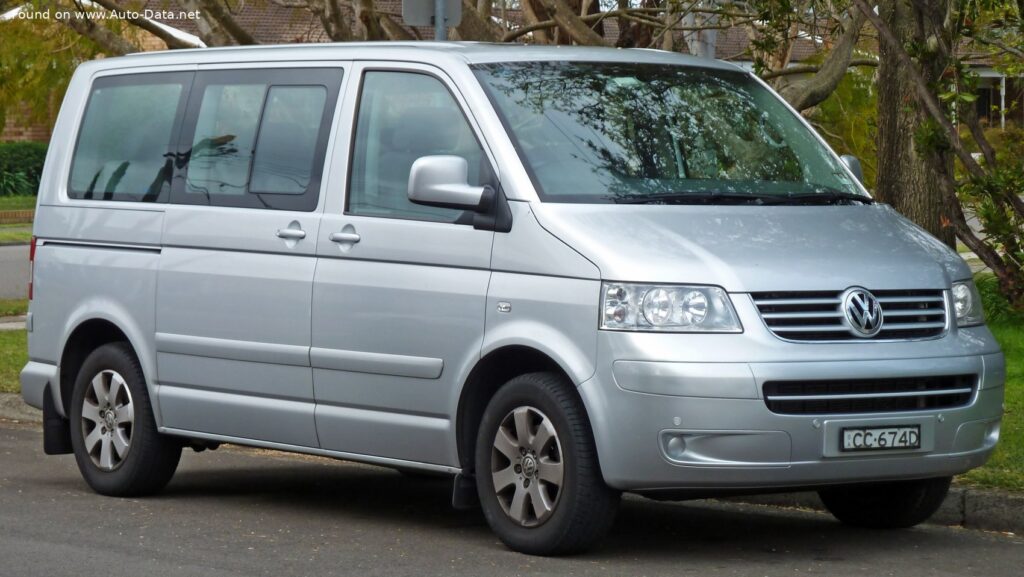
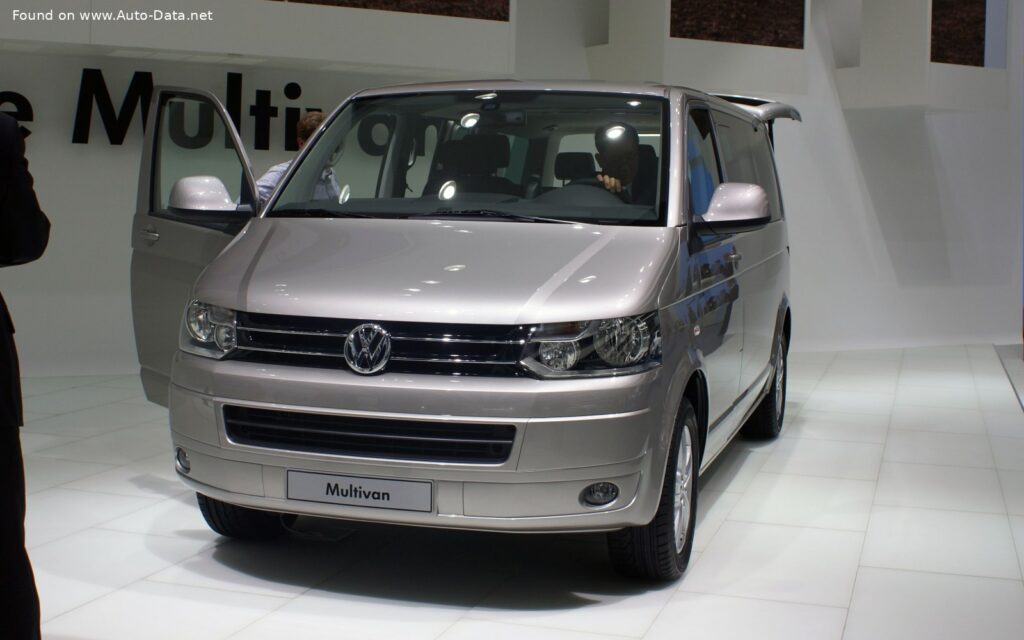
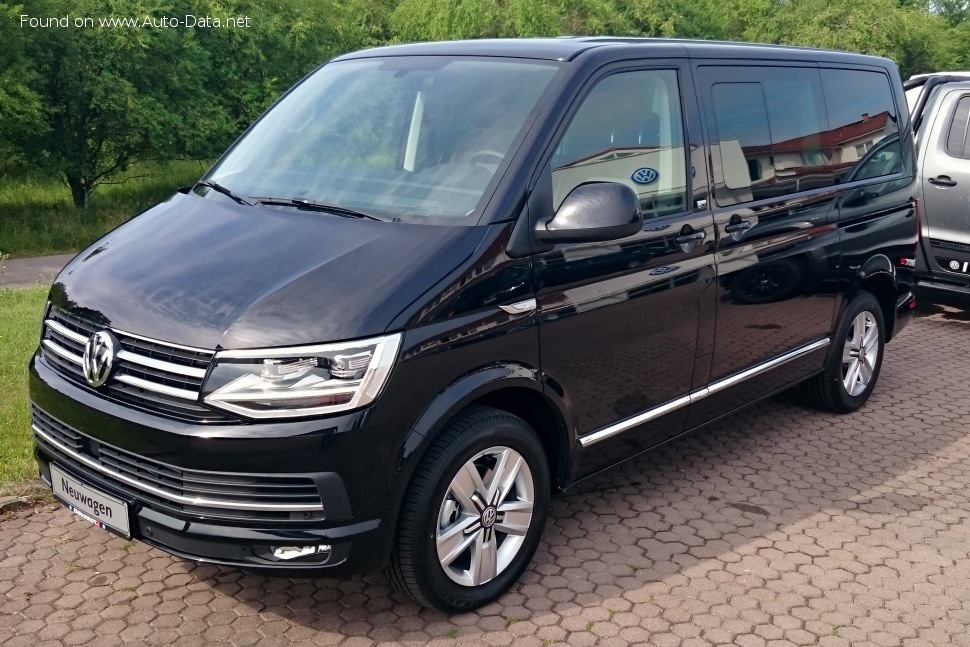
The Volkswagen Multivan (T6) retains the iconic, functional, and instantly recognizable silhouette that has defined the Transporter series for decades. As a minivan, or “people mover” as it’s often referred to in Europe, its design prioritizes practicality, interior space, and passenger comfort. The T6 generation brought subtle but significant refinements to the exterior, including sharper lines, updated lighting signatures, and a more contemporary front fascia, all while maintaining its characteristic boxy profile that maximizes interior volume.
Measuring 193.07 inches (4904 mm) in length, 74.96 inches (1904 mm) in width (90.43 inches or 2297 mm including mirrors), and 77.56 inches (1970 mm) in height, the Multivan (T6) is a substantial vehicle. Its generous 118.11-inch (3000 mm) wheelbase contributes to a stable ride and expansive interior. The interior is designed for ultimate flexibility, offering seating for 5 to 7 occupants, with various configurations possible thanks to a rail system that allows seats to slide, fold, or be removed entirely. This adaptability makes it suitable for diverse roles, from a family vacation vehicle to a mobile office or shuttle.
One of the Multivan’s most striking features is its cavernous cargo capacity. With a minimum trunk space of 5800 liters (204.83 cu. ft.), it offers storage volume that rivals many full-size cargo vans, making it incredibly practical for carrying luggage, sports equipment, or business supplies. The vehicle’s kerb weight stands at 4812.69 lbs (2183 kg), with a maximum permissible weight of 6790.24 lbs (3080 kg), allowing for a substantial maximum load of 1977.55 lbs (897 kg). Furthermore, its robust chassis allows for a permitted trailer load with brakes of 5511.56 lbs (2500 kg), highlighting its capability as a workhorse.
From a technological standpoint, the Multivan (T6) incorporated contemporary features for its era. Standard assisting systems included ABS (Anti-lock Braking System), a fundamental safety feature. The vehicle utilized a steering rack and pinion system with electric power steering, providing precise control and ease of maneuverability, particularly in urban environments despite its size. Suspension consisted of an independent McPherson type at the front and a double wishbone setup at the rear, engineered to provide a comfortable ride and stable handling characteristic of Volkswagen’s passenger vehicles. Braking performance was ensured by ventilated discs at the front and disc brakes at the rear. Tire options ranged from 215/65 R16 to 255/45 R18, mounted on corresponding wheel rims, allowing for customization in ride comfort and handling characteristics.
Technical Specifications
| Category | Specification |
|---|---|
| General Information | |
| Brand | Volkswagen |
| Model | Multivan |
| Generation | Multivan (T6) |
| Type (Engine) | 2.0 TDI (204 Hp) 4MOTION |
| Start of Production | 2015 year |
| End of Production | 2018 year |
| Powertrain Architecture | Internal Combustion engine |
| Body type | Minivan |
| Seats | 5-7 |
| Doors | 5 |
| Performance Specs | |
| Fuel Consumption (Urban) | 9.4 l/100 km (25 US mpg) |
| Fuel Consumption (Extra Urban) | 6 l/100 km (39.2 US mpg) |
| Fuel Consumption (Combined) | 7.2 l/100 km (32.7 US mpg) |
| CO2 Emissions | 188 g/km |
| Fuel Type | Diesel |
| Acceleration 0 – 60 mph | 9.5 sec |
| Maximum Speed | 199 km/h (123.65 mph) |
| Emission Standard | Euro 6 |
| Weight-to-Power Ratio | 10.7 kg/Hp, 93.4 Hp/tonne |
| Weight-to-Torque Ratio | 4.9 kg/Nm, 206.1 Nm/tonne |
| Engine Specs | |
| Power | 204 Hp @ 4000 rpm |
| Power per liter | 103.7 Hp/l |
| Torque | 450 Nm (331.9 lb.-ft.) @ 1400-2400 rpm |
| Engine Layout | Front, Transverse |
| Engine Model/Code | CXEB |
| Engine Displacement | 1968 cm³ (120.09 cu. in.) |
| Number of Cylinders | 4 |
| Engine Configuration | Inline |
| Number of Valves per Cylinder | 4 |
| Fuel Injection System | Diesel Commonrail |
| Engine Aspiration | Turbocharger, Intercooler |
| Engine Oil Capacity | 7.4 l (7.82 US qt) |
| Engine Systems | Particulate filter |
| Space, Volume and Weights | |
| Kerb Weight | 2183 kg (4812.69 lbs) |
| Max. Weight | 3080 kg (6790.24 lbs) |
| Max Load | 897 kg (1977.55 lbs) |
| Trunk (boot) space – minimum | 5800 l (204.83 cu. ft.) |
| Fuel Tank Capacity | 80 l (21.13 US gal) |
| Max. Roof Load | 100 kg (220.46 lbs) |
| Permitted Trailer Load with Brakes (12%) | 2500 kg (5511.56 lbs) |
| Permitted Trailer Load without Brakes | 750 kg (1653.47 lbs) |
| Permitted Towbar Download | 100 kg (220.46 lbs) |
| Dimensions | |
| Length | 4904 mm (193.07 in) |
| Width | 1904 mm (74.96 in) |
| Width including mirrors | 2297 mm (90.43 in) |
| Height | 1970 mm (77.56 in) |
| Wheelbase | 3000 mm (118.11 in) |
| Ride Height (Ground Clearance) | 193 mm (7.6 in) |
| Minimum Turning Circle (Turning Diameter) | 11.9 m (39.04 ft) |
| Approach Angle | 21.8° |
| Departure Angle | 16.7° |
| Ramp-over (Brakeover) Angle | 14.3° |
| Drivetrain, Brakes and Suspension Specs | |
| Drivetrain Architecture | The Internal combustion engine (ICE) drives permanently the four wheels of the vehicle. |
| Drive Wheel | All wheel drive (4×4) |
| Number of Gears and Type of Gearbox | 6 gears, manual transmission |
| Front Suspension | Independent type McPherson |
| Rear Suspension | Double wishbone |
| Front Brakes | Ventilated discs |
| Rear Brakes | Disc |
| Assisting Systems | ABS (Anti-lock braking system) |
| Steering Type | Steering rack and pinion |
| Power Steering | Electric Steering |
| Tires Size | 215/65 R16; 215/60 R17; 235/55 R17; 255/45 R18 |
| Wheel Rims Size | 16; 17; 18 |
Legacy and Market Impact
The Volkswagen Multivan (T6), particularly in its potent 2.0 TDI (204 Hp) 4MOTION guise, carved out a significant niche in the European automotive landscape. Its legacy is deeply intertwined with the broader Volkswagen Transporter family, which has historically been celebrated for its robustness, reliability, and unparalleled versatility. In Europe, the Multivan is not merely a minivan; it’s often viewed as a premium, multi-purpose vehicle that seamlessly blends the practicality of a commercial van with the comfort and refinement of a passenger car.
Its reputation for exceptional build quality, durable powertrains, and strong residual values made it a highly sought-after vehicle, both new and on the used market. Owners appreciated its ability to serve as a daily driver, a family adventure vehicle, or even a mobile workspace, adapting to an incredibly diverse range of needs. The 4MOTION all-wheel-drive system further amplified its appeal, particularly in regions with challenging climates or for those who desired enhanced traction for outdoor pursuits, setting it apart from many front-wheel-drive-only competitors.
In its primary markets, the Multivan (T6) faced stiff competition from other established players in the large passenger van segment. Key rivals included the Mercedes-Benz V-Class, which offered a more luxurious approach, and the Ford Transit Custom (specifically the Tourneo Custom passenger variant), known for its driving dynamics and value. Other competitors included models like the Opel Vivaro Combi and Renault Trafic Passenger, which often competed on price and practicality. However, the Multivan consistently held its own, often being perceived as the benchmark for its balanced attributes and the prestige associated with the Volkswagen badge.
The historical significance of the Multivan (T6) cannot be overstated. It represented a crucial evolutionary step in a lineage that began with the iconic Type 2, demonstrating how a utilitarian vehicle could transform into a sophisticated, technologically advanced, and comfortable people carrier. While the American market has largely gravitated towards traditional minivans or large SUVs for family transport, the Multivan’s success in Europe highlights a different approach to family and commercial mobility – one that values configurable space, robust engineering, and a commanding road presence. The T6 Multivan’s blend of powerful diesel performance, efficient all-wheel drive, and flexible interior design ensured its position as a true icon of European automotive engineering, a testament to Volkswagen’s enduring commitment to the Transporter series.