The Seat Ibiza IV (facelift 2015) 1.4 TDI (90 Hp): A European Supermini Workhorse
The Seat Ibiza IV (facelift 2015) 1.4 TDI (90 Hp) represents a crucial iteration of Seat’s long-running and highly successful supermini, a segment critically important in the European automotive landscape. Seat, a Spanish automaker under the Volkswagen Group umbrella, positions the Ibiza as a youthful, sporty, and practical option, often sharing its underpinnings with siblings like the Volkswagen Polo and Skoda Fabia. This particular model, produced from May 2015 to 2017, showcases the mid-cycle refresh of the fourth-generation Ibiza, bringing updated styling, enhanced technology, and refined powertrains to maintain its competitive edge. While Seat vehicles are not sold in the United States, the Ibiza has carved out a significant niche in Europe, appealing to buyers seeking an efficient, agile, and well-equipped compact hatchback for urban environments and longer commutes alike. This 1.4-liter TDI variant, with its focus on fuel economy and low emissions, was particularly popular among European consumers facing stringent environmental regulations and high fuel costs, offering a compelling blend of performance and frugality.
Engine and Performance of the Seat Ibiza IV (facelift 2015) 1.4 TDI (90 Hp)
At the heart of the Seat Ibiza IV (facelift 2015) 1.4 TDI (90 Hp) lies a sophisticated 1.4-liter (1422 cm³ or 86.78 cu. in.) inline three-cylinder diesel engine. Coded CUSB, this powerplant is a prime example of modern diesel engineering, designed for efficiency and torque delivery. It features a common rail fuel injection system, a turbocharger, and an intercooler, all working in concert to produce 90 horsepower at a modest 3500 rpm. This power output, while not overtly sporty, is perfectly adequate for the car’s intended purpose and segment.
More impressive than its peak horsepower is the engine’s torque figure: a robust 230 Nm (169.64 lb.-ft.) available across a broad and usable range from 1750 to 2500 rpm. This low-end torque is characteristic of diesel engines and provides the Ibiza with excellent responsiveness in city driving and effortless cruising on highways, minimizing the need for frequent gear changes. Power is sent to the front wheels via a smooth-shifting 5-speed manual transmission, a common choice in this segment for its direct engagement and contribution to fuel efficiency.
Performance figures for the 1.4 TDI are respectable for its class. The Ibiza can accelerate from 0 to 60 mph in a calculated 10.4 seconds (0-100 km/h in 10.9 seconds), making it nimble enough for merging into traffic. Its top speed is rated at 113.09 mph (182 km/h), demonstrating its capability for sustained highway speeds. Crucially, the engine’s design prioritizes fuel economy and environmental impact. It boasts an impressive combined fuel consumption figure of 3.6 liters per 100 km, which translates to an outstanding 65.3 US miles per gallon. With CO2 emissions of just 93 g/km, the 1.4 TDI variant met the stringent Euro 6 emission standard, making it an environmentally conscious choice in its market.
Design and Features
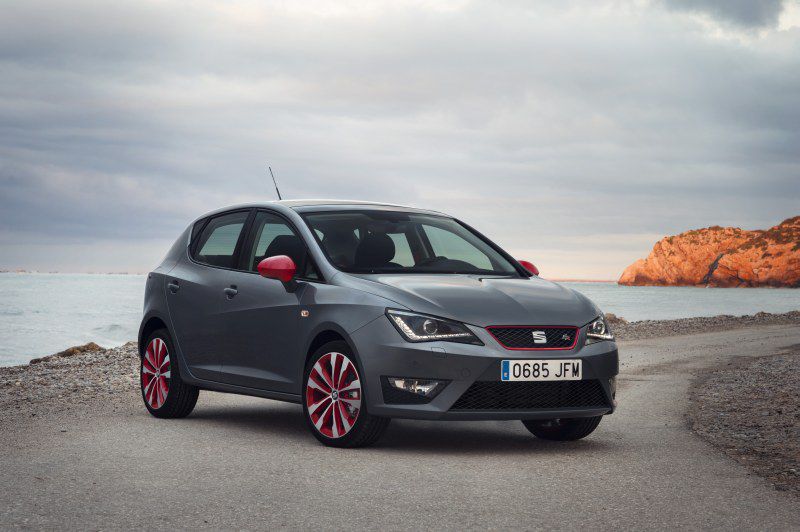
The Seat Ibiza IV (facelift 2015) maintained the sporty and dynamic aesthetic that had defined the fourth generation since its initial launch in 2008. The facelift introduced subtle but effective changes to keep its appearance fresh and contemporary. These included redesigned front bumpers, refreshed headlights with available LED daytime running lights, and updated alloy wheel designs. The overall silhouette remained that of a practical 5-door hatchback, a body style highly favored in Europe for its versatility and compact footprint.
Inside, the Ibiza IV facelift received more substantial updates, focusing on improving material quality, ergonomics, and technology. A revised dashboard layout featured new instrument cluster graphics and a more modern infotainment system, often with a touchscreen interface that supported connectivity features like MirrorLink for smartphone integration. While not explicitly detailed in the provided data, standard features for a car of this era and segment in Europe would typically include power windows, central locking, air conditioning, and a multi-function steering wheel.
Safety was also a key consideration. The Ibiza IV came equipped with essential assisting systems like ABS (Anti-lock Braking System) as standard, along with multiple airbags. The body structure itself was engineered to provide robust crash protection, contributing to the car’s reputation as a safe and reliable option for families and individual drivers alike. Its compact dimensions – a length of 159.88 inches, a width of 66.65 inches, and a height of 56.89 inches – combined with a tight turning circle of 32.81 feet, made it exceptionally maneuverable in congested urban environments, a significant advantage in European cities.
Technical Specifications
| Category | Specification | Metric (Original) | US Equivalent |
|---|---|---|---|
General Information |
|||
| Brand | Seat | ||
| Model | Ibiza | ||
| Generation | Ibiza IV (facelift 2015) | ||
| Type (Engine) | 1.4 TDI (90 Hp) | ||
| Start of Production | May, 2015 | ||
| End of Production | 2017 | ||
| Powertrain Architecture | Internal Combustion engine | ||
| Body Type | Hatchback | ||
| Seats | 5 | ||
| Doors | 5 | ||
Performance Specifications |
|||
| Fuel Consumption (Combined) | 3.6 l/100 km | 65.3 US mpg | |
| CO2 Emissions | 93 g/km | ||
| Fuel Type | Diesel | ||
| Acceleration 0 – 60 mph | 10.4 sec (Calculated) | 10.4 sec | |
| Acceleration 0 – 62 mph (0-100 km/h) | 10.9 sec | 10.9 sec | |
| Maximum Speed | 182 km/h | 113.09 mph | |
| Emission Standard | Euro 6 | ||
| Weight-to-Power Ratio | 12 kg/Hp | 26.46 lbs/Hp | |
| Weight-to-Torque Ratio | 4.7 kg/Nm | 10.36 lbs/lb.-ft. | |
Engine Specifications |
|||
| Power | 90 Hp @ 3500 rpm | 90 Hp @ 3500 rpm | |
| Power per Liter | 63.3 Hp/l | 63.3 Hp/l | |
| Torque | 230 Nm @ 1750-2500 rpm | 169.64 lb.-ft. @ 1750-2500 rpm | |
| Engine Layout | Front, Transverse | ||
| Engine Model/Code | CUSB | ||
| Engine Displacement | 1422 cm³ | 86.78 cu. in. | |
| Number of Cylinders | 3 | ||
| Engine Configuration | Inline | ||
| Cylinder Bore | 79.5 mm | 3.13 in. | |
| Piston Stroke | 95.5 mm | 3.76 in. | |
| Compression Ratio | 16.2:1 | ||
| Number of Valves per Cylinder | 4 | ||
| Fuel Injection System | Diesel Commonrail | ||
| Engine Aspiration | Turbocharger, Intercooler | ||
| Engine Oil Capacity | 4.1 l | 4.33 US qt | |
| Coolant Capacity | 8 l | 8.45 US qt | |
| Engine Systems | Particulate filter | ||
Space, Volume and Weights |
|||
| Kerb Weight | 1080 kg | 2380.99 lbs | |
| Max. Weight (GVWR) | 1640 kg | 3615.58 lbs | |
| Max Load | 560 kg | 1234.59 lbs | |
| Trunk (Boot) Space – Minimum | 292 l | 10.31 cu. ft. | |
| Fuel Tank Capacity | 45 l | 11.89 US gal | |
Dimensions |
|||
| Length | 4061 mm | 159.88 in. | |
| Width | 1693 mm | 66.65 in. | |
| Height | 1445 mm | 56.89 in. | |
| Wheelbase | 2469 mm | 97.2 in. | |
| Front Track | 1465 mm | 57.68 in. | |
| Rear Track | 1457 mm | 57.36 in. | |
| Minimum Turning Circle | 10 m | 32.81 ft. | |
Drivetrain, Brakes and Suspension Specs |
|||
| Drivetrain Architecture | Internal combustion engine drives front wheels | ||
| Drive Wheel | Front-wheel drive | ||
| Number of Gears & Type | 5 gears, manual transmission | ||
| Front Suspension | Independent, McPherson with coil spring and anti-roll bar | ||
| Rear Suspension | Semi-independent, coil spring | ||
| Front Brakes | Ventilated discs | ||
| Rear Brakes | Drum | ||
| Assisting Systems | ABS (Anti-lock braking system) | ||
| Steering Type | Steering rack and pinion | ||
| Tire Sizes | 175/70 R14; 185/60 R15; 215/45 R16; 215/40 R17 | ||
| Wheel Rims Size | 14; 15; 16; 17 | ||
Legacy and Market Impact
The Seat Ibiza, particularly the fourth-generation facelift, played a pivotal role in Seat’s strategy to capture a significant share of the highly competitive European supermini segment. Positioned as a more emotionally charged alternative to its Volkswagen Group stablemate, the Polo, the Ibiza offered a blend of Spanish flair, Volkswagen engineering reliability, and competitive pricing. The 1.4 TDI (90 Hp) variant, in particular, was instrumental in addressing the widespread demand for fuel-efficient and low-emission vehicles across Europe.
In its primary markets, the Ibiza competed fiercely against established rivals such as the Ford Fiesta, Renault Clio, Peugeot 208, Opel Corsa (Vauxhall Corsa in the UK), and its platform-sharing cousin, the Volkswagen Polo. What set the Ibiza apart was its distinctive design language, often characterized by sharper lines and a more aggressive stance, appealing to younger buyers or those who desired a sportier aesthetic without sacrificing practicality or economy. The 2015 facelift ensured the model remained fresh against newer entrants, solidifying its reputation for offering solid build quality, enjoyable driving dynamics, and excellent value.
The Ibiza’s impact extends beyond its sales figures. It contributed significantly to Seat’s brand identity as a producer of stylish, dynamic, and accessible cars. The 1.4 TDI engine, with its impressive fuel economy and Euro 6 compliance, underscored the brand’s commitment to efficiency and environmental responsibility, which became increasingly important factors in consumer purchasing decisions during its production run. Even after its replacement by the fifth-generation Ibiza in 2017, the Ibiza IV (facelift 2015) 1.4 TDI (90 Hp) remains a testament to Seat’s ability to craft a compelling supermini that resonated deeply with European motorists, offering a practical, economical, and engaging driving experience.