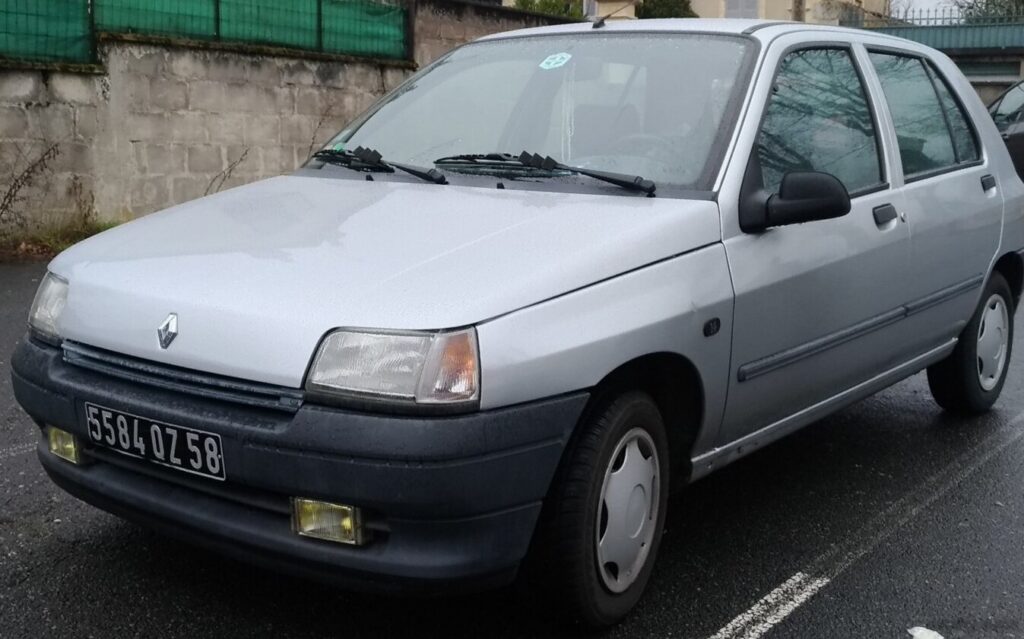
Renault Clio IV Grandtour (Phase II, 2016) 0.9 Energy TCe (90 Hp)
The Renault Clio IV Grandtour (Phase II, 2016), specifically the 0.9 Energy TCe (90 Hp) variant, represents a significant offering in the highly competitive European subcompact (or supermini) segment. Unveiled as part of the Clio’s mid-cycle refresh in 2016, this model continued the fourth generation’s design language while introducing subtle enhancements and technological updates. While never officially sold in the United States, the Clio Grandtour, known as an “estate” in Europe, served as a practical and fuel-efficient option for families and individuals seeking more cargo capacity than the standard Clio hatchback, without the larger footprint or higher cost of a compact vehicle or SUV. Its role was to provide an accessible, versatile, and economical choice in a market that still values the traditional station wagon form factor, even in smaller dimensions.
Engine and Performance: The 0.9 Energy TCe (90 Hp) Powertrain
At the heart of this particular Renault Clio IV Grandtour (Phase II, 2016) model is the advanced 0.9-liter Energy TCe engine, a testament to Renault’s commitment to downsizing and turbocharging for improved efficiency and performance. This inline three-cylinder gasoline (petrol) engine, internally coded H4B 408, boasts a displacement of 898 cubic centimeters (approximately 54.8 cubic inches). Despite its small size, the engine is equipped with a turbocharger and an intercooler, allowing it to produce a respectable 90 horsepower (Hp) and a peak torque of 140 Newton-meters (Nm), which translates to approximately 103.26 pound-feet (lb.-ft.). This torque figure is particularly impressive for such a small engine, delivered at lower RPMs thanks to the turbocharging, making the car feel more responsive in urban driving conditions.
Power is delivered to the front wheels via a smooth-shifting 5-speed manual transmission, a common and cost-effective choice for vehicles in this segment. This drivetrain architecture, where the internal combustion engine drives the front wheels, is optimized for packaging efficiency and lighter weight. The Clio Grandtour 0.9 Energy TCe achieves a top speed of 182 kilometers per hour (approximately 113.09 mph), which is more than adequate for European highways and general commuting.
Fuel economy is a key selling point for this powertrain. According to official figures, the combined fuel consumption stands at an impressive 4.6 liters per 100 kilometers, which equates to approximately 51.1 US miles per gallon. Urban consumption is rated at 5.7 l/100 km (41.3 US mpg), while extra-urban driving can yield as much as 4.0 l/100 km (58.8 US mpg). These figures highlight the engine’s efficiency, further underscored by its CO2 emissions of just 104 grams per kilometer, allowing it to meet stringent Euro 6 emission standards. The weight-to-power ratio of 11.7 kg/Hp (85.3 Hp/tonne) and a weight-to-torque ratio of 7.5 kg/Nm (132.7 Nm/tonne) indicate a well-balanced package designed for nimble handling and economical operation.
Design and Features of the Renault Clio IV Grandtour (Phase II, 2016)
The Clio IV Grandtour (Phase II, 2016) continued the striking design language introduced by Laurens van den Acker for the fourth-generation Clio. The “Phase II” designation indicates a mid-cycle refresh, bringing subtle but effective updates to the exterior and interior. On the outside, the Grandtour featured revised C-shaped LED daytime running lights, a refreshed front grille, and updated bumper designs, lending it a more modern and cohesive look. Its station wagon body type, with five doors and seating for five occupants, was designed with practicality in mind.
Measuring 4267 millimeters (167.99 inches) in length, 1732 millimeters (68.19 inches) in width (1945 mm or 76.57 inches including mirrors), and 1475 millimeters (58.07 inches) in height, the Grandtour offered a compact yet spacious package. The wheelbase of 2589 millimeters (101.93 inches) contributed to a stable ride and comfortable interior space. The primary advantage of the Grandtour over its hatchback sibling was its significantly enhanced cargo capacity. With a minimum trunk space of 430 liters (15.19 cubic feet), it provided ample room for luggage, groceries, or sports equipment, a crucial factor for its target demographic. This space could be further expanded by folding down the rear seats.
Inside, the Phase II refresh brought improved material quality and updated infotainment options, reflecting contemporary automotive trends. Standard features for the segment included electric power steering for effortless maneuverability, and a suite of safety systems like ABS (Anti-lock Braking System) for controlled stopping. Braking was handled by ventilated discs at the front and solid discs at the rear, providing reliable stopping power. The vehicle rode on 195/55 R16 tires, mounted on 16-inch wheel rims, offering a good balance of comfort and grip. The Clio Grandtour also offered practical towing capabilities, with a permitted trailer load of 1200 kg (2645.55 lbs.) with brakes and 565 kg (1245.61 lbs.) without brakes, further enhancing its utility.
Technical Specifications
| Category | Specification | US Equivalent |
|---|---|---|
| General Information | ||
| Brand | Renault | |
| Model | Clio | |
| Generation | Clio IV Grandtour (Phase II, 2016) | |
| Engine Type | 0.9 Energy TCe (90 Hp) | |
| Production Start | 2016 | |
| Production End | 2020 | |
| Powertrain Architecture | Internal Combustion Engine | |
| Body Type | Station wagon (estate) | |
| Seats | 5 | |
| Doors | 5 | |
| Performance Specs | ||
| Fuel Consumption (Urban) | 5.7 l/100 km | 41.3 US mpg |
| Fuel Consumption (Extra Urban) | 4.0 l/100 km | 58.8 US mpg |
| Fuel Consumption (Combined) | 4.6 l/100 km | 51.1 US mpg |
| CO2 Emissions | 104 g/km | |
| Fuel Type | Petrol (Gasoline) | |
| Maximum Speed | 182 km/h | 113.09 mph |
| Emission Standard | Euro 6 | |
| Weight-to-Power Ratio | 11.7 kg/Hp | |
| Weight-to-Torque Ratio | 7.5 kg/Nm | |
| Engine Specs | ||
| Power | 90 Hp | |
| Power per liter | 100.2 Hp/l | |
| Torque | 140 Nm | 103.26 lb.-ft. |
| Engine Layout | Front, Transverse | |
| Engine Model/Code | H4B 408 | |
| Engine Displacement | 898 cm3 | 0.9 Liters (54.8 cu. in.) |
| Number of Cylinders | 3 | |
| Engine Configuration | Inline | |
| Valves per Cylinder | 4 | |
| Fuel Injection System | Multi-port manifold injection | |
| Engine Aspiration | Turbocharger, Intercooler | |
| Engine Oil Capacity | 4.1 l | 4.33 US qt |
| Coolant Capacity | 5 l | 5.28 US qt |
| Space, Volume and Weights | ||
| Kerb Weight | 1055 kg | 2325.88 lbs. |
| Max. Weight | 1640 kg | 3615.58 lbs. |
| Max Load | 585 kg | 1289.7 lbs. |
| Trunk (Boot) Space – Minimum | 430 l | 15.19 cu. ft. |
| Permitted Trailer Load with Brakes (12%) | 1200 kg | 2645.55 lbs. |
| Permitted Trailer Load without Brakes | 565 kg | 1245.61 lbs. |
| Dimensions | ||
| Length | 4267 mm | 167.99 in. |
| Width | 1732 mm | 68.19 in. |
| Width Including Mirrors | 1945 mm | 76.57 in. |
| Height | 1475 mm | 58.07 in. |
| Wheelbase | 2589 mm | 101.93 in. |
| Front Track | 1506 mm | 59.29 in. |
| Rear Track | 1506 mm | 59.29 in. |
| Front Overhang | 853 mm | 33.58 in. |
| Rear Overhang | 825 mm | 32.48 in. |
| Drivetrain, Brakes and Suspension Specs | ||
| Drivetrain Architecture | Front-wheel drive, Internal Combustion Engine | |
| Drive Wheel | Front wheel drive | |
| Number of Gears and Type | 5 gears, manual transmission | |
| Front Brakes | Ventilated discs | |
| Rear Brakes | Disc | |
| Assisting Systems | ABS (Anti-lock braking system) | |
| Steering Type | Steering rack and pinion | |
| Power Steering | Electric Steering | |
| Tires Size | 195/55 R16 | |
| Wheel Rims Size | 16 inches | |
Legacy and Market Impact
The Renault Clio IV Grandtour (Phase II, 2016) with the 0.9 Energy TCe engine carved out a significant niche in the European automotive landscape. In markets where small station wagons are still appreciated for their blend of compact dimensions and practical utility, the Clio Grandtour stood as a compelling option. Its primary competitors included models like the Skoda Fabia Combi, Dacia Logan MCV, and to some extent, compact crossovers that started to gain traction around this period, offering a different form of utility. However, the Grandtour’s traditional wagon shape provided a lower loading height and often more usable volume than many small SUVs.
The car’s reputation was built on several pillars: its stylish design, which brought a youthful and dynamic aesthetic to the often conservative wagon segment; its excellent fuel efficiency, making it an economical choice for daily commutes and longer journeys; and its surprising practicality, offering considerable cargo space for its size. For urban families or those with active lifestyles requiring extra room for gear, the Grandtour offered a smart alternative to larger, more expensive vehicles. Its compact dimensions made it easy to maneuver and park in crowded European cities, while the efficient 0.9 TCe engine kept running costs low.
Historically, the Clio Grandtour continued Renault’s legacy of producing popular and accessible vehicles for the masses. It demonstrated that a small car could still be versatile and family-friendly, without sacrificing modern amenities or efficient performance. Its contribution to meeting stringent European emissions targets with its Euro 6 compliance was also notable, showcasing Renault’s engineering prowess in developing small, high-output, and clean-burning engines. Although the popularity of traditional station wagons in the subcompact segment eventually waned in favor of crossovers, the Clio IV Grandtour remains a testament to well-executed design and engineering that prioritized practicality and economy for its target audience. It cemented the Clio’s position as a versatile platform, capable of adapting to various market demands beyond just the popular hatchback.