The Renault Megane II Coupe 2.0 16V (135 Hp) Automatic: A Distinctive European Compact
The Renault Megane II Coupe, produced between 2002 and 2005, represented a bold departure from conventional automotive design within the highly competitive European C-segment. As an international automotive expert, it’s clear that Renault aimed to make a statement with the second generation of its popular Megane line, particularly with the 3-door coupe variant. This specific model, the Renault Megane II Coupe 2.0 16V (135 Hp) Automatic, combined a spirited gasoline engine with an automatic transmission, offering a blend of distinctive styling, practical everyday performance, and a touch of French flair not typically found in its class. While not officially sold in the United States, the Megane II Coupe played a significant role in defining Renault’s design language and technological ambitions in its primary markets across Europe and other international regions.
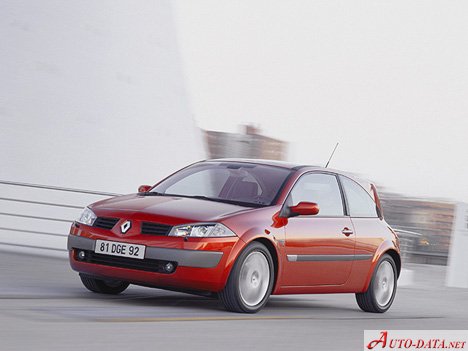
Launched in 2002, the Megane II quickly garnered attention, not least for its polarizing but ultimately influential “bustle-back” rear design, which set it apart from its more conservatively styled rivals. The Coupe variant intensified this aesthetic, presenting a sportier, more compact silhouette while retaining much of the practicality expected from a car in this segment. This article delves into the technical specifications, design philosophy, and market impact of this unique vehicle, providing an expert’s perspective on its place in automotive history.
Engine and Performance: The Heart of the Renault Megane II Coupe 2.0 16V (135 Hp) Automatic
Under the hood, the Renault Megane II Coupe 2.0 16V (135 Hp) Automatic featured a robust and well-regarded 2.0-liter (1998 cm3 or 121.93 cu. in.) F4R inline-four engine. This naturally aspirated, DOHC (Double Overhead Camshaft) engine was equipped with 16 valves (4 per cylinder) and a multi-port manifold injection system, a common and reliable setup for its era. It delivered a respectable 135 horsepower at 5500 rpm, translating to a power-per-liter output of 67.6 HP/l, which was competitive for a non-turbocharged engine of its size. Torque figures stood at 191 Nm (140.87 lb.-ft.) at 3750 rpm, providing a healthy mid-range pull that made for comfortable daily driving.
Power was sent to the front wheels via a 4-speed automatic transmission, a common configuration for automatic compact cars of the early 2000s. While not as sophisticated as modern multi-speed or dual-clutch units, this gearbox offered smooth, if not particularly rapid, shifts. The vehicle could accelerate from 0 to 60 mph in an estimated 10.4 seconds (0-100 km/h in 10.9 seconds) and reach a top speed of 120.55 mph (194 km/h). These figures positioned the Megane II Coupe 2.0 16V as a competent performer for its segment, suitable for both urban commuting and longer highway journeys.
In terms of efficiency, the Megane II Coupe 2.0 16V Automatic had a combined fuel economy rating of 8.4 l/100 km, equivalent to approximately 28 US mpg. Urban consumption was rated at 11.8 l/100 km (19.9 US mpg), while extra-urban driving saw figures improve to 6.5 l/100 km (36.2 US mpg). With CO2 emissions of 201 g/km, it met the Euro 4 emission standard, reflecting the environmental regulations pertinent to its production years.
Design and Features: Embracing the Avant-Garde
The design of the Megane II Coupe was arguably its most defining characteristic. Renault, under the guidance of chief designer Patrick le Quément, pushed boundaries with a distinctive, angular aesthetic that diverged sharply from the rounded forms of its predecessor. The 3-door coupe body amplified this design language, presenting a sleek profile that culminated in the controversial but iconic “bustle-back” rear end. This design, characterized by a steeply raked rear window and a prominent, almost vertical trunk lid, was both aerodynamically efficient (with a drag coefficient of 0.35 Cd) and visually striking, ensuring the Megane II stood out in any parking lot.
Despite its coupe designation, the Megane II Coupe was designed to be a practical 5-seater, though rear passenger space, as is typical for coupes, was more constrained than in the hatchback variant. The trunk space was surprisingly versatile, offering a minimum of 330 liters (11.65 cu. ft.) and expanding to a generous 1190 liters (42.02 cu. ft.) with the rear seats folded, making it quite capable for luggage or cargo. The interior mirrored the exterior’s modern and somewhat unconventional approach, with a digital dashboard and a focus on ergonomics and perceived quality that was a step up for Renault.
Key features for the era included an independent McPherson strut front suspension and a torsion beam rear suspension, providing a balanced ride and handling characteristic of many European compacts. The vehicle was equipped with ventilated disc brakes at the front and disc brakes at the rear, complemented by an Anti-lock Braking System (ABS) for enhanced safety. Power steering was electric, offering light and precise control, particularly beneficial for navigating tight urban environments. The car rode on 205/55 R16 tires with 6.5J x 16 wheel rims, a common size for the segment, balancing ride comfort with adequate grip.
Technical Specifications
| Category | Specification |
|---|---|
| General Information | |
| Brand | Renault |
| Model | Megane |
| Generation | Megane II Coupe |
| Type (Engine) | 2.0 16V (135 Hp) Automatic |
| Production Start | 2002 |
| Production End | 2005 |
| Powertrain Architecture | Internal Combustion Engine (ICE) |
| Body Type | Coupe |
| Seats | 5 |
| Doors | 3 |
| Performance Specs | |
| Fuel Consumption (Urban) | 11.8 l/100 km (19.9 US mpg) |
| Fuel Consumption (Extra Urban) | 6.5 l/100 km (36.2 US mpg) |
| Fuel Consumption (Combined) | 8.4 l/100 km (28 US mpg) |
| CO2 Emissions | 201 g/km |
| Fuel Type | Gasoline (Petrol) |
| Acceleration 0 – 60 mph | 10.4 sec |
| Acceleration 0 – 100 km/h | 10.9 sec |
| Maximum Speed | 194 km/h (120.55 mph) |
| Emission Standard | Euro 4 |
| Weight-to-Power Ratio | 9.2 kg/Hp (108.4 Hp/tonne) |
| Weight-to-Torque Ratio | 6.5 kg/Nm (153.4 Nm/tonne) |
| Engine Specs | |
| Power | 135 Hp @ 5500 rpm |
| Power per Liter | 67.6 Hp/l |
| Torque | 191 Nm @ 3750 rpm (140.87 lb.-ft.) |
| Engine Layout | Front, Transverse |
| Engine Model/Code | F4R |
| Engine Displacement | 1998 cm3 (121.93 cu. in.) |
| Number of Cylinders | 4 |
| Engine Configuration | Inline |
| Cylinder Bore | 82.7 mm (3.26 in.) |
| Piston Stroke | 93 mm (3.66 in.) |
| Compression Ratio | 10:1 |
| Valves per Cylinder | 4 |
| Fuel Injection System | Multi-port manifold injection |
| Engine Aspiration | Naturally aspirated |
| Valvetrain | DOHC |
| Engine Oil Capacity | 5.4 l (5.71 US qt) |
| Coolant Capacity | 6.5 l (6.87 US qt) |
| Space, Volume & Weights | |
| Kerb Weight | 1245 kg (2744.76 lbs.) |
| Max. Weight | 1785 kg (3935.25 lbs.) |
| Max. Load | 540 kg (1190.5 lbs.) |
| Trunk Space (Minimum) | 330 l (11.65 cu. ft.) |
| Trunk Space (Maximum) | 1190 l (42.02 cu. ft.) |
| Fuel Tank Capacity | 60 l (15.85 US gal) |
| Max. Roof Load | 80 kg (176.37 lbs.) |
| Permitted Trailer Load (with brakes) | 1300 kg (2866.01 lbs.) |
| Permitted Trailer Load (without brakes) | 650 kg (1433 lbs.) |
| Permitted Towbar Download | 75 kg (165.35 lbs.) |
| Dimensions | |
| Length | 4209 mm (165.71 in.) |
| Width | 1777 mm (69.96 in.) |
| Height | 1458 mm (57.4 in.) |
| Wheelbase | 2625 mm (103.35 in.) |
| Front Track | 1518 mm (59.76 in.) |
| Rear Track | 1514 mm (59.61 in.) |
| Drag Coefficient (Cd) | 0.35 |
| Minimum Turning Circle | 10.5 m (34.45 ft.) |
| Drivetrain, Brakes & Suspension | |
| Drivetrain Architecture | Front-wheel drive (Internal Combustion Engine drives front wheels) |
| Drive Wheel | Front-wheel drive |
| Number of Gears & Type | 4 gears, automatic transmission |
| Front Suspension | Independent, McPherson type |
| Rear Suspension | Torsion beam |
| Front Brakes | Ventilated discs |
| Rear Brakes | Disc |
| Assisting Systems | ABS (Anti-lock Braking System) |
| Steering Type | Steering rack and pinion |
| Power Steering | Electric Steering |
| Tire Size | 205/55 R16 |
| Wheel Rims Size | 6.5J x 16 |
Legacy and Market Impact in Europe
The Renault Megane II, and particularly the Coupe variant, left an indelible mark on the European compact car market. Its daring design was a significant talking point, polarizing opinions but ultimately proving successful in drawing attention to the brand. Renault’s strategy was to differentiate itself through innovative design and a focus on safety, where the Megane II achieved a groundbreaking five-star Euro NCAP rating, a major selling point in its time.
In its segment, the Megane II Coupe faced stiff competition from established players like the Volkswagen Golf (particularly the 3-door variant), Ford Focus, Opel Astra, and Peugeot 307. While these rivals often offered more conventional styling, the Megane II Coupe carved out a niche for buyers who desired something unique and expressive. Its emphasis on comfort, interior space (for its class), and a generally smooth ride made it a compelling choice for everyday European drivers.
The Renault Megane II Coupe 2.0 16V (135 Hp) Automatic, though a niche model within the broader Megane lineup, contributed to the overall success of the second generation, which sold millions of units worldwide. It demonstrated Renault’s willingness to take risks with design and technology, influencing subsequent models and solidifying the brand’s reputation for innovation. Today, the Megane II Coupe is remembered as a distinctive and characterful car that embodied the spirit of early 2000s European automotive design, a testament to Renault’s bold vision.