
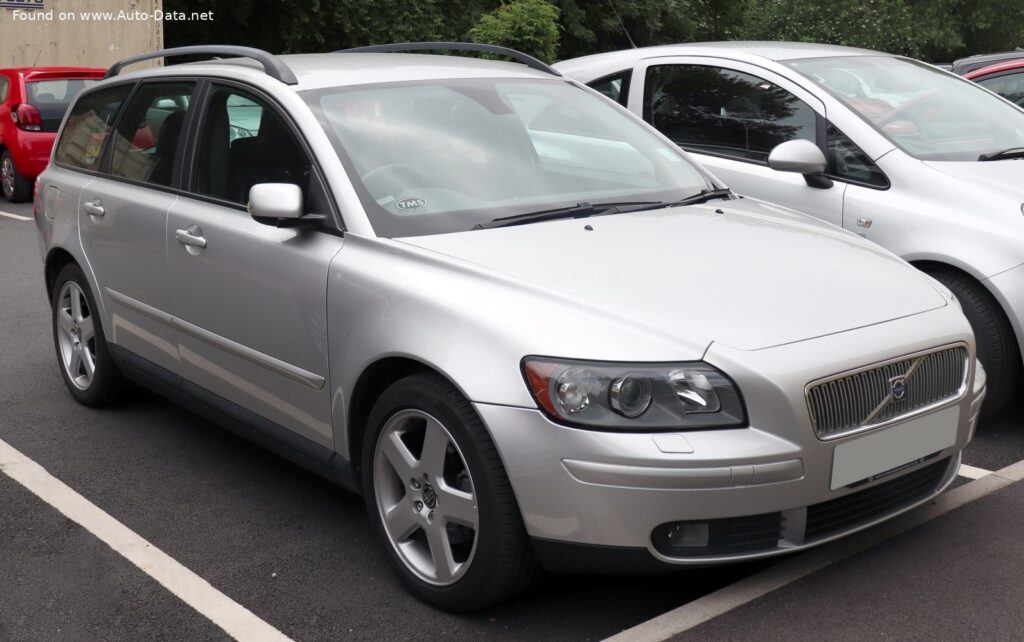
The Volvo V50 2.0 D (136 Hp): A European Premium Compact Wagon
The Volvo V50, introduced in 2004, marked a significant step for the Swedish automaker as it aimed to expand its presence in the competitive compact executive segment, particularly in the European market. Positioned as a stylish and practical premium compact station wagon, the V50 was the estate variant of the S40 sedan, succeeding the V40. Sharing its P1 platform with the Ford Focus and Mazda 3, the V50 blended Volvo’s renowned safety and practicality with a more dynamic driving experience and contemporary design. This article focuses on the **Volvo V50 2.0 D (136 Hp)**, a popular diesel-powered variant from its initial production run between 2004 and 2007, highlighting its engineering, features, and market impact, especially in regions where diesel powertrains were highly favored.
Volvo V50 2.0 D (136 Hp) Powertrain and Performance
At the heart of the **Volvo V50 2.0 D (136 Hp)** lies a robust and efficient 2.0-liter (1998 cm³ or 121.93 cu. in.) inline four-cylinder diesel engine, internally designated D4204T. This powerplant was a product of the collaboration between Ford and PSA Peugeot Citroën, widely regarded for its balance of power, torque, and fuel economy. Equipped with a common rail fuel injection system, a turbocharger, and an intercooler, the engine delivered a respectable 136 horsepower at 4000 rpm. More impressively for a diesel, it produced a strong 236.02 lb.-ft. (320 Nm) of torque at a low 2000 rpm, providing excellent mid-range acceleration and effortless cruising capability.
Power was transmitted to the front wheels via a 5-speed manual transmission, a common setup for efficiency and driver engagement in its segment. This combination allowed the V50 2.0 D to accelerate from 0 to 60 mph in a brisk 9.1 seconds (0-100 km/h in 9.6 seconds) and reach a maximum speed of 130.49 mph (210 km/h). These performance figures made the V50 2.0 D a competitive offering, capable of handling both urban commuting and long-distance highway travel with ease.
One of the most compelling aspects of this diesel variant was its outstanding fuel efficiency. Volvo claimed a combined fuel consumption of 5.6 liters per 100 kilometers, which translates to an impressive 42 US mpg (50.4 UK mpg). This efficiency, coupled with relatively low CO2 emissions of 148 g/km, made the V50 2.0 D an attractive option for environmentally conscious buyers and those seeking lower running costs, particularly in European markets where diesel fuel was often more affordable and prevalent. The engine’s compression ratio of 18.5:1, along with its 4 valves per cylinder, contributed to its efficient combustion and overall performance characteristics.
Design and Features of the Volvo V50
The Volvo V50, in its station wagon (estate) body type, represented a modern interpretation of Volvo’s long-standing tradition of practical and safe family vehicles. Its design, characterized by sleek lines and a compact footprint, moved away from the more boxy aesthetic of older Volvo wagons, while still retaining a distinctive and premium appearance. With an overall length of 177.72 inches (4514 mm), a width of 69.69 inches (1770 mm), and a height of 57.17 inches (1452 mm), the V50 offered a manageable size for city driving yet provided ample interior space.
The interior of the V50 was designed with Volvo’s typical Scandinavian minimalism and ergonomic focus. It comfortably accommodated five occupants across its five doors. A key highlight was the “floating” center console, a design element that would become a signature for Volvo in the mid-2000s, offering both aesthetic appeal and practical storage space behind it. Materials used were of a high standard for its class, contributing to a premium feel.
As a station wagon, practicality was paramount. The V50 offered a versatile cargo area, with a minimum trunk space of 14.73 cu. ft. (417 liters), expandable to a generous 46.16 cu. ft. (1307 liters) with the rear seats folded down. This flexibility made it ideal for families, outdoor enthusiasts, or anyone needing significant hauling capacity without opting for a larger, less fuel-efficient SUV.
Safety, a cornerstone of the Volvo brand, was thoroughly addressed in the V50. Standard features included an Anti-lock Braking System (ABS) and a comprehensive array of airbags. The vehicle’s robust chassis, shared with well-regarded platforms, and its front and rear ventilated disc brakes, along with front and rear transverse stabilizers, ensured stable handling and effective stopping power. The steering system utilized a rack and pinion setup, providing precise and responsive control.
Technical Specifications
| Category | Specification | Value |
|---|---|---|
| General Information | ||
| Brand | Volvo | |
| Model | V50 | |
| Generation | V50 | |
| Type (Engine) | 2.0 D (136 Hp) | |
| Start of Production | 2004 year | |
| End of Production | 2007 year | |
| Powertrain Architecture | Internal Combustion engine | |
| Body type | Station wagon (estate) | |
| Seats | 5 | |
| Doors | 5 | |
| Performance Specs | ||
| Fuel consumption (combined) | 5.6 l/100 km, 42 US mpg, 50.4 UK mpg, 17.9 km/l | |
| CO2 emissions | 148 g/km | |
| Fuel Type | Diesel | |
| Acceleration 0 – 60 mph | 9.1 sec | |
| Acceleration 0 – 100 km/h | 9.6 sec | |
| Maximum speed | 130.49 mph (210 km/h) | |
| Weight-to-power ratio | 10.7 kg/Hp, 93.4 Hp/tonne | |
| Weight-to-torque ratio | 4.6 kg/Nm, 219.8 Nm/tonne | |
| Engine Specs | ||
| Power | 136 Hp @ 4000 rpm | |
| Power per liter | 68.1 Hp/l | |
| Torque | 236.02 lb.-ft. (320 Nm) @ 2000 rpm | |
| Engine layout | Front, Transverse | |
| Engine Model/Code | D4204T | |
| Engine displacement | 1998 cm³ (2.0 l / 121.93 cu. in.) | |
| Number of cylinders | 4 | |
| Engine configuration | Inline | |
| Cylinder Bore | 3.35 in. (85 mm) | |
| Piston Stroke | 3.46 in. (88 mm) | |
| Compression ratio | 18.5:1 | |
| Number of valves per cylinder | 4 | |
| Fuel injection system | Diesel Commonrail | |
| Engine aspiration | Turbocharger, Intercooler | |
| Engine oil capacity | 5.81 US qt (5.5 l) | |
| Coolant | 10.04 US qt (9.5 l) | |
| Space, Volume and Weights | ||
| Kerb Weight | 3209.93 lbs. (1456 kg) | |
| Trunk (boot) space – minimum | 14.73 cu. ft. (417 l) | |
| Trunk (boot) space – maximum | 46.16 cu. ft. (1307 l) | |
| Fuel tank capacity | 13.74 US gal (52 l) | |
| Dimensions | ||
| Length | 177.72 in. (4514 mm) | |
| Width | 69.69 in. (1770 mm) | |
| Height | 57.17 in. (1452 mm) | |
| Wheelbase | 103.94 in. (2640 mm) | |
| Front track | 60.43 in. (1535 mm) | |
| Rear (Back) track | 60.28 in. (1531 mm) | |
| Drivetrain, Brakes and Suspension Specs | ||
| Drivetrain Architecture | The Internal combustion engine (ICE) drives the front wheels of the vehicle. | |
| Drive wheel | Front wheel drive | |
| Number of gears and type of gearbox | 5 gears, manual transmission | |
| Front suspension | Transverse stabilizer | |
| Rear suspension | Transverse stabilizer | |
| Front brakes | Ventilated discs | |
| Rear brakes | Ventilated discs | |
| Assisting systems | ABS (Anti-lock braking system) | |
| Steering type | Steering rack and pinion | |
Legacy and Market Impact
The Volvo V50, particularly diesel variants like the 2.0 D (136 Hp), carved out a significant niche in the European premium compact segment. It offered a compelling alternative to established German rivals such as the BMW 3 Series Touring, Audi A4 Avant, Mercedes-Benz C-Class Estate, and the more mainstream Volkswagen Passat Variant. Its appeal lay in its distinctive Scandinavian design, Volvo’s legendary safety reputation, and the robust efficiency of its diesel powertrains.
For buyers in Europe, the V50 2.0 D represented a sensible yet sophisticated choice. It provided the practicality of a wagon, the comfort and quality expected of a premium brand, and the economic benefits of a high-torque, fuel-efficient diesel engine. Its shared platform with the Ford Focus also meant that while it felt distinctly Volvo, it benefited from well-sorted dynamics and a refined ride. This made it popular among families and professionals who desired a compact, versatile vehicle that didn’t compromise on safety or driving pleasure.
In the North American market, the V50 was offered primarily with gasoline engines, reflecting the different market preferences and regulatory environment regarding diesel vehicles at the time. Therefore, the 2.0 D (136 Hp) variant remained largely a European phenomenon, where it contributed significantly to Volvo’s sales and reinforced its image as a producer of safe, practical, and efficient premium vehicles. The V50’s production run, which lasted until 2012 (though this specific engine variant was phased out earlier), solidified Volvo’s commitment to the compact premium segment and laid groundwork for future models that would continue to blend Scandinavian design with global engineering platforms. Its legacy is one of a well-executed, understated premium compact wagon that delivered on Volvo’s core values while adapting to modern market demands.
