The Opel Rekord E Caravan (facelift 1982) 2.3 TD (86 Hp): A European Workhorse
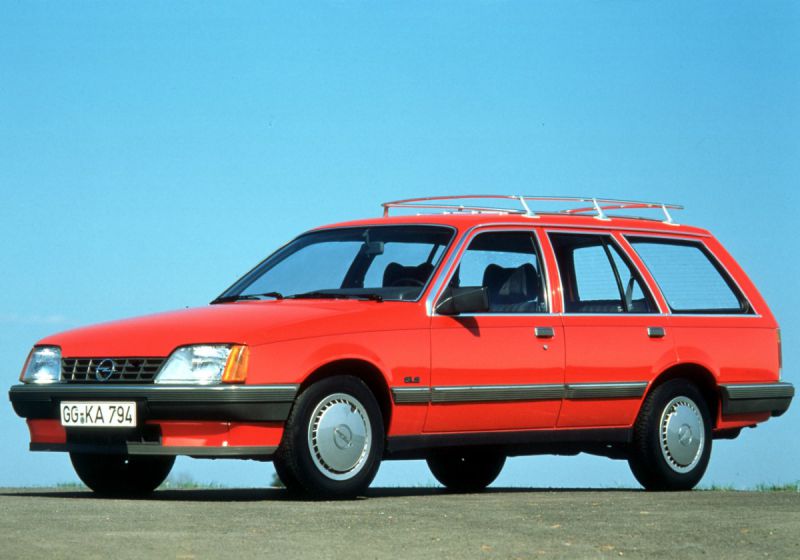
The Opel Rekord E Caravan (facelift 1982) 2.3 TD (86 Hp) represents a significant chapter in European automotive history, serving as a cornerstone of Opel’s lineup during the mid-1980s. As a product of General Motors’ German subsidiary, Opel, the Rekord E was a prominent mid-size to executive family car, particularly in its home market and across continental Europe. Produced from May 1984 to September 1986, this specific variant, featuring a 2.3-liter turbocharged diesel engine, was part of the facelifted E generation, which debuted in 1982. While the Rekord nameplate was largely unknown in the United States, its legacy in Europe as a reliable, spacious, and economical family station wagon (known as an “estate” across the Atlantic) solidified its reputation as a practical and enduring vehicle for its time. The Caravan body style, in particular, underscored its utility, catering to families and businesses alike who required ample cargo space without sacrificing comfortable passenger transport.
Engine and Performance of the Opel Rekord E Caravan (facelift 1982) 2.3 TD (86 Hp)
Under the hood, the Opel Rekord E Caravan (facelift 1982) 2.3 TD (86 Hp) featured an inline four-cylinder, 2.3-liter (2260 cm³) diesel engine, designated as the 23DT. This powertrain was a testament to the growing demand for fuel efficiency in Europe following the oil crises of the 1970s. Equipped with a turbocharger, a relatively advanced feature for a mainstream diesel engine in the mid-1980s, it produced a respectable 86 horsepower at 4200 rpm and a robust 139.4 lb.-ft. of torque at a low 2200 rpm. This torque output was crucial for the vehicle’s role as a load-hauler, providing ample pulling power for its size and weight.
The engine utilized a precombustion chamber injection system, a common design for diesel engines of that era, known for its smoother operation and quieter running compared to direct injection systems of the time. Power was delivered to the rear wheels via a five-speed manual transmission, offering drivers a greater degree of control and contributing to the vehicle’s overall fuel economy. With a combined fuel consumption rating of approximately 29 US mpg, the 2.3 TD was an economical choice for long-distance travel and daily commuting.
Performance figures, while not exhilarating by modern standards, were competitive for a diesel station wagon of its vintage. The Rekord E Caravan 2.3 TD could accelerate from 0 to 60 mph in about 15.2 seconds and reach a top speed of 102.53 mph. These figures underscored its practical rather than sporty intentions, emphasizing durability and efficiency over outright speed. The engine’s robust design and the car’s rear-wheel-drive architecture contributed to a reputation for reliability and straightforward maintenance, making it a popular choice for fleet operators and families seeking a dependable vehicle.
Design and Features: The Opel Rekord E Caravan’s Practicality
The design of the Opel Rekord E Caravan (facelift 1982) was characteristic of European automotive aesthetics in the early to mid-1980s: functional, understated, and built for purpose. As a station wagon, its primary design objective was utility and space. The body type, often referred to as an “estate” in Europe, offered between three and five doors, typically configured as a five-door for family use, accommodating five occupants comfortably. The facelift introduced in 1982 brought subtle refinements to the exterior, including revised grille designs, updated headlamps, and minor trim changes, aimed at modernizing its appearance while retaining its established identity.
Measuring 184.17 inches in length, 67.72 inches in width, and 58.07 inches in height, with a wheelbase of 105.04 inches, the Rekord E Caravan provided a substantial footprint on the road. These dimensions translated into a surprisingly spacious interior, particularly in the cargo area, which was a key selling point for the station wagon variant. The large rear hatch and relatively low loading sill facilitated easy access for luggage, groceries, or commercial goods.
Inside, the Rekord E emphasized durability and straightforward ergonomics. Materials were chosen for their hard-wearing qualities, designed to withstand the rigors of family life or commercial use. While not luxurious, the cabin offered a comfortable and uncluttered environment. Features, typical for its era, would have included a basic heating and ventilation system, an AM/FM radio, and manual window winders. Safety features were largely passive, relying on the robust construction of the body shell and the effectiveness of seatbelts, which were becoming standard across Europe. The car’s substantial 1270 kg (2799.87 lbs) curb weight contributed to a solid, stable feel on the road, while the ventilated disc brakes at the front and drum brakes at the rear provided adequate stopping power for the vehicle’s performance capabilities.
Technical Specifications: Opel Rekord E Caravan (facelift 1982) 2.3 TD (86 Hp)
| Category | Specification | US Equivalent (where applicable) |
|---|---|---|
| General Information | ||
| Brand | Opel | |
| Model | Rekord | |
| Generation | Rekord E Caravan (facelift 1982) | |
| Type (Engine) | 2.3 TD (86 Hp) | |
| Start of production | May, 1984 | |
| End of production | September, 1986 | |
| Powertrain Architecture | Internal Combustion engine | |
| Body type | Station wagon (estate) | |
| Seats | 5 | |
| Doors | 3-5 | |
| Performance Specs | ||
| Fuel consumption (combined) | 8.1 l/100 km | 29 US mpg |
| Fuel Type | Diesel | |
| Acceleration 0 – 60 mph | 15.2 sec | |
| Maximum speed | 165 km/h | 102.53 mph |
| Weight-to-power ratio | 14.8 kg/Hp | 32.63 lbs/Hp |
| Weight-to-torque ratio | 6.7 kg/Nm | 14.77 lbs/Nm |
| Engine Specs | ||
| Power | 86 Hp @ 4200 rpm | |
| Power per liter | 38.1 Hp/l | |
| Torque | 189 Nm @ 2200 rpm | 139.4 lb.-ft. @ 2200 rpm |
| Engine Model/Code | 23DT | |
| Engine displacement | 2260 cm³ | 2.3 Liters / 137.91 cu. in. |
| Number of cylinders | 4 | |
| Engine configuration | Inline | |
| Cylinder Bore | 92 mm | 3.62 in. |
| Piston Stroke | 85 mm | 3.35 in. |
| Compression ratio | 23:1 | |
| Number of valves per cylinder | 2 | |
| Fuel injection system | Precombustion chamber injection | |
| Engine aspiration | Turbocharger | |
| Valvetrain | SOHC | |
| Engine oil capacity | 5.5 l | 5.81 US qt |
| Coolant | 11.5 l | 12.15 US qt |
| Space, Volume and Weights | ||
| Kerb Weight | 1270 kg | 2799.87 lbs. |
| Max. weight | 1900 kg | 4188.78 lbs. |
| Max load | 630 kg | 1388.91 lbs. |
| Fuel tank capacity | 70 l | 18.49 US gal |
| Dimensions | ||
| Length | 4678 mm | 184.17 in. |
| Width | 1720 mm | 67.72 in. |
| Height | 1475 mm | 58.07 in. |
| Wheelbase | 2668 mm | 105.04 in. |
| Front track | 1435 mm | 56.5 in. |
| Rear (Back) track | 1432 mm | 56.38 in. |
| Ride height (ground clearance) | 140 mm | 5.51 in. |
| Minimum turning circle | 10.8 m | 35.43 ft. |
| Drivetrain, Brakes and Suspension | ||
| Drivetrain Architecture | The Internal combustion engine (ICE) drives the rear wheels of the vehicle. | |
| Drive wheel | Rear wheel drive | |
| Number of gears and type of gearbox | 5 gears, manual transmission | |
| Front brakes | Ventilated discs | |
| Rear brakes | Drum | |
Legacy and Market Impact of the Opel Rekord E Caravan (facelift 1982)
The Opel Rekord E Caravan (facelift 1982) 2.3 TD (86 Hp) carved out a significant niche in the European automotive landscape of the 1980s. Its reputation was built on a foundation of reliability, practicality, and cost-effectiveness. As a large family wagon, it was a staple on German autobahns and European country roads, offering a comfortable ride for long journeys and substantial cargo capacity for family vacations or professional use. The diesel variant, in particular, was highly valued for its excellent fuel economy and robust torque, making it a favorite among taxi operators, small businesses, and families who prioritized running costs and longevity.
In its primary market, the Rekord E Caravan faced stiff competition from other European manufacturers. Key rivals included the Ford Granada/Scorpio, another popular large family car from GM’s main competitor in Europe, and the Volkswagen Passat (B2 generation), which offered a more modern front-wheel-drive layout. More premium alternatives like the Volvo 240/740 wagons and the diesel variants of the Mercedes-Benz W123/W124 also competed for market share, though the Rekord typically offered a more accessible price point. The Rekord’s enduring appeal lay in its honest, no-nonsense approach to transportation, providing a solid and dependable package without excessive frills.
Historically, the Rekord E generation is notable as one of the last large rear-wheel-drive (RWD) sedans and wagons produced by Opel before the company transitioned to predominantly front-wheel-drive (FWD) platforms with its successor, the Opel Omega, introduced in 1986. This shift mirrored a broader industry trend towards FWD for improved packaging efficiency and perceived handling characteristics for mass-market vehicles. The Rekord E, therefore, represents the culmination of a long line of traditional RWD Opel family cars, embodying the engineering philosophy of a bygone era. Its diesel engine, with its turbocharger, showcased Opel’s commitment to developing more efficient and powerful diesel options, anticipating the widespread adoption of diesel technology in Europe that would follow in subsequent decades. Today, the Opel Rekord E Caravan remains a cherished classic for enthusiasts who appreciate its robust construction, straightforward mechanics, and its pivotal role in the everyday lives of millions of Europeans during the 1980s.