
<!DOCTYPE html>
<html lang=”en-US”>
<head>
<meta charset=”UTF-8″>
<meta name=”viewport” content=”width=device-width, initial-scale=1.0″>
<title>Mercedes-Benz S124 300 TE (188 Hp) 4MATIC Automatic</title>
<style>
body { font-family: Arial, sans-serif; line-height: 1.6; color: #333; margin: 20px; }
h2 { color: #2c3e50; border-bottom: 2px solid #ccc; padding-bottom: 5px; margin-top: 30px; }
h3 { color: #34495e; margin-top: 20px; }
p { margin-bottom: 10px; text-align: justify; }
table { width: 100%; border-collapse: collapse; margin-top: 20px; margin-bottom: 20px; }
th, td { border: 1px solid #ddd; padding: 8px; text-align: left; }
th { background-color: #f2f2f2; }
.note { font-style: italic; color: #666; font-size: 0.9em; }
</style>
</head>
<body>
<h2>Mercedes-Benz S124 300 TE (188 Hp) 4MATIC Automatic: A Pillar of Engineering Excellence</h2>
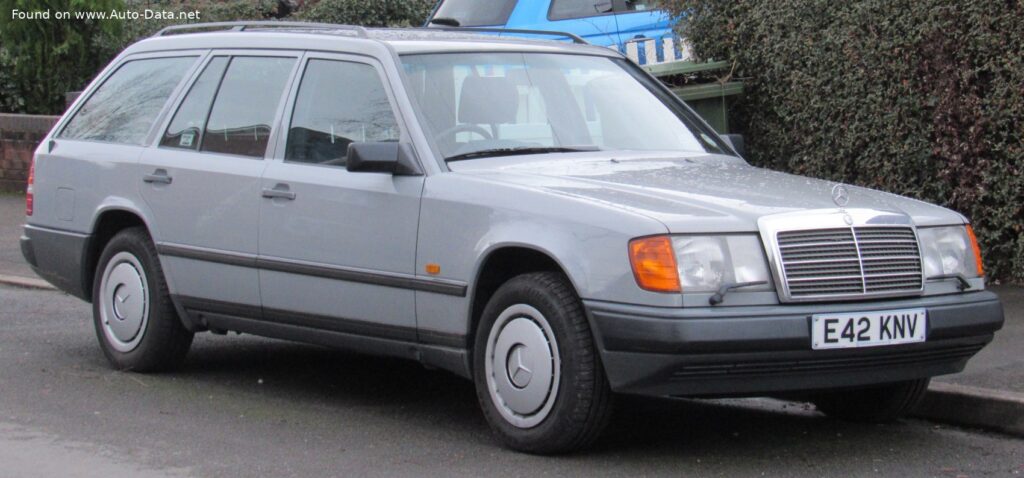
<p>The <strong>Mercedes-Benz S124 300 TE (188 Hp) 4MATIC Automatic</strong> represents a significant chapter in the history of the W124 generation, a series widely regarded as one of the finest vehicles ever produced by Mercedes-Benz. Introduced in August 1986 and produced until August 1989, this particular model combined the practicality and elegance of a luxury station wagon with the advanced traction capabilities of Mercedes-Benz’s innovative 4MATIC all-wheel-drive system. Positioned in the premium mid-size luxury segment, the S124 300 TE 4MATIC was a testament to German engineering during an era when Mercedes-Benz was synonymous with uncompromising quality, durability, and technological innovation. It carved out a niche for discerning European and international buyers who demanded both utilitarian functionality and refined driving dynamics, even in challenging weather conditions.</p>
<h2>Powertrain and Performance of the Mercedes-Benz S124 300 TE (188 Hp) 4MATIC Automatic</h2>
<p>At the heart of the <strong>Mercedes-Benz S124 300 TE (188 Hp) 4MATIC Automatic</strong> was the robust M 103 E 30 / 103.985 engine, a 3.0-liter (2962 cm3 or 180.75 cu. in.) naturally aspirated inline-six gasoline engine. This powerplant was celebrated for its smooth operation, reliability, and ample power delivery, characteristics that defined Mercedes-Benz engines of the period. Featuring a Single Overhead Camshaft (SOHC) valvetrain with two valves per cylinder and a multi-port manifold injection system, the engine produced a respectable 188 horsepower at 5700 rpm. Torque output was equally impressive for its time, peaking at 191.77 lb.-ft. (260 Nm) at 4400 rpm, providing strong acceleration and effortless cruising capability.</p>
<p>The power was channeled through a sophisticated 4-speed automatic transmission, known for its smooth shifts and durability. What truly set this model apart was its advanced 4MATIC all-wheel-drive system. Unlike permanent AWD systems, Mercedes-Benz’s 4MATIC of this era was an electro-mechanically controlled system that primarily drove the rear wheels, engaging the front wheels only when slippage was detected. This intelligent system provided enhanced traction and stability in adverse conditions without compromising fuel efficiency or handling dynamics on dry pavement. Performance figures included a 0 to 60 mph acceleration time of a swift 9.1 seconds and a top speed of 128.62 mph (207 km/h), making it one of the faster and more capable wagons of its day.</p>
<p>Fuel economy for the S124 300 TE 4MATIC was rated at approximately 16.4 US mpg in urban driving and 24.8 US mpg on the highway, respectable figures for a large, powerful, all-wheel-drive luxury vehicle from the late 1980s. The engine’s compression ratio stood at 9.2:1, and it had an engine oil capacity of 6.5 liters (6.87 US quarts) and a coolant capacity of 9 liters (9.51 US quarts), reflecting its robust design intended for long-term reliability.</p>
<h3>Chassis and Suspension</h3>
<p>The S124’s chassis was renowned for its exceptional ride comfort and stable handling. The front suspension utilized an independent wishbone setup, while the rear featured a sophisticated independent multi-link suspension. This innovative rear suspension design, a hallmark of the W124 generation, provided superior wheel control and improved ride quality compared to many contemporary systems. Braking was handled by ventilated discs at the front and solid discs at the rear, augmented by an Anti-lock Braking System (ABS), a significant safety feature for the time. Steering was a hydraulic cone worm with recirculation balls system, offering precise feedback and ease of maneuverability.</p>
<h3>Design and Features</h3>
<p>The <strong>Mercedes-Benz S124 300 TE 4MATIC</strong> epitomized the understated elegance and functional design characteristic of Mercedes-Benz in the late 20th century. Its station wagon (estate) body type, featuring five doors and seating for five, offered immense practicality without sacrificing aesthetic appeal. The design, penned by Bruno Sacco, was timeless, characterized by clean lines, robust construction, and excellent aerodynamic efficiency for its era. The vehicle’s dimensions — 187.6 inches in length, 68.5 inches in width, and 58.98 inches in height, with a generous 110.24-inch wheelbase — contributed to a spacious and comfortable cabin, further enhancing its appeal as a family or executive transporter.</p>
<p>Inside, the S124 offered a cabin built with high-quality materials and meticulous attention to detail. Ergonomics were excellent, with intuitive controls and supportive seating designed for long-distance comfort. Standard features typically included power windows, central locking, and the aforementioned ABS. The availability of 4MATIC was a premium option that significantly enhanced its utility in regions with inclement weather, providing a level of confidence and safety that few competitors could match.</p>
<h2>Technical Specifications: Mercedes-Benz S124 300 TE (188 Hp) 4MATIC Automatic</h2>
<table>
<thead>
<tr>
<th>Category</th>
<th>Specification</th>
</tr>
</thead>
<tbody>
<tr>
<td colspan=”2″><strong>General Information</strong></td>
</tr>
<tr>
<td>Brand</td>
<td>Mercedes-Benz</td>
</tr>
<tr>
<td>Model</td>
<td>W124</td>
</tr>
<tr>
<td>Generation</td>
<td>S124</td>
</tr>
<tr>
<td>Type (Engine)</td>
<td>300 TE (188 Hp) 4MATIC Automatic</td>
</tr>
<tr>
<td>Start of Production</td>
<td>August, 1986 year</td>
</tr>
<tr>
<td>End of Production</td>
<td>August, 1989 year</td>
</tr>
<tr>
<td>Powertrain Architecture</td>
<td>Internal Combustion engine</td>
</tr>
<tr>
<td>Body type</td>
<td>Station wagon (estate)</td>
</tr>
<tr>
<td>Seats</td>
<td>5</td>
</tr>
<tr>
<td>Doors</td>
<td>5</td>
</tr>
<tr>
<td colspan=”2″><strong>Performance Specifications</strong></td>
</tr>
<tr>
<td>Fuel Consumption (Urban)</td>
<td>14.3 l/100 km (16.4 US mpg)</td>
</tr>
<tr>
<td>Fuel Consumption (Extra Urban)</td>
<td>9.5 l/100 km (24.8 US mpg)</td>
</tr>
<tr>
<td>Fuel Type</td>
<td>Petrol (Gasoline)</td>
</tr>
<tr>
<td>Acceleration 0 – 60 mph</td>
<td>9.1 sec</td>
</tr>
<tr>
<td>Maximum Speed</td>
<td>128.62 mph (207 km/h)</td>
</tr>
<tr>
<td>Weight-to-Power Ratio</td>
<td>8.5 kg/Hp (117.5 Hp/tonne)</td>
</tr>
<tr>
<td>Weight-to-Torque Ratio</td>
<td>6.2 kg/Nm (162.5 Nm/tonne)</td>
</tr>
<tr>
<td colspan=”2″><strong>Engine Specifications</strong></td>
</tr>
<tr>
<td>Power</td>
<td>188 Hp @ 5700 rpm</td>
</tr>
<tr>
<td>Power per liter</td>
<td>63.5 Hp/l</td>
</tr>
<tr>
<td>Torque</td>
<td>191.77 lb.-ft. (260 Nm) @ 4400 rpm</td>
</tr>
<tr>
<td>Engine layout</td>
<td>Front, Longitudinal</td>
</tr>
<tr>
<td>Engine Model/Code</td>
<td>M 103 E 30 / 103.985</td>
</tr>
<tr>
<td>Engine displacement</td>
<td>3.0 l (2962 cm3 / 180.75 cu. in.)</td>
</tr>
<tr>
<td>Number of cylinders</td>
<td>6</td>
</tr>
<tr>
<td>Engine configuration</td>
<td>Inline</td>
</tr>
<tr>
<td>Cylinder Bore</td>
<td>3.48 in. (88.5 mm)</td>
</tr>
<tr>
<td>Piston Stroke</td>
<td>3.16 in. (80.25 mm)</td>
</tr>
<tr>
<td>Compression ratio</td>
<td>9.2:1</td>
</tr>
<tr>
<td>Number of valves per cylinder</td>
<td>2</td>
</tr>
<tr>
<td>Fuel injection system</td>
<td>Multi-port manifold injection</td>
</tr>
<tr>
<td>Engine aspiration</td>
<td>Naturally aspirated engine</td>
</tr>
<tr>
<td>Valvetrain</td>
<td>SOHC</td>
</tr>
<tr>
<td>Engine oil capacity</td>
<td>6.5 l (6.87 US qt)</td>
</tr>
<tr>
<td>Coolant capacity</td>
<td>9 l (9.51 US qt)</td>
</tr>
<tr>
<td colspan=”2″><strong>Space, Volume and Weights</strong></td>
</tr>
<tr>
<td>Kerb Weight</td>
<td>3527.4 lbs. (1600 kg)</td>
</tr>
<tr>
<td>Max. weight</td>
<td>4806.08 lbs. (2180 kg)</td>
</tr>
<tr>
<td>Max load</td>
<td>1278.68 lbs. (580 kg)</td>
</tr>
<tr>
<td>Fuel tank capacity</td>
<td>19.02 US gal (72 l)</td>
</tr>
<tr>
<td colspan=”2″><strong>Dimensions</strong>&
