Introduction to the Renault Megane II Coupe 2.0 16V Turbo (163 Hp)
The
Renault Megane II Coupe 2.0 16V Turbo (163 Hp)
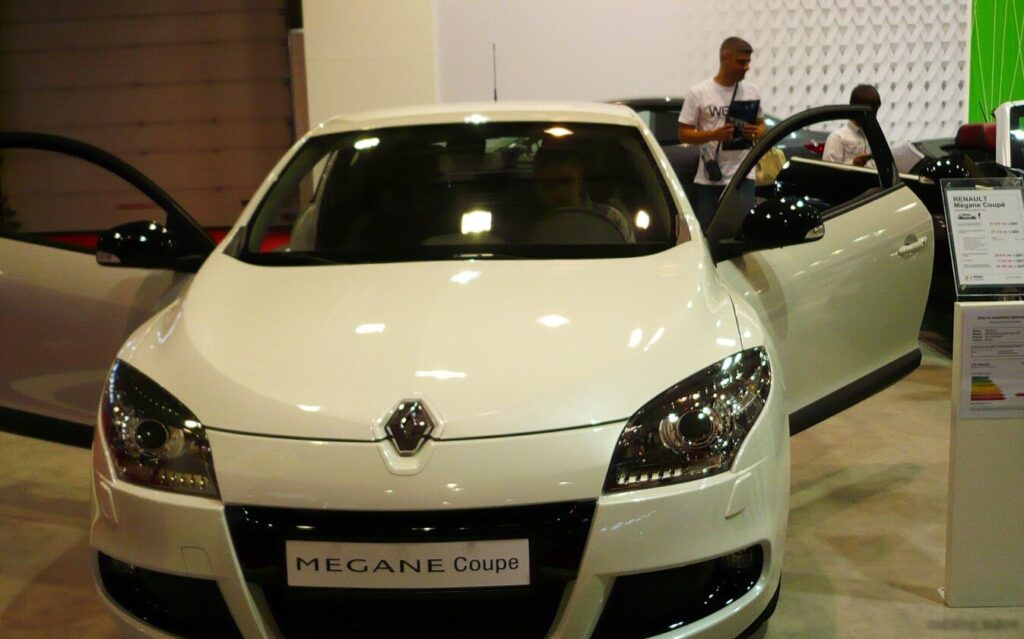
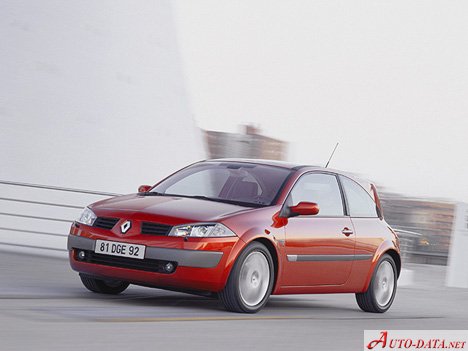
represents a significant chapter in Renault’s design and engineering philosophy during the early 2000s. Introduced in 2004, this particular variant of the second-generation Megane aimed to blend distinctive styling with engaging performance, targeting the European compact car segment. The Megane II, known for its polarizing yet innovative design, stood out from its competitors with its unique “bustle-back” rear end and bold aesthetic choices. While the Megane was a staple in the European market, it was not officially sold in the United States, making it an intriguing example of European automotive trends and engineering for American enthusiasts. This specific 2.0-liter turbocharged coupe model served as a more performance-oriented option within the broader Megane II lineup, offering a compelling package of power, handling, and daily usability.
The Renault Megane II Coupe: Engineering and Performance
Powertrain and Dynamics of the Renault Megane II Coupe
At the heart of the
Renault Megane II Coupe 2.0 16V Turbo (163 Hp)
lies a robust F4R engine, a 1998 cubic centimeter (121.93 cubic inch) inline four-cylinder unit. This engine features a Double Overhead Camshaft (DOHC) valvetrain with 4 valves per cylinder, ensuring efficient breathing and performance. What truly sets this variant apart is its forced induction system: a turbocharger complemented by an intercooler. This setup allowed the engine to produce a respectable 163 horsepower at 5000 revolutions per minute, translating to a power output of 81.6 horsepower per liter.
Torque delivery was equally impressive for its class, with 270 Newton-meters (199.14 lb.-ft.) available at a relatively low 3250 rpm. This broad torque band contributed to the car’s responsive nature and flexible driving characteristics, making it adept for both urban commuting and spirited highway cruising. Power was sent to the front wheels via a precise 6-speed manual transmission, offering drivers an engaging and direct connection to the car’s performance.
Performance figures for the
Renault Megane II Coupe 2.0 16V Turbo (163 Hp)
were competitive for its era. It could accelerate from 0 to 100 kilometers per hour (0-62 mph) in 8.3 seconds, with a calculated 0-60 mph time of 7.9 seconds. Its top speed reached 220 km/h (136.7 mph), underscoring its capabilities as a capable and quick compact coupe. Fuel economy, while not the primary focus of a turbocharged model, was reasonable for the time, with a combined cycle rating of 7.7 liters per 100 kilometers (30.5 US mpg). The vehicle met the Euro 3 emission standard, reflecting its environmental compliance for the mid-2000s European market.
Design and Features
The
Renault Megane II Coupe
was a stylistic departure for Renault, characterized by its distinctive and often debated design. The three-door coupe body type accentuated the car’s sporty intentions, featuring a sleeker profile compared to its hatchback sibling. The iconic “bustle-back” rear design, with its steeply raked rear window and prominent tailgate, gave the Megane II an unmistakable identity on European roads. Despite its compact exterior dimensions—a length of 4209 mm (165.71 inches), a width of 1777 mm (69.96 inches), and a height of 1458 mm (57.4 inches)—the interior was designed to accommodate five occupants, though the rear seats in a coupe configuration were typically best suited for shorter journeys or children.
Inside, the Megane II offered a modern and ergonomic cabin for its time. While specific luxury features varied by trim, standard equipment often included power windows, air conditioning, and a quality audio system. Safety was a strong point for the Megane II generation, which notably achieved a five-star Euro NCAP safety rating. The 2.0 16V Turbo variant came equipped with a comprehensive suite of safety features, including an Anti-lock Braking System (ABS) as standard, enhancing control during emergency braking.
The chassis dynamics were managed by an independent McPherson strut front suspension and a torsion beam rear suspension, a common and effective setup for front-wheel-drive vehicles in this segment. Braking performance was assured by ventilated discs at the front and solid discs at the rear. The car utilized a rack and pinion steering system with electric power steering, providing a balance of ease of use at low speeds and improved feedback at higher velocities. Standard tire size was 205/55 R16, mounted on 6.5J x 16-inch wheel rims, providing a good balance of grip and ride comfort.
Technical Specifications
| Category | Specification | Value |
|---|---|---|
| General Information | ||
| Brand | Renault | |
| Model | Megane | |
| Generation | Megane II Coupe | |
| Type (Engine) | 2.0 16V Turbo (163 Hp) | |
| Start of Production | 2004 year | |
| End of Production | 2006 year | |
| Powertrain Architecture | Internal Combustion engine | |
| Body type | Coupe | |
| Seats | 5 | |
| Doors | 3 | |
| Performance Specs | ||
| Fuel consumption (economy) – urban | 10.6 l/100 km (22.2 US mpg) | |
| Fuel consumption (economy) – extra urban | 6 l/100 km (39.2 US mpg) | |
| Fuel consumption (economy) – combined | 7.7 l/100 km (30.5 US mpg) | |
| CO2 emissions | 184 g/km | |
| Fuel Type | Petrol (Gasoline) | |
| Acceleration 0 – 100 km/h | 8.3 sec | |
| Acceleration 0 – 60 mph (Calculated) | 7.9 sec | |
| Maximum speed | 220 km/h (136.7 mph) | |
| Emission standard | Euro 3 | |
| Weight-to-power ratio | 7.7 kg/Hp (129.9 Hp/tonne) | |
| Weight-to-torque ratio | 4.6 kg/Nm (215.1 Nm/tonne) | |
| Engine Specs | ||
| Power | 163 Hp @ 5000 rpm | |
| Power per liter | 81.6 Hp/l | |
| Torque | 270 Nm @ 3250 rpm (199.14 lb.-ft.) | |
| Engine layout | Front, Transverse | |
| Engine Model/Code | F4R | |
| Engine displacement | 1998 cm3 (121.93 cu. in.) | |
| Number of cylinders | 4 | |
| Engine configuration | Inline | |
| Cylinder Bore | 82.7 mm (3.26 in.) | |
| Piston Stroke | 93 mm (3.66 in.) | |
| Compression ratio | 10:1 | |
| Number of valves per cylinder | 4 | |
| Fuel injection system | Multi-port manifold injection | |
| Engine aspiration | Turbocharger, Intercooler | |
| Valvetrain | DOHC | |
| Engine oil capacity | 5.4 l (5.71 US qt) | |
| Coolant capacity | 6.5 l (6.87 US qt) | |
| Space, Volume and Weights | ||
| Kerb Weight | 1255 kg (2766.8 lbs.) | |
| Max. weight | 1795 kg (3957.3 lbs.) | |
| Max load | 540 kg (1190.5 lbs.) | |
| Trunk (boot) space – minimum | 330 l (11.65 cu. ft.) | |
| Trunk (boot) space – maximum | 1190 l (42.02 cu. ft.) | |
| Fuel tank capacity | 60 l (15.85 US gal) | |
| Max. roof load | 80 kg (176.37 lbs.) | |
| Permitted trailer load with brakes (12%) | 1300 kg (2866.01 lbs.) | |
| Permitted trailer load without brakes | 650 kg (1433 lbs.) | |
| Permitted towbar download | 75 kg (165.35 lbs.) | |
| Dimensions | ||
| Length | 4209 mm (165.71 in.) | |
| Width | 1777 mm (69.96 in.) | |
| Height | 1458 mm (57.4 in.) | |
| Wheelbase | 2625 mm (103.35 in.) | |
| Front track | 1518 mm (59.76 in.) | |
| Rear (Back) track | 1514 mm (59.61 in.) | |
| Drag coefficient (Cd) | 0.35 | |
| Minimum turning circle (turning diameter) | 10.5 m (34.45 ft.) | |
| Drivetrain, Brakes and Suspension Specs | ||
| Drivetrain Architecture | Front-wheel drive, Internal Combustion Engine | |
| Drive wheel | Front wheel drive | |
| Number of gears and type of gearbox | 6 gears, manual transmission | |
| Front suspension | Independent type McPherson | |
| Rear suspension | Torsion | |
| Front brakes | Ventilated discs | |
| Rear brakes | Disc | |
| Assisting systems | ABS (Anti-lock braking system) | |
| Steering type | Steering rack and pinion | |
| Power steering | Electric Steering | |
| Tires size | 205/55 R16 | |
| Wheel rims size | 6.5J x 16 | |
Legacy and Market Impact
The Renault Megane II, and specifically the
Renault Megane II Coupe 2.0 16V Turbo (163 Hp)
, carved out a notable niche in the European compact car market during its production run from 2004 to 2006. The second-generation Megane was a bold statement from Renault, moving away from the more conservative styling of its predecessor. While its design was initially met with mixed reactions, it ultimately proved successful, contributing to strong sales across Europe. The coupe variant, with its more dynamic styling and sportier powertrain, appealed to buyers looking for a blend of practicality and driving excitement, without stepping into the more aggressive hot hatch territory of models like the Megane RS.
In its primary European market, the Megane II Coupe competed against a diverse range of vehicles. Direct rivals in the compact coupe or sportier hatchback segment would have included models such as the Opel Astra GTC, the Peugeot 307 CC (though a convertible hardtop), and potentially even the Volkswagen Golf GTI, though the Megane Coupe often offered a slightly different proposition in terms of comfort and distinctive styling versus outright performance. The 2.0 16V Turbo model provided a compelling alternative to naturally aspirated engines from competitors, offering strong torque and flexible performance.
Renault’s reputation for innovation in safety was a significant factor in the Megane II’s success. Its pioneering 5-star Euro NCAP rating for occupant protection set a new benchmark for the segment and heavily influenced consumer perception of the brand. This safety prowess, combined with the car’s comfortable ride, distinctive design, and the spirited performance of the 2.0 16V Turbo engine, contributed to its enduring legacy. Even today, the Megane II is remembered for its unique aesthetics and its role in solidifying Renault’s position as a leader in design and safety within the European compact car segment. The
Renault Megane II Coupe 2.0 16V Turbo (163 Hp)
stands as a testament to an era when European automakers experimented with bold designs and offered accessible performance to a broad audience, even if it remained an exclusive experience for those outside its primary markets.