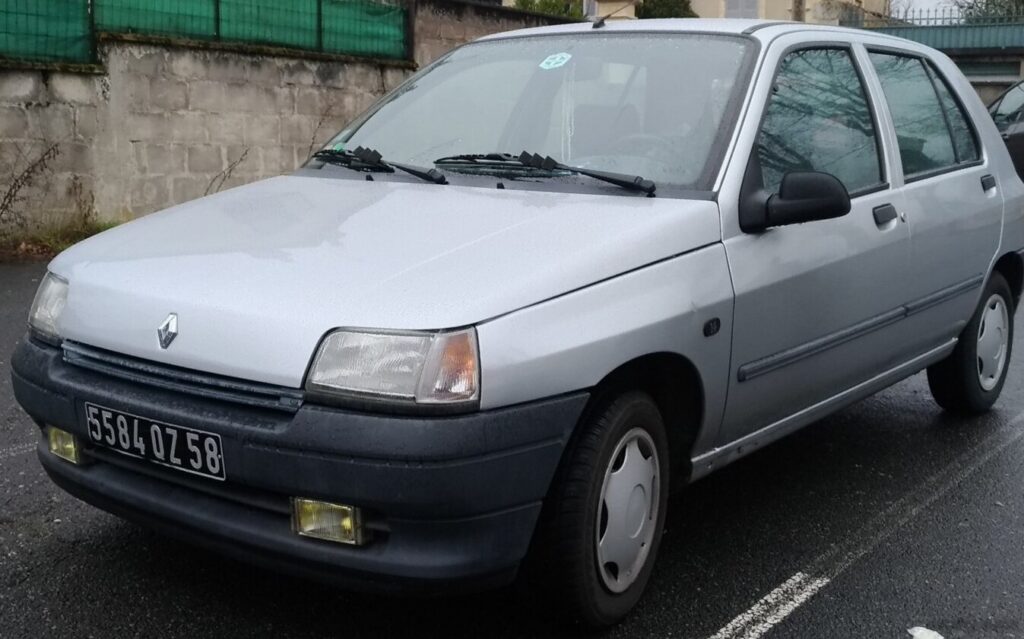
Introduction to the Renault Clio IV Grandtour
The Renault Clio, a cornerstone of the European subcompact (B-segment) market, has long been celebrated for its blend of style, practicality, and efficiency. The fourth generation, known as the Clio IV, continued this legacy, introducing a significantly more dynamic design language. This detailed analysis focuses on the Renault Clio IV Grandtour, specifically the Phase II refresh model produced from 2016 to 2018, equipped with the 1.2 16V (75 Hp) engine. While the Clio hatchback was a ubiquitous sight across Europe, the Grandtour variant offered an extended body style, transforming the popular subcompact into a versatile station wagon (often referred to as an “estate” in Europe). This particular model, not officially sold in the United States, played a crucial role in its primary European market by providing an affordable and fuel-efficient option for families or individuals requiring more cargo space than a typical hatchback, without the larger footprint or cost of a compact car or SUV.
The Clio IV Grandtour, particularly in its Phase II iteration, represented Renault’s commitment to modern design and practical engineering. The Phase II refresh brought subtle yet meaningful updates, including revised lighting signatures, updated grille designs, and enhancements to interior materials and available technology, ensuring the Clio remained competitive in a rapidly evolving segment. The 1.2 16V (75 Hp) engine variant stood out as an entry-level powertrain, emphasizing reliability, low running costs, and compliance with stringent European emission standards, such as Euro 6. This article will delve into its mechanical specifications, design philosophy, market position, and overall impact within the European automotive landscape.
Engineering and Performance: The 1.2 16V Engine in the Renault Clio IV Grandtour
Powertrain Overview
At the heart of this specific Renault Clio IV Grandtour model is a naturally aspirated 1.2-liter (1149 cm3 or 70.12 cu. in.) 16-valve inline-four gasoline engine, internally designated as the D4F 740. This powerplant was engineered with a strong emphasis on fuel efficiency and smooth, predictable power delivery rather than outright performance. It produces a modest 75 horsepower (Hp) at 5500 revolutions per minute (rpm), making it well-suited for urban driving and moderate highway speeds. The peak torque output is 107 Newton-meters (Nm), or approximately 78.92 lb.-ft., available at 4250 rpm. This torque profile ensures adequate responsiveness in city traffic and sufficient pulling power for daily commutes.
Power is channeled to the front wheels via a five-speed manual transmission, a common and reliable setup for vehicles in this class. The manual gearbox allows drivers to optimize the engine’s modest output, keeping it within its most efficient operating range. The internal combustion engine (ICE) architecture is front, transverse, which is typical for front-wheel-drive subcompacts, contributing to a compact engine bay and maximizing interior space. The multi-port manifold injection system ensures precise fuel delivery, contributing to both efficiency and lower emissions. With a power-to-weight ratio of 14.2 kg/Hp (or 70.4 Hp per tonne) and a torque-to-weight ratio of 10 kg/Nm (100.4 Nm per tonne), the Clio IV Grandtour 1.2 16V is positioned as a practical and economical vehicle, rather than a performance contender.
Fuel Efficiency and Emissions
One of the key selling points of the Clio IV Grandtour 1.2 16V was its commendable fuel economy. According to official figures, the vehicle achieves a combined fuel consumption of 5.6 liters per 100 kilometers, which translates to an impressive 42 US miles per gallon (mpg). In urban driving, it consumes 7.2 l/100 km (32.7 US mpg), while on extra-urban routes, it can reach 4.7 l/100 km (50 US mpg). These figures highlight its suitability for cost-conscious drivers and its capability for economical long-distance travel.
In terms of environmental impact, the Clio IV Grandtour 1.2 16V emits 127 grams of CO2 per kilometer, classifying it as compliant with the Euro 6 emission standard. This standard, effective in Europe during its production years, set strict limits on pollutant emissions, underscoring Renault’s commitment to environmental responsibility. The vehicle’s top speed is rated at 167 km/h (approximately 103.77 mph), which is more than adequate for European highway limits and general driving conditions.
Design, Practicality, and Features
Exterior and Interior Design
The Renault Clio IV Grandtour, particularly after its Phase II refresh in 2016, embodied a sleek and modern design language. Penned by Laurens van den Acker, the Clio IV generation moved away from its predecessor’s more conservative styling, adopting a “sensual design” philosophy characterized by flowing lines, sculpted surfaces, and a more athletic stance. The Grandtour variant took this attractive design and extended the roofline, creating a station wagon body type that seamlessly integrated increased cargo capacity without sacrificing the car’s aesthetic appeal. Its dimensions—167.99 inches in length, 68.19 inches in width (76.57 inches including mirrors), and 58.07 inches in height—made it a compact and maneuverable vehicle ideal for navigating tight European city streets while still offering substantial interior volume. The wheelbase of 101.93 inches contributed to a stable ride and maximized cabin space within its footprint.
The Phase II refresh subtly refined the exterior with updated LED lighting signatures, particularly for the daytime running lights, and a revised front grille that further integrated the Renault diamond badge. The interior also saw improvements, with enhanced material quality and updated trim options aiming to elevate the perceived premium feel. The five-door, five-seat configuration ensured practicality for small families, with easy access to both front and rear passenger compartments.
Practicality and Cargo Versatility
Where the Renault Clio IV Grandtour truly distinguished itself from its hatchback sibling was in its practicality. The station wagon body style significantly boosted its cargo-carrying capabilities. With the rear seats in place, the trunk offered a generous minimum volume of 430 liters (15.19 cu. ft.), a substantial increase over the hatchback’s capacity. This made it an attractive option for buyers who needed to transport luggage, groceries, or sports equipment regularly. The ability to fold down the rear seats further expanded this space, accommodating larger items. Its maximum permissible load capacity was 1190.5 lbs., making it a capable hauler for its size. Furthermore, the Grandtour was rated to tow a permitted trailer load of 2645.55 lbs. with brakes, or 1256.63 lbs. without brakes, adding to its versatility.
Safety and Driver Aids
For a modern car of its era, the Clio IV Grandtour incorporated essential safety and driver assistance systems. Standard features included an Anti-lock Braking System (ABS), which was crucial for maintaining steering control during emergency braking. The braking system itself comprised ventilated discs at the front and solid discs at the rear, providing reliable stopping power. The vehicle also featured electric power steering with a rack and pinion setup, offering light and precise handling, particularly beneficial for urban maneuvers and parking. The tire size of 185/65 R15, mounted on 15-inch wheel rims, balanced ride comfort with adequate grip. While the data provided doesn’t detail advanced driver-assistance systems (ADAS) that became more common in later models, the Clio IV Grandtour offered a solid foundation of passive and active safety features expected in its class during its production years.
Technical Specifications
| Category | Specification |
|---|---|
| Brand | Renault |
| Model | Clio |
| Generation | Clio IV Grandtour (Phase II, 2016) |
| Type (Engine) | 1.2 16V (75 Hp) |
| Start of Production | 2016 year |
| End of Production | 2018 year |
| Powertrain Architecture | Internal Combustion engine |
| Body Type | Station wagon (estate) |
| Seats | 5 |
| Doors | 5 |
| Fuel Consumption (Economy) – Urban | 7.2 l/100 km (32.7 US mpg) |
| Fuel Consumption (Economy) – Extra Urban | 4.7 l/100 km (50 US mpg) |
| Fuel Consumption (Economy) – Combined | 5.6 l/100 km (42 US mpg) |
| CO2 Emissions | 127 g/km |
| Fuel Type | Petrol (Gasoline) |
| Maximum Speed | 167 km/h (103.77 mph) |
| Emission Standard | Euro 6 |
| Weight-to-Power Ratio | 14.2 kg/Hp (70.4 Hp/tonne) |
| Weight-to-Torque Ratio | 10 kg/Nm (100.4 Nm/tonne) |
| Power | 75 Hp @ 5500 rpm |
| Power per Liter | 65.3 Hp/l |
| Torque | 107 Nm (78.92 lb.-ft.) @ 4250 rpm |
| Engine Layout | Front, Transverse |
| Engine Model/Code | D4F 740 |
| Engine Displacement | 1149 cm3 (70.12 cu. in.) |
| Number of Cylinders | 4 |
| Engine Configuration | Inline |
| Number of Valves per Cylinder | 4 |
| Fuel Injection System | Multi-port manifold injection |
| Engine Aspiration | Naturally aspirated engine |
| Engine Oil Capacity | 4 l (4.23 US qt) |
| Coolant Capacity | 5 l (5.28 US qt) |
| Kerb Weight | 1066 kg (2350.13 lbs.) |
| Max. Weight | 1606 kg (3540.62 lbs.) |
| Max Load | 540 kg (1190.5 lbs.) |
| Trunk (Boot) Space – Minimum | 430 l (15.19 cu. ft.) |
| Permitted Trailer Load with Brakes (12%) | 1200 kg (2645.55 lbs.) |
| Permitted Trailer Load without Brakes | 570 kg (1256.63 lbs.) |
| Length | 4267 mm (167.99 in.) |
| Width | 1732 mm (68.19 in.) |
| Width Including Mirrors | 1945 mm (76.57 in.) |
| Height | 1475 mm (58.07 in.) |
| Wheelbase | 2589 mm (101.93 in.) |
| Front Track | 1506 mm (59.29 in.) |
| Rear (Back) Track | 1506 mm (59.29 in.) |
| Front Overhang | 853 mm (33.58 in.) |
| Rear Overhang | 825 mm (32.48 in.) |
| Drivetrain Architecture | Front wheel drive; Internal Combustion engine drives the front wheels. |
| Drive Wheel | Front wheel drive |
| Number of Gears and Type of Gearbox | 5 gears, manual transmission |
| Front Brakes | Ventilated discs |
| Rear Brakes | Disc |
| Assisting Systems | ABS (Anti-lock braking system) |
| Steering Type | Steering rack and pinion |
| Power Steering | Electric Steering |
| Tires Size | 185/65 R15 |
| Wheel Rims Size | 15 inches |
Legacy and Market Impact of the Renault Clio IV Grandtour
Market Positioning and Competitors
The Renault Clio IV Grandtour occupied a niche but important segment within the highly competitive European automotive market. As a subcompact station wagon, it offered a compelling proposition for buyers who needed more utility than a standard hatchback but found larger compact wagons or emerging crossovers to be either too expensive, too large, or less fuel-efficient. Its primary competitors in Europe included other B-segment wagons like the Skoda Fabia Combi and the Dacia Logan MCV, both of which also prioritized practicality and value. While Ford offered a Fiesta Wagon in some European markets, it was less prevalent than the Clio Grandtour. The rise of compact SUVs and crossovers began to erode the market share for traditional station wagons in this segment, but the Grandtour held its own by offering a more car-like driving experience and superior fuel economy compared to many higher-riding alternatives.
The Clio’s reputation for stylish design, comfortable ride quality, and robust engineering further solidified the Grandtour’s position. It was often chosen by young families, urban dwellers needing versatile cargo solutions, or individuals seeking an economical and practical daily driver. Its relatively low curb weight of 2350.13 lbs. contributed to its agile handling and efficiency, making it a pleasant vehicle to drive in diverse conditions, from busy city centers to winding country roads.
Enduring Appeal and Significance
Although not available in the North American market, the Renault Clio IV Grandtour, particularly the Phase II 1.2 16V (75 Hp) variant, left a significant mark in Europe. It demonstrated Renault’s ability to innovate within the subcompact segment, offering a genuine alternative to the standard hatchback. Its blend of a modern, attractive design, commendable fuel economy, and exceptional practicality for its class ensured its popularity. The Euro 6 compliant engine also underscored its commitment to environmental standards, a critical factor for European consumers.
The Clio Grandtour’s legacy is rooted in its role as a sensible and stylish choice for those prioritizing space and efficiency. It represented a smart solution for buyers who needed more than a basic commuter car but weren’t ready to commit to a larger, more expensive vehicle. In a market increasingly dominated by SUVs, the Renault Clio IV Grandtour stood as a testament to the enduring appeal of the well-designed and highly functional station wagon, proving that practicality and appealing aesthetics could indeed coexist in a compact package. Its production run from 2016 to 2018 marked a crucial period for the model, solidifying its place as a valued and versatile option in the European automotive landscape before the eventual transition to its successor generations.