The Volkswagen Multivan (T6): A Versatile People Mover
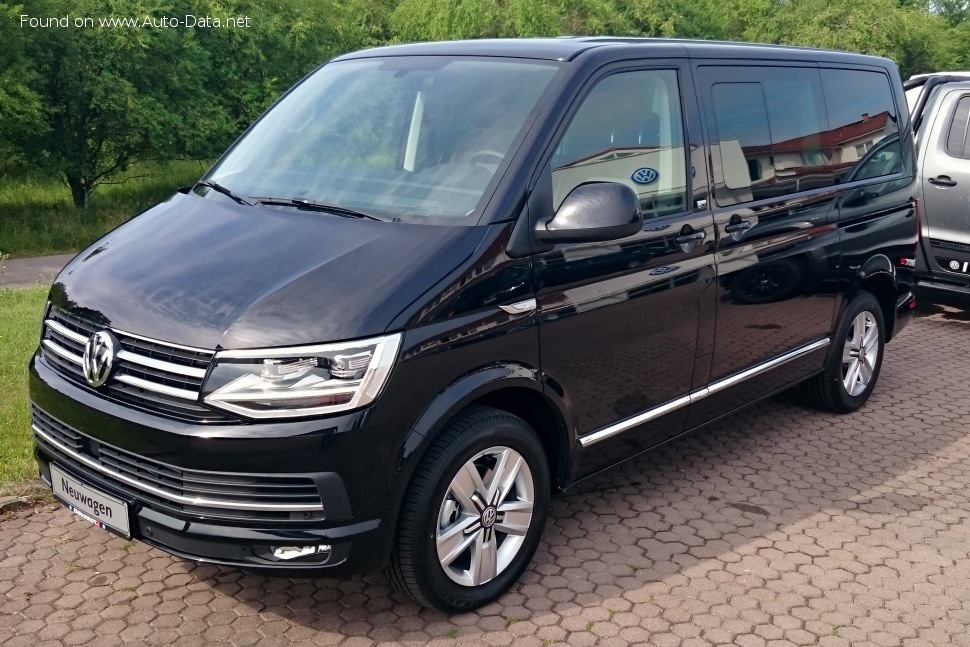
The Volkswagen Multivan (T6) 2.0 TSI (150 Hp) represents the sixth generation of Volkswagen’s highly regarded Transporter series, a lineage renowned globally for its versatility, practicality, and robust engineering. Introduced in 2015, the T6 Multivan continued the tradition of offering a sophisticated and spacious people mover, designed to cater to both family and business needs. While not a primary fixture in the North American market, where Volkswagen’s minivan offerings have historically differed, the Multivan (T6) established itself as a benchmark in Europe and other international markets for its blend of comfort, utility, and car-like driving dynamics. This particular variant, powered by a 2.0-liter TSI gasoline engine delivering 150 horsepower, positioned itself as a balanced option within the T6 lineup, offering a compelling mix of performance and efficiency for its segment.
Building upon the success of its predecessors, the T6 generation brought refined styling, updated technology, and enhanced powertrains. The Multivan variant specifically focused on passenger comfort and modular interior configurations, distinguishing it from the more cargo-oriented Transporter or camper-focused California models. Its robust architecture and thoughtful design made it a popular choice for large families, shuttle services, and adventurous individuals seeking a capable and comfortable vehicle for long journeys.
Engine and Performance of the Volkswagen Multivan (T6) 2.0 TSI (150 Hp)
At the heart of this particular Volkswagen Multivan (T6) 2.0 TSI (150 Hp) is a modern, turbocharged 2.0-liter (1984 cm³) inline four-cylinder gasoline engine, designated with the code CJKB. This powerplant leverages Volkswagen’s renowned TSI technology, featuring direct fuel injection and a turbocharger with an intercooler to optimize power delivery and fuel efficiency. The engine produces a respectable 150 horsepower, available across a broad rev range from 3750 to 6000 rpm, ensuring flexible performance in various driving conditions.
Torque output is equally impressive for a vehicle of its size, reaching 206.52 lb.-ft. (280 Nm) available from a low 1500 rpm all the way up to 3750 rpm. This wide torque band is crucial for a people mover like the Multivan, providing strong pulling power for acceleration and effortless cruising, even when fully loaded or towing. Power is sent to the front wheels through a precise 6-speed manual transmission, offering engaging driver control and contributing to the vehicle’s overall efficiency.
In terms of acceleration, the Multivan (T6) 2.0 TSI (150 Hp) can reach 60 mph from a standstill in an estimated 11.9 seconds, with 0-62 mph (0-100 km/h) taking 12.5 seconds. Its top speed is rated at 113.09 mph (182 km/h), which is more than adequate for highway travel. Despite its substantial dimensions and curb weight of 4424.68 lbs., the vehicle manages to deliver reasonable fuel economy, with a combined NEDC rating of 25.6 US mpg (9.2 liters/100 km). Urban consumption stands at 19.1 US mpg, while extra-urban driving can see figures as high as 31.4 US mpg. The engine also incorporates a Start & Stop system, further contributing to fuel savings and reduced emissions, meeting the Euro 6 emission standard with CO2 output of 210 g/km.
Design and Features: Functionality Meets Comfort
The design of the Volkswagen Multivan (T6) is a testament to Volkswagen’s philosophy of functional elegance. As a minivan with five doors and seating for 5 to 7 occupants, its exterior dimensions are substantial yet well-proportioned. Measuring 193.07 inches in length, 74.96 inches in width (90.43 inches including mirrors), and 77.56 inches in height, the Multivan offers an imposing road presence while maximizing interior volume. The 118.11-inch wheelbase ensures a stable ride and contributes significantly to the generous cabin space.
Inside, the Multivan truly shines with its highly adaptable interior. The seating configurations are a key highlight, allowing for easy re-arrangement or removal of seats to create a vast cargo area. With a minimum trunk space of 204.83 cubic feet (5800 liters), it can swallow an impressive amount of luggage or equipment, making it ideal for various transport needs. The cabin is designed with practicality in mind, featuring durable materials and intuitive controls, characteristic of Volkswagen’s commitment to user-friendly design.
Underneath its practical exterior, the Multivan (T6) features a sophisticated chassis designed for comfort and stability. It utilizes an independent MacPherson strut front suspension and a double wishbone rear suspension, a setup that provides a surprisingly car-like ride quality for a vehicle of its size. Braking is handled by ventilated discs at the front and solid discs at the rear, ensuring strong stopping power, complemented by an Anti-lock Braking System (ABS) for enhanced safety. The electric power steering system provides precise control and ease of maneuvering, even with a minimum turning circle of 39.04 feet. Various tire sizes from 215/65 R16 to 255/45 R18 were available, allowing for customization based on performance or comfort preferences.
Technical Specifications
| Category | Specification | Value |
|---|---|---|
| General Information | ||
| Brand | Volkswagen | |
| Model | Multivan | |
| Generation | Multivan (T6) | |
| Type (Engine) | 2.0 TSI (150 Hp) | |
| Start of Production | 2015 year | |
| End of Production | 2018 year | |
| Powertrain Architecture | Internal Combustion engine | |
| Body Type | Minivan | |
| Seats | 5-7 | |
| Doors | 5 | |
| Performance Specs | ||
| Fuel Consumption (Urban, NEDC) | 19.1 US mpg (12.3 l/100 km) | |
| Fuel Consumption (Extra Urban, NEDC) | 31.4 US mpg (7.5 l/100 km) | |
| Fuel Consumption (Combined, NEDC) | 25.6 US mpg (9.2 l/100 km) | |
| CO2 Emissions (NEDC) | 210 g/km | |
| Fuel Type | Petrol (Gasoline) | |
| Acceleration 0 – 60 mph | 11.9 sec | |
| Acceleration 0 – 62 mph (0 – 100 km/h) | 12.5 sec | |
| Maximum Speed | 113.09 mph (182 km/h) | |
| Emission Standard | Euro 6 | |
| Weight-to-Power Ratio | 13.4 kg/Hp, 74.7 Hp/tonne | |
| Weight-to-Torque Ratio | 7.2 kg/Nm, 139.5 Nm/tonne | |
| Engine Specs | ||
| Power | 150 Hp @ 3750-6000 rpm | |
| Power per Liter | 75.6 Hp/l | |
| Torque | 206.52 lb.-ft. @ 1500-3750 rpm (280 Nm) | |
| Engine Layout | Front, Transverse | |
| Engine Model/Code | CJKB | |
| Engine Displacement | 2.0 liters (1984 cm³, 121.07 cu. in.) | |
| Number of Cylinders | 4 | |
| Engine Configuration | Inline | |
| Number of Valves per Cylinder | 4 | |
| Fuel Injection System | Direct injection | |
| Engine Aspiration | Turbocharger, Intercooler | |
| Engine Oil Capacity | 6.02 US qt (5.7 l) | |
| Engine Systems | Start & Stop System | |
| Space, Volume and Weights | ||
| Kerb Weight | 4424.68 lbs. (2007 kg) | |
| Max. Weight (GVWR) | 6613.87 lbs. (3000 kg) | |
| Max Load | 2189.19 lbs. (993 kg) | |
| Trunk (Boot) Space – Minimum | 204.83 cu. ft. (5800 l) | |
| Fuel Tank Capacity | 21.13 US gal (80 l) | |
| Max. Roof Load | 220.46 lbs. (100 kg) | |
| Permitted Trailer Load with Brakes (12%) | 5511.56 lbs. (2500 kg) | |
| Permitted Trailer Load without Brakes | 1653.47 lbs. (750 kg) | |
| Permitted Towbar Download | 220.46 lbs. (100 kg) | |
| Dimensions | ||
| Length | 193.07 in. (4904 mm) | |
| Width | 74.96 in. (1904 mm) | |
| Width including Mirrors | 90.43 in. (2297 mm) | |
| Height | 77.56 in. (1970 mm) | |
| Wheelbase | 118.11 in. (3000 mm) | |
| Ride Height (Ground Clearance) | 7.6 in. (193 mm) | |
| Minimum Turning Circle (Turning Diameter) | 39.04 ft. (11.9 m) | |
| Approach Angle | 21.8° | |
| Departure Angle | 16.7° | |
| Ramp-over (Brakeover) Angle | 14.3° | |
| Drivetrain, Brakes and Suspension Specs | ||
| Drivetrain Architecture | The Internal combustion engine (ICE) drives the front wheels of the vehicle. | |
| Drive Wheel | Front-wheel drive | |
| Number of Gears and Type of Gearbox | 6 gears, manual transmission | |
| Front Suspension | Independent type McPherson | |
| Rear Suspension | Double wishbone | |
| Front Brakes | Ventilated discs | |
| Rear Brakes | Disc | |
| Assisting Systems | ABS (Anti-lock braking system) | |
| Steering Type | Steering rack and pinion | |
| Power Steering | Electric Steering | |
| Tires Size | 215/65 R16; 215/60 R17; 235/55 R17; 255/45 R18 | |
| Wheel Rims Size | 16; 17; 18 | |
Legacy and Market Impact in the Van Segment
The Volkswagen Multivan (T6) 2.0 TSI (150 Hp) continues the illustrious legacy of the Volkswagen Transporter family, a lineage that dates back to the iconic T1 “Bus” of the 1950s. This heritage imbues the Multivan with a reputation for reliability, exceptional build quality, and enduring utility that few competitors can match. In its primary markets of Europe and parts of Asia, the T6 Multivan is not merely a vehicle; it’s a statement of versatility and premium family or business transport. It carved out a niche as a more refined and car-like alternative to traditional large vans, offering a blend of passenger comfort, advanced features, and a driving experience that belied its size.
Its competitors in the European market typically include premium people movers such as the Mercedes-Benz V-Class, and more utility-focused vans like the Ford Transit Custom, Opel Vivaro, and Renault Trafic. However, the Multivan distinguishes itself with its unique blend of passenger-car refinement and commercial vehicle robustness, often seen as a more upscale offering than its direct rivals. Its flexible seating arrangements, robust engine options, and available all-wheel-drive (though not on this specific FWD variant) made it suitable for a wide array of uses, from executive shuttles and family road trips to adventure vehicles for outdoor enthusiasts.
The decision not to market the Multivan extensively in the United States reflects differing market demands, where large minivans like the Chrysler Pacifica or Honda Odyssey, and increasingly SUVs, dominate the family vehicle segment. However, its impact on the global van segment is undeniable. The T6 Multivan, including the 2.0 TSI (150 Hp) variant, solidified Volkswagen’s position as a leader in the multi-purpose vehicle category, demonstrating that a highly practical vehicle could also be comfortable, efficient, and enjoyable to drive. It maintained its strong resale value and cult following, a testament to its enduring appeal and the quality inherent in the Volkswagen Transporter brand. The T6’s production run from 2015 to 2018 paved the way for the subsequent T6.1 refresh and the all-new T7 Multivan, carrying forward a legacy of innovation and utility that continues to define its segment.