
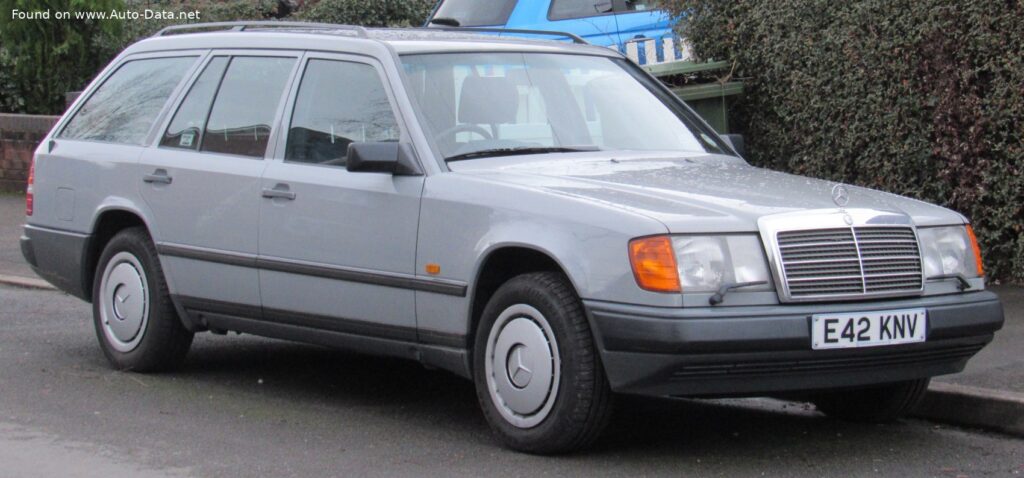
The Mercedes-Benz S124 300 TE CAT (180 Hp): A Paragon of German Engineering
The Mercedes-Benz S124 300 TE CAT (180 Hp) represents a significant chapter in the history of the German luxury automaker, embodying the brand’s commitment to engineering excellence, durability, and sophisticated design. As part of the iconic W124 generation, often hailed as one of Mercedes-Benz’s finest creations, the S124 specifically denotes the station wagon (estate) variant. Produced from May 1985 to August 1989, this particular model, the 300 TE CAT, was a premium offering in the executive segment, celebrated for its robust inline-six engine, spacious interior, and unparalleled build quality. While the W124 series enjoyed global success, the S124 wagon was particularly popular in European markets, where its blend of luxury, practicality, and formidable road presence resonated deeply with discerning buyers seeking a versatile yet prestigious vehicle. The “CAT” designation indicates the inclusion of a catalytic converter, reflecting the era’s growing emphasis on environmental considerations and stricter emissions standards.
Engine and Performance: Powering the Mercedes-Benz S124 300 TE CAT
At the heart of the Mercedes-Benz S124 300 TE CAT lies the renowned M103 E 30 / 103.983 engine, a naturally aspirated 3.0-liter (2962 cm3 or 180.75 cu. in.) inline-six gasoline unit. This powertrain was a hallmark of Mercedes-Benz engineering during the 1980s, known for its smooth operation, reliability, and robust power delivery. The engine utilized a Multi-port manifold injection system and a SOHC (Single Overhead Camshaft) valvetrain with two valves per cylinder, a configuration that prioritized durability and a broad torque curve over peak horsepower figures.
The 300 TE CAT produced a healthy 180 horsepower at 5700 rpm, translating to a power-per-liter output of 60.8 horsepower per liter. Torque was equally impressive for its time, peaking at 255 Nm (188.08 lb.-ft.) at 4400 rpm. This substantial torque, coupled with the engine’s longitudinal front layout and rear-wheel-drive architecture, provided excellent tractability and a refined driving experience. Power was channeled through a precise 5-speed manual transmission, offering drivers an engaging connection to the vehicle’s capabilities.
Performance figures for the S124 300 TE CAT were respectable for a luxury station wagon of its era. It could accelerate from 0 to 60 mph in a swift 8.0 seconds (0-100 km/h in 8.4 seconds), allowing it to keep pace with many contemporary sedans. The top speed was rated at 131.73 mph (212 km/h), demonstrating its Autobahn-cruising prowess. Despite its substantial curb weight of 3240.8 lbs (1470 kg), the vehicle maintained a commendable weight-to-power ratio of 8.2 kg/Hp, or 122.4 Hp per tonne, underscoring its well-balanced engineering. Fuel economy, while not a primary selling point for a luxury vehicle of this class, was reasonable for the period, with an extra-urban consumption of approximately 30.5 US mpg.
Design and Features: Form, Function, and Enduring Style
The Mercedes-Benz S124, with its station wagon body style, masterfully combined elegant aesthetics with unparalleled practicality. Designed by Bruno Sacco, the W124 series is celebrated for its timeless, understated lines that exude sophistication without succumbing to passing trends. The S124 wagon, with its five doors and seating for five, offered exceptional versatility, making it a favorite among families and professionals alike. Its generous dimensions, with a length of 187.6 inches (4765 mm), width of 68.5 inches (1740 mm), and height of 58.66 inches (1490 mm), translated into a capacious interior and a substantial cargo area. The 110.24-inch (2800 mm) wheelbase contributed to a stable ride and ample rear legroom.
Inside, the S124 300 TE CAT upheld Mercedes-Benz’s reputation for meticulous craftsmanship and ergonomic design. High-quality materials, precise fit-and-finish, and a logical layout characterized the cabin. Features typical for a luxury car of the late 1980s included power windows, central locking, and an advanced climate control system. Safety, a paramount concern for Mercedes-Benz, was addressed through a robust body structure, anti-lock brakes (ABS, likely optional or standard on this trim), and a sophisticated suspension system. The independent multi-link rear suspension, a pioneering design for its time, offered superior ride comfort and handling stability, even when the vehicle was fully laden. Front suspension utilized a wishbone setup, complementing the rear for a balanced and controlled ride. The braking system, featuring ventilated discs at the front and solid discs at the rear, provided confident stopping power. Power steering, of the cone worm with recirculation balls type and hydraulic assistance, offered precise control and ease of maneuverability. The vehicle rode on 195/65 R15 tires mounted on 6.5J x 15 wheel rims, providing a comfortable and planted stance.
Technical Specifications: Mercedes-Benz S124 300 TE CAT (180 Hp)
| Category | Specification |
|---|---|
| General Information | |
| Brand | Mercedes-Benz |
| Model | W124 |
| Generation | S124 |
| Type (Engine) | 300 TE CAT (180 Hp) |
| Start of Production | May, 1985 |
| End of Production | August, 1989 |
| Powertrain Architecture | Internal Combustion Engine |
| Body Type | Station wagon (estate) |
| Seats | 5 |
| Doors | 5 |
| Performance Specs | |
| Fuel Consumption (Urban) | 14.2 l/100 km (16.6 US mpg) |
| Fuel Consumption (Extra Urban) | 7.7 l/100 km (30.5 US mpg) |
| Fuel Type | Petrol (Gasoline) |
| Acceleration 0 – 60 mph | 8.0 sec |
| Acceleration 0 – 100 km/h | 8.4 sec |
| Maximum Speed | 212 km/h (131.73 mph) |
| Weight-to-Power Ratio | 8.2 kg/Hp (122.4 Hp/tonne) |
| Weight-to-Torque Ratio | 5.8 kg/Nm (173.5 Nm/tonne) |
| Engine Specs | |
| Power | 180 Hp @ 5700 rpm |
| Power per Liter | 60.8 Hp/l |
| Torque | 255 Nm @ 4400 rpm (188.08 lb.-ft. @ 4400 rpm) |
| Engine Layout | Front, Longitudinal |
| Engine Model/Code | M 103 E 30 / 103.983 |
| Engine Displacement | 2962 cm3 (3.0 l, 180.75 cu. in.) |
| Number of Cylinders | 6 |
| Engine Configuration | Inline |
| Cylinder Bore | 88.5 mm (3.48 in.) |
| Piston Stroke | 80.25 mm (3.16 in.) |
| Compression Ratio | 9.2:1 |
| Valves per Cylinder | 2 |
| Fuel Injection System | Multi-port manifold injection |
| Engine Aspiration | Naturally aspirated engine |
| Valvetrain | SOHC |
| Engine Oil Capacity | 6.5 l (6.87 US qt) |
| Coolant Capacity | 9 l (9.51 US qt) |
| Space, Volume, and Weights | |
| Kerb Weight | 1470 kg (3240.8 lbs) |
| Max. Weight | 2090 kg (4607.66 lbs) |
| Max. Load | 620 kg (1366.87 lbs) |
| Fuel Tank Capacity | 72 l (19.02 US gal) |
| Dimensions | |
| Length | 4765 mm (187.6 in.) |
| Width | 1740 mm (68.5 in.) |
| Height | 1490 mm (58.66 in.) |
| Wheelbase | 2800 mm (110.24 in.) |
| Front Track | 1497 mm (58.94 in.) |
| Rear Track | 1488 mm (58.58 in.) |
| Drivetrain, Brakes, and Suspension Specs | |
| Drivetrain Architecture | Internal Combustion Engine (ICE) drives the rear wheels |
| Drive Wheel | Rear wheel drive |
| Number of Gears & Gearbox Type | 5 gears, manual transmission |
| Front Suspension | Wishbone |
| Rear Suspension | Independent multi-link suspension |
| Front Brakes | Ventilated discs |
| Rear Brakes | Disc |
| Steering Type | Cone worm with recirculation balls |
| Power Steering | Hydraulic Steering |
| Tires Size (Front/Rear) | 195/65 R15 |
| Wheel Rims Size (Front/Rear) | 6.5J x 15 |
Legacy and Market Impact of the S124 300 TE CAT
The Mercedes-Benz W124 series, and particularly its S124 wagon variant, holds a revered place in automotive history. It is widely regarded as the zenith of Mercedes-Benz’s “over-engineering” philosophy, where durability, longevity, and meticulous construction were prioritized above all else. This reputation for robustness meant that many W124s, including the 300 TE CAT, remained on the road for decades, accumulating hundreds of thousands of miles with proper maintenance. This inherent reliability contributed significantly to Mercedes-Benz’s brand image as a producer of dependable, high-quality vehicles.
In its primary European markets, the S124 300 TE CAT competed against other luxury executive wagons such as the BMW 5 Series Touring (E34 generation) and the Audi 100 Avant (C3/C4 generations). While each competitor offered its own blend of performance and luxury, the Mercedes-Benz S124 stood out for its unique combination of tank-like build quality, a supremely comfortable ride, and a timeless design that seemed to defy aging. It was often seen as the more conservative, yet ultimately more enduring, choice.
The historical significance of the S124 300 TE CAT extends beyond its initial sales success. Today, it is a highly sought-after classic, particularly well-preserved examples. Its status as a “modern classic” is cemented by its reputation for mechanical integrity, ease of service (compared to later, more complex models), and a driving experience that harks back to an era of uncompromised automotive engineering. Enthusiasts and collectors appreciate the S124 for its ability to still function as a practical, comfortable daily driver, while simultaneously offering a tangible connection to Mercedes-Benz’s golden age. The 300 TE CAT, with its potent inline-six and versatile wagon body, encapsulates the perfect balance of performance, luxury, and utility that defined the W124 generation, leaving an indelible mark on the automotive landscape.
