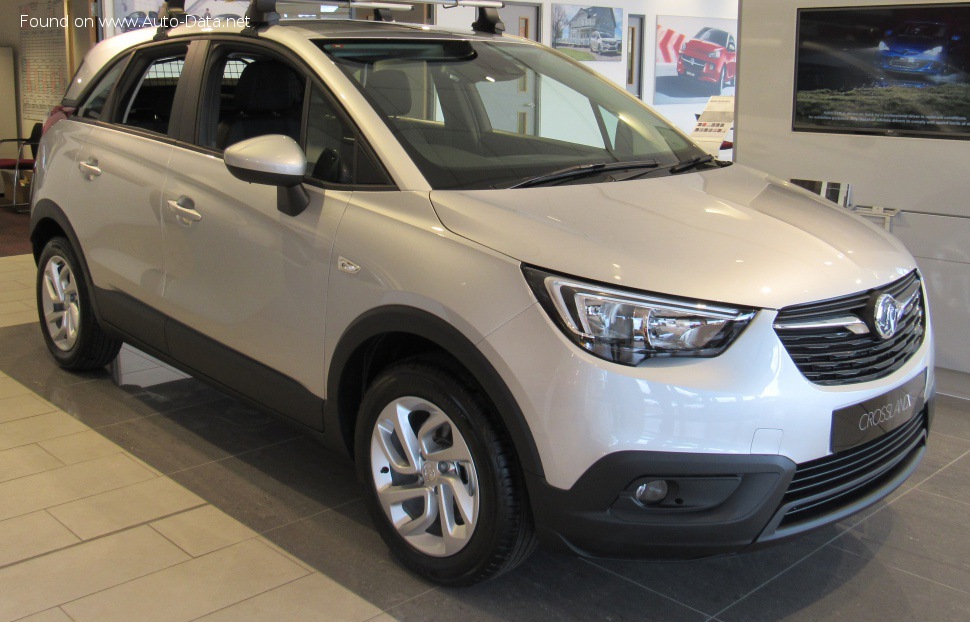
Introduction to the Vauxhall Crossland X 1.2 (83 Hp)
The Vauxhall Crossland X 1.2 (83 Hp) represents a significant entry in the highly competitive compact crossover SUV segment, primarily serving the United Kingdom and broader European markets. Introduced in June 2019 as part of the Crossland X generation, this model was designed to appeal to buyers seeking practicality, urban maneuverability, and a higher driving position without the bulk of a larger SUV. As a product of Vauxhall, the British arm of the German Opel brand (which itself is part of the multinational Stellantis automotive group, formerly PSA Group), the Crossland X shares its underlying architecture with other successful European compact vehicles, reflecting a strategic move towards platform rationalization. Production for this specific 1.2-liter, 83 horsepower variant spanned from June 2019 to October 2020, positioning it as a contemporary option during its brief but impactful production run.
The Crossland X was conceived as a replacement for the Meriva mini MPV, signaling a shift in consumer preference from traditional multi-purpose vehicles to the more fashionable crossover body style. This particular iteration, powered by a naturally aspirated 1.2-liter gasoline engine, aimed to offer an accessible entry point into the Crossland X range, balancing performance with fuel efficiency and lower operating costs, making it a pragmatic choice for a wide array of European drivers.
Engine and Performance of the Vauxhall Crossland X
Under the hood, the Vauxhall Crossland X 1.2 (83 Hp) features a compact yet robust powertrain designed for efficiency and everyday usability. The vehicle is propelled by a 1.2-liter (1199 cm3 or 73.17 cu. in.) naturally aspirated inline three-cylinder gasoline engine, designated with the model code D12XE. This engine configuration is strategically placed at the front and transversely mounted, driving the front wheels, which is typical for vehicles in this segment prioritizing interior space and manufacturing simplicity.
The engine delivers a modest but adequate 83 horsepower at 5750 rpm, translating to a power-per-liter output of 69.2 Hp/l. Torque is rated at 87.03 lb.-ft. (118 Nm) available at a relatively low 2750 rpm, which aids in urban drivability and offers decent pull from low speeds. Power is routed through a five-speed manual transmission, a common choice for its direct engagement and efficiency in this class.
In terms of performance, the Crossland X 1.2 (83 Hp) is geared more towards economical daily commuting than outright speed. It achieves 0 to 60 mph in 13.6 seconds, with a maximum speed of 106.25 mph (171 km/h). Fuel efficiency is a strong point, with a combined WLTP rating of 39.2 to 35.6 US mpg (6-6.6 l/100 km), making it a cost-effective option for mileage-conscious drivers. Emissions are kept in check with a CO2 output of 106 g/km and compliance with the stringent Euro 6d emission standard, reflecting its commitment to environmental responsibility. The engine also incorporates a Start & Stop System, further enhancing fuel economy in stop-and-go traffic by automatically shutting off the engine when the vehicle is stationary.
Design and Features of the Crossland X
The Vauxhall Crossland X adopts a distinctive SUV body type, characterized by its elevated stance and practical five-door layout, offering easy access for up to five occupants. Its design language, while clearly Vauxhall, also incorporates elements from its PSA Group lineage, resulting in a contemporary and somewhat rugged aesthetic. The vehicle measures 165.83 inches (4212 mm) in length, 69.49 inches (1765 mm) in width (77.8 inches or 1976 mm including mirrors), and 63.19 inches (1605 mm) in height. These dimensions contribute to its compact footprint, making it adept at navigating crowded city streets and tight parking spaces, while the 102.52-inch (2604 mm) wheelbase ensures a stable ride and adequate interior volume.
Inside, the Crossland X prioritizes functionality and versatility. The five-seat configuration offers comfortable seating, and the cargo area is particularly flexible. Minimum trunk space stands at a generous 14.48 cu. ft. (410 liters), which can be expanded significantly to 44.32 cu. ft. (1255 liters) with the rear seats folded down, making it suitable for hauling groceries, luggage, or even larger items. The design also features a relatively low drag coefficient (Cd) of 0.31, contributing to its fuel efficiency and reduced wind noise at higher speeds.
Key features for this generation include an electric power steering system, offering light and responsive handling, especially beneficial in urban environments. Safety is addressed with standard Anti-lock Braking System (ABS) and disc brakes on both front and rear axles. The suspension setup comprises an independent McPherson strut system with coil springs and an anti-roll bar at the front, paired with a dependent spring suspension at the rear, providing a balanced ride quality. The vehicle can be fitted with 195/60 R16 or 215/50 R17 tires, mounted on 16 or 17-inch wheel rims, respectively, offering a choice between comfort and slightly sportier handling. Its minimum turning circle of 36.78 feet (11.21 meters) further underscores its urban agility.
Technical Specifications
| Category | Specification |
|---|---|
| Brand | Vauxhall |
| Model | Crossland |
| Generation | Crossland X |
| Type (Engine) | 1.2 (83 Hp) |
| Start of Production | June, 2019 |
| End of Production | October, 2020 |
| Powertrain Architecture | Internal Combustion engine |
| Body type | SUV |
| Seats | 5 |
| Doors | 5 |
| Combined Fuel Consumption (WLTP) | 39.2 – 35.6 US mpg (6-6.6 l/100 km) |
| CO2 Emissions (NEDC, WLTP equivalent) | 106 g/km |
| Fuel Type | Petrol (Gasoline) |
| Acceleration 0 – 60 mph | 13.6 sec |
| Maximum Speed | 106.25 mph (171 km/h) |
| Emission Standard | Euro 6d |
| Power | 83 Hp @ 5750 rpm |
| Power per liter | 69.2 Hp/l |
| Torque | 87.03 lb.-ft. (118 Nm) @ 2750 rpm |
| Engine Layout | Front, Transverse |
| Engine Model/Code | D12XE |
| Engine Displacement | 1.2 l (1199 cm3, 73.17 cu. in.) |
| Number of Cylinders | 3 |
| Engine Configuration | Inline |
| Number of Valves per Cylinder | 4 |
| Fuel Injection System | Multi-port manifold injection |
| Engine Aspiration | Naturally aspirated engine |
| Valvetrain | DOHC, VVT |
| Engine Oil Capacity | 3.43 US qt (3.25 l) |
| Coolant Capacity | 5.28 US qt (5 l) |
| Engine Systems | Start & Stop System |
| Max. Weight | 3725.81 lbs. (1690 kg) |
| Trunk (boot) Space – Minimum | 14.48 cu. ft. (410 l) |
| Trunk (boot) Space – Maximum | 44.32 cu. ft. (1255 l) |
| Fuel Tank Capacity | 11.89 US gal (45 l) |
| Permitted Trailer Load with Brakes (12%) | 1433 lbs. (650 kg) |
| Permitted Trailer Load without Brakes | 1234.59 lbs. (560 kg) |
| Length | 165.83 in. (4212 mm) |
| Width | 69.49 in. (1765 mm) |
| Width including Mirrors | 77.8 in. (1976 mm) |
| Height | 63.19 in. (1605 mm) |
| Wheelbase | 102.52 in. (2604 mm) |
| Front Overhang | 35.28 in. (896 mm) |
| Rear Overhang | 28.03 in. (712 mm) |
| Drag Coefficient (Cd) | 0.31 |
| Minimum Turning Circle (Turning Diameter) | 36.78 ft. (11.21 m) |
| Drivetrain Architecture | Internal combustion engine drives the front wheels |
| Drive Wheel | Front wheel drive |
| Number of Gears and Type of Gearbox | 5 gears, manual transmission |
| Front Suspension | Independent, type McPherson with coil spring and anti-roll bar |
| Rear Suspension | Dependent spring suspension |
| Front Brakes | Disc |
| Rear Brakes | Disc |
| Assisting Systems | ABS (Anti-lock braking system) |
| Steering Type | Steering rack and pinion |
| Power Steering | Electric Steering |
| Tires Size | 195/60 R16; 215/50 R17 |
| Wheel Rims Size | 16; 17 |
Legacy and Market Impact of the Vauxhall Crossland X
The Vauxhall Crossland X 1.2 (83 Hp), despite its relatively short production run for this specific variant, played a crucial role in Vauxhall’s strategy to capture a share of the burgeoning compact crossover market in the UK and Europe. It succeeded the Meriva, a model that had seen declining sales as consumer preferences shifted away from traditional MPVs. By adopting the more fashionable SUV styling and higher ground clearance, the Crossland X aimed to offer a more appealing package that resonated with modern buyers seeking versatility and an aspirational image.
In its segment, the Crossland X faced stiff competition from well-established rivals such as the Nissan Juke, Renault Captur, Hyundai Kona, and its platform-mate, the Peugeot 2008. What set the Crossland X apart, especially this entry-level 1.2-liter variant, was its focus on practicality, affordability, and efficient urban performance. It was often lauded for its spacious interior for its class, particularly the generous trunk volume, and its comfortable ride quality, making it an attractive option for small families or individuals who frequently needed extra cargo capacity.
Its mechanical underpinnings, shared with other PSA Group vehicles, ensured a degree of reliability and access to a wide network of parts and service. While the 83 Hp engine was not designed for exhilarating performance, it delivered adequate power for city driving and highway cruising, combined with commendable fuel economy and low emissions, which were significant selling points in European markets with strict environmental regulations and high fuel costs. The Crossland X was positioned as a sensible, no-frills option that delivered on its promise of practicality and ease of ownership.
The transition from the Crossland X to simply the Crossland in late 2020 (along with a facelift and updated powertrain options) indicated Vauxhall’s commitment to the model line and its continued relevance in the market. The 1.2 (83 Hp) variant, during its time, served as an accessible and economical gateway to the Crossland X range, helping Vauxhall maintain its presence in a segment that continues to be a cornerstone of automotive sales across Europe. Its legacy is one of a pragmatic, well-packaged urban crossover that successfully navigated the evolving demands of the European automotive landscape.