The Opel Rekord E (facelift 1982): A European Mainstay of the Mid-1980s
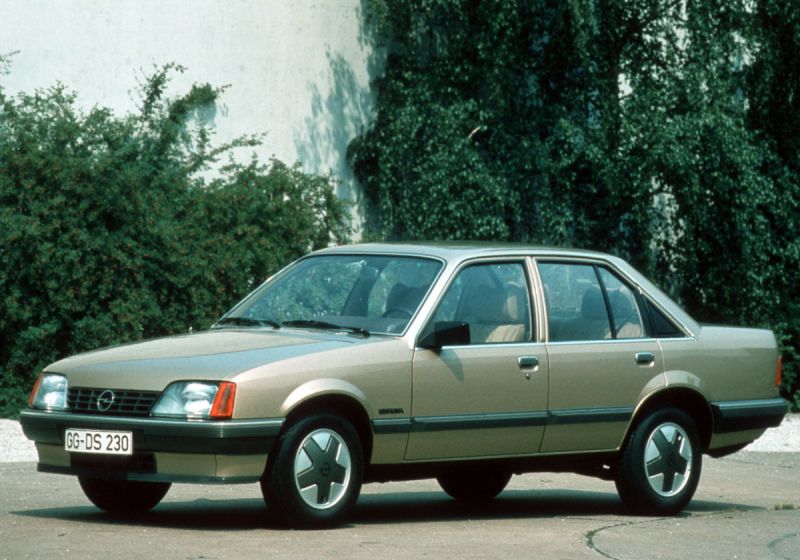
The Opel Rekord E (facelift 1982) represents a significant iteration of a long-running and highly successful executive car series from German automaker Opel, a subsidiary of General Motors. While never officially imported to the United States, the Rekord was a ubiquitous sight on European roads, serving as a reliable family sedan, fleet vehicle, and even a preferred choice for taxi operators for decades. The E-generation, produced from 1977 to 1986, marked a pivotal period for Opel, introducing more aerodynamic styling and refined engineering. The 1982 facelift, specifically, brought subtle yet impactful updates that kept the Rekord competitive in the rapidly evolving European mid-size segment of the early to mid-1980s. This particular variant, the 1.8 S with an automatic transmission, epitomized the comfortable and practical attributes that made the Rekord a household name across the continent.
Engine & Performance: The Opel Rekord E (facelift 1982) 1.8 S Powertrain
At the heart of the Opel Rekord E (facelift 1982) 1.8 S was Opel’s robust 1.8-liter (1796 cm3 or 109.6 cu. in.) inline-four engine, designated with the code 18S. This naturally aspirated unit, utilizing a carburetor fuel injection system and a Single Overhead Camshaft (SOHC) valvetrain with two valves per cylinder, was engineered for durability and dependable performance rather than outright speed. It produced a respectable 90 horsepower at 5400 rpm, translating to a power-per-liter figure of 50.1 Hp/l. Torque output stood at 143 Nm (105.47 lb.-ft.), available across a broad and usable band from 3000 to 3400 rpm, making it well-suited for everyday driving conditions. The engine featured a cylinder bore of 3.34 inches and a piston stroke of 3.13 inches, with a compression ratio of 9.2:1.
Mated to this engine in the specified variant was a 3-speed automatic transmission, a common offering for those seeking driving convenience in the era. While this automatic gearbox provided smooth shifts, it did contribute to a more leisurely acceleration profile compared to manual transmission counterparts. The Rekord 1.8 S Automatic could accelerate from 0 to 60 mph in a calculated 14.7 seconds, reaching a maximum speed of 103.77 mph. These figures were considered adequate for a family sedan of its time, prioritizing comfort and ease of use over sporty dynamics. Fuel economy, a growing concern in the 1980s, was rated at 27 US mpg (8.7 l/100 km) combined, a reasonable figure for a carbureted, rear-wheel-drive vehicle of its size. The engine required 3.96 US quarts of oil, and the cooling system held 6.34 US quarts of coolant, indicating a straightforward and maintainable mechanical setup.
Design & Features: Form and Function of the Opel Rekord E Sedan
The Opel Rekord E (facelift 1982) retained the classic sedan body type, offering four doors and comfortable seating for five occupants. Its design ethos was one of understated elegance and practicality. The 1982 facelift introduced minor stylistic revisions, including a redesigned front grille and updated lighting elements, which gave the Rekord a more contemporary look without straying from its established, conservative appeal. With a length of 183.15 inches, a width of 67.95 inches, and a height of 55.91 inches, the Rekord E was a substantial vehicle for its class, providing ample interior space and a commanding road presence. The wheelbase measured 105.04 inches, contributing to a stable and comfortable ride.
Inside, the Rekord prioritized functionality and durability. Materials were chosen for their robustness and ease of cleaning, catering to its role as a workhorse and family vehicle. The trunk space was generous, offering a minimum of 17.3 cu. ft. (490 liters), sufficient for family vacations or commercial use. The fuel tank capacity of 17.17 US gallons (65 liters) provided a respectable cruising range. The vehicle’s kerb weight stood at 2513.27 lbs. (1140 kg), with a maximum gross weight of 3648.65 lbs. (1655 kg), allowing for a substantial maximum load of 1135.38 lbs. (515 kg). Furthermore, it was capable of towing a permitted trailer load with brakes of 2866.01 lbs. (1300 kg), highlighting its utility.
From a chassis perspective, the Rekord E featured a traditional rear-wheel-drive architecture, a hallmark of Opel’s larger models for decades. This setup was favored for its predictable handling characteristics and robustness. The front brakes were ventilated discs, offering effective stopping power, while the rear utilized drum brakes, a common configuration for mid-size cars of the period. Its minimum turning circle of 35.43 feet (10.8 meters) made it reasonably maneuverable for its size. The drag coefficient (Cd) of 0.36 was competitive for a sedan in the early 1980s, reflecting Opel’s efforts in aerodynamic efficiency.
Technical Specifications
| Category | Specification |
|---|---|
| Brand | Opel |
| Model | Rekord E (facelift 1982) |
| Type | 1.8 S (90 Hp) Automatic |
| Production Start | September, 1982 |
| Production End | August, 1986 |
| Body Type | Sedan |
| Seats | 5 |
| Doors | 4 |
| Fuel Type | Petrol (Gasoline) |
| Fuel Consumption (Combined) | 27 US mpg (8.7 l/100 km) |
| Acceleration 0-60 mph | 14.7 sec |
| Maximum Speed | 103.77 mph (167 km/h) |
| Power | 90 Hp @ 5400 rpm |
| Torque | 105.47 lb.-ft. (143 Nm) @ 3000-3400 rpm |
| Engine Displacement | 1.8 liters (1796 cm3 / 109.6 cu. in.) |
| Number of Cylinders | 4, Inline |
| Valvetrain | SOHC |
| Fuel Injection System | Carburetor |
| Transmission | 3 gears, Automatic |
| Drivetrain | Rear-wheel drive |
| Front Brakes | Ventilated discs |
| Rear Brakes | Drum |
| Kerb Weight | 2513.27 lbs. (1140 kg) |
| Max. Weight | 3648.65 lbs. (1655 kg) |
| Trunk Space (Minimum) | 17.3 cu. ft. (490 l) |
| Fuel Tank Capacity | 17.17 US gal (65 l) |
| Length | 183.15 in. (4652 mm) |
| Width | 67.95 in. (1726 mm) |
| Height | 55.91 in. (1420 mm) |
| Wheelbase | 105.04 in. (2668 mm) |
| Front Track | 56.5 in. (1435 mm) |
| Rear Track | 55.59 in. (1412 mm) |
| Ride Height | 5.51 in. (140 mm) |
| Drag Coefficient (Cd) | 0.36 |
| Minimum Turning Circle | 35.43 ft. (10.8 m) |
Legacy & Market Impact of the Opel Rekord E (facelift 1982)
The Opel Rekord E (facelift 1982), particularly in its 1.8 S Automatic guise, cemented its reputation as a highly dependable and practical vehicle in the fiercely competitive European market. For decades, the Rekord line was Opel’s answer to the Ford Taunus/Sierra and, to some extent, even aimed at the lower echelons of premium offerings like the BMW 3-Series and Mercedes-Benz 190E, albeit at a more accessible price point. Its primary competitors in the mid-1980s included the Ford Sierra, the Volkswagen Passat, and various models from French and Italian manufacturers. The Rekord distinguished itself with its robust build quality, spacious interior, and straightforward mechanicals, which translated into lower maintenance costs.
The facelifted E-generation continued the Rekord’s legacy as a workhorse. Its rear-wheel-drive layout, while becoming less common in mainstream sedans towards the end of the 1980s, was appreciated by many for its traditional driving feel and durability, especially under heavy loads or when towing. The car’s strong sales figures throughout its production run underscore its popularity and the trust consumers placed in the Opel brand. It was a common sight as a company car, a family hauler, and even saw extensive use in public services across Europe.
The Rekord E’s impact extended beyond just sales; it represented a transitional period for Opel as the automotive industry moved towards more advanced electronics, front-wheel-drive layouts, and increased aerodynamic efficiency. While the Rekord E embraced some of these changes with its facelift and improved drag coefficient, it remained fundamentally a product of its time, relying on proven, robust engineering. Its eventual replacement by the Opel Omega in 1986 marked the end of the Rekord nameplate, but the Omega largely carried forward the Rekord’s legacy of offering a spacious, comfortable, and reliable executive car for the masses. Today, the Opel Rekord E is remembered as a testament to Opel’s engineering prowess during the era, a classic European sedan that delivered on its promise of practicality and durability for millions of drivers.