The Nissan Skyline VII Coupe (R31) 2.5 R6 24V (180 Hp): A Bridge to Legend
The Nissan Skyline, a name synonymous with performance and innovation in the automotive world, has a rich and storied history spanning many generations. Among them, the seventh-generation Skyline, known by its chassis code R31, holds a distinctive place. Produced from 1985 to 1995, the Nissan Skyline VII Coupe (R31) 2.5 R6 24V (180 Hp) represented a significant evolutionary step for the model, bridging the gap between the more traditional Skylines of the past and the globally renowned, high-performance R32, R33, and R34 generations that would follow. Primarily marketed in Japan, Australia, New Zealand, and South Africa, the R31 was not officially sold in the United States, making it a “forbidden fruit” for American enthusiasts until eligible for import under the 25-year rule.
This particular variant, the 2.5 R6 24V coupe, embodied Nissan’s commitment to combining a sporty driving experience with everyday usability. It was a sophisticated machine for its time, showcasing advanced engine technology and a design language that was both contemporary and recognizably Skyline. While often overshadowed by its more celebrated successors, the R31 laid crucial groundwork for the Skyline’s future dominance in performance car culture, particularly through its introduction of the legendary RB-series engines.
Engine & Performance: The Heart of the Nissan Skyline VII Coupe (R31) 2.5 R6 24V (180 Hp)
At the core of the Nissan Skyline VII Coupe (R31) 2.5 R6 24V (180 Hp) lies a powerplant that would become legendary: a 2.5-liter (2498 cm3 or 152.44 cu. in.) inline-six engine. While the specific engine code is not provided in the data, this configuration strongly indicates one of the early iterations of Nissan’s famed RB-series engines, renowned for their smoothness, durability, and tuning potential. This naturally aspirated unit featured a 24-valve cylinder head (four valves per cylinder), a sophisticated design for the mid-1980s that allowed for improved breathing and higher engine speeds.
This engine delivered a robust 180 horsepower at 6000 rpm, providing a strong power-per-liter figure of 72.1 Hp/l. Torque output stood at 226 Nm (166.69 lb.-ft.) at 5200 rpm, ensuring a responsive driving experience across a broad rev range. Power was sent to the rear wheels via a precise 5-speed manual transmission, a choice that underscored the R31’s driver-focused intentions. This drivetrain architecture, combining a longitudinal front-mounted engine with rear-wheel drive, was a hallmark of the Skyline’s sporting character and provided excellent balance and handling dynamics.
Performance figures for the 2.5 R6 24V coupe were respectable for its era. It boasted a top speed of 215 km/h (133.59 mph), making it a capable performer on the open road. The car’s kerb weight of 2910.1 lbs (1320 kg) resulted in a weight-to-power ratio of 7.3 kg/Hp (136.4 Hp/tonne), indicating a lively and engaging drive. Fuel economy, while not a primary focus for such a vehicle, was rated at approximately 16.8 US mpg in urban conditions and a more efficient 26.1 US mpg for extra-urban driving, thanks to its multi-port manifold injection system, a modern feature for its time.
Design & Features: An Eighties Icon
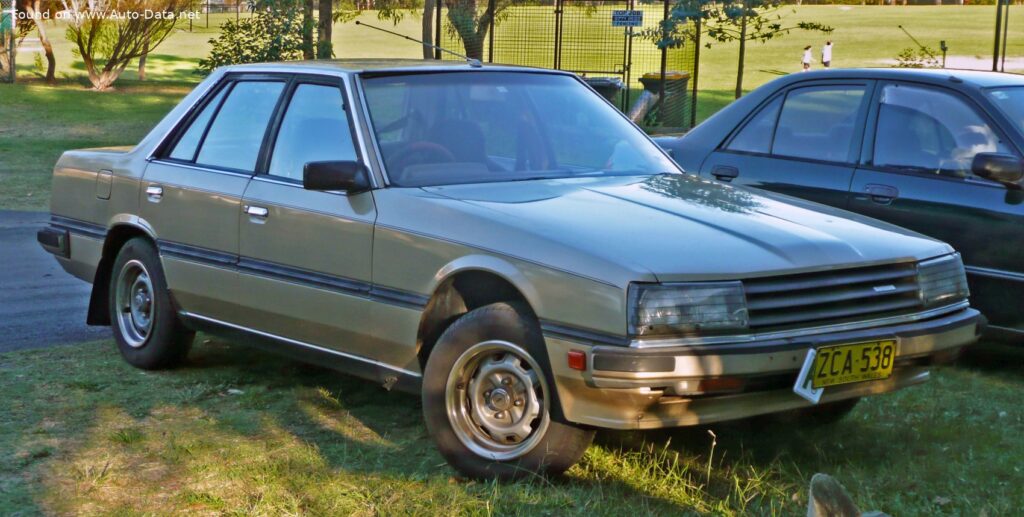
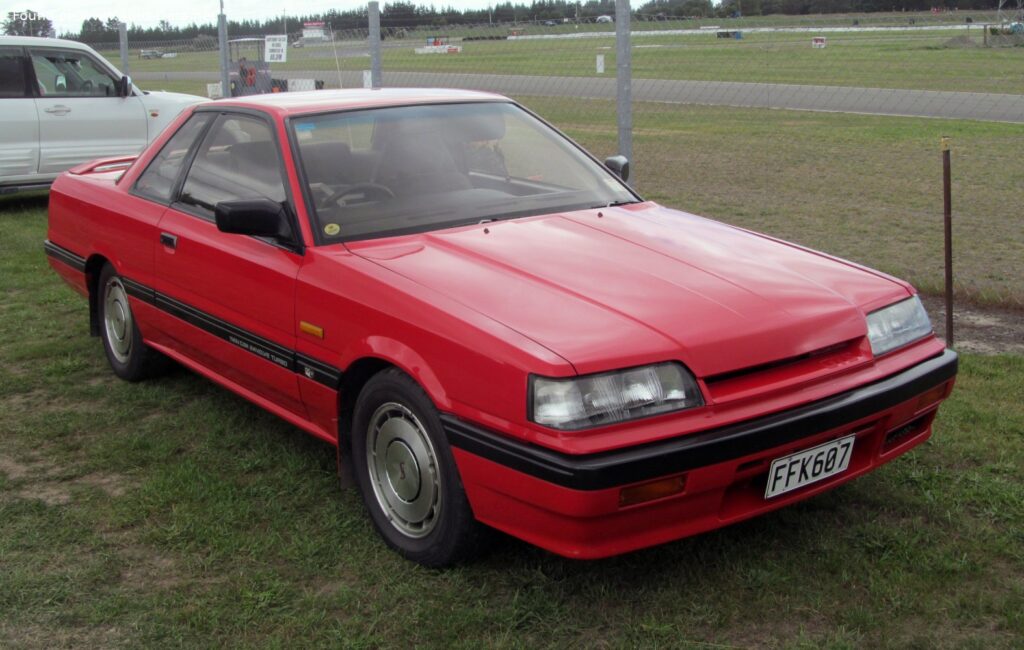
The Nissan Skyline VII Coupe (R31) presented a distinct aesthetic that firmly placed it in the mid-to-late 1980s. Its design language moved away from the sharper, more angular lines of its R30 predecessor, adopting a slightly softer, more aerodynamic, yet still unmistakably “boxy” profile. As a two-door coupe, it offered a sleek and sporty appearance, distinguishing it from its sedan and wagon siblings. The car measured 178.35 inches in length, 63.58 inches in width, and 52.17 inches in height, with a wheelbase of 102.95 inches, giving it a stable and planted stance.
Despite its coupe body, the R31 was designed to accommodate five occupants, making it a practical sports car for its segment. The interior, while driver-centric, offered a comfortable and well-appointed cabin, reflecting Nissan’s commitment to quality. Key features for its time included hydraulic power steering, enhancing maneuverability and driver feedback. In terms of safety, the R31 coupe was equipped with an Anti-lock Braking System (ABS), a significant advanced safety feature for a mass-produced vehicle in the 1980s, providing improved control during emergency braking. The braking system utilized ventilated discs at the front and solid discs at the rear, ensuring strong stopping power. The car rode on 205/60 HR15 tires, providing a good balance of grip and ride comfort.
The R31 generation also famously introduced a range of technological innovations for the Skyline, including the “Pop-up Head-up Display” (HUD) in some variants and the “Auto Spoiler” on the GTS-R, showcasing Nissan’s forward-thinking approach to automotive technology during this era. While not all features were standard on every trim, they demonstrated the R31’s role as a testbed for future Skyline advancements.
Technical Specifications
| Category | Specification |
|---|---|
| Brand | Nissan |
| Model | Skyline VII Coupe (R31) |
| Type (Engine) | 2.5 R6 24V (180 Hp) |
| Production Start | 1985 year |
| Production End | 1995 year |
| Powertrain Architecture | Internal Combustion engine |
| Body type | Coupe |
| Seats | 5 |
| Doors | 2 |
| Performance Specs | |
| Fuel Consumption (Urban) | 14 l/100 km (16.8 US mpg) |
| Fuel Consumption (Extra Urban) | 9 l/100 km (26.1 US mpg) |
| Fuel Type | Petrol (Gasoline) |
| Maximum Speed | 215 km/h (133.59 mph) |
| Weight-to-Power Ratio | 7.3 kg/Hp (136.4 Hp/tonne) |
| Weight-to-Torque Ratio | 5.8 kg/Nm (171.2 Nm/tonne) |
| Engine Specs | |
| Power | 180 Hp @ 6000 rpm |
| Power per Liter | 72.1 Hp/l |
| Torque | 226 Nm @ 5200 rpm (166.69 lb.-ft. @ 5200 rpm) |
| Engine Layout | Front, Longitudinal |
| Engine Displacement | 2498 cm3 (152.44 cu. in.) |
| Number of Cylinders | 6 |
| Engine Configuration | Inline |
| Cylinder Bore | 86 mm (3.39 in.) |
| Piston Stroke | 71.7 mm (2.82 in.) |
| Compression Ratio | 10:1 |
| Valves per Cylinder | 4 |
| Fuel Injection System | Multi-port manifold injection |
| Engine Aspiration | Naturally aspirated engine |
| Space, Volume and Weights | |
| Kerb Weight | 1320 kg (2910.1 lbs) |
| Fuel Tank Capacity | 60 l (15.85 US gal) |
| Dimensions | |
| Length | 4530 mm (178.35 in.) |
| Width | 1615 mm (63.58 in.) |
| Height | 1325 mm (52.17 in.) |
| Wheelbase | 2615 mm (102.95 in.) |
| Front Track | 1460 mm (57.48 in.) |
| Rear Track | 1460 mm (57.48 in.) |
| Drivetrain, Brakes and Suspension Specs | |
| Drivetrain Architecture | Internal combustion engine drives the rear wheels |
| Drive Wheel | Rear wheel drive |
| Gearbox Type | 5 gears, manual transmission |
| Front Brakes | Ventilated discs |
| Rear Brakes | Disc |
| Assisting Systems | ABS (Anti-lock braking system) |
| Power Steering | Hydraulic Steering |
| Tires Size | 205/60 HR15 |
Legacy & Market Impact
The Nissan Skyline VII Coupe (R31) often finds itself in the shadow of its more famous successors, the R32, R33, and R34 GT-Rs, which achieved legendary status through motorsports and popular culture. However, the R31’s contribution to the Skyline lineage is undeniable and significant. It was the first Skyline generation to feature the now-iconic RB-series inline-six engine family, laying the mechanical foundation for the performance legends that followed. The specific 2.5-liter naturally aspirated engine in this coupe variant showcased the potential for smooth, reliable power, even without forced induction.
In its primary markets, particularly Japan and Australia, the R31 was well-received. In Australia, the R31 Skyline GTS-R, a limited-production turbocharged variant, achieved considerable success in Group A touring car racing, further cementing the R31’s performance credentials. Competitors in its segment included other Japanese performance coupes like the Toyota Supra (A70 generation), the Mazda RX-7 (FC3S), and the Honda Prelude, each offering a different flavor of sporty driving. The R31 carved out its niche by offering a blend of traditional Skyline robustness with modern (for the time) technology and a distinct, somewhat understated, aesthetic.
Today, the R31 Skyline is experiencing a resurgence in appreciation, particularly among JDM (Japanese Domestic Market) enthusiasts and collectors. Its robust mechanicals, including the durable RB engine, make it a desirable platform for modification and restoration. Furthermore, its unique 1980s styling sets it apart from both older and newer Skylines, giving it a distinct identity. For American enthusiasts, the R31 has transitioned from an unobtainable dream to a viable import, thanks to the 25-year import rule, allowing a new generation to discover and appreciate this pivotal, yet often overlooked, chapter in the storied history of the Nissan Skyline. It represents a crucial evolutionary step, proving that even a “bridge” generation can possess significant character, innovation, and enduring appeal.