Volkswagen Transporter (T5, facelift 2009) Panel Van: An Overview
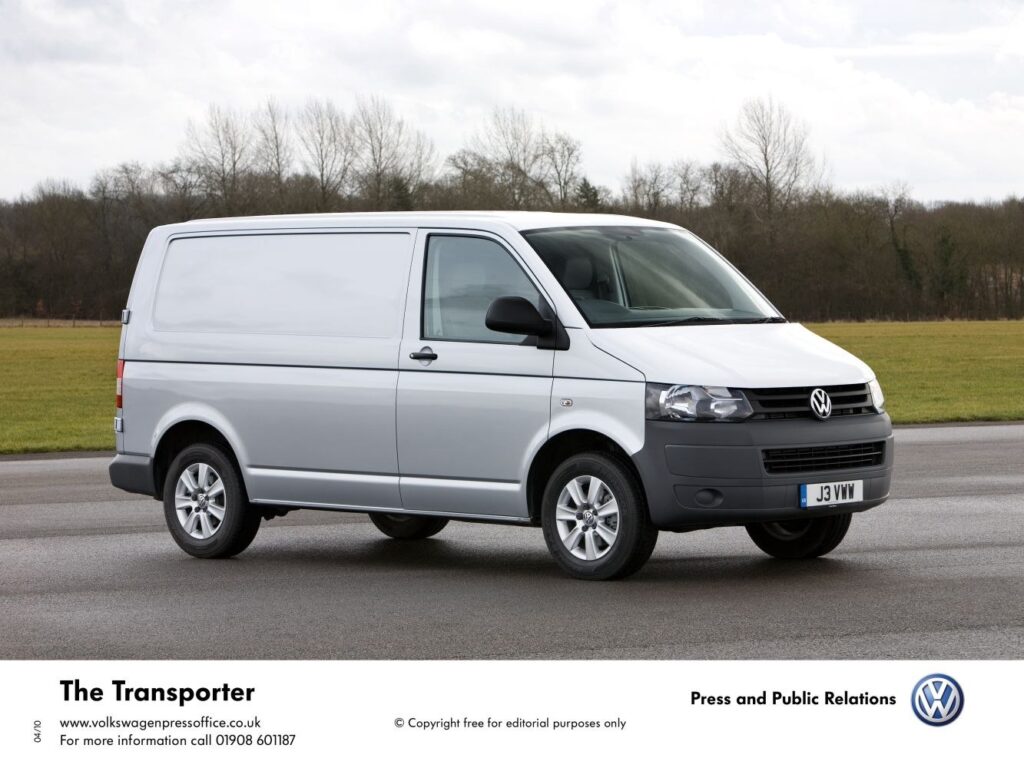
The Volkswagen Transporter (T5, facelift 2009) Panel Van represents a significant iteration of Volkswagen’s iconic light commercial vehicle series, a lineage stretching back to the original Type 2 “Bus.” This particular variant, produced between 2012 and 2015, is a facelifted version of the fifth-generation Transporter (T5), specifically configured as a panel van with a 2.0-liter TDI BlueMotion Technology (BMT) engine, delivering 140 horsepower, paired with a Direct Shift Gearbox (DSG) automatic transmission. Designated as L2H2, it signifies a long-wheelbase and high-roof configuration, maximizing cargo capacity for commercial applications.
While the Volkswagen Transporter series holds an almost legendary status in Europe and other international markets as a versatile workhorse and popular platform for camper conversions, it was not officially sold in the United States during this generation. In the U.S., Volkswagen’s commercial vehicle offerings have historically been different, with larger vans like the Mercedes-Benz Sprinter (rebadged as a Freightliner or Dodge Sprinter) or domestic full-size vans dominating the market. Nonetheless, understanding the T5 facelift’s engineering and market role provides valuable insight into global automotive trends and Volkswagen’s prowess in the light commercial vehicle segment. This model combined robust utility with advanced powertrain technology, setting a benchmark for efficiency and driveability in its class.
Engine and Performance: The 2.0 TDI BlueMotion Technology in the Volkswagen Transporter (T5, facelift 2009) Panel Van
At the heart of this particular Volkswagen Transporter (T5, facelift 2009) Panel Van is a sophisticated 2.0-liter (1968 cm3, or 120.09 cu. in.) inline-four turbo diesel engine, identified by the EA189 / CAAC engine code. This powerplant is a testament to Volkswagen’s commitment to diesel efficiency and performance, featuring a double overhead camshaft (DOHC) valvetrain with 4 valves per cylinder, a common rail direct fuel injection system, and boosted by a turbocharger with an intercooler. This configuration allows the engine to produce a respectable 140 horsepower at 3500 rpm, translating to a power output of 71.1 horsepower per liter.
More critically for a commercial vehicle, the engine generates a substantial 250.77 lb.-ft. (340 Nm) of torque, available across a broad and usable range from 1750 to 2500 rpm. This ample torque at low engine speeds is crucial for hauling heavy loads and providing confident acceleration even when fully laden. Power is sent to the front wheels through an advanced 7-speed DSG automatic transmission. This dual-clutch gearbox is renowned for its rapid, smooth shifts and contributes significantly to both the vehicle’s fuel efficiency and driving comfort, a notable upgrade over traditional manual or torque-converter automatics in commercial vans of the era.
Performance figures reflect its utilitarian purpose rather than outright speed. The L2H2 variant can accelerate from 0 to 60 mph in approximately 12 seconds, with a maximum speed of 103.15 mph (166 km/h). However, its true strength lies in its fuel economy, especially thanks to Volkswagen’s BlueMotion Technology (BMT). This package includes a Start & Stop system and a particulate filter, optimizing fuel consumption and reducing emissions. The combined fuel economy for this model is impressive for a vehicle of its size and capacity, ranging from 31.8 to 30.5 US mpg (7.4-7.7 l/100 km), achieving Euro 5 emission standards. This efficiency was a key selling point in markets where fuel costs and environmental regulations are significant considerations for fleet operators and businesses.
Design and Features
The Volkswagen Transporter (T5, facelift 2009) Panel Van in its L2H2 configuration is designed first and foremost for functionality and utility. Its body type is a classic panel van, offering 4 to 5 doors for easy access and a practical 2 to 3 seating arrangement in the cabin, prioritizing cargo space over passenger capacity. The “L2H2” designation indicates a Long wheelbase (3400 mm / 133.86 in) and a High roof (2176 mm / 85.67 in), which translates directly into an enormous cargo volume of up to 7800 liters (275.45 cu. ft.). This cavernous load area, combined with a maximum payload capacity ranging from 2140.69 to 2237.69 lbs. (971-1015 kg), made it an ideal choice for a wide array of trades, delivery services, and logistics operations.
Aesthetically, the T5 facelift maintained Volkswagen’s characteristic clean and robust design language. The exterior featured updated headlights, grille, and bumpers that aligned it with Volkswagen’s passenger car lineup of the time, giving it a more modern and cohesive look. Despite these updates, the core design remained focused on durability and ease of maintenance, crucial attributes for a commercial vehicle. The overall length of 208.35 inches (5292 mm) and a width of 74.96 inches (1904 mm) (89.88 inches including mirrors) provide a substantial road presence and ample interior volume.
Inside, the cabin was designed with the working driver in mind. While not luxurious, it offered a comfortable and ergonomic environment with durable materials built to withstand the rigors of daily commercial use. Standard features included power steering (hydraulic), and essential safety systems like ABS (Anti-lock Braking System), enhancing control and stability. The independent front suspension (McPherson with coil spring and anti-roll bar) and independent rear suspension (coil spring, transverse stabilizer, trailing arm) were tuned to provide a balance of ride comfort, handling, and load-carrying capability. Ventilated disc brakes on both the front (308×29.5 mm) and rear (294×22 mm) ensured strong stopping power, essential for a vehicle often operating at or near its maximum gross weight of 6172.94 – 7054.79 lbs. (2800-3200 kg).
Technical Specifications
| Category | Specification |
|---|---|
| General Information | |
| Brand | Volkswagen |
| Model | Transporter |
| Generation | Transporter (T5, facelift 2009) Panel Van |
| Type (Engine) | 2.0 TDI BMT (140 Hp) DSG L2H2 |
| Production Start | 2012 |
| Production End | 2015 |
| Body Type | Van |
| Seats | 2-3 |
| Doors | 4-5 |
| Performance Specs | |
| Fuel Consumption (Urban, NEDC) | 25.6 – 24.8 US mpg (9.2-9.5 l/100 km) |
| Fuel Consumption (Extra Urban, NEDC) | 36.8 – 35.1 US mpg (6.4-6.7 l/100 km) |
| Fuel Consumption (Combined, NEDC) | 31.8 – 30.5 US mpg (7.4-7.7 l/100 km) |
| CO2 Emissions (NEDC) | 195-203 g/km |
| Fuel Type | Diesel |
| Acceleration 0-60 mph (Calculated) | 12 seconds |
| Maximum Speed | 103.15 mph (166 km/h) |
| Emission Standard | Euro 5 |
| Weight-to-power ratio | 12.8 kg/Hp, 78.4 Hp/tonne |
| Engine Specs | |
| Power | 140 Hp @ 3500 rpm |
| Torque | 250.77 lb.-ft. (340 Nm) @ 1750-2500 rpm |
| Engine Layout | Front, Transverse |
| Engine Model/Code | EA189 / CAAC |
| Engine Displacement | 2.0 liters (1968 cm3 / 120.09 cu. in.) |
| Number of Cylinders | 4 |
| Engine Configuration | Inline |
| Compression Ratio | 16.5:1 |
| Valves per Cylinder | 4 |
| Fuel Injection System | Diesel Commonrail |
| Engine Aspiration | Turbocharger, Intercooler |
| Valvetrain | DOHC |
| Engine Oil Capacity | 7.4 US qt (7 l) |
| Coolant Capacity | 11.62 US qt (11 l) |
| Engine Systems | Start & Stop System, Particulate filter |
| Space, Volume and Weights | |
| Kerb Weight | 3935.25 – 4914.1 lbs. (1785-2229 kg) |
| Max. Weight | 6172.94 – 7054.79 lbs. (2800-3200 kg) |
| Max. Load | 2140.69 – 2237.69 lbs. (971-1015 kg) |
| Trunk (Boot) Space – Maximum | 275.45 cu. ft. (7800 l) |
| Fuel Tank Capacity | 21.13 US gal (80 l) |
| Permitted Trailer Load (with brakes) | 5511.56 lbs. (2500 kg) |
| Permitted Trailer Load (without brakes) | 1653.47 lbs. (750 kg) |
| Dimensions | |
| Length | 208.35 in. (5292 mm) |
| Width | 74.96 in. (1904 mm) |
| Width (including mirrors) | 89.88 in. (2283 mm) |
| Height | 85.67 in. (2176 mm) |
| Wheelbase | 133.86 in. (3400 mm) |
| Front Overhang | 35.28 in. (896 mm) |
| Rear Overhang | 39.21 in. (996 mm) |
| Ride Height (Ground Clearance) | 7.91 in. (201 mm) |
| Minimum Turning Circle | 43.31 ft. (13.2 m) |
| Approach Angle | 21° |
| Departure Angle | 17° |
| Ramp-over (Brakeover) Angle | 12° |
| Drivetrain, Brakes and Suspension | |
| Drivetrain Architecture | Front-wheel drive |
| Drive Wheel | Front wheel drive |
| Gearbox | 7 gears, automatic transmission DSG |
| Front Suspension | Independent, McPherson with coil spring and anti-roll bar |
| Rear Suspension | Independent coil spring, Transverse stabilizer, Trailing arm |
| Front Brakes | Ventilated discs, 308×29.5 mm |
| Rear Brakes | Ventilated discs, 294×22 mm |
| Assisting Systems | ABS (Anti-lock braking system) |
| Steering Type | Steering rack and pinion |
| Power Steering | Hydraulic Steering |
| Tires Size | 215/65 R16 |
| Wheel Rims Size | 6.5J x 16 |
Legacy and Market Impact
The Volkswagen Transporter series, including the T5 facelift, enjoys a formidable reputation as a cornerstone of the light commercial vehicle market across Europe and many other parts of the world. It is celebrated for its exceptional reliability, robust build quality, and remarkable versatility. The Volkswagen Transporter (T5, facelift 2009) Panel Van, with its 2.0 TDI BMT (140 Hp) DSG L2H2 configuration, perfectly encapsulated these attributes during its production run from 2012 to 2015.
In its primary markets, the T5 facelift competed fiercely with other established players such as the Ford Transit Custom, Mercedes-Benz Vito, Renault Trafic, and Opel Vivaro. What often set the Transporter apart was its car-like driving dynamics, superior refinement, and the advanced powertrain options like the DSG transmission and BlueMotion Technology, which offered a compelling blend of performance and fuel efficiency. For businesses, this meant lower running costs, improved driver comfort, and a vehicle that projected a professional image.
The T5’s historical significance lies in its continuous evolution of a successful formula. It built upon the legacy of previous Transporter generations (T1, T2, T3, T4), maintaining the brand’s position as a leader in the segment. The L2H2 panel van variant was particularly impactful for small to medium-sized enterprises, delivery companies, and tradespeople who required maximum cargo volume and payload capacity without resorting to larger, less maneuverable trucks. Its ability to navigate urban environments efficiently while carrying substantial loads made it an indispensable tool for countless businesses.
Beyond its commercial utility, the Transporter platform, especially the T5, also gained immense popularity as a base for recreational vehicles and camper van conversions, a testament to its durable chassis and spacious interior. While this specific model is a dedicated panel van, its underlying architecture contributed to the broader T5 family’s success in leisure markets too. The T5 facelift cemented the Transporter’s reputation as a premium offering in the commercial van segment, known for its longevity and strong resale value. Its blend of German engineering, advanced diesel technology, and practical design ensures its legacy as a highly respected and influential vehicle in automotive history, even for markets where it was never officially sold.