Introduction to the Suzuki Grand Vitara II (facelift 2008) 3 Door 1.9 DDiS (129 Hp) AWD
The Suzuki Grand Vitara II (facelift 2008) 3 Door 1.9 DDiS (129 Hp) AWD represents a significant iteration of Suzuki’s long-standing commitment to producing capable and compact sport utility vehicles. Launched in September 2008 as a refreshed version of the second-generation Grand Vitara, this model was designed primarily for European and Asian markets, where its combination of compact dimensions, robust four-wheel-drive system, and efficient diesel powertrain made it a compelling option for both urban driving and light off-road excursions. Unlike its larger, often gasoline-powered siblings sold in the North American market, this 3-door diesel variant offered a more focused proposition, catering to consumers seeking fuel economy and maneuverability without sacrificing genuine all-terrain capability. Production of this specific configuration continued until May 2010, cementing its place as a practical and versatile choice in its segment.
The Grand Vitara lineage has always been synonymous with rugged reliability and value, a tradition the second generation, and particularly this facelifted 3-door model, proudly upheld. Positioned in the compact SUV segment, it faced a diverse array of competitors, but its unique blend of a body-on-frame chassis (integrated into a monocoque structure for improved rigidity and ride comfort), permanent all-wheel drive, and a torquey diesel engine set it apart. This article will delve into the technical specifications, design philosophies, and market impact of the Suzuki Grand Vitara II (facelift 2008) 3 Door 1.9 DDiS (129 Hp) AWD, providing a comprehensive overview for automotive enthusiasts and experts alike.
Engine and Performance of the Suzuki Grand Vitara II (facelift 2008) 3 Door 1.9 DDiS (129 Hp) AWD
At the heart of the Suzuki Grand Vitara II (facelift 2008) 3 Door 1.9 DDiS (129 Hp) AWD lies a potent 1.9-liter (1870 cm³, 114.11 cu. in.) F9Q inline-four diesel engine. This powerplant, known for its robust construction and widespread use in various European vehicles, was specifically tuned by Suzuki to deliver a balance of power and efficiency suitable for the Grand Vitara’s applications. It generates a respectable 129 horsepower at 3750 rpm, providing ample thrust for daily driving. More significantly for an SUV of its type, the engine produces a substantial 221.27 lb.-ft. (300 Nm) of torque, available at a low 2000 rpm. This strong low-end torque is crucial for off-road capability, allowing the vehicle to tackle challenging terrains and pull heavy loads with confidence.
The F9Q engine utilizes a Diesel Commonrail fuel injection system, ensuring precise fuel delivery for optimal combustion and efficiency. Coupled with a turbocharger and intercooler, it provides brisk acceleration and responsiveness across the rev range. Performance figures for this compact SUV include an acceleration from 0 to 60 mph in 12.2 seconds (0-100 km/h in 12.8 seconds) and a top speed of 105.63 mph (170 km/h). While not a performance leader, these figures are entirely adequate for a vehicle designed for versatility rather than outright speed.
Fuel efficiency was a key selling point for the 1.9 DDiS model, especially in markets sensitive to fuel costs. The vehicle achieves a combined fuel economy of 33.6 US mpg (7.0 l/100 km) under the NEDC cycle. This breaks down to 28.3 US mpg (8.3 l/100 km) in urban conditions and an impressive 37.9 US mpg (6.2 l/100 km) on the extra-urban cycle. With CO2 emissions rated at 183 g/km, the Grand Vitara II 1.9 DDiS complied with Euro 4 emission standards, a testament to its relatively clean diesel technology for the era, further aided by the inclusion of a particulate filter. The powertrain is mated to a durable 5-speed manual transmission, which, combined with the permanent all-wheel-drive system, ensures reliable power delivery to all four wheels, enhancing traction and control in various driving conditions.
Design and Features
Exterior and Body Structure
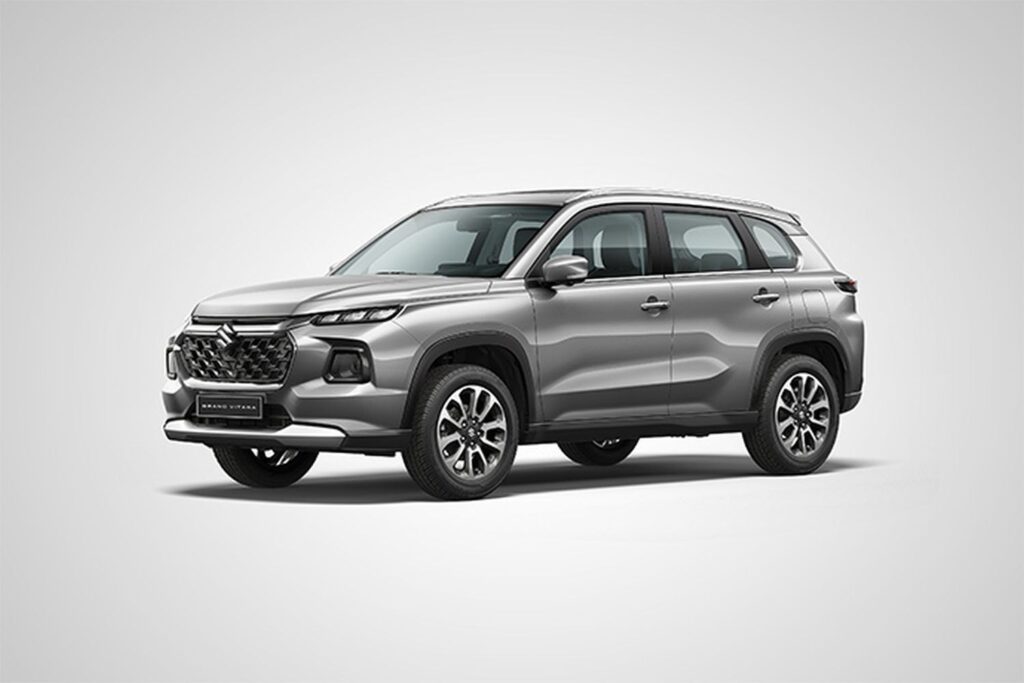
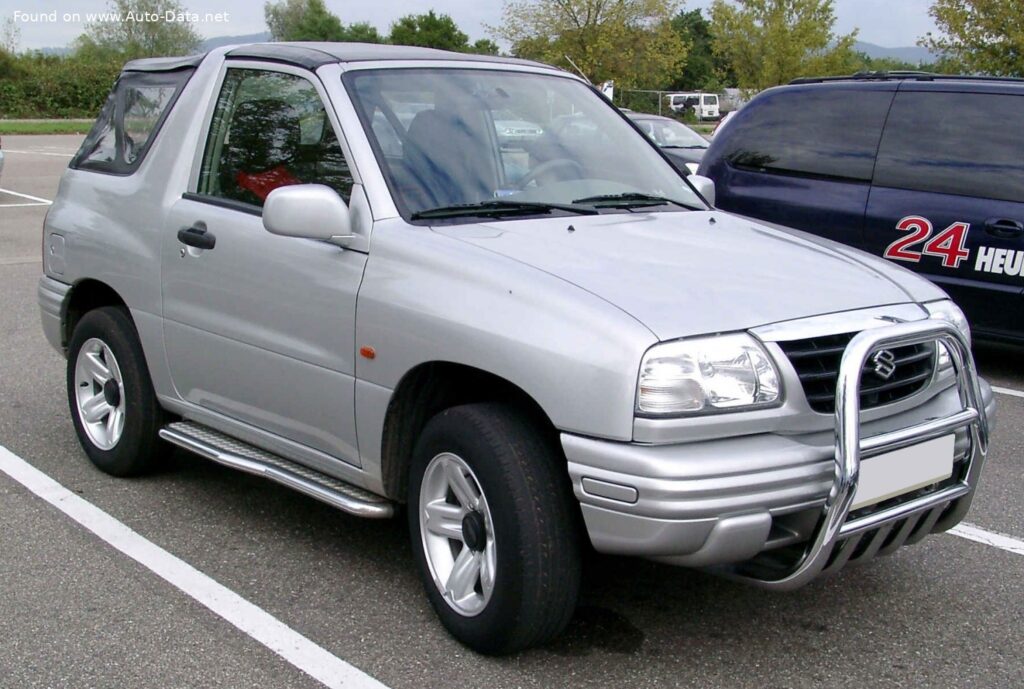
The Suzuki Grand Vitara II (facelift 2008) 3 Door maintains the rugged yet refined aesthetic that characterized the second generation. As a 3-door SUV, it presents a more compact and sportier profile compared to its 5-door counterpart, emphasizing agility and maneuverability. With a length of 163.39 inches (4150 mm), a width of 73.62 inches (1870 mm), and a height of 66.73 inches (1695 mm), its dimensions contribute to its urban practicality while still offering a commanding presence. The facelift introduced subtle styling enhancements, including updated grille designs, revised bumper fascias, and new wheel options, keeping the vehicle’s appearance fresh and contemporary.
Underneath its stylish exterior, the Grand Vitara II employed a unique integrated ladder frame, combining the rigidity of a traditional body-on-frame SUV with the refined ride quality of a unibody construction. This hybrid architecture provided exceptional torsional stiffness, crucial for both on-road handling and off-road durability. A significant ground clearance of 8.07 inches (205 mm) further underscored its genuine off-road credentials, allowing it to navigate uneven terrain with ease. The permanent all-wheel-drive (AWD) system ensures constant power distribution to all wheels, enhancing grip and stability in adverse weather or challenging driving situations.
Interior and Safety
Inside, the 3-door Grand Vitara II is configured for four occupants, offering a practical and comfortable cabin for its size. The design emphasized functionality and durability, with controls logically placed and materials chosen to withstand the rigors of both daily commuting and adventurous outings. Despite its compact exterior, the interior provided a respectable trunk space, ranging from 18.22 cu. ft. (516 liters) with the rear seats up, expandable to a generous 34.04 cu. ft. (964 liters) when the rear seats are folded down, making it surprisingly versatile for cargo.
Safety features for the 2008 facelift model were competitive for its class. Standard equipment included an Anti-lock Braking System (ABS), which significantly enhances braking control in emergency situations. The vehicle featured ventilated disc brakes on both the front and rear axles, providing strong and consistent stopping power. Steering was managed by a rack and pinion system with electric power steering, offering light and precise control for improved maneuverability, especially at low speeds. The robust chassis and comprehensive safety systems contributed to the Grand Vitara’s reputation as a secure and dependable vehicle.
Technical Specifications
| Category | Specification |
|---|---|
| Brand | Suzuki |
| Model | Grand Vitara |
| Generation | Grand Vitara II (facelift 2008) 3 Door |
| Type (Engine) | 1.9 DDiS (129 Hp) AWD |
| Production Start | September, 2008 |
| Production End | May, 2010 |
| Powertrain Architecture | Internal Combustion Engine |
| Body Type | SUV |
| Seats | 4 |
| Doors | 3 |
| Fuel Consumption (Urban NEDC) | 8.3 l/100 km (28.3 US mpg) |
| Fuel Consumption (Extra Urban NEDC) | 6.2 l/100 km (37.9 US mpg) |
| Fuel Consumption (Combined NEDC) | 7.0 l/100 km (33.6 US mpg) |
| CO2 Emissions (NEDC) | 183 g/km |
| Fuel Type | Diesel |
| Acceleration 0 – 60 mph | 12.2 sec |
| Maximum Speed | 105.63 mph (170 km/h) |
| Emission Standard | Euro 4 |
| Weight-to-power ratio | 11.8 kg/Hp (84.5 Hp/tonne) |
| Power | 129 Hp @ 3750 rpm |
| Power per liter | 69 Hp/l |
| Torque | 221.27 lb.-ft. (300 Nm) @ 2000 rpm |
| Engine Layout | Front, Longitudinal |
| Engine Model/Code | F9Q |
| Engine Displacement | 1.9 liters (1870 cm³, 114.11 cu. in.) |
| Number of Cylinders | 4 |
| Engine Configuration | Inline |
| Cylinder Bore | 3.15 in. (80 mm) |
| Piston Stroke | 3.66 in. (93 mm) |
| Compression Ratio | 17:1 |
| Valves per Cylinder | 2 |
| Fuel Injection System | Diesel Commonrail |
| Engine Aspiration | Turbocharger, Intercooler |
| Engine Oil Capacity | 5.1 liters (5.39 US qt) |
| Engine Systems | Particulate filter |
| Kerb Weight | 3366.46 – 3545.03 lbs. (1527-1608 kg) |
| Max. Weight | 4276.97 lbs. (1940 kg) |
| Max Load | 731.93 – 910.51 lbs. (332-413 kg) |
| Trunk (Boot) Space – Minimum | 18.22 cu. ft. (516 l) |
| Trunk (Boot) Space – Maximum | 34.04 cu. ft. (964 l) |
| Fuel Tank Capacity | 14.53 US gal (55 l) |
| Permitted Trailer Load with Brakes (12%) | 3527.4 lbs. (1600 kg) |
| Permitted Trailer Load without Brakes | 1212.54 lbs. (550 kg) |
| Permitted Towbar Download | 187.39 lbs. (85 kg) |
| Length | 163.39 in. (4150 mm) |
| Width | 73.62 in. (1870 mm) |
| Height | 66.73 in. (1695 mm) |
| Wheelbase | 96.06 in. (2440 mm) |
| Front Track | 60.63 in. (1540 mm) |
| Rear Track | 61.81 in. (1570 mm) |
| Ride Height (Ground Clearance) | 8.07 in. (205 mm) |
| Minimum Turning Circle | 33.46 ft. (10.2 m) |
| Drivetrain Architecture | Permanent All-Wheel Drive (4×4) |
| Drive Wheel | All-Wheel Drive (4×4) |
| Number of Gears | 5 |
| Gearbox Type | Manual Transmission |
| Front Suspension | Independent type McPherson |
| Rear Suspension | Independent multi-link suspension |
| Front Brakes | Ventilated discs |
| Rear Brakes | Ventilated discs |
| Assisting Systems | ABS (Anti-lock braking system) |
| Steering Type | Steering rack and pinion |
| Power Steering | Electric Steering |
| Tires Size | 215/70 R16 99H; 225/70 R16 102S; 225/70 R16 101H |
| Wheel Rims Size | 6.5J x 16 |
Legacy and Market Impact
The Suzuki Grand Vitara II (facelift 2008) 3 Door 1.9 DDiS (129 Hp) AWD carved out a distinct niche in its primary European and Asian markets. Its legacy is rooted in Suzuki’s long-standing reputation for building durable, capable, and surprisingly affordable 4×4 vehicles, a tradition that began with iconic models like the Samurai and the original Vitara/Sidekick. The second-generation Grand Vitara, and particularly this 3-door diesel variant, continued this heritage by offering a more refined and comfortable package without compromising its off-road prowess.
In Europe, where diesel engines and compact SUVs were highly valued, the 1.9 DDiS model found a receptive audience. It competed against a diverse range of vehicles, from more road-biased compact SUVs like the first-generation Nissan Qashqai and certain variants of the Honda CR-V, to more off-road-focused contenders such as the Land Rover Freelander (particularly its smaller diesel engines) and even the Toyota RAV4 3-door models from earlier generations. What set the Grand Vitara apart was its unique blend of a genuine low-range capable (though this specific 1.9 DDiS variant had permanent AWD, not always low-range in all markets, but the chassis was capable) all-wheel-drive system, robust construction, and relatively compact dimensions, making it adept at navigating both congested city streets and challenging rural paths.
Its market impact stemmed from its versatility. For many, it served as a practical family vehicle, offering decent fuel economy and a commanding driving position. For others, its sturdy build, ample ground clearance, and permanent AWD made it an ideal companion for outdoor activities, light towing (up to 3527.4 lbs. with brakes), and navigating snowy or unpaved roads. The 3-door configuration, while limiting rear passenger access, appealed to those who valued its sportier aesthetic and slightly shorter wheelbase for increased maneuverability.
While never officially sold in the United States in this specific diesel, 3-door configuration, its principles align with the global shift towards more efficient and versatile SUVs. Its success in other markets highlighted the demand for vehicles that could bridge the gap between urban practicality and rugged adventure. The Grand Vitara II 1.9 DDiS remains a testament to Suzuki’s engineering philosophy: building capable, reliable, and value-oriented vehicles that empower drivers to explore beyond the pavement. Its robust construction and dependable powertrain ensure that many examples continue to serve their owners faithfully, underscoring its enduring legacy as a true workhorse in the compact SUV segment.