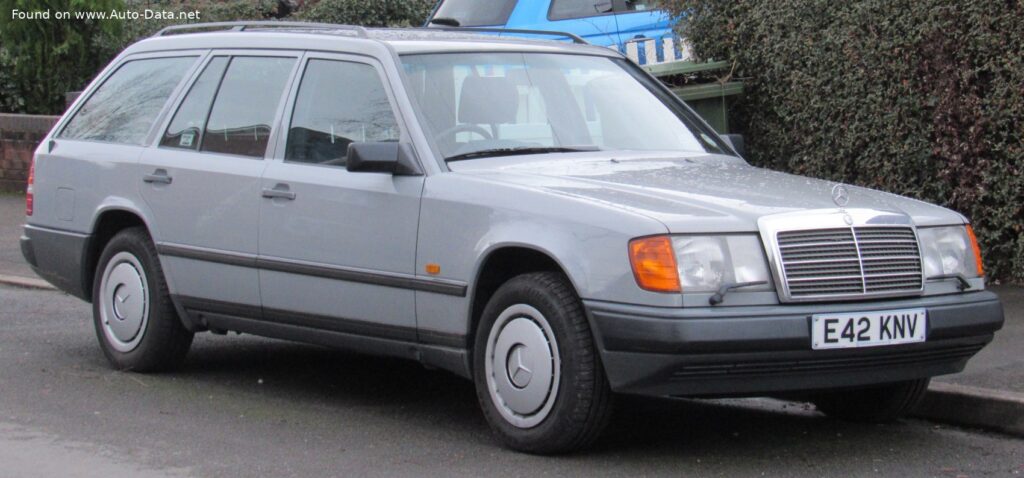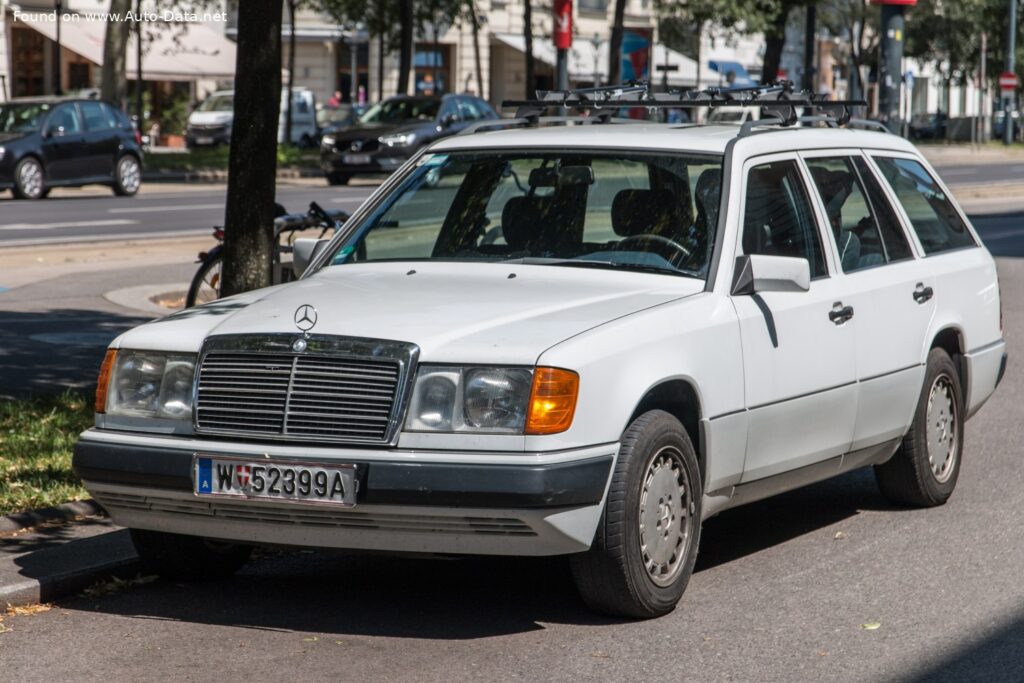
The Mercedes-Benz S124 (facelift 1989) 200 T: A Testament to Enduring German Engineering
The Mercedes-Benz W124 series, produced from 1984 to 1996, stands as a monumental achievement in automotive engineering, revered globally for its unparalleled build quality, robustness, and timeless design. Within this iconic lineage, the S124 designation refers to the station wagon (estate) variant, a highly practical and equally durable counterpart to the sedan. The Mercedes-Benz S124 (facelift 1989) 200 T, specifically produced between September 1989 and May 1990, represents a particular iteration of this celebrated wagon, incorporating the subtle yet significant enhancements of the 1989 facelift. While this specific 2.0-liter gasoline model was primarily tailored for the European market, it embodies the core values of the W124 platform: reliability, comfort, and sophisticated utility. It served as an entry-level option, offering accessible Mercedes-Benz quality to a broad customer base, particularly those prioritizing practicality and long-term ownership over outright performance.
Engine & Performance: The Heart of the Mercedes-Benz S124 (facelift 1989)
Powering the Mercedes-Benz S124 (facelift 1989) 200 T was the M102 V 20 / 102.922 engine, a 2.0-liter (1996 cm³ or 121.8 cu. in.) naturally aspirated inline-four cylinder unit. This engine, known for its straightforward design and remarkable durability, delivered 105 horsepower at 5500 rpm and a respectable 116.53 lb.-ft. of torque at 3500 rpm. While not designed for blistering speed, this powertrain was engineered for smooth, consistent delivery and exceptional longevity, traits that have cemented the W124’s reputation.
The M102 featured a SOHC (Single Overhead Camshaft) valvetrain with two valves per cylinder, a common and reliable configuration for its era. Fuel delivery was handled by a carburettor system, a technology that was gradually being phased out by more advanced electronic fuel injection systems but was still prevalent in many entry-level models of the time. This choice contributed to the engine’s simplicity and ease of maintenance.
Paired with a 4-speed manual transmission, the 200 T directed its power to the rear wheels, a classic Mercedes-Benz drivetrain architecture that provided balanced handling and a robust feel. Performance figures, while modest by modern standards, were entirely adequate for daily driving and long-distance cruising in Europe. The vehicle could accelerate from 0 to 60 mph in approximately 13.3 seconds and reach a top speed of 107.5 mph. Fuel economy was reasonable for a vehicle of its size and era, with an urban consumption of around 19.3 US mpg and an extra-urban (highway) rating of about 30.5 US mpg, demonstrating its capability as an efficient long-haul cruiser. The focus was less on raw acceleration and more on reliable, comfortable, and economical travel, a core tenet of Mercedes-Benz’s philosophy for its utility vehicles.
Design & Features: Practical Elegance
The S124 station wagon embodied Mercedes-Benz’s commitment to functional design and understated elegance. With a length of 187.6 inches, a width of 68.5 inches, and a height of 58.62 inches, riding on a 110.24-inch wheelbase, the S124 offered substantial interior space for five occupants and a generous cargo area. The five-door body type was inherently practical, providing easy access to both passenger and luggage compartments. The design, penned by Bruno Sacco, was characterized by clean lines, a low drag coefficient (for its time), and a sense of enduring quality that has allowed it to age gracefully.
The 1989 facelift introduced subtle refinements, primarily focusing on updated trim details and minor aesthetic tweaks that kept the W124 competitive without altering its fundamental, well-regarded design. Inside, the cabin was designed for ergonomic comfort and durability, featuring high-quality materials built to withstand decades of use.
In terms of features, even an entry-level model like the 200 T benefited from Mercedes-Benz’s commitment to safety and driver convenience. The vehicle was equipped with disc brakes on both the front and rear axles, providing confident stopping power. An Anti-lock Braking System (ABS) was a significant safety feature for its time, enhancing control during emergency braking. Power steering, specifically a hydraulic cone worm system with recirculation balls, ensured effortless maneuverability despite the vehicle’s substantial size. The independent multi-link rear suspension, a hallmark of the W124 chassis, contributed significantly to its renowned ride comfort and stable handling characteristics, even when fully loaded. The 195/65 R15 tires on 6.5J x 15 wheels provided a good balance of grip and ride comfort.
Technical Specifications
| Category | Specification |
|---|---|
| General Information | |
| Brand | Mercedes-Benz |
| Model | W124 |
| Generation | S124 (facelift 1989) |
| Type (Engine) | 200 T (105 Hp) |
| Production Start | September, 1989 |
| Production End | May, 1990 |
| Powertrain Architecture | Internal Combustion engine |
| Body type | Station wagon (estate) |
| Seats | 5 |
| Doors | 5 |
| Performance Specs | |
| Fuel consumption (urban) | 12.2 l/100 km (19.3 US mpg) |
| Fuel consumption (extra urban) | 7.7 l/100 km (30.5 US mpg) |
| Fuel Type | Petrol (Gasoline) |
| Acceleration 0 – 60 mph | 13.3 sec |
| Maximum speed | 173 km/h (107.5 mph) |
| Weight-to-power ratio | 13.8 kg/Hp (30.4 lbs/Hp) |
| Engine Specs | |
| Power | 105 Hp @ 5500 rpm |
| Power per liter | 52.6 Hp/l |
| Torque | 158 Nm (116.53 lb.-ft.) @ 3500 rpm |
| Engine layout | Front, Longitudinal |
| Engine Model/Code | M 102 V 20 / 102.922 |
| Engine displacement | 1996 cm³ (2.0 l / 121.8 cu. in.) |
| Number of cylinders | 4 |
| Engine configuration | Inline |
| Cylinder Bore | 89 mm (3.5 in.) |
| Piston Stroke | 80.19 mm (3.16 in.) |
| Compression ratio | 9.1:1 |
| Number of valves per cylinder | 2 |
| Fuel injection system | Carburettor |
| Engine aspiration | Naturally aspirated engine |
| Valvetrain | SOHC |
| Engine oil capacity | 5 l (5.28 US qt) |
| Coolant capacity | 8.5 l (8.98 US qt) |
| Space, Volume and Weights | |
| Kerb Weight | 1450 kg (3196.7 lbs.) |
| Max. weight | 2070 kg (4563.57 lbs.) |
| Max load | 620 kg (1366.87 lbs.) |
| Fuel tank capacity | 72 l (19.02 US gal) |
| Dimensions | |
| Length | 4765 mm (187.6 in.) |
| Width | 1740 mm (68.5 in.) |
| Height | 1489 mm (58.62 in.) |
| Wheelbase | 2800 mm (110.24 in.) |
| Front track | 1497 mm (58.94 in.) |
| Rear (Back) track | 1497 mm (58.94 in.) |
| Drivetrain, Brakes and Suspension Specs | |
| Drivetrain Architecture | Rear wheel drive |
| Number of gears and type of gearbox | 4 gears, manual transmission |
| Front suspension | Wishbone |
| Rear suspension | Independent multi-link suspension |
| Front brakes | Disc |
| Rear brakes | Disc |
| Assisting systems | ABS (Anti-lock braking system) |
| Steering type | Cone worm with recirculation balls |
| Power steering | Hydraulic Steering |
| Tires size | Front: 195/65 R15, Rear: 195/65 R15 |
| Wheel rims size | Front: 6.5J x 15, Rear: 6.5J x 15 |
Legacy & Market Impact
The Mercedes-Benz W124 generation, including the S124 wagon, enjoys a legendary status in the automotive world, often cited as one of the last truly “over-engineered” Mercedes-Benz vehicles. The Mercedes-Benz S124 (facelift 1989) 200 T, while not a performance icon, perfectly encapsulates this ethos of durability and reliability. Its primary market was undoubtedly Europe, where its combination of build quality, practicality, and relatively efficient 2.0-liter gasoline engine made it a popular choice for families and businesses alike.
In its competitive landscape, the S124 200 T faced rivals such as the BMW 5 Series Touring (E34 generation), the Audi 100 Avant (C3/C4 generations), and the Volvo 740/940 series. While BMW offered a sportier driving experience and Audi innovated with Quattro all-wheel drive, the Mercedes-Benz S124 distinguished itself with its unparalleled ride comfort, superior build quality, and a reputation for being virtually indestructible. Volvo, a traditional rival in the wagon segment, competed strongly on safety and practicality, but often lacked Mercedes-Benz’s perceived prestige and refined driving dynamics.
The 200 T variant, with its 105 horsepower engine and manual transmission, was particularly well-suited to European tax structures and fuel costs, where a smaller, more economical engine was often preferred over larger, thirstier units. This specific model was less commonly imported to the United States in its original form, as the American market typically favored larger displacement engines, often V6 or V8, and automatic transmissions in luxury vehicles. Mercedes-Benz usually offered more potent gasoline or robust diesel engines in its W124 models sold in the U.S., such as the 300E sedan or 300TE wagon.
Today, the S124 series, especially well-maintained examples, commands respect and a loyal following. The 200 T remains a testament to a bygone era of automotive manufacturing, where longevity and mechanical integrity were paramount. Its legacy is one of a dependable, comfortable, and elegant workhorse, a car that continues to serve its owners faithfully decades after leaving the factory floor, embodying the very essence of Mercedes-Benz’s engineering prowess. Its enduring appeal lies not in its speed or cutting-edge technology, but in its unwavering quality and timeless utility.