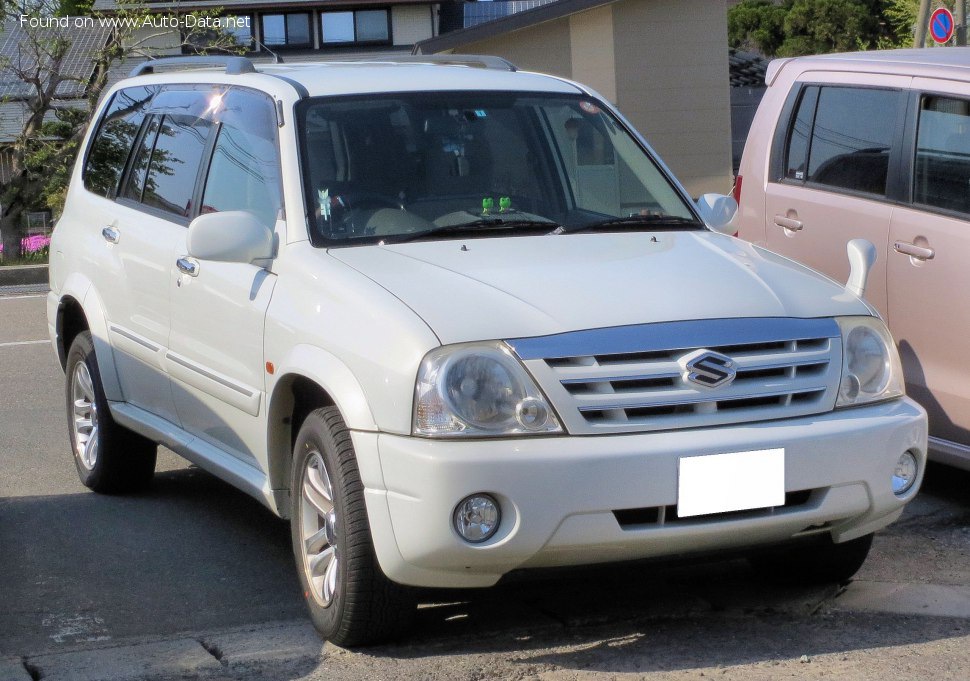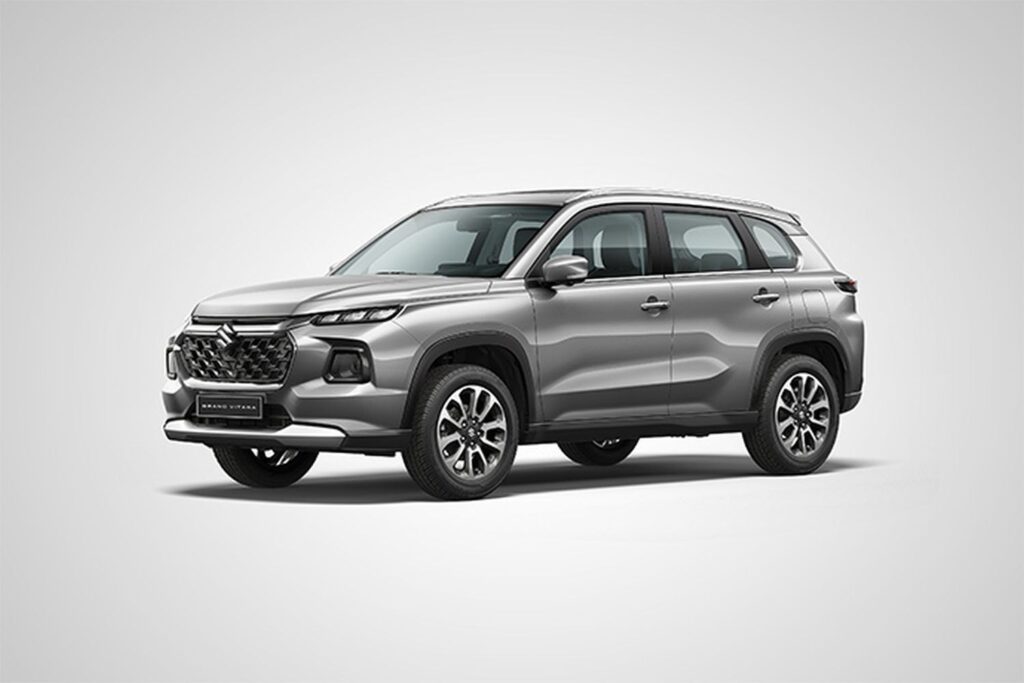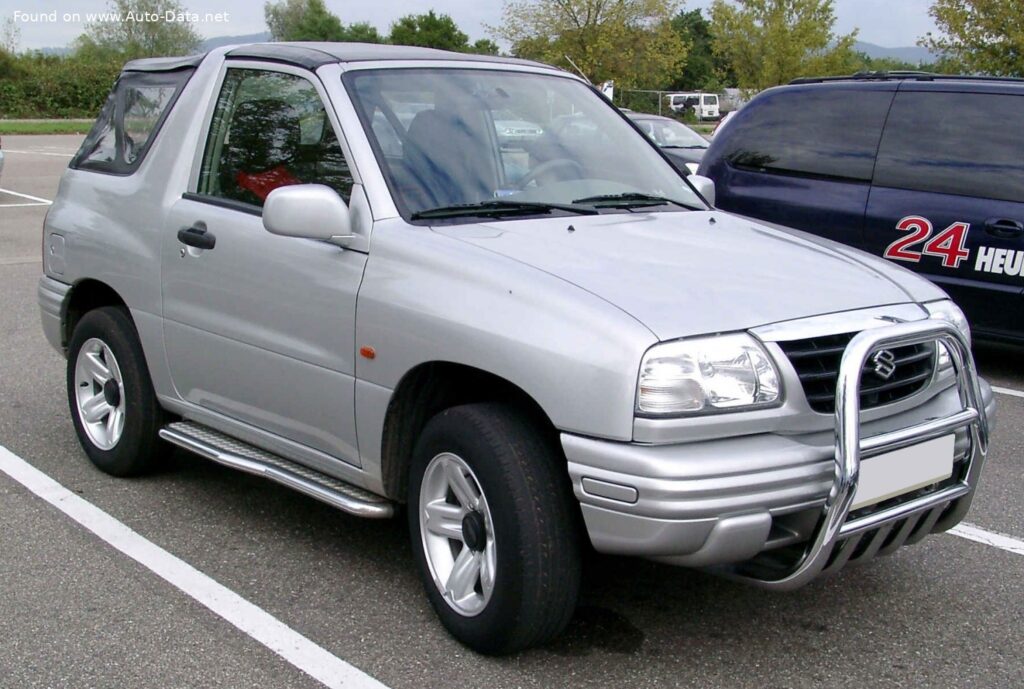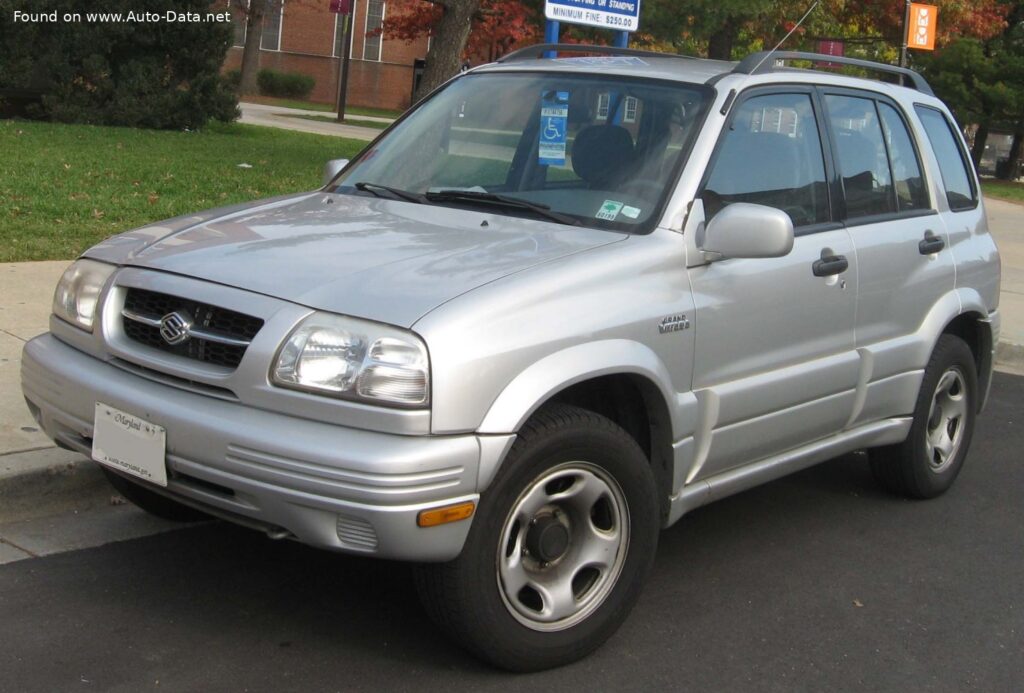
Suzuki Grand Vitara II (facelift 2008) 3 Door 1.9 DDiS (129 Hp) AWD
The Suzuki Grand Vitara II, specifically the facelifted 2008 model in its compact 3-door configuration, powered by the 1.9 DDiS (Diesel Direct Injection System) engine with 129 horsepower and an All-Wheel Drive (AWD) system, represented a distinct offering within the compact SUV segment. Produced from May 2010 to December 2012, this iteration of the Grand Vitara was primarily targeted at European and other international markets where diesel powertrains and smaller, more agile SUVs were highly popular. Unlike its larger, more family-oriented 5-door sibling, the 3-door Grand Vitara emphasized a blend of urban maneuverability, off-road capability, and fuel efficiency, standing out with its robust ladder-frame chassis construction and permanent all-wheel drive, a rarity among its crossover competitors.
The Grand Vitara line, known for its ruggedness and versatility, continued this tradition with the second-generation facelift. This specific 3-door model, while not extensively marketed in the United States due to its diesel engine and compact dimensions, played a significant role in Suzuki’s European lineup. It offered consumers a more utilitarian and adventure-ready alternative to the burgeoning market of soft-roader crossovers, maintaining Suzuki’s heritage of producing capable and dependable 4×4 vehicles.
Engine & Performance: The 1.9 DDiS Powertrain in the Suzuki Grand Vitara II (facelift 2008) 3 Door 1.9 DDiS (129 Hp) AWD
At the heart of this particular Suzuki Grand Vitara II (facelift 2008) 3 Door 1.9 DDiS (129 Hp) AWD model was a 1.9-liter (1870 cm³, 114.11 cu. in.) inline-four diesel engine, designated with the F9Q code. This powerplant, known for its robust construction and strong torque delivery, produced 129 horsepower at 4000 rpm. More critically for an SUV designed for both on-road and light off-road duties, it delivered a healthy 221.27 lb.-ft. (300 Nm) of torque across a broad and accessible rev range, from 1750 to 2500 rpm. This low-end torque was crucial for confident acceleration, towing, and tackling challenging terrain.
The engine utilized a Diesel Commonrail fuel injection system, ensuring precise fuel delivery for improved efficiency and reduced emissions. Coupled with a turbocharger and an intercooler, the 1.9 DDiS engine offered a responsive power delivery that belied its modest displacement. It also featured a particulate filter, allowing it to meet the stringent Euro 5 emission standards, a key requirement for its European market. Power was sent to all four wheels via a 5-speed manual transmission, providing direct driver engagement and control, particularly beneficial in off-road scenarios.
Performance figures for this compact SUV were respectable for its class and intended purpose. The Grand Vitara 1.9 DDiS could accelerate from 0 to 60 mph in a calculated 12.2 seconds (0-100 km/h in 12.8 seconds), reaching a maximum speed of 105.63 mph (170 km/h). Fuel economy was a strong suit, with a combined NEDC cycle rating of 35.1 US mpg (6.7 l/100 km), reflecting the inherent efficiency of a modern turbodiesel engine. This combination of power, torque, and efficiency made it a practical choice for consumers seeking a versatile daily driver capable of weekend adventures.
Design & Features
The 3-door Suzuki Grand Vitara II maintained a distinctive and purposeful design, reflecting its dual nature as both an urban commuter and an off-road explorer. Its compact length of 163.39 inches (4150 mm) and width of 73.62 inches (1870 mm) made it agile in city traffic and tight parking spaces, while its substantial ground clearance of 8.07 inches (205 mm) underscored its off-road credentials. The design was characterized by a robust stance, short overhangs, and a spare wheel mounted on the rear tailgate, a classic SUV styling cue that not only saved interior space but also emphasized its adventurous spirit.
Inside, the 3-door Grand Vitara offered seating for four occupants. Despite its compact exterior, the interior was designed for practicality, with a minimum trunk space of 18.22 cu. ft. (516 liters) that could expand to a maximum of 34.04 cu. ft. (964 liters) with the rear seats folded, providing ample room for luggage or gear. Key features included power steering (electric for ease of maneuvering), and an Anti-lock Braking System (ABS) for enhanced safety. The suspension setup featured an independent McPherson type at the front and an independent multi-link suspension at the rear, aiming to provide a balance between on-road comfort and off-road articulation. Braking was handled by ventilated discs on both the front and rear axles.
The vehicle’s permanent all-wheel-drive architecture was a significant differentiator. Unlike many contemporary crossovers that offered only part-time or reactive AWD systems, the Grand Vitara’s system provided continuous power to all four wheels, enhancing traction and stability in varied conditions, from slippery roads to challenging trails. Tire sizes ranged from 215/70 R16 to 225/65 R17, mounted on 16- or 17-inch wheel rims, providing a good balance of grip and ride comfort for its segment.
Technical Specifications
| Category | Specification |
|---|---|
| Brand | Suzuki |
| Model | Grand Vitara |
| Generation | Grand Vitara II (facelift 2008) 3 Door |
| Engine Type | 1.9 DDiS (129 Hp) AWD |
| Production Start | May, 2010 |
| Production End | December, 2012 |
| Powertrain Architecture | Internal Combustion engine |
| Body Type | SUV |
| Seats | 4 |
| Doors | 3 |
| Performance Specs | |
| Fuel Consumption (Urban) | 8 l/100 km (29.4 US mpg) |
| Fuel Consumption (Extra Urban) | 6 l/100 km (39.2 US mpg) |
| Fuel Consumption (Combined) | 6.7 l/100 km (35.1 US mpg) |
| CO2 Emissions (NEDC) | 177 g/km |
| Fuel Type | Diesel |
| Acceleration 0 – 60 mph | 12.2 sec |
| Acceleration 0 – 100 km/h | 12.8 sec |
| Maximum Speed | 105.63 mph (170 km/h) |
| Emission Standard | Euro 5 |
| Weight-to-Power Ratio | 11.9 kg/Hp, 84.4 Hp/tonne |
| Weight-to-Torque Ratio | 5.1 kg/Nm, 196.2 Nm/tonne |
| Engine Specs | |
| Power | 129 Hp @ 4000 rpm |
| Power per liter | 69 Hp/l |
| Torque | 221.27 lb.-ft. (300 Nm) @ 1750-2500 rpm |
| Engine Layout | Front, Longitudinal |
| Engine Model/Code | F9Q |
| Engine Displacement | 1.9 liters (1870 cm³, 114.11 cu. in.) |
| Number of Cylinders | 4 |
| Engine Configuration | Inline |
| Cylinder Bore | 3.15 in. (80 mm) |
| Piston Stroke | 3.66 in. (93 mm) |
| Compression Ratio | 17:1 |
| Valves per Cylinder | 2 |
| Fuel Injection System | Diesel Commonrail |
| Engine Aspiration | Turbocharger, Intercooler |
| Engine Oil Capacity | 5.39 US qt (5.1 l) |
| Engine Oil Specification | Not publicly available in provided data |
| Engine Systems | Particulate filter |
| Space, Volume and Weights | |
| Kerb Weight | 3370.87 – 3511.96 lbs. (1529-1593 kg) |
| Max. Weight | 4276.97 lbs. (1940 kg) |
| Max Load | 765 – 906.1 lbs. (347-411 kg) |
| Trunk Space (Minimum) | 18.22 cu. ft. (516 l) |
| Trunk Space (Maximum) | 34.04 cu. ft. (964 l) |
| Fuel Tank Capacity | 14.53 US gal (55 l) |
| Permitted Trailer Load with Brakes (12%) | 3527.4 lbs. (1600 kg) |
| Permitted Trailer Load without Brakes | 1212.54 lbs. (550 kg) |
| Permitted Towbar Download | 187.39 lbs. (85 kg) |
| Dimensions | |
| Length | 163.39 in. (4150 mm) |
| Width | 73.62 in. (1870 mm) |
| Height | 66.73 in. (1695 mm) |
| Wheelbase | 96.06 in. (2440 mm) |
| Front Track | 60.63 in. (1540 mm) |
| Rear Track | 61.81 in. (1570 mm) |
| Ride Height (Ground Clearance) | 8.07 in. (205 mm) |
| Minimum Turning Circle | 33.46 ft. (10.2 m) |
| Drivetrain, Brakes and Suspension Specs | |
| Drivetrain Architecture | Permanent All-Wheel Drive (ICE drives all four wheels) |
| Drive Wheel | All-wheel drive (4×4) |
| Number of Gears | 5 gears, manual transmission |
| Front Suspension | Independent type McPherson |
| Rear Suspension | Independent multi-link suspension |
| Front Brakes | Ventilated discs |
| Rear Brakes | Ventilated discs |
| Assisting Systems | ABS (Anti-lock braking system) |
| Steering Type | Steering rack and pinion |
| Power Steering | Electric Steering |
| Tires Size | 215/70 R16 99H; 225/70 R16 102S; 225/65 R17 101H |
| Wheel Rims Size | 6.5J x 16; 6.5J x 17 |
Legacy & Market Impact
The Suzuki Grand Vitara II (facelift 2008) 3 Door 1.9 DDiS (129 Hp) AWD carved out a distinctive niche in its primary markets, predominantly Europe. While many manufacturers were shifting towards softer, car-based crossovers with less off-road capability, Suzuki steadfastly maintained the Grand Vitara’s rugged character. Its permanent all-wheel-drive system, combined with a capable ladder-frame chassis, set it apart from rivals like the Toyota RAV4, Honda CR-V, or Nissan Qashqai, many of which adopted more road-biased unibody constructions and simpler AWD systems, especially in their compact 3-door forms.
The 3-door variant, in particular, appealed to a specific demographic: those seeking a compact, maneuverable SUV for urban environments that could also confidently tackle rough roads, light trails, or adverse weather conditions. Its relatively compact dimensions made it an excellent choice for navigating narrow European streets, while the diesel engine offered the fuel efficiency and torque favored by European drivers. The Grand Vitara built a reputation for reliability and durability, traits long associated with the Suzuki brand in its 4×4 offerings.
Competitors in its segment, especially those offering a 3-door option, were scarce. While some brands offered compact SUVs, few combined the Grand Vitara’s true 4×4 pedigree with a diesel engine in such a compact package. This made it a unique proposition for buyers who valued genuine off-road capability and robust construction over pure on-road refinement or maximum passenger space. Its legacy is one of an unpretentious, highly capable, and practical compact SUV that stayed true to its roots, offering a blend of utility and adventurous spirit that resonated with a loyal customer base in its target markets. Even after its production ended in 2012, the Grand Vitara remained a respected nameplate, a testament to its enduring design and mechanical integrity.