The Renault Megane II Coupe: A European Compact with Distinctive Flair
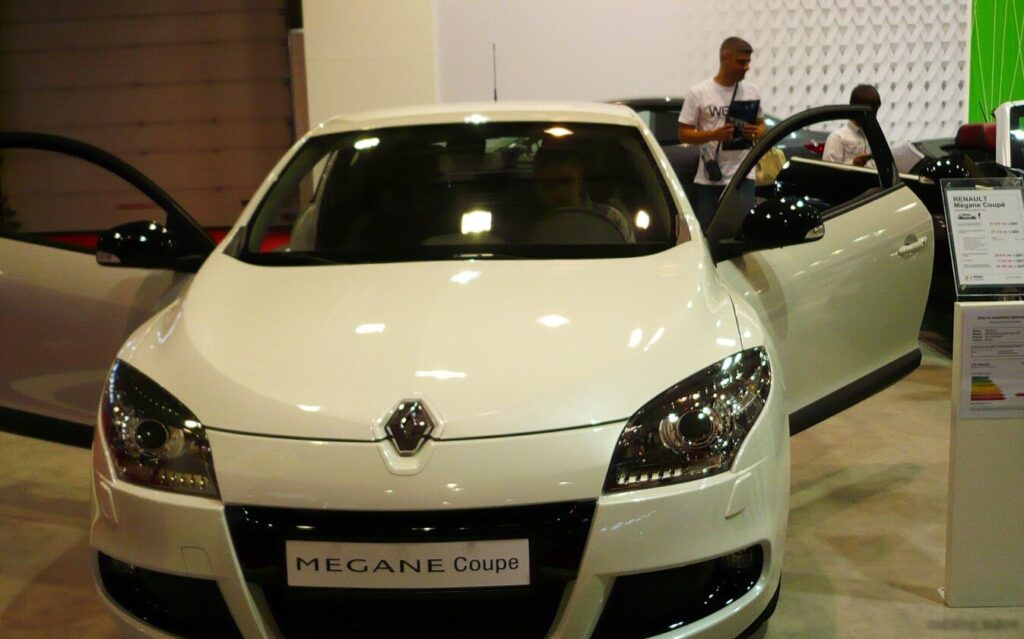
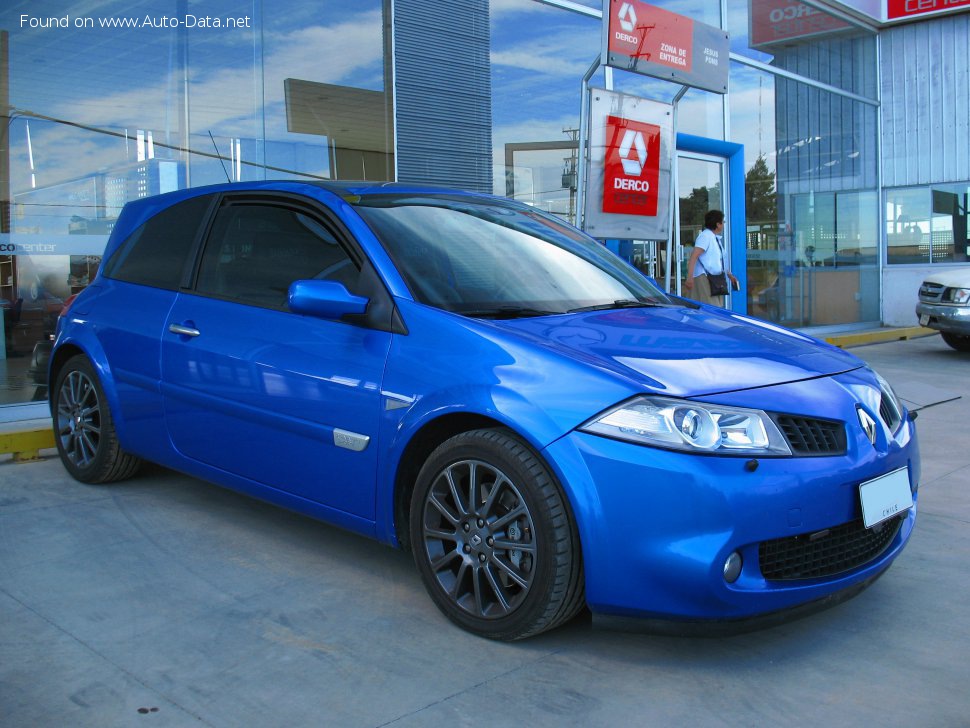
The Renault Megane II Coupe, specifically the Phase II model introduced in 2006, represents a significant chapter in the history of compact European automobiles. As a prominent player in the highly competitive C-segment, the Megane II distinguished itself with a bold, unconventional design that challenged traditional automotive aesthetics. While never officially sold in the United States, this French-engineered compact coupe carved out a strong niche in its primary European and other international markets, offering a blend of distinctive styling, practical packaging, and efficient powertrains. The 2006 Phase II update brought subtle refinements to an already established design, maintaining its avant-garde appeal while enhancing its technological and safety credentials.
This particular variant, equipped with the 1.5 dCi (106 Hp) diesel engine, was a testament to Renault’s commitment to fuel efficiency and low emissions, a crucial selling point in European markets where fuel costs and environmental regulations are paramount. The Megane II Coupe, with its three-door configuration and five-seat capacity, aimed to combine the sportier appeal of a coupe with the everyday usability expected of a compact family car, making it a versatile option for a wide array of buyers.
Engine & Performance: The Efficient 1.5 dCi in the Renault Megane II Coupe
Under the hood of the Renault Megane II Coupe 1.5 dCi (106 Hp) lies Renault’s acclaimed K9K Turbo diesel engine, a powerplant renowned across Europe for its robust efficiency and surprising performance for its displacement. This inline four-cylinder engine, with a displacement of 1,461 cubic centimeters (89.16 cubic inches), delivers a respectable 106 horsepower at 4000 rpm. More impressively, it generates a substantial 177.01 pound-feet of torque at a low 2000 rpm, providing excellent low-end grunt that makes for responsive city driving and confident highway cruising.
The engine’s architecture features a front, transverse layout, driving the front wheels through a slick-shifting 6-speed manual transmission. This setup was optimized for both performance and fuel economy. The diesel common rail fuel injection system, combined with a turbocharger and intercooler, ensures efficient combustion and a broad powerband. The compression ratio of 18.8:1 is typical for a modern diesel, contributing to its thermal efficiency. With a weight-to-power ratio of 11.2 kg/Hp (89.1 Hp/tonne) and a weight-to-torque ratio of 5 kg/Nm (201.7 Nm/tonne), the Megane II Coupe 1.5 dCi offered a lively driving experience despite its modest horsepower figure.
Performance figures reflect this balance: the vehicle accelerates from 0 to 60 mph in a brisk 10.5 seconds, and its top speed reaches 114.95 mph. Fuel economy was a major highlight, with a combined rating of 50 US mpg (4.7 l/100 km). Urban consumption stood at 40.6 US mpg (5.8 l/100 km), while extra-urban driving could yield an impressive 57.4 US mpg (4.1 l/100 km). These figures, coupled with CO2 emissions of 124 g/km and an Euro 4 emission standard compliance, made the Megane II Coupe 1.5 dCi an environmentally conscious and economically attractive choice for European consumers.
Design & Features: A Bold Statement in the Compact Segment
The Renault Megane II Coupe, particularly the Phase II model, retained the distinctive and somewhat polarizing design language that defined the second-generation Megane. Its most notable feature was the “bustle back” rear end, which, while more pronounced on the hatchback, still lent a unique character to the coupe. The three-door body style emphasized its sportier intentions, with a sleek profile and a more aggressive stance compared to its five-door sibling. Measuring 165.71 inches in length, 69.96 inches in width (79.76 inches including mirrors), and 57.4 inches in height, the Megane II Coupe had compact dimensions ideal for navigating European cityscapes, while its 103.35-inch wheelbase provided a stable ride.
Inside, the Megane II Coupe offered a surprisingly spacious cabin for a compact coupe, designed to accommodate five occupants, though the rear seats were more suited for shorter journeys or children. The trunk space was practical, ranging from 11.65 cubic feet with all seats up to a generous 42.02 cubic feet with the rear seats folded, enhancing its versatility. Key features for a 2006 vehicle included an electric power steering system for easy maneuverability, and a robust safety suite with standard Anti-lock Braking System (ABS). The car rode on 195/65 R15 tires mounted on 6J x 15-inch wheel rims.
Suspension-wise, the Megane II Coupe utilized an independent McPherson type setup at the front and a torsion beam at the rear, a common and effective configuration for front-wheel-drive compacts, offering a good balance of comfort and handling. Braking was handled by ventilated discs at the front and solid discs at the rear, ensuring confident stopping power. The drag coefficient (Cd) of 0.35 was competitive for its class, contributing to its fuel efficiency.
Technical Specifications
| Category | Specification |
|---|---|
| General Information | |
| Brand | Renault |
| Model | Megane |
| Generation | Megane II Coupe (Phase II, 2006) |
| Engine Type | 1.5 dCi (106 Hp) |
| Production Years | 2006 – 2006 |
| Powertrain Architecture | Internal Combustion Engine (ICE) |
| Body Type | Coupe |
| Seats | 5 |
| Doors | 3 |
| Performance Specs | |
| Fuel Consumption (Urban) | 5.8 l/100 km (40.6 US mpg) |
| Fuel Consumption (Extra Urban) | 4.1 l/100 km (57.4 US mpg) |
| Fuel Consumption (Combined) | 4.7 l/100 km (50 US mpg) |
| CO2 Emissions | 124 g/km |
| Fuel Type | Diesel |
| Acceleration 0-60 mph | 10.5 sec |
| Maximum Speed | 185 km/h (114.95 mph) |
| Emission Standard | Euro 4 |
| Weight-to-Power Ratio | 11.2 kg/Hp (89.1 Hp/tonne) |
| Weight-to-Torque Ratio | 5 kg/Nm (201.7 Nm/tonne) |
| Engine Specs | |
| Power | 106 Hp @ 4000 rpm |
| Power per Liter | 72.6 Hp/l |
| Torque | 240 Nm @ 2000 rpm (177.01 lb.-ft.) |
| Engine Layout | Front, Transverse |
| Engine Model/Code | K9K Turbo |
| Engine Displacement | 1461 cm3 (89.16 cu. in.) |
| Number of Cylinders | 4 |
| Engine Configuration | Inline |
| Cylinder Bore | 76 mm (2.99 in.) |
| Piston Stroke | 80.5 mm (3.17 in.) |
| Compression Ratio | 18.8:1 |
| Valves per Cylinder | 2 |
| Fuel Injection System | Diesel Commonrail |
| Engine Aspiration | Turbocharger, Intercooler |
| Engine Oil Capacity | 4.5 l (4.76 US qt) |
| Coolant Capacity | 7.5 l (7.93 US qt) |
| Space, Volume & Weights | |
| Kerb Weight | 1190 kg (2623.5 lbs) |
| Max. Weight | 1750 kg (3858.09 lbs) |
| Max Load | 560 kg (1234.59 lbs) |
| Trunk (Boot) Space (Min) | 330 l (11.65 cu. ft.) |
| Trunk (Boot) Space (Max) | 1190 l (42.02 cu. ft.) |
| Fuel Tank Capacity | 60 l (15.85 US gal) |
| Max. Roof Load | 80 kg (176.37 lbs) |
| Permitted Trailer Load with Brakes (12%) | 1300 kg (2866.01 lbs) |
| Permitted Trailer Load without Brakes | 650 kg (1433 lbs) |
| Permitted Towbar Download | 75 kg (165.35 lbs) |
| Dimensions | |
| Length | 4209 mm (165.71 in.) |
| Width | 1777 mm (69.96 in.) |
| Width (Including Mirrors) | 2026 mm (79.76 in.) |
| Height | 1458 mm (57.4 in.) |
| Wheelbase | 2625 mm (103.35 in.) |
| Front Track | 1518 mm (59.76 in.) |
| Rear Track | 1514 mm (59.61 in.) |
| Front Overhang | 842 mm (33.15 in.) |
| Rear Overhang | 742 mm (29.21 in.) |
| Drag Coefficient (Cd) | 0.35 |
| Minimum Turning Circle | 10.5 m (34.45 ft.) |
| Drivetrain, Brakes & Suspension | |
| Drivetrain Architecture | Front-wheel drive, Internal Combustion engine |
| Drive Wheel | Front-wheel drive |
| Gearbox | 6 gears, manual transmission |
| Front Suspension | Independent type McPherson |
| Rear Suspension | Torsion |
| Front Brakes | Ventilated discs |
| Rear Brakes | Disc |
| Assisting Systems | ABS (Anti-lock braking system) |
| Steering Type | Steering rack and pinion |
| Power Steering | Electric Steering |
| Tires Size | 195/65 R15 |
| Wheel Rims Size | 6J x 15 |
Legacy & Market Impact of the Renault Megane II Coupe
The Renault Megane II Coupe, particularly the 2006 Phase II 1.5 dCi model, carved out a distinct identity in the European compact car market. Its bold design, which initially generated considerable discussion, eventually became a hallmark of Renault’s design philosophy during that era. While the Megane II was never officially imported into the North American market, its impact across Europe and other global regions was substantial. It competed fiercely with other established compacts like the Opel Astra GTC, Peugeot 307 Coupe Cabriolet (though the Megane also had a CC variant), and various three-door versions of the Volkswagen Golf and Ford Focus.
The Megane II’s reputation was built on several pillars: its striking aesthetics, a generally comfortable ride, and a strong emphasis on safety, earning it high marks in Euro NCAP crash tests. The 1.5 dCi engine variant, in particular, was lauded for its exceptional fuel economy and low running costs, making it an attractive proposition for private buyers and fleet operators alike in markets where diesel power was king. This efficiency, combined with its Euro 4 compliance, positioned it as a responsible choice in an increasingly environmentally conscious automotive landscape.
Despite its unique styling, which some found polarizing, the Megane II Coupe proved to be a practical and engaging vehicle. Its blend of a sporty three-door body with genuine five-seat capacity and a versatile cargo area offered a compelling alternative to more conventional hatchbacks. The Phase II update ensured it remained competitive, incorporating minor enhancements that kept it fresh against newer rivals. Today, the Megane II Coupe is remembered as an embodiment of Renault’s willingness to push design boundaries, offering a distinctive and efficient option in the compact segment that contributed significantly to the brand’s presence in key international markets.