The Renault Clio IV (Phase I) 1.2 TCe (120 Hp) GT Automatic: A European Hot Hatch Contender
The Renault Clio IV (Phase I) 1.2 TCe (120 Hp) GT Automatic, produced between 2013 and 2016, represents a significant iteration in the long-running and highly successful Clio lineage. As a cornerstone of the European B-segment (subcompact) market, the Clio has consistently been one of the continent’s best-selling cars. The fourth-generation Clio, launched in 2012, introduced a striking new design language, a more upscale interior, and a range of efficient powertrains. The specific 1.2 TCe (120 Hp) GT Automatic variant positioned itself as a sportier, yet still practical, offering within the Clio lineup, blending spirited performance with the convenience of an automatic transmission and enhanced features. While never officially sold in the United States, this model played a crucial role in Renault’s strategy to capture a youthful and dynamic segment of the European market, competing fiercely with established rivals through its blend of style, technology, and driving engagement.
Engine and Performance of the Renault Clio IV (Phase I) 1.2 TCe (120 Hp) GT Automatic
At the heart of the Renault Clio IV (Phase I) GT Automatic is its lively 1.2-liter TCe (Turbo Control efficiency) gasoline engine, designated by the H5F 403 engine code. This inline four-cylinder unit, featuring a DOHC valvetrain and direct fuel injection, benefits significantly from turbocharging and an intercooler to deliver impressive power and torque for its displacement. With an engine displacement of 1197 cm³ (73.05 cu. in.), it produces a robust 120 horsepower at 4900 rpm, translating to an impressive power output of 100.3 horsepower per liter.
Torque figures are equally compelling, with 190 Nm (140.14 lb.-ft.) available, contributing to the car’s agile feel. This power is managed by a sophisticated 6-speed automatic transmission, driving the front wheels. The combination allows the Clio GT Automatic to accelerate from 0 to 60 mph in a brisk 8.2 seconds and reach a maximum speed of 123.65 mph (199 km/h). Despite its sporty aspirations, the 1.2 TCe engine also boasts commendable fuel efficiency, with a combined fuel economy rating of 45.2 US mpg (5.2 l/100 km) and an extra-urban figure of 53.5 US mpg (4.4 l/100 km). This efficiency, coupled with its Euro 5 emission standard compliance, made it an attractive option for European drivers seeking a balance of performance and economy. The engine’s compact and lightweight design, contributing to a favorable weight-to-power ratio of 8.2 kg/Hp (122.4 Hp/tonne), further enhanced the car’s dynamic capabilities.
Design and Features
Exterior and Interior Aesthetics
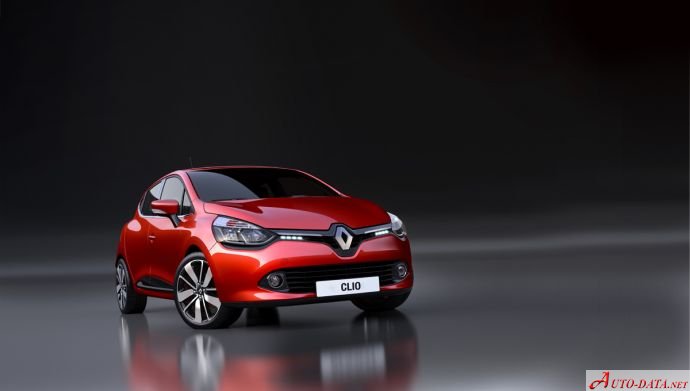
The fourth-generation Renault Clio marked a significant departure from its predecessors in terms of design, adopting a more expressive and fluid aesthetic penned by Laurens van den Acker. The Clio IV (Phase I) GT Automatic, specifically, features a distinctive five-door hatchback body style, seamlessly integrating the rear door handles into the C-pillar to create a coupé-like profile. Its dimensions – 159.92 inches (4062 mm) in length, 68.19 inches (1732 mm) in width, and 57.01 inches (1448 mm) in height – made it a compact yet spacious offering in its segment. The design was characterized by a prominent front grille, sleek headlights, and sculpted body lines, giving it a modern and dynamic presence on the road. The GT variant likely included specific styling cues such as unique alloy wheels (17-inch with 205/45 R17 tires), sportier bumpers, and possibly GT badging to differentiate it from standard models.
Inside, the Clio IV offered a contemporary cabin with improved material quality and design compared to previous generations. The focus was on ergonomics and connectivity, featuring a digital instrument cluster and a prominent touchscreen infotainment system (depending on trim and options). Practicality was also a strong suit, with seating for five and a respectable minimum trunk space of 10.59 cu. ft. (300 liters), expandable with the rear seats folded. Safety features for the era included standard ABS (Anti-lock Braking System), and the car’s robust chassis, combined with independent MacPherson struts at the front and a semi-independent, coil spring rear suspension, ensured a comfortable yet engaging ride. The electric power steering system provided light and precise control, making it well-suited for both city driving and spirited country roads.
Technical Specifications: Renault Clio IV (Phase I) 1.2 TCe (120 Hp) GT Automatic
| Category | Specification |
|---|---|
| General Information | |
| Brand | Renault |
| Model | Clio |
| Generation | Clio IV (Phase I) |
| Type (Engine) | 1.2 TCe (120 Hp) GT Automatic |
| Production Start | 2013 year |
| Production End | 2016 year |
| Powertrain Architecture | Internal Combustion engine |
| Body type | Hatchback |
| Seats | 5 |
| Doors | 5 |
| Performance Specs | |
| Fuel consumption (economy) – urban | 6.6 l/100 km (35.6 US mpg, 42.8 UK mpg) |
| Fuel consumption (economy) – extra urban | 4.4 l/100 km (53.5 US mpg, 64.2 UK mpg) |
| Fuel consumption (economy) – combined | 5.2 l/100 km (45.2 US mpg, 54.3 UK mpg) |
| Fuel Type | Petrol (Gasoline) |
| Acceleration 0 – 60 mph | 8.2 sec |
| Acceleration 0 – 62 mph (0-100 km/h) | 8.6 sec |
| Maximum speed | 123.65 mph (199 km/h) |
| Emission standard | Euro 5 |
| Weight-to-power ratio | 8.2 kg/Hp (122.4 Hp/tonne) |
| Weight-to-torque ratio | 5.2 kg/Nm (193.9 Nm/tonne) |
| Engine Specs | |
| Power | 120 Hp @ 4900 rpm |
| Power per liter | 100.3 Hp/l |
| Torque | 190 Nm (140.14 lb.-ft.) |
| Engine layout | Front, Transverse |
| Engine Model/Code | H5F 403 |
| Engine displacement | 1197 cm³ (73.05 cu. in.) |
| Number of cylinders | 4 |
| Engine configuration | Inline |
| Cylinder Bore | 72.2 mm (2.84 in.) |
| Piston Stroke | 73.1 mm (2.88 in.) |
| Compression ratio | 9.8:1 |
| Number of valves per cylinder | 4 |
| Fuel injection system | Direct injection |
| Engine aspiration | Turbocharger, Intercooler |
| Valvetrain | DOHC |
| Engine oil capacity | 4.6 l (4.86 US qt) |
| Coolant capacity | 5 l (5.28 US qt) |
| Space, Volume and Weights | |
| Kerb Weight | 980 kg (2160.53 lbs.) |
| Trunk (boot) space – minimum | 300 l (10.59 cu. ft.) |
| Fuel tank capacity | 45 l (11.89 US gal) |
| Dimensions | |
| Length | 4062 mm (159.92 in.) |
| Width | 1732 mm (68.19 in.) |
| Height | 1448 mm (57.01 in.) |
| Wheelbase | 2589 mm (101.93 in.) |
| Front track | 1506 mm (59.29 in.) |
| Rear (Back) track | 1506 mm (59.29 in.) |
| Minimum turning circle (diameter) | 10.6 m (34.78 ft.) |
| Drivetrain, Brakes and Suspension Specs | |
| Drivetrain Architecture | Internal combustion engine (ICE) drives the front wheels |
| Drive wheel | Front wheel drive |
| Number of gears and type of gearbox | 6 gears, automatic transmission |
| Front suspension | Independent type McPherson |
| Rear suspension | Semi-independent, coil spring |
| Front brakes | Ventilated discs |
| Rear brakes | Disc |
| Assisting systems | ABS (Anti-lock braking system) |
| Steering type | Steering rack and pinion |
| Power steering | Electric Steering |
| Tires size | 205/45 R17 |
| Wheel rims size | 17 inches |
Legacy and Market Impact
The Renault Clio IV, and particularly the 1.2 TCe (120 Hp) GT Automatic variant, solidified the Clio’s reputation as a stylish, capable, and desirable subcompact in the highly competitive European market. Despite not being offered in North America, the Clio continued its legacy as one of France’s and Europe’s best-selling cars, often vying for the top spot against formidable rivals like the Ford Fiesta, Volkswagen Polo, Peugeot 208, and Opel Corsa. The GT Automatic model specifically carved out a niche for buyers who desired more performance and a sportier aesthetic than standard Clio models, but still valued the convenience and efficiency of an automatic transmission for daily driving. It offered a compelling alternative to more overtly “hot” hatchbacks by providing a blend of everyday usability with engaging dynamics.
Its impact was significant in demonstrating that a smaller engine, when combined with modern turbocharging technology, could deliver respectable performance without sacrificing fuel economy. This particular powertrain showcased Renault’s engineering prowess in downsized engines, a trend that became increasingly prevalent across the automotive industry. The Clio IV’s bold design also influenced subsequent Renault models and helped to rejuvenate the brand’s image, making it appealing to a younger demographic. Its success underscored the importance of design, technology, and a diverse range of powertrains in maintaining relevance in a segment where consumer preferences are constantly evolving. The Clio IV remains a popular used car in Europe, a testament to its enduring appeal and robust engineering.