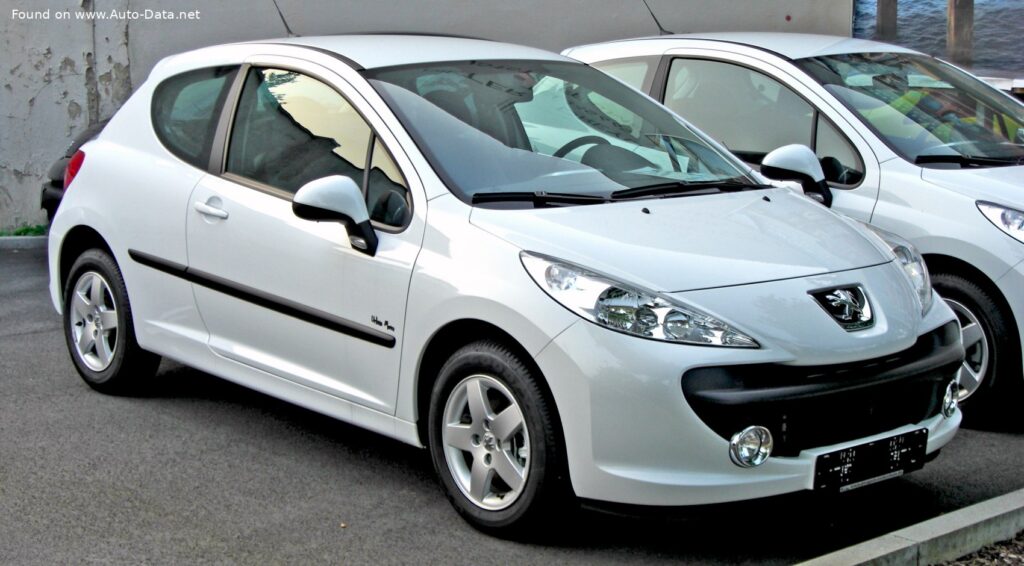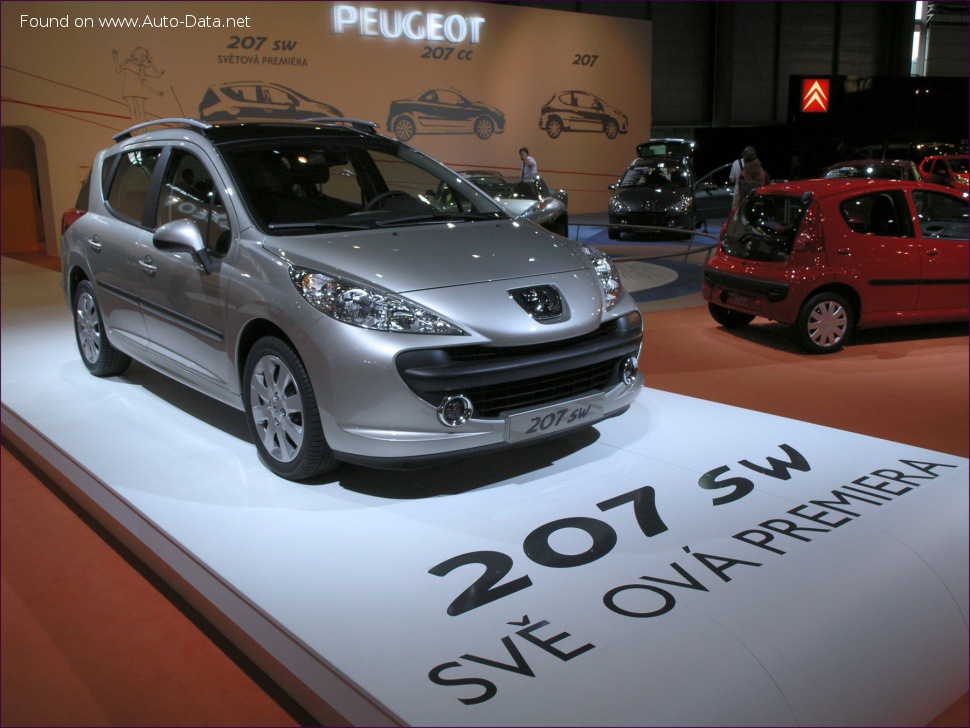
Introduction to the Peugeot 207 SW 1.6 HDi (90 Hp)
The Peugeot 207 SW, a distinctive station wagon variant of the popular Peugeot 207 supermini, represented a significant offering in the competitive European B-segment. Produced from 2007 to 2009, this particular iteration, the Peugeot 207 SW 1.6 HDi (90 Hp), was meticulously designed to cater to families and individuals prioritizing a blend of practicality, exceptional fuel efficiency, and a comfortable driving experience within a compact footprint. While never officially imported or sold in the United States market, the 207 SW carved out a substantial niche in its primary European market, embodying the continent’s well-established preference for smaller, versatile vehicles equipped with highly efficient diesel powertrains.
This model effectively extended the 207’s appeal beyond the standard hatchback, providing significantly enhanced cargo capacity and a more family-oriented design. Crucially, it achieved this expansion without compromising the nimble handling and engaging driving dynamics that were characteristic of its smaller hatchback sibling. The 207 SW was a testament to Peugeot’s strategy of offering diverse body styles to meet varied consumer needs, presenting a compelling package for those who required more utility than a traditional hatchback but still desired the maneuverability and economy of a subcompact car.
Engine & Performance of the Peugeot 207 SW
At the heart of the Peugeot 207 SW 1.6 HDi (90 Hp) lay its highly regarded 1.6-liter HDi (High-pressure Direct injection) turbodiesel engine. This four-cylinder, inline powerplant, specifically identified by its internal code 9HV DV6ATED4, was a ubiquitous and celebrated fixture across a multitude of Peugeot and Citroën models during that era. It garnered widespread acclaim for its robust and reliable performance, coupled with truly remarkable fuel economy figures.
The engine was engineered to deliver a respectable 90 horsepower at 4000 rpm. More impressively, it generated a substantial 158.58 lb.-ft. of torque at a remarkably low 1750 rpm. This ample pulling power was critical for providing confident acceleration and effortless highway cruising, especially considering the vehicle’s compact dimensions and its potential for carrying passengers and cargo. The engine’s advanced design incorporated a DOHC (Double Overhead Camshaft) valvetrain with four valves per cylinder, a configuration that ensured optimized air intake and exhaust flow, contributing to its efficiency and responsiveness.
Performance was further enhanced by a turbocharger paired with an intercooler, which boosted the engine’s output and delivered a strong, linear power delivery—a hallmark characteristic of modern turbodiesel engines. Power was channeled to the front wheels through a precise 5-speed manual transmission. This powertrain combination allowed the 207 SW 1.6 HDi to accelerate from 0 to 60 mph in a respectable 11.2 seconds, with a maximum speed of 113.09 mph. These performance metrics underscored its capability as a competent and versatile daily driver, equally at home navigating bustling urban environments or undertaking longer journeys across the varied European topography.
One of the most compelling attributes of this powertrain was its exceptional fuel efficiency. The 207 SW 1.6 HDi achieved an impressive combined fuel economy of 51.1 US mpg (4.6 l/100 km). Urban driving conditions saw it return an excellent 40.6 US mpg, while extra-urban (highway) cruising pushed its efficiency to an outstanding 58.8 US mpg. These figures, combined with low CO2 emissions of just 119 g/km and adherence to the Euro 4 emission standard, positioned it as an environmentally conscious and highly cost-effective choice for European consumers, who often contend with high fuel prices and stringent environmental regulations. Furthermore, its 13.21 US gallon fuel tank capacity provided a substantial cruising range, enhancing its practicality for extended travel.
Design & Features of the Peugeot 207 SW
The Peugeot 207 SW distinguished itself from its hatchback sibling primarily through its elegantly extended roofline and a thoughtfully redesigned rear section, transforming it into a practical yet stylish station wagon. Despite its enhanced utility, the vehicle maintained a relatively compact footprint, measuring 163.62 inches in length, 68.82 inches in width, and 60.12 inches in height. These dimensions made it ideally suited for navigating the often-narrow city streets and tight parking spaces prevalent across Europe. A wheelbase of 100 inches contributed to both a stable ride and a comfortable amount of interior space for its class.
The five-door, five-seat configuration cemented the 207 SW’s status as a highly versatile family vehicle. Its most significant appeal lay in its cargo capacity. While the minimum trunk space of 11.9 cubic feet was comparable to many standard hatchbacks, the true genius of its design was revealed when the rear seats were folded down. This expanded the cargo volume to a generous 44.43 cubic feet, a figure that rivaled some vehicles from the segment above. This impressive flexibility allowed owners to effortlessly transport a wide array of items, from weekly groceries to luggage for a family vacation, or even larger objects for home improvement projects. The design also incorporated a low loading sill and a wide aperture for the tailgate, further enhancing its ease of use and practicality.
Aesthetically, the 207 SW proudly carried over the distinctive “cat-eye” headlights and the prominent, smiling grille that characterized the entire 207 range, lending it a playful yet assertive front fascia. The flowing lines continued gracefully along the vehicle’s flanks, culminating in a neatly integrated rear design that skillfully avoided the often-boxy appearance associated with many station wagons. Standard features for its era included responsive power steering, contributing to effortless maneuverability. Safety was a key consideration, addressed through the inclusion of an Anti-lock Braking System (ABS), ventilated disc brakes at the front, and reliable drum brakes at the rear, ensuring dependable stopping power under various conditions.
The vehicle’s chassis was engineered for a comfortable and predictable ride, a hallmark of French automotive design. It featured an independent McPherson type front suspension and a semi-independent rear suspension with coil springs. This setup effectively absorbed road imperfections while maintaining composure, making both short commutes and longer journeys pleasant. The 207 SW rode on 185/65 R15 tires mounted on 15-inch wheel rims, a common and effective configuration for balancing ride comfort, handling dynamics, and cost-effectiveness in its class.
Technical Specifications
The following table provides a comprehensive overview of the technical specifications for the Peugeot 207 SW 1.6 HDi (90 Hp).
| Category | Specification | Value |
|---|---|---|
| General Information | Brand | Peugeot |
| Model | 207 | |
| Generation | 207 SW | |
| Type (Engine) | 1.6 HDi (90 Hp) | |
| Production Start | 2007 | |
Production End

|