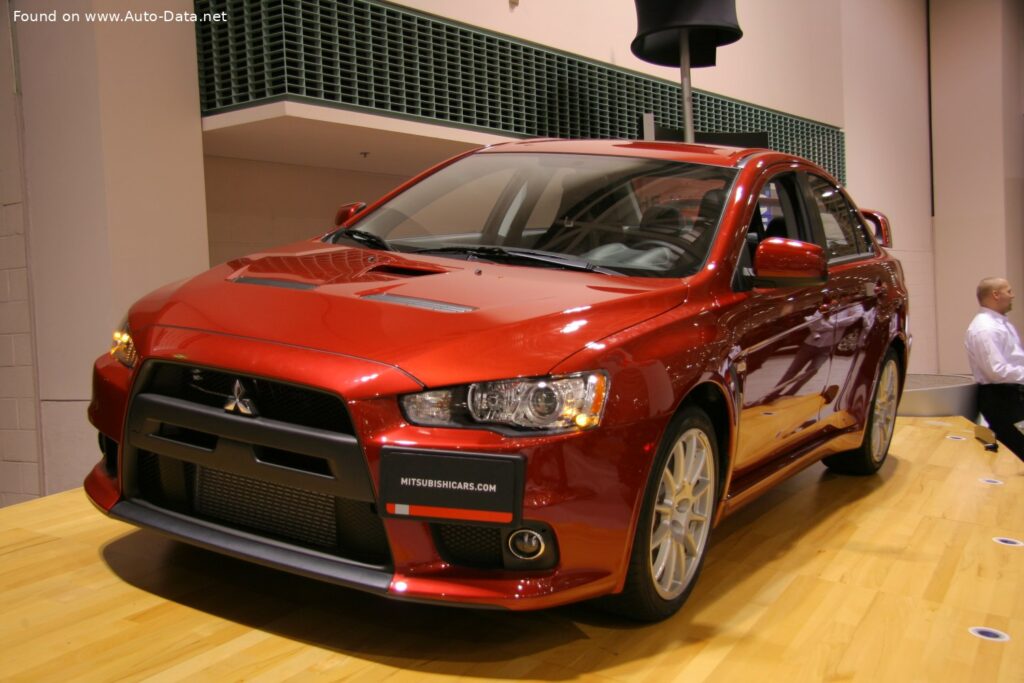
Introduction to the Mitsubishi Lancer Evolution X
The Mitsubishi Lancer Evolution X represents the tenth and final generation of Mitsubishi’s iconic high-performance sports sedan, a lineage deeply rooted in rally motorsport. Launched in 2007 for the 2008 model year, the Evolution X marked a significant departure from its predecessors in terms of design, platform, and powertrain, yet it retained the core philosophy of a rally-bred street machine. This particular variant, the 2.0 MIVEC (295 Hp) S-AWC, produced between 2008 and 2010, exemplified the model’s formidable capabilities, combining a potent turbocharged engine with Mitsubishi’s highly advanced Super All-Wheel Control (S-AWC) system. Positioned in the highly competitive compact performance segment, the Lancer Evolution X aimed to fuse cutting-edge technology with the raw driving exhilaration that had defined the “Evo” name for over a decade.
Engine and Performance: The Heart of the Mitsubishi Lancer Evolution X
At the core of the Mitsubishi Lancer Evolution X 2.0 MIVEC (295 Hp) S-AWC was the newly developed 4B11T engine, a 2.0-liter (1998 cm3 or 121.93 cu. in.) all-aluminum inline-four power plant. This engine, featuring a DOHC valvetrain with Mitsubishi Innovative Valve timing Electronic Control (MIVEC) on both intake and exhaust camshafts, represented a modernization over the previous 4G63 engine. Equipped with a turbocharger and an intercooler, the 4B11T delivered a robust 295 horsepower at 6500 rpm, translating to an impressive power output of 147.6 horsepower per liter. Peak torque stood at 269.95 lb.-ft. (366 Nm) available at a relatively low 3500 rpm, providing a broad powerband ideal for both spirited driving and track performance.
Power was sent to all four wheels through a standard 5-speed manual transmission, a choice that underscored the car’s driver-centric philosophy. This powertrain, combined with the sophisticated Super All-Wheel Control (S-AWC) system, allowed the Lancer Evolution X to achieve remarkable acceleration figures. The sprint from 0 to 60 mph was dispatched in a mere 5.1 seconds, while 0 to 62 mph (100 km/h) took 5.4 seconds. The vehicle’s top speed was electronically limited to 149.13 mph (240 km/h), a testament to its performance credentials.
Despite its performance focus, Mitsubishi also paid attention to efficiency for its era. The combined fuel economy for this variant was rated at 23.1 US mpg (10.2 l/100 km), with urban consumption at 17.3 US mpg (13.6 l/100 km) and extra-urban at 28.3 US mpg (8.3 l/100 km). CO2 emissions were 243 g/km, meeting Euro 4 emission standards. The weight-to-power ratio was an impressive 5.3 kg/Hp (189.1 Hp/tonne), highlighting the car’s lean mass relative to its output.
Design and Features
Exterior and Interior Aesthetics
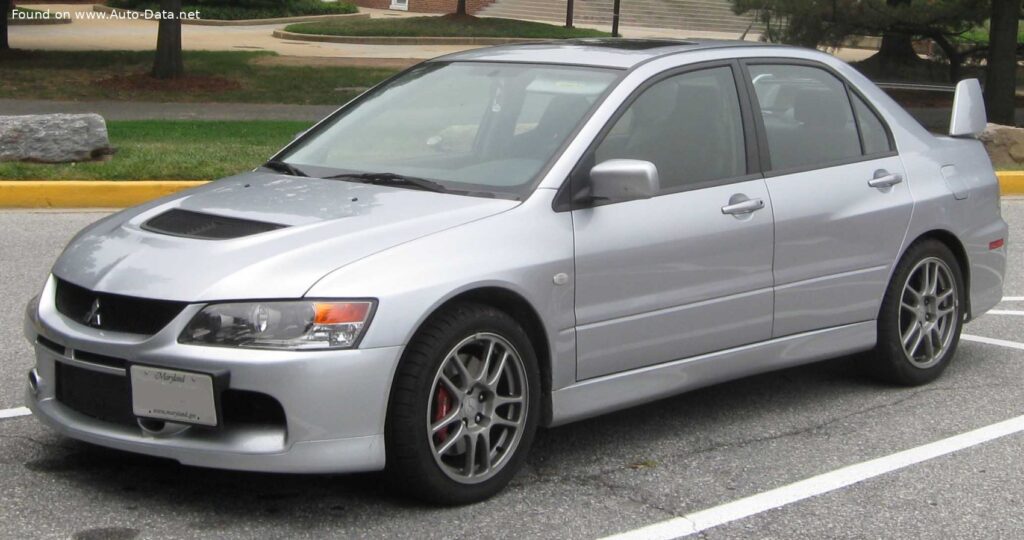
The Mitsubishi Lancer Evolution X adopted a more aggressive and contemporary design compared to its predecessors, based on the larger and more rigid GS platform shared with the standard Lancer. Its four-door sedan body type exuded a purposeful stance, characterized by a wide, gaping front grille, prominent hood vents for engine cooling, flared wheel arches, and a signature large rear spoiler that was both functional for aerodynamics and a visual hallmark of the Evo series. The overall length of the vehicle was 177.36 inches (4505 mm), with a width of 71.26 inches (1810 mm) and a height of 58.27 inches (1480 mm), contributing to its muscular road presence.
Inside, the Evolution X featured a driver-focused cockpit. While sharing some elements with the standard Lancer, it differentiated itself with performance-oriented touches such as sport seats, a unique instrument cluster, and specific trim. Seating for five was available, making it a surprisingly practical performance car, although the rear trunk space was a modest 11.41 cu. ft. (323 liters) due to the all-wheel-drive components.
Chassis, Suspension, and Braking Systems
The chassis of the Evolution X was engineered for exceptional handling and stability. It utilized an independent McPherson strut suspension with coil springs and a transverse stabilizer at the front, paired with an independent multi-link suspension, coil springs, and a transverse stabilizer at the rear. This setup provided a balance of ride comfort and dynamic performance, crucial for a car designed for both road and track.
Braking power was equally impressive, with large ventilated discs on all four wheels: 350 mm in diameter at the front and 330 mm at the rear. These were complemented by an Anti-lock Braking System (ABS) as standard, ensuring confident stopping power under various conditions. The steering system featured a hydraulic rack and pinion setup, delivering precise and communicative feedback to the driver. The vehicle rode on performance-oriented 245/40 R18 tires mounted on 8.5J x 18-inch wheel rims, providing substantial grip.
Super All-Wheel Control (S-AWC)
Perhaps the most defining feature of the Lancer Evolution X was its advanced Super All-Wheel Control (S-AWC) system. This sophisticated drivetrain architecture managed the permanent all-wheel-drive system by integrating various dynamic control components: Active Yaw Control (AYC), Active Center Differential (ACD), Active Stability Control (ASC), and Sport ABS. S-AWC continuously monitored road conditions and driver inputs, distributing torque not only between the front and rear axles but also between the left and right wheels to optimize traction, stability, and handling. This system allowed the Evolution X to carve through corners with remarkable precision and maintain composure even at the limits of adhesion, distinguishing it from many of its competitors.
Technical Specifications
| Category | Specification |
|---|---|
| Brand | Mitsubishi |
| Model | Lancer Evolution |
| Generation | Lancer Evolution X |
| Type (Engine) | 2.0 MIVEC (295 Hp) S-AWC |
| Production Start | 2008 |
| Production End | 2010 |
| Body Type | Sedan |
| Seats | 5 |
| Doors | 4 |
| Performance Specs | |
| 0 – 60 mph Acceleration | 5.1 seconds |
| 0 – 62 mph (100 km/h) Acceleration | 5.4 seconds |
| Maximum Speed | 149.13 mph (240 km/h) |
| Fuel Consumption (Urban) | 17.3 US mpg (13.6 l/100 km) |
| Fuel Consumption (Extra Urban) | 28.3 US mpg (8.3 l/100 km) |
| Fuel Consumption (Combined) | 23.1 US mpg (10.2 l/100 km) |
| CO2 Emissions (NEDC) | 243 g/km |
| Emission Standard | Euro 4 |
| Fuel Type | Petrol (Gasoline) |
| Weight-to-Power Ratio | 5.3 kg/Hp (189.1 Hp/tonne) |
| Weight-to-Torque Ratio | 4.3 kg/Nm (234.6 Nm/tonne) |
| Engine Specs | |
| Power | 295 Hp @ 6500 rpm |
| Power per liter | 147.6 Hp/l |
| Torque | 269.95 lb.-ft. (366 Nm) @ 3500 rpm |
| Engine Layout | Front, Transverse |
| Engine Model/Code | 4B11T |
| Engine Displacement | 121.93 cu. in. (1998 cm3) |
| Number of Cylinders | 4 |
| Engine Configuration | Inline |
| Cylinder Bore | 3.39 in. (86 mm) |
| Piston Stroke | 3.39 in. (86 mm) |
| Compression Ratio | 9:1 |
| Valves per Cylinder | 4 |
| Fuel Injection System | Multi-port manifold injection |
| Engine Aspiration | Turbocharger, Intercooler |
| Valvetrain | DOHC |
| Engine Oil Capacity | 5.92 US qt (5.6 l) |
| Coolant Capacity | 7.93 US qt (7.5 l) |
| Dimensions, Volume & Weights | |
| Kerb Weight | 3439.21 lbs. (1560 kg) |
| Maximum Weight | 4497.43 lbs. (2040 kg) |
| Max Load | 1058.22 lbs. (480 kg) |
| Trunk (Boot) Space | 11.41 cu. ft. (323 l) |
| Fuel Tank Capacity | 14.53 US gal (55 l) |
| Length | 177.36 in. (4505 mm) |
| Width | 71.26 in. (1810 mm) |
| Height | 58.27 in. (1480 mm) |
| Wheelbase | 104.33 in. (2650 mm) |
| Front Track | 60.83 in. (1545 mm) |
| Rear Track | 60.83 in. (1545 mm) |
| Front Overhang | 36.22 in. (920 mm) |
| Rear Overhang | 36.81 in. (935 mm) |
| Ride Height (Ground Clearance) | 5.31 in. (135 mm) |
| Minimum Turning Circle | 38.71 ft. (11.8 m) |
| Drivetrain, Brakes & Suspension | |
| Drivetrain Architecture | Internal Combustion engine drives permanently all four wheels (AWD) |
| Drive Wheel | All-Wheel Drive (4×4) |
| Gearbox Type | 5 gears, manual transmission |
| Front Suspension | Coil spring, Independent McPherson, Transverse stabilizer |
| Rear Suspension | Independent multi-link, Transverse stabilizer, Coil spring |
| Front Brakes | Ventilated discs, 13.78 in. (350 mm) |
| Rear Brakes | Ventilated discs, 12.99 in. (330 mm) |
| Assisting Systems | ABS (Anti-lock braking system) |
| Steering Type | Steering rack and pinion |
| Power Steering | Hydraulic Steering |
| Tire Size | 245/40 R18 |
| Wheel Rims Size | 8.5J x 18 |
Legacy and Market Impact
The Mitsubishi Lancer Evolution X, particularly the 2.0 MIVEC (295 Hp) S-AWC variant from 2008-2010, holds a significant place in automotive history as the culmination of Mitsubishi’s rally-inspired performance car development. It entered a highly competitive niche, primarily squaring off against its perennial rival, the Subaru Impreza WRX STI. Both vehicles shared a philosophy of turbocharged all-wheel-drive performance derived from their World Rally Championship heritage, creating a fierce rivalry that captivated enthusiasts worldwide, including a strong following in the United States.
The Evo X’s reputation was built on its uncompromising performance, exceptional handling dynamics, and the sheer technological prowess of its S-AWC system. While some purists initially lamented the shift from the venerable 4G63 engine to the new 4B11T, and the increased curb weight compared to earlier generations, the Evo X proved itself as a formidable machine on road and track. Its ability to put power down effectively and maintain stability through corners earned it accolades from automotive journalists and enthusiasts alike.
Beyond its direct competitor, the Evo X also contended with other performance sedans and hot hatches, such as the Audi S3 in Europe and later models like the Ford Focus RS, though few could match its pure rally pedigree. Its impact on the market was profound, solidifying Mitsubishi’s image as a producer of hardcore performance vehicles, even as the company’s overall strategic direction began to shift away from such models.
The Lancer Evolution X’s production run, which ended globally in 2016, marked the conclusion of an era for Mitsubishi. Its discontinuation symbolized a broader trend in the automotive industry, where traditional gasoline-powered performance sedans began to give way to SUVs and electrified vehicles. As such, the Evo X stands as a modern classic, a testament to a time when rally homologation cars ruled the enthusiast landscape. It remains a highly sought-after vehicle in the used market, cherished for its engineering, driving engagement, and its iconic status as the final chapter of a legendary performance lineage. The 2008-2010 2.0 MIVEC (295 Hp) S-AWC model, with its potent engine and advanced S-AWC, is particularly remembered as a prime example of the Evo X’s formidable capabilities.