The Skoda Octavia III Combi 1.6 TDI (110 Hp) GreenLine: A Paragon of European Efficiency
The
Skoda Octavia III Combi 1.6 TDI (110 Hp) GreenLine
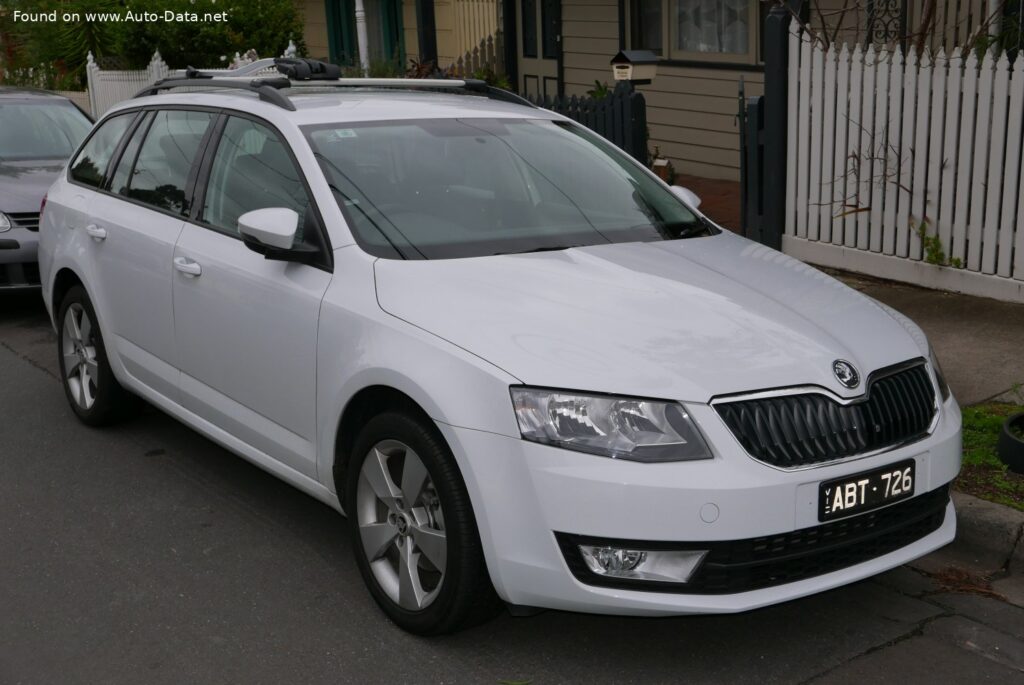
, produced between May 2013 and 2017, represents a significant chapter in the evolution of Skoda as a globally recognized automotive brand. As a pivotal model in the Czech automaker’s lineup, the third-generation Octavia Combi (the European term for station wagon or estate) solidified Skoda’s reputation for delivering exceptional value, practicality, and robust engineering, largely thanks to its integration within the Volkswagen Group. This particular variant, the 1.6 TDI GreenLine, was specifically engineered to address the growing demand for fuel efficiency and reduced environmental impact in the European market, a segment where Skoda has historically excelled. While not officially sold in the United States, the Octavia III Combi played a crucial role in Europe’s compact car segment, offering a compelling blend of spaciousness, comfort, and remarkable economy for families and business users alike.
Positioned in the highly competitive C-segment, the Octavia III Combi distinguished itself with its “simply clever” philosophy, offering intelligent features and cavernous interior space that often rivaled vehicles from higher segments. The GreenLine designation, in particular, signified Skoda’s commitment to eco-conscious motoring, incorporating a suite of technologies designed to minimize fuel consumption and CO2 emissions without significantly compromising daily usability. This model, therefore, stands as a testament to European automotive engineering’s focus on practicality, efficiency, and sustainable performance, providing a benchmark for what a compact station wagon could achieve in its era.
Engine and Performance: The Heart of the Skoda Octavia III Combi 1.6 TDI GreenLine
At the core of the
Skoda Octavia III Combi 1.6 TDI (110 Hp) GreenLine
lies a highly efficient 1.6-liter (1598 cm3 or 97.52 cu. in.) turbocharged diesel engine, part of the Volkswagen Group’s renowned EA288 family (specifically engine codes CRKB, CXXB, DBKA). This inline four-cylinder powerplant, featuring a DOHC valvetrain with four valves per cylinder and a common rail fuel injection system, was meticulously optimized for both performance and economy. It delivered a respectable 110 horsepower (Hp) at a flexible range of 3250-4000 revolutions per minute (rpm), making it capable of effortless highway cruising and confident overtaking.
More impressively, the engine generated a substantial 250 Newton-meters (Nm) of torque, equivalent to 184.39 lb.-ft., available from a low 1500 rpm all the way up to 3000 rpm. This broad torque band was a key factor in the vehicle’s responsive feel and excellent real-world drivability, especially when loaded with passengers and cargo. Power was transmitted to the front wheels via a smooth-shifting 6-speed manual transmission, a choice that further enhanced the driver’s control over the vehicle’s efficiency.
Performance figures for the GreenLine variant were commendable for an economy-focused model: the Octavia III Combi could accelerate from 0 to 60 mph in a swift 10.2 seconds and reach a top speed of 126.76 mph (204 km/h). However, the true highlight of this powertrain was its extraordinary fuel economy. The GreenLine package, which included features like a Start & Stop system, a particulate filter, and aerodynamic enhancements (evidenced by a low drag coefficient of 0.287), allowed the vehicle to achieve a combined fuel consumption of an astounding 3.2 liters per 100 kilometers, translating to approximately 73.5 US miles per gallon. Urban consumption was rated at 61.9 US mpg, while extra-urban driving could yield up to 78.4 US mpg. This exceptional efficiency also resulted in very low CO2 emissions of just 85 grams per kilometer, meeting the stringent Euro 5 emission standards of its time. The weight-to-power ratio of 11 kg/Hp (91.3 Hp/tonne) further underscored its balanced performance envelope.
Design and Features: Practicality Meets Modernity
The
Skoda Octavia III Combi 1.6 TDI (110 Hp) GreenLine
embodied a design philosophy that blended understated elegance with unparalleled practicality. As a five-door, five-seat station wagon, its body style was inherently designed for utility. The exterior styling was clean and contemporary, reflecting Skoda’s evolving design language under Volkswagen Group’s influence. Its dimensions—183.43 inches in length, 71.42 inches in width (79.41 inches including mirrors), and 57.68 inches in height—contributed to a substantial road presence while ensuring ample interior volume. The generous 105.75-inch wheelbase was particularly instrumental in providing excellent passenger comfort and stability.
Inside, the Octavia Combi was renowned for its thoughtful ergonomics and high-quality materials, creating a comfortable and user-friendly cabin environment. The true strength, however, lay in its cargo capacity. With the rear seats in place, the trunk offered an impressive 21.54 cubic feet (610 liters) of space, which could expand to a cavernous 61.45 cubic feet (1740 liters) with the rear seats folded down. This made it one of the most capacious vehicles in its class, ideal for families, travelers, or those needing to transport significant loads. The maximum load capacity was 1421.98 lbs (645 kg), and it could tow up to 2204.62 lbs (1000 kg) with brakes.
From a technical standpoint, the vehicle featured an independent McPherson strut front suspension with coil springs and an anti-roll bar, paired with a torsion beam rear suspension. This setup provided a comfortable ride while maintaining composed handling. Stopping power came from ventilated disc brakes at the front and disc brakes at the rear, augmented by an Anti-lock Braking System (ABS) for enhanced safety. The electric power steering system offered precise control and ease of maneuvering, with a minimum turning circle of 36.25 feet (11.05 meters). The GreenLine model also featured specific 195/65 R15 tires on 6J x 15 wheel rims, chosen to optimize rolling resistance and further contribute to its exceptional fuel economy. These features collectively underscored the Octavia Combi’s commitment to being a well-rounded, safe, and highly practical vehicle for the discerning European consumer.
Technical Specifications
| Category | Specification |
|---|---|
| General Information | |
| Brand | Skoda |
| Model | Octavia |
| Generation | Octavia III Combi |
| Type (Engine) | 1.6 TDI (110 Hp) GreenLine |
| Production Start | May, 2013 |
| Production End | 2017 |
| Powertrain Architecture | Internal Combustion engine |
| Body type | Station wagon (estate) |
| Seats | 5 |
| Doors | 5 |
| Performance Specs | |
| Fuel consumption (urban) | 3.8 l/100 km (61.9 US mpg) |
| Fuel consumption (extra urban) | 3 l/100 km (78.4 US mpg) |
| Fuel consumption (combined) | 3.2 l/100 km (73.5 US mpg) |
| CO2 emissions (NEDC) | 85 g/km |
| Fuel Type | Diesel |
| Acceleration 0 – 60 mph | 10.2 sec |
| Maximum speed | 126.76 mph (204 km/h) |
| Emission standard | Euro 5 |
| Weight-to-power ratio | 11 kg/Hp (91.3 Hp/tonne) |
| Weight-to-torque ratio | 4.8 kg/Nm (207.5 Nm/tonne) |
| Engine Specs | |
| Power | 110 Hp @ 3250-4000 rpm |
| Power per liter | 68.8 Hp/l |
| Torque | 250 Nm (184.39 lb.-ft.) @ 1500-3000 rpm |
| Engine layout | Front, Transverse |
| Engine Model/Code | EA288 / CRKB, CXXB, DBKA |
| Engine displacement | 1598 cm3 (1.6 liters / 97.52 cu. in.) |
| Number of cylinders | 4 |
| Engine configuration | Inline |
| Cylinder Bore | 3.13 in. (79.5 mm) |
| Piston Stroke | 3.17 in. (80.5 mm) |
| Compression ratio | 16.2:1 |
| Number of valves per cylinder | 4 |
| Fuel injection system | Diesel Commonrail |
| Engine aspiration | Turbocharger, Intercooler |
| Valvetrain | DOHC |
| Engine oil capacity | 4.86 US qt (4.6 l) |
| Coolant | 8.88 US qt (8.4 l) |
| Engine systems | Start & Stop System, Particulate filter |
| Space, Volume and Weights | |
| Kerb Weight | 2656.57 lbs (1205 kg) |
| Max. weight | 4078.55 lbs (1850 kg) |
| Max load | 1421.98 lbs (645 kg) |
| Trunk (boot) space – minimum | 21.54 cu. ft. (610 l) |
| Trunk (boot) space – maximum | 61.45 cu. ft. (1740 l) |
| Fuel tank capacity | 13.21 US gal (50 l) |
| Max. roof load | 165.35 lbs (75 kg) |
| Permitted trailer load with brakes (12%) | 2204.62 lbs (1000 kg) |
| Permitted trailer load without brakes | 1410.96 lbs (640 kg) |
| Permitted towbar download | 165.35 lbs (75 kg) |
| Dimensions | |
| Length | 183.43 in. (4659 mm) |
| Width | 71.42 in. (1814 mm) |
| Width including mirrors | 79.41 in. (2017 mm) |
| Height | 57.68 in. (1465 mm) |
| Wheelbase | 105.75 in. (2686 mm) |
| Front track | 60.98 in. (1549 mm) |
| Rear (Back) track | 59.84 in. (1520 mm) |
| Front overhang | 34.88 in. (886 mm) |
| Rear overhang | 42.8 in. (1087 mm) |
| Ride height (ground clearance) | 5.51 in. (140 mm) |
| Drag coefficient (Cd) | 0.287 |
| Minimum turning circle | 36.25 ft. (11.05 m) |
| Approach angle | 13.9° |
| Departure angle | 12.2° |
| Drivetrain, Brakes and Suspension | |
| Drivetrain Architecture | Front-wheel drive, Internal Combustion engine |
| Drive wheel | Front wheel drive |
| Number of gears and type of gearbox | 6 gears, manual transmission |
| Front suspension | Independent, type McPherson with coil spring and anti-roll bar |
| Rear suspension | Coil spring, Torsion |
| Front brakes | Ventilated discs |
| Rear brakes | Disc |
| Assisting systems | ABS (Anti-lock braking system) |
| Steering type | Steering rack and pinion |
| Power steering | Electric Steering |
| Tires size | 195/65 R15 |
| Wheel rims size | 6J x 15 |
Legacy and Market Impact in Europe
The
Skoda Octavia III Combi 1.6 TDI (110 Hp) GreenLine
, and indeed the entire third-generation Octavia lineup, left an indelible mark on the European automotive landscape. Its legacy is primarily defined by its ability to punch above its weight class, offering Volkswagen Group engineering and quality at a more accessible price point than its Audi or VW siblings. The Octavia Combi quickly earned a reputation for being an exceptionally reliable, practical, and economical workhorse, appealing to a broad spectrum of buyers from young families to fleet operators.
In the European market, the Octavia Combi’s primary competitors included other popular C-segment station wagons such as the Ford Focus Wagon, Opel Astra Sports Tourer, Renault Megane Estate, and Peugeot 308 SW. Against these rivals, the Octavia consistently stood out due to its class-leading interior space, particularly its voluminous trunk, and its no-nonsense, user-friendly approach. The GreenLine variant, with its remarkable fuel efficiency and low CO2 emissions, further enhanced its appeal in markets increasingly sensitive to environmental regulations and running costs. It provided a compelling argument for diesel power during a period when diesel technology was still widely favored for its efficiency advantages.
Historically, the Octavia III generation cemented Skoda’s position as a serious contender in mainstream European markets. It demonstrated that Skoda was not merely a budget brand but a manufacturer capable of producing sophisticated, well-engineered vehicles that offered genuine value and innovation. The GreenLine models, in particular, showcased Skoda’s commitment to sustainable mobility, proving that “eco-friendly” didn’t have to mean sacrificing practicality or performance. While its presence in North America was non-existent, the Octavia III Combi GreenLine remains a significant example of how European automakers tailored specific variants to meet regional demands for efficiency, utility, and cost-effectiveness, contributing to Skoda’s ongoing success and reputation for smart, reliable motoring.