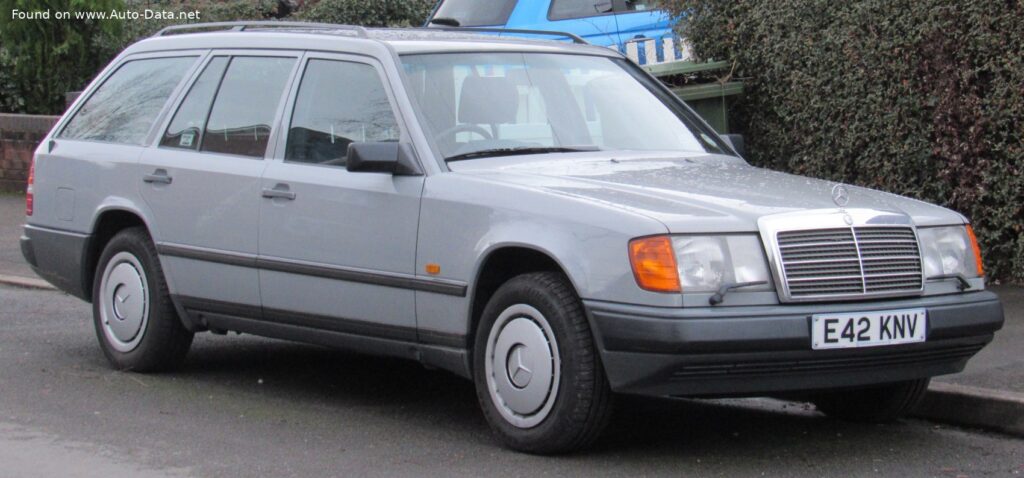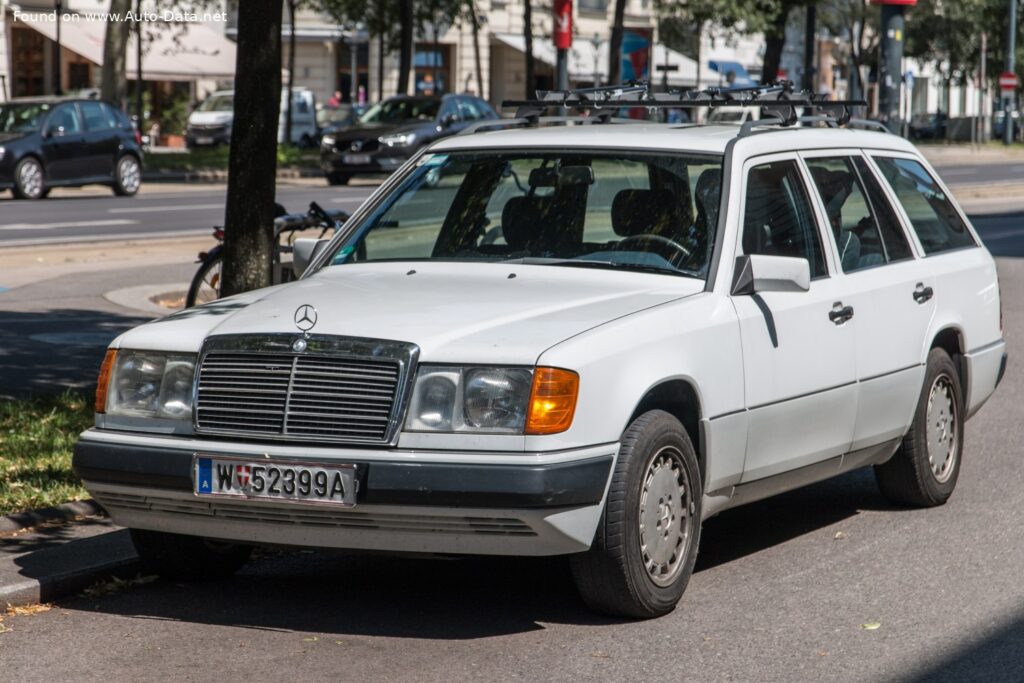
Introduction to the Mercedes-Benz S124 (facelift 1989) 200 TD
The Mercedes-Benz W124 series, produced from 1984 to 1996, stands as a testament to German engineering and a high-water mark for the brand’s reputation for durability and over-engineering. Within this esteemed lineage, the S124 designation refers to the station wagon (estate) variant, renowned for its practicality, robust construction, and timeless design. The specific model under review, the Mercedes-Benz S124 (facelift 1989) 200 TD (75 Hp), represents a crucial period in the W124’s production cycle, incorporating the minor yet significant updates introduced with the 1989 facelift. This particular model, produced from September 1989 to June 1991, was an entry-level diesel offering primarily targeted at the European market, where diesel engines were highly favored for their fuel efficiency and longevity, especially for long-distance travel and commercial applications like taxis.
Positioned in the premium mid-size segment—the precursor to today’s E-Class—the S124 200 TD combined the inherent quality and safety of the W124 platform with the versatility of a station wagon body style. While not designed for blistering performance, its naturally aspirated diesel engine emphasized reliability, economy, and a smooth, unhurried driving experience, perfectly aligning with the practical demands of its intended European buyers. The S124 was not officially sold in the United States in this specific diesel configuration, but its reputation for uncompromising build quality and mechanical fortitude resonated globally, influencing automotive design and engineering standards for decades to come.
Engine and Performance of the Mercedes-Benz S124 (facelift 1989) 200 TD
Powertrain Architecture and Characteristics
Powering the Mercedes-Benz S124 (facelift 1989) 200 TD was the OM 601 D 20 / 601.912 engine, a 2.0-liter (121.86 cubic inches) naturally aspirated inline-four diesel unit. This engine was a hallmark of Mercedes-Benz’s commitment to diesel technology, known for its extreme robustness and remarkable longevity. With an output of 75 horsepower at 4600 rpm and a peak torque of 92.93 lb.-ft. (126 Nm) delivered between 2700 and 3550 rpm, the 200 TD was engineered for endurance and efficiency rather than outright speed. The engine’s layout was front, longitudinal, driving the rear wheels, a classic Mercedes-Benz setup that ensured balanced handling and excellent traction.
The OM 601 engine featured a SOHC (Single Overhead Camshaft) valvetrain with two valves per cylinder and utilized a precombustion chamber injection system, a common and reliable technology for diesel engines of its era. With a high compression ratio of 22:1, this engine was designed to maximize fuel efficiency. Paired with a 5-speed manual transmission, the powertrain offered a direct and engaging driving experience, allowing the driver to make the most of the available power and torque. The engine oil capacity was 6.5 liters, and the coolant capacity was 8.5 liters, reflecting the robust cooling and lubrication systems designed for long-term reliability.
Driving Dynamics and Fuel Economy
Performance figures for the 200 TD were modest by modern standards, yet entirely adequate for its intended purpose. The vehicle accelerated from 0 to 60 mph in 20.6 seconds, with a top speed of 93.21 mph (150 km/h). These figures underscored its role as a practical workhorse and a comfortable cruiser rather than a performance machine. Its strength lay in its impressive fuel economy: an urban consumption rating of 27 US mpg and an extra-urban (highway) rating of 43.6 US mpg. These numbers were exceptional for a vehicle of its size and weight in the late 1980s, making it an economically sensible choice for high-mileage drivers. The 19.02 US gallon (72-liter) fuel tank provided a substantial cruising range, further enhancing its appeal for long-distance travel. The vehicle’s weight-to-power ratio stood at 19.5 kg/Hp (51.4 Hp/tonne), indicating a focus on durability and load-carrying capability over raw acceleration.
Design and Features
Timeless Aesthetics and Practicality
The Mercedes-Benz S124 (facelift 1989) maintained the iconic design language of the W124 series, characterized by its clean lines, understated elegance, and functional aesthetic. As a station wagon (estate), it offered exceptional practicality with its five doors and five seats, making it an ideal family vehicle or a reliable workhorse for businesses. The facelift in 1989 brought subtle refinements, typically including updated side cladding, body-colored bumpers, and minor interior tweaks, enhancing its contemporary appeal without altering its fundamental, enduring design.
Measuring 187.6 inches in length, 68.5 inches in width, and 58.62 inches in height, with a generous 110.24-inch wheelbase, the S124 provided a spacious and comfortable cabin for occupants, along with a substantial cargo area. The robust body structure, a hallmark of Mercedes-Benz engineering, contributed to both occupant safety and the vehicle’s legendary longevity. The kerb weight of 3218.75 lbs (1460 kg) and a maximum load capacity of 1366.87 lbs (620 kg) further highlighted its ability to handle significant loads, a key attribute for a station wagon.
Chassis and Safety Innovations
The W124 chassis was renowned for its advanced suspension system, and the S124 200 TD benefited from this engineering prowess. It featured a double wishbone front suspension and a groundbreaking independent multi-link rear suspension. This multi-link setup, pioneered by Mercedes-Benz, provided exceptional ride comfort, precise handling, and superior road holding for its time. Braking duties were handled by disc brakes on both the front and rear wheels, augmented by an Anti-lock Braking System (ABS), which was a significant safety feature in the late 1980s, enhancing control during emergency stops.
Steering was managed by a hydraulic power-assisted cone worm with recirculation balls system, offering precise control and a comfortable steering feel. The vehicle rode on 195/65 R15 tires mounted on 6.5J x 15 wheel rims, providing a good balance of grip, comfort, and durability. The interior was characterized by high-quality materials, ergonomic design, and a focus on driver and passenger comfort, typical of Mercedes-Benz vehicles of this era. Features like sturdy seat upholstery, clear instrumentation, and effective ventilation systems contributed to a premium ownership experience.
Technical Specifications
| Category | Specification |
|---|---|
| General Information | |
| Brand | Mercedes-Benz |
| Model | W124 |
| Generation | S124 (facelift 1989) |
| Type (Engine) | 200 TD (75 Hp) |
| Start of Production | September, 1989 |
| End of Production | June, 1991 |
| Powertrain Architecture | Internal Combustion engine |
| Body Type | Station wagon (estate) |
| Seats | 5 |
| Doors | 5 |
| Performance Specs | |
| Fuel Consumption (Urban) | 27 US mpg (8.7 l/100 km) |
| Fuel Consumption (Extra Urban) | 43.6 US mpg (5.4 l/100 km) |
| Fuel Type | Diesel |
| Acceleration 0 – 60 mph | 20.6 sec |
| Maximum Speed | 93.21 mph (150 km/h) |
| Weight-to-Power Ratio | 19.5 kg/Hp (51.4 Hp/tonne) |
| Weight-to-Torque Ratio | 11.6 kg/Nm (86.3 Nm/tonne) |
| Engine Specs | |
| Power | 75 Hp @ 4600 rpm |
| Power per liter | 37.6 Hp/l |
| Torque | 92.93 lb.-ft. @ 2700-3550 rpm (126 Nm) |
| Engine Layout | Front, Longitudinal |
| Engine Model/Code | OM 601 D 20 / 601.912 |
| Engine Displacement | 2.0 liters (1997 cm3 / 121.86 cu. in.) |
| Number of Cylinders | 4 |
| Engine Configuration | Inline |
| Cylinder Bore | 3.43 in (87 mm) |
| Piston Stroke | 3.31 in (84 mm) |
| Compression Ratio | 22:1 |
| Number of Valves per Cylinder | 2 |
| Fuel Injection System | Precombustion chamber injection |
| Engine Aspiration | Naturally aspirated engine |
| Valvetrain | SOHC |
| Engine Oil Capacity | 6.87 US qt (6.5 l) |
| Coolant Capacity | 8.98 US qt (8.5 l) |
| Space, Volume and Weights | |
| Kerb Weight | 3218.75 lbs (1460 kg) |
| Max. Weight | 4585.62 lbs (2080 kg) |
| Max Load | 1366.87 lbs (620 kg) |
| Fuel Tank Capacity | 19.02 US gal (72 l) |
| Dimensions | |
| Length | 187.6 in (4765 mm) |
| Width | 68.5 in (1740 mm) |
| Height | 58.62 in (1489 mm) |
| Wheelbase | 110.24 in (2800 mm) |
| Front Track | 58.94 in (1497 mm) |
| Rear (Back) Track | 58.94 in (1497 mm) |
| Drivetrain, Brakes and Suspension Specs | |
| Drivetrain Architecture | Rear wheel drive |
| Drive Wheel | Rear wheel drive |
| Number of Gears and Type of Gearbox | 5 gears, manual transmission |
| Front Suspension | Wishbone |
| Rear Suspension | Independent multi-link suspension |
| Front Brakes | Disc |
| Rear Brakes | Disc |
| Assisting Systems | ABS (Anti-lock braking system) |
| Steering Type | Cone worm with recirculation balls |
| Power Steering | Hydraulic Steering |
| Tires Size | Front: 195/65 R15; Rear: 195/65 R15 |
| Wheel Rims Size | Front: 6.5J x 15; Rear: 6.5J x 15 |
Legacy and Market Impact
A Benchmark for Durability and Engineering
The Mercedes-Benz W124 series, including the S124 station wagon, is widely regarded as one of the most robust and “over-engineered” automobiles ever produced. The Mercedes-Benz S124 (facelift 1989) 200 TD, despite being an entry-level variant, fully embodied this reputation. Its naturally aspirated OM 601 diesel engine is legendary for its ability to cover hundreds of thousands, if not over a million, miles with proper maintenance, making it a favorite for taxi operators across Europe and developing nations. This extraordinary longevity and reliability cemented Mercedes-Benz’s image as a builder of indestructible vehicles.
In its primary European market, the S124 200 TD competed against rivals such as the BMW 5-Series Touring (E34 generation), the Audi 100 Avant (C3/C4 generations), and the Volvo 740/940 Estate. While these competitors offered their own strengths, the S124 consistently stood out for its superior build quality, sophisticated multi-link rear suspension, and the almost bulletproof nature of its diesel powertrains. Its blend of luxury, practicality, safety, and unparalleled durability made it a highly desirable vehicle, both new and on the used car market.
Enduring Appeal and Historical Significance
The S124 200 TD’s market impact was profound, setting high standards for what a premium station wagon could be. It demonstrated that a utilitarian body style could be combined with luxury appointments and advanced engineering. Its influence extended beyond mere sales figures; it helped solidify the perception of Mercedes-Benz as the pinnacle of automotive engineering, a reputation that the brand still leverages today. The W124 chassis, in general, is often cited by enthusiasts and experts alike as the last of the “old-school” Mercedes-Benz models, built with an uncompromising approach to quality and longevity before cost-cutting measures became more prevalent in the automotive industry.
Today, the Mercedes-Benz S124, particularly the diesel variants, enjoys a strong cult following among classic car enthusiasts. Its simple, robust mechanics are relatively easy to maintain, and its timeless design continues to turn heads. The 200 TD, with its focus on efficiency and endurance, represents a specific philosophy of motoring that prioritizes reliability and cost-effectiveness over outright performance. It remains a testament to an era when automotive engineering was driven by the pursuit of ultimate durability and functional excellence, leaving an indelible mark on automotive history. Its legacy is one of unwavering quality, practical sophistication, and a mechanical integrity that few vehicles, then or now, can truly match.