Toyota Proace City Verso SWB 1.5 D-4D (130 Hp): A Practical European Workhorse
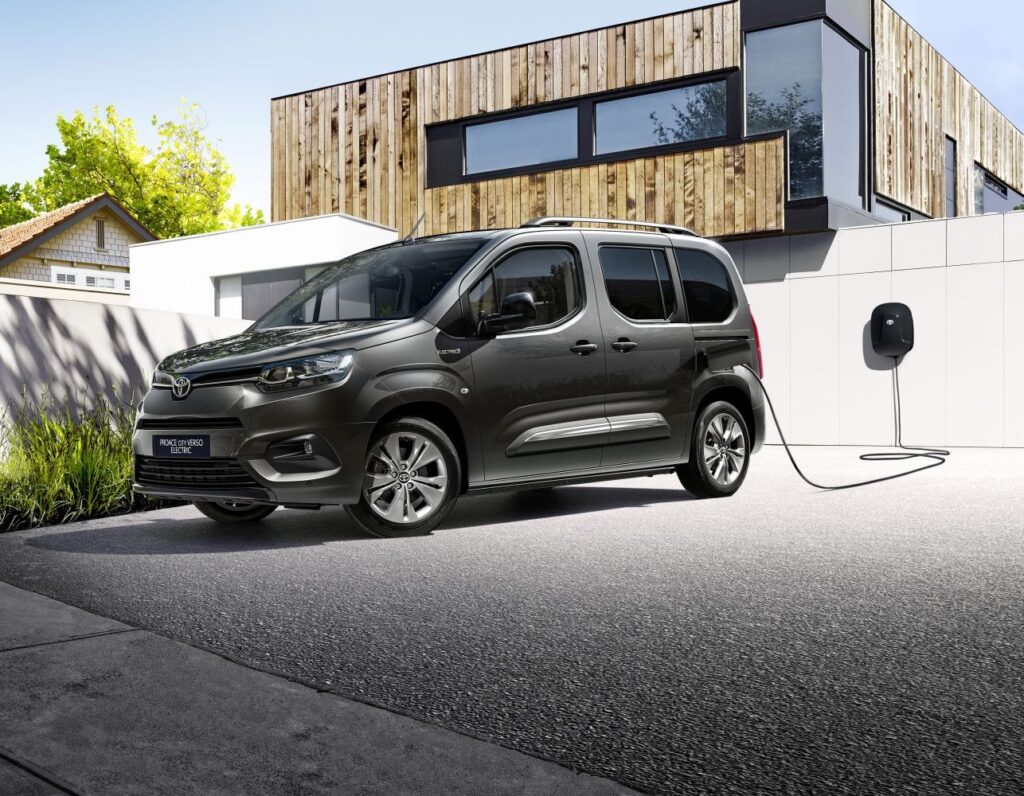
The Toyota Proace City Verso SWB 1.5 D-4D (130 Hp), introduced in April 2020, represents Toyota’s entry into the compact minivan/leisure activity vehicle (LAV) segment in European and select Asian markets. This particular variant, the Short Wheelbase (SWB) with its 1.5-liter D-4D diesel engine producing 130 horsepower, is a testament to the modern utility vehicle’s blend of passenger comfort, cargo versatility, and fuel efficiency. Unlike many Toyota models familiar to North American consumers, the Proace City Verso is a product of a strategic partnership, specifically a rebadged version of vehicles developed by the former PSA Group (now part of Stellantis). This collaboration allows Toyota to offer a competitive vehicle in a segment crucial for families and small businesses in its target regions, without the extensive R&D costs of an entirely new platform. It embodies a practical, no-nonsense approach to transportation, prioritizing space, economy, and everyday usability over outright luxury or performance.
Engineering and Performance of the Toyota Proace City Verso SWB
Powertrain: The Efficient 1.5 D-4D Diesel Engine
At the heart of the Toyota Proace City Verso SWB 1.5 D-4D (130 Hp) is a robust and efficient 1.5-liter (1499 cm3 or 91.47 cu. in.) inline-four diesel engine, designated with the code YH01. This powertrain architecture features a front, transverse engine layout, driving the front wheels. Equipped with a common rail fuel injection system, a turbocharger, and an intercooler, it delivers a respectable 130 horsepower at 3750 rpm. Its peak torque output is a substantial 300 Nm (221.27 lb.-ft.) available from a low 1750 rpm, which is crucial for a vehicle designed to carry passengers and cargo. This low-end torque ensures strong acceleration from a standstill and effortless cruising, even when fully loaded. The engine’s OHC valvetrain and four valves per cylinder contribute to its efficiency and smooth operation.
Paired with a 6-speed manual transmission, this setup is geared for optimal fuel economy and responsive driving dynamics. The vehicle boasts impressive fuel consumption figures, especially for its class: a combined NEDC rating of 4.2-4.3 liters per 100 km (56-54.7 US mpg). Urban consumption stands at 4.7-4.8 l/100 km (50-49 US mpg), while extra-urban driving achieves an even more frugal 3.9-4 l/100 km (60.3-58.8 US mpg). These figures highlight the diesel engine’s inherent efficiency, further enhanced by features like a Start & Stop System and a Particulate filter, ensuring compliance with the stringent Euro 6d-ISC-FCM emission standard and CO2 emissions of 111-113 g/km. With a weight-to-power ratio of 10.4 kg/Hp (95.9 Hp/tonne) and a weight-to-torque ratio of 4.5 kg/Nm (221.4 Nm/tonne), the Proace City Verso offers a balanced blend of utility and drivability.
Chassis and Dynamics
The Proace City Verso features a practical and comfortable suspension setup. The front utilizes an independent McPherson type, known for its balance of ride comfort and handling precision. The rear employs a torsion beam suspension, a common choice for compact utility vehicles due to its space-saving design and robustness, which is ideal for accommodating varying loads. Braking is handled by ventilated discs at the front and solid discs at the rear, complemented by an Anti-lock Braking System (ABS) for enhanced safety. The electric power steering system, with its rack and pinion setup, provides light and precise control, particularly beneficial in urban environments where maneuverability is key. The vehicle is typically fitted with 205/60 R16 92H or 205/55 R17 95V tires, mounted on 16 or 17-inch wheel rims, offering a good compromise between ride comfort and grip.
Design and Features
The Toyota Proace City Verso SWB is designed first and foremost for practicality and versatility. It adopts a minivan body type, characterized by its boxy, functional aesthetic that maximizes interior space. With five doors and seating for five occupants, it offers easy access to both front and rear cabins. The exterior dimensions are compact enough for urban navigation, measuring 173.35 inches (4403 mm) in length, 72.76 inches (1848 mm) in width, and 70.87 inches (1800 mm) in height. The 109.65-inch (2785 mm) wheelbase contributes to a stable ride while maintaining a relatively small footprint.
Inside, the Proace City Verso truly shines with its adaptable cargo and passenger configuration. Even with all five seats in use, the minimum trunk space is a generous 21.08 cubic feet (597 liters). When the rear seats are folded or removed, this expands dramatically to a cavernous 75.08 cubic feet (2126 liters), making it exceptionally capable of hauling large items, luggage, or equipment. This flexibility is a cornerstone of its appeal to families and businesses alike. Practical features extend to its towing capabilities, with a permitted trailer load of 2755.78 lbs (1250 kg) with brakes, and 1653.47 lbs (750 kg) without brakes, further underscoring its utility. A 13.21 US gallon (50 liter) fuel tank provides a considerable range, while a 4.49 US gallon (17 liter) AdBlue tank ensures the diesel engine’s emissions control system operates effectively.
Technical Specifications
| Category | Specification | US Equivalent (where applicable) |
|---|---|---|
| General Information | ||
| Brand | Toyota | |
| Model | Proace City Verso SWB | |
| Type (Engine) | 1.5 D-4D (130 Hp) | |
| Start of Production | April, 2020 | |
| Powertrain Architecture | Internal Combustion engine | |
| Body type | Minivan | |
| Seats | 5 | |
| Doors | 5 | |
| Performance Specs | ||
| Fuel consumption (urban NEDC) | 4.7-4.8 l/100 km | 50 – 49 US mpg |
| Fuel consumption (extra urban NEDC) | 3.9-4 l/100 km | 60.3 – 58.8 US mpg |
| Fuel consumption (combined NEDC) | 4.2-4.3 l/100 km | 56 – 54.7 US mpg |
| CO2 emissions (NEDC) | 111-113 g/km | |
| Fuel Type | Diesel | |
| Emission standard | Euro 6d-ISC-FCM | |
| Weight-to-power ratio | 10.4 kg/Hp | |
| Weight-to-torque ratio | 4.5 kg/Nm | |
| Engine Specs | ||
| Power | 130 Hp @ 3750 rpm | |
| Power per liter | 86.7 Hp/l | |
| Torque | 300 Nm @ 1750 rpm | 221.27 lb.-ft. @ 1750 rpm |
| Engine layout | Front, Transverse | |
| Engine Model/Code | YH01 | |
| Engine displacement | 1499 cm3 | 91.47 cu. in. |
| Number of cylinders | 4 | |
| Engine configuration | Inline | |
| Number of valves per cylinder | 4 | |
| Fuel injection system | Diesel Commonrail | |
| Engine aspiration | Turbocharger, Intercooler | |
| Valvetrain | OHC | |
| Engine oil capacity | 4 l | 4.23 US qt |
| Engine systems | Start & Stop System, Particulate filter | |
| Space, Volume and Weights | ||
| Kerb Weight | 1355 kg | 2987.26 lbs. |
| Max. weight | 2120 kg | 4673.8 lbs. |
| Max load | 765 kg | 1686.54 lbs. |
| Trunk (boot) space – minimum | 597 l | 21.08 cu. ft. |
| Trunk (boot) space – maximum | 2126 l | 75.08 cu. ft. |
| Fuel tank capacity | 50 l | 13.21 US gal |
| AdBlue tank | 17 l | 4.49 US gal |
| Max. roof load | 100 kg | 220.46 lbs. |
| Permitted trailer load with brakes (12%) | 1250 kg | 2755.78 lbs. |
| Permitted trailer load without brakes | 750 kg | 1653.47 lbs. |
| Permitted towbar download | 50 kg | 110.23 lbs. |
| Dimensions | ||
| Length | 4403 mm | 173.35 in. |
| Width | 1848 mm | 72.76 in. |
| Height | 1800 mm | 70.87 in. |
| Wheelbase | 2785 mm | 109.65 in. |
| Front track | 1553 mm | 61.14 in. |
| Rear (Back) track | 1567 mm | 61.69 in. |
| Drivetrain, Brakes and Suspension | ||
| Drivetrain Architecture | Front wheel drive ICE | |
| Drive wheel | Front wheel drive | |
| Number of gears and type of gearbox | 6 gears, manual transmission | |
| Front suspension | Independent type McPherson | |
| Rear suspension | Torsion | |
| Front brakes | Ventilated discs | |
| Rear brakes | Disc | |
| Assisting systems | ABS (Anti-lock braking system) | |
| Steering type | Steering rack and pinion | |
| Power steering | Electric Steering | |
| Tires size | 205/60 R16 92H; 205/55 R17 95V | |
| Wheel rims size | 16; 17 |
Legacy and Market Impact
The Toyota Proace City Verso, including the SWB 1.5 D-4D (130 Hp) variant, plays a significant role in Toyota’s strategy within the European and certain Asian markets. As a rebadged version of the Stellantis (formerly PSA Group) K9 platform vehicles, it allows Toyota to offer a competitive product in the compact van segment without the substantial development costs associated with a bespoke model. This strategy is common in the light commercial vehicle (LCV) and utility passenger vehicle sectors, where economies of scale are critical. Its siblings from the same platform include the Citroën Berlingo, Peugeot Rifter/Partner, and Opel/Vauxhall Combo Life, establishing a highly competitive market segment.
In its primary markets, the Proace City Verso is highly regarded for its exceptional versatility, fuel efficiency, and robust build quality – attributes that align well with Toyota’s global reputation. It serves a diverse customer base, from young families needing flexible passenger and cargo solutions to small businesses requiring a reliable and economical vehicle for deliveries and service calls. Its compact dimensions make it ideal for navigating crowded European city streets, while its generous interior volume and towing capacity provide capabilities often found in larger, less efficient vehicles.
The 1.5 D-4D (130 Hp) diesel engine, in particular, has been a cornerstone of its appeal, offering a compelling blend of power for highway driving and impressive fuel economy, which is a major purchasing factor in regions with higher fuel prices. Its compliance with Euro 6d-ISC-FCM emissions standards ensures its relevance in an increasingly environmentally conscious automotive landscape. While the Proace City Verso is not marketed in North America due to different market preferences and regulatory environments, its success in other regions underscores the global demand for practical, efficient, and adaptable utility vehicles. It stands as a prime example of international automotive collaboration delivering a product tailored to specific regional needs, reinforcing Toyota’s comprehensive portfolio in markets beyond its traditional strongholds.