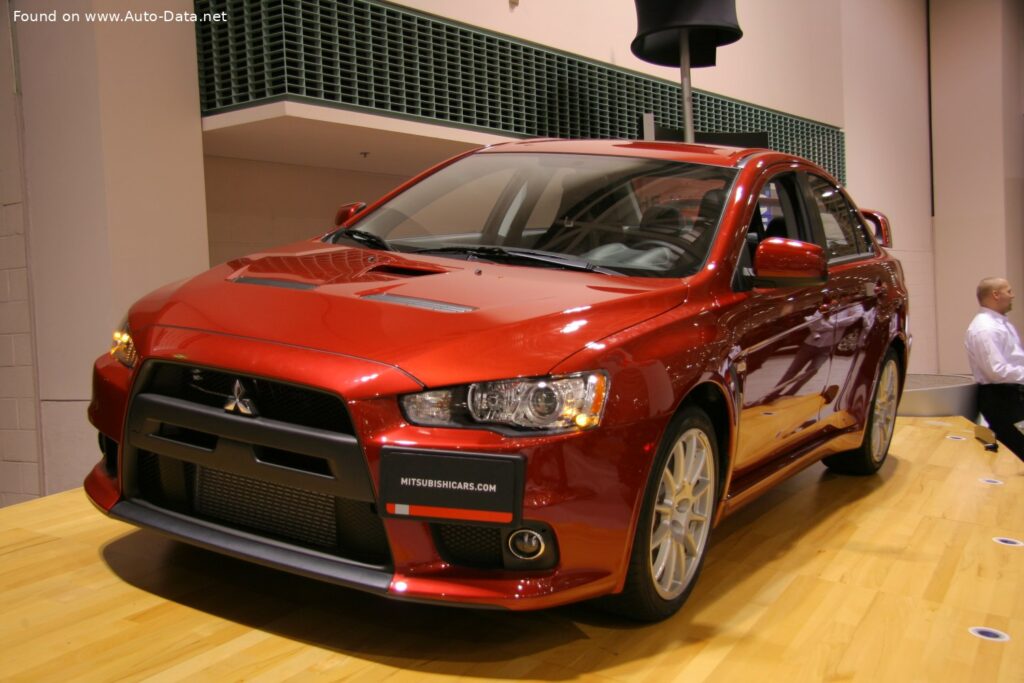
The Mitsubishi Lancer Evolution X 2.0 MIVEC (295 Hp) S-AWC: A Rally Icon’s Swan Song
The Mitsubishi Lancer Evolution X, often simply referred to as the Evo X, represents the tenth and final generation of Mitsubishi’s legendary high-performance sport compact sedan. Produced from 2007 to 2016, with the 2.0 MIVEC (295 Hp) S-AWC variant specifically manufactured between 2010 and 2014, this vehicle continued the storied lineage of rally-bred performance cars. The Evo X was a direct descendant of Mitsubishi’s highly successful World Rally Championship (WRC) efforts, bringing cutting-edge powertrain and chassis technology to the street. In the United States market, the Lancer Evolution X was a celebrated entry in the performance sedan segment, challenging rivals with its sophisticated all-wheel-drive system and potent turbocharged engine, cementing its status as a cult classic among enthusiasts.
Engine and Performance: The Heart of the Mitsubishi Lancer Evolution X
At the core of the 2010-2014 Mitsubishi Lancer Evolution X 2.0 MIVEC (295 Hp) S-AWC lies the formidable 4B11T engine. This all-aluminum, 2.0-liter (1998 cm³ or 121.93 cu. in.) inline-four engine was a significant departure from the previous 4G63 engine, offering a more modern design and improved efficiency. Equipped with Mitsubishi’s innovative MIVEC (Mitsubishi Innovative Valve timing Electronic Control) system, which continuously varies valve timing on both intake and exhaust camshafts, the engine delivers a broad powerband and impressive responsiveness.
Further enhancing its output is a robust turbocharger paired with an intercooler, forcing a dense charge of air into the cylinders. This setup allows the engine to produce a robust 295 horsepower at 6500 rpm and a substantial 269.95 lb.-ft. of torque at a relatively low 3500 rpm. This power-to-torque ratio, combined with the vehicle’s relatively light curb weight of 3439.21 lbs., results in an impressive weight-to-power ratio of 5.3 kg/Hp (189.1 Hp/tonne).
Performance figures for the Evo X 2.0 MIVEC (295 Hp) S-AWC are nothing short of exhilarating. It can accelerate from 0 to 60 mph in a blistering 5.1 seconds, and dispatch the 0 to 100 km/h sprint in 5.4 seconds. The car’s top speed is electronically limited to 149.13 mph (240 km/h), a testament to its high-speed stability and aerodynamic design. Power is channeled through a standard five-speed manual transmission, offering direct and engaging gear changes for the driver.
While performance was its primary focus, Mitsubishi also paid attention to the engine’s environmental impact for its time. The 4B11T engine met the Euro 5 emission standard, with CO2 emissions rated at 243 g/km. Fuel economy figures, while secondary for a performance vehicle, were rated at a combined 22.4 US mpg (10.5 l/100 km), with urban consumption at 16.1 US mpg (14.6 l/100 km) and extra-urban at 29 US mpg (8.1 l/100 km).
Design and Features: Form Meets Function
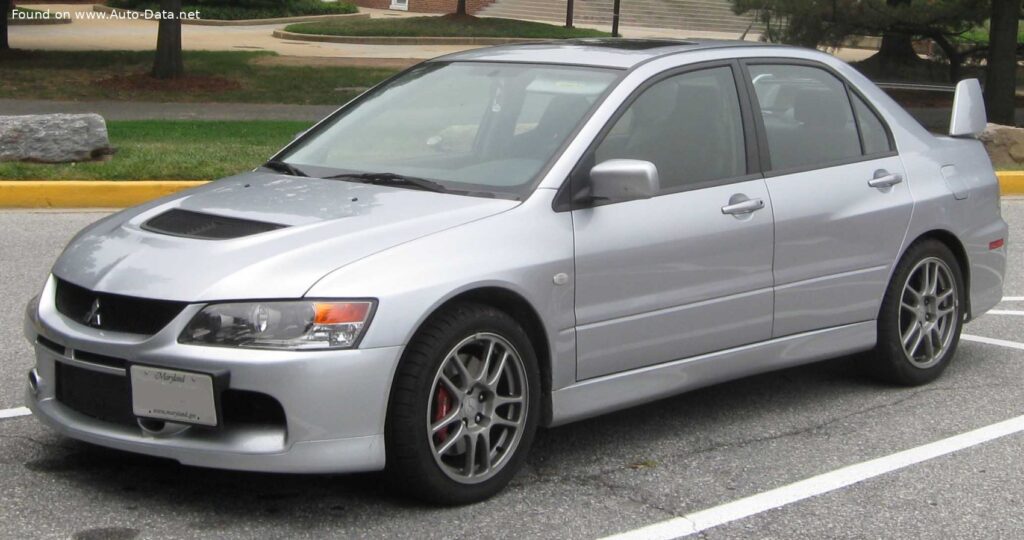
The Mitsubishi Lancer Evolution X retains the iconic sedan body type, featuring four doors and seating for five occupants. Its design language is aggressive and purposeful, reflecting its rally heritage. The front fascia is dominated by a large, trapezoidal grille, flanked by sharp headlights and prominent air intakes that serve both aesthetic and functional purposes, aiding in cooling the engine and brakes. Aerodynamic elements such as a large rear wing (on certain trims), side skirts, and a rear diffuser contribute to downforce and stability at high speeds.
Dimensionally, the Evo X measures 177.36 inches in length, 71.26 inches in width, and 58.27 inches in height, with a wheelbase of 104.33 inches. These proportions give it a wide, planted stance, further enhanced by the 18-inch alloy wheels (8.5J x 18) wrapped in 245/40 R18 tires.
A cornerstone of the Evo X’s advanced technology is its Super All-Wheel Control (S-AWC) system. This sophisticated drivetrain architecture permanently drives all four wheels, integrating Active Yaw Control (AYC), Active Center Differential (ACD), Active Stability Control (ASC), and Sport ABS. S-AWC intelligently distributes torque to individual wheels, enhancing traction, cornering ability, and overall stability, making the Evo X remarkably agile and confidence-inspiring in various driving conditions.
The suspension system is meticulously tuned for performance. The front features an independent MacPherson strut setup with coil springs and a transverse stabilizer, while the rear employs an independent multi-link suspension, also with coil springs and a transverse stabilizer. This combination provides a firm yet compliant ride, offering excellent road holding and minimizing body roll during aggressive maneuvers.
Stopping power is equally impressive, with large ventilated disc brakes at both the front (350 mm) and rear (330 mm), complemented by an Anti-lock Braking System (ABS). The steering is a hydraulic rack-and-pinion system, providing precise feedback and a direct connection to the road. Inside, the cabin is driver-focused, featuring supportive sport seats, a functional dashboard layout, and essential amenities for a performance car of its era.
Technical Specifications
| Category | Specification | US/Imperial Equivalent |
|---|---|---|
| Brand | Mitsubishi | |
| Model | Lancer Evolution X | |
| Type (Engine) | 2.0 MIVEC (295 Hp) S-AWC | |
| Production Years | 2010 – 2014 | |
| Body Type | Sedan | |
| Seats | 5 | |
| Doors | 4 | |
| Performance Specs | ||
| Fuel Consumption (Urban NEDC) | 14.6 l/100 km | 16.1 US mpg |
| Fuel Consumption (Extra Urban NEDC) | 8.1 l/100 km | 29 US mpg |
| Fuel Consumption (Combined NEDC) | 10.5 l/100 km | 22.4 US mpg |
| CO2 Emissions (NEDC) | 243 g/km | |
| Fuel Type | Petrol (Gasoline) | |
| Acceleration 0-60 mph | 5.1 sec | |
| Acceleration 0-100 km/h | 5.4 sec | |
| Maximum Speed | 240 km/h | 149.13 mph |
| Emission Standard | Euro 5 | |
| Weight-to-Power Ratio | 5.3 kg/Hp | 189.1 Hp/tonne |
| Engine Specs | ||
| Power | 295 Hp @ 6500 rpm | |
| Torque | 366 Nm @ 3500 rpm | 269.95 lb.-ft. @ 3500 rpm |
| Engine Layout | Front, Transverse | |
| Engine Model/Code | 4B11T | |
| Engine Displacement | 1998 cm³ | 121.93 cu. in. (2.0 L) |
| Number of Cylinders | 4 | |
| Engine Configuration | Inline | |
| Cylinder Bore | 86 mm | 3.39 in. |
| Piston Stroke | 86 mm | 3.39 in. |
| Compression Ratio | 9:1 | |
| Valves per Cylinder | 4 | |
| Fuel Injection System | Multi-port manifold injection | |
| Engine Aspiration | Turbocharger, Intercooler | |
| Valvetrain | DOHC | |
| Engine Oil Capacity | 5.6 l | 5.92 US qt |
| Coolant Capacity | 7.5 l | 7.93 US qt |
| Space, Volume and Weights | ||
| Kerb Weight | 1560 kg | 3439.21 lbs. |
| Max. Weight | 2040 kg | 4497.43 lbs. |
| Max Load | 480 kg | 1058.22 lbs. |
| Trunk (Boot) Space – minimum | 323 l | 11.41 cu. ft. |
| Fuel Tank Capacity | 55 l | 14.53 US gal |
| Dimensions | ||
| Length | 4505 mm | 177.36 in. |
| Width | 1810 mm | 71.26 in. |
| Height | 1480 mm | 58.27 in. |
| Wheelbase | 2650 mm | 104.33 in. |
| Front Track | 1545 mm | 60.83 in. |
| Rear Track | 1545 mm | 60.83 in. |
| Front Overhang | 920 mm | 36.22 in. |
| Rear Overhang | 935 mm | 36.81 in. |
| Ride Height (Ground Clearance) | 135 mm | 5.31 in. |
| Minimum Turning Circle | 11.8 m | 38.71 ft. |
| Drivetrain, Brakes and Suspension Specs | ||
| Drivetrain Architecture | Internal Combustion engine drives permanently the four wheels (All-Wheel Drive). | |
| Drive Wheel | All-Wheel Drive (4×4) | |
| Number of Gears | 5 | |
| Type of Gearbox | Manual transmission | |
| Front Suspension | Coil spring, Independent type McPherson, Transverse stabilizer | |
| Rear Suspension | Independent multi-link suspension, Transverse stabilizer, Coil spring | |
| Front Brakes | Ventilated discs, 350 mm | |
| Rear Brakes | Ventilated discs, 330 mm | |
| Assisting Systems | ABS (Anti-lock braking system) | |
| Steering Type | Steering rack and pinion | |
| Power Steering | Hydraulic Steering | |
| Tires Size | 245/40 R18 | |
| Wheel Rims Size | 8.5J x 18 | |
Legacy and Market Impact
The Mitsubishi Lancer Evolution X, and specifically the 2.0 MIVEC (295 Hp) S-AWC variant, holds a significant place in automotive history as the final iteration of a legendary nameplate. For decades, the Lancer Evolution series had been a benchmark for performance, leveraging its rally success to create street-legal cars that offered unparalleled handling and raw power for their price point. The Evo X continued this tradition, but also marked a pivotal shift for Mitsubishi as the brand moved away from its performance-oriented roots.
In the highly competitive sport compact segment, the Evo X’s primary rival was, and always had been, the Subaru WRX STI. Both cars shared a philosophy of turbocharged all-wheel-drive performance derived from rally racing, creating a fierce and enduring rivalry that fueled innovation and passion among enthusiasts. The Evo X was often praised for its more sophisticated S-AWC system, which many considered superior in its ability to dynamically manage traction and improve cornering, giving it an edge in technical driving situations. Its sharper, more aggressive styling also appealed to a distinct demographic.
Despite its technological prowess and enthusiast appeal, the Evo X ultimately faced an uphill battle against changing market trends and Mitsubishi’s shifting corporate strategy. The decision to discontinue the Lancer Evolution after the X generation was met with widespread disappointment among fans and the automotive press, marking the end of an era for rally-inspired performance cars from Mitsubishi.
Today, the Lancer Evolution X is highly sought after in the used car market, particularly well-maintained examples of the 2.0 MIVEC S-AWC. Its legacy is one of engineering excellence, rally pedigree, and an uncompromising dedication to driving performance. It stands as a testament to Mitsubishi’s capabilities as a performance car manufacturer and remains a celebrated icon for those who appreciate a true driver’s car with a rich motorsport heritage. The Evo X didn’t just compete; it defined a segment and left an indelible mark on the automotive landscape, ensuring its place as a future classic.