The Renault Clio IV (Phase I) 1.5 Energy dCi (90 Hp) Start&Stop: A European Supermini Standard-Bearer
The Renault Clio IV, specifically the Phase I model featuring the 1.5 Energy dCi (90 Hp) Start&Stop powertrain, represents a significant iteration in the long-standing and highly successful Clio lineage. Launched in 2012 and produced through 2016, this generation of the Clio cemented its position as a dominant force in Europe’s highly competitive B-segment, often referred to as the supermini class. While never officially sold in the United States, the Clio IV was a cornerstone of Renault’s strategy in its primary European and international markets, embodying a blend of stylish design, practical utility, and—crucially for its target audience—impressive fuel efficiency. Its introduction marked a new design language for Renault under the guidance of Laurens van den Acker, moving towards more emotional and sensuous styling cues that would define the brand for years to come. The 1.5 Energy dCi variant, with its 90 horsepower diesel engine and integrated Start&Stop system, was particularly aimed at drivers seeking low running costs and a reduced environmental footprint, making it a popular choice for both private owners and fleet operators across the continent.
Engine & Performance: Efficiency Meets Everyday Driveability
At the heart of the Renault Clio IV (Phase I) 1.5 Energy dCi (90 Hp) Start&Stop lies Renault’s well-regarded K9K 628 diesel engine. This 1.5-liter (1461 cm³ or 89.16 cu. in.) inline four-cylinder powerplant is a testament to modern diesel engineering, focusing on a balance of performance and exceptional fuel economy. Equipped with a turbocharger and intercooler, along with a sophisticated common rail fuel injection system, it delivers a respectable 90 horsepower at 4000 rpm. More importantly for its segment, it produces a robust 220 Nm (162.26 lb.-ft.) of torque available at a low 1750 rpm. This ample low-end torque is crucial for a car of its size, providing brisk acceleration from a standstill and confident overtaking maneuvers in urban and extra-urban environments.
The vehicle’s performance figures reflect its practical orientation. It accelerates from 0 to 60 mph in a calculated 11.1 seconds (0-100 km/h in 11.7 seconds) and can reach a top speed of 112.47 mph (181 km/h). These numbers are more than adequate for typical European driving conditions, where agility and fuel economy often take precedence over outright speed. The powertrain architecture is a conventional front, transverse engine layout driving the front wheels through a smooth-shifting 5-speed manual transmission.
A key differentiator for this specific model is the “Energy dCi” designation, which signifies a range of efficiency-enhancing technologies, and the “Start&Stop System.” This system automatically shuts off the engine when the vehicle is stationary, such as at traffic lights, and seamlessly restarts it when the driver depresses the clutch. This feature significantly reduces fuel consumption and emissions in stop-and-go city traffic. Combined with other optimizations, this results in remarkable fuel economy figures: an urban consumption of 4.1 l/100 km (57.4 US mpg), extra-urban at 3.3 l/100 km (71.3 US mpg), and a combined cycle of 3.6 l/100 km (65.3 US mpg). Such figures made the Clio IV 1.5 Energy dCi a leader in its class for efficiency, complying with Euro 5 emission standards and featuring a particulate filter to reduce harmful emissions.
Design & Features: A Bold Statement in the Supermini Segment
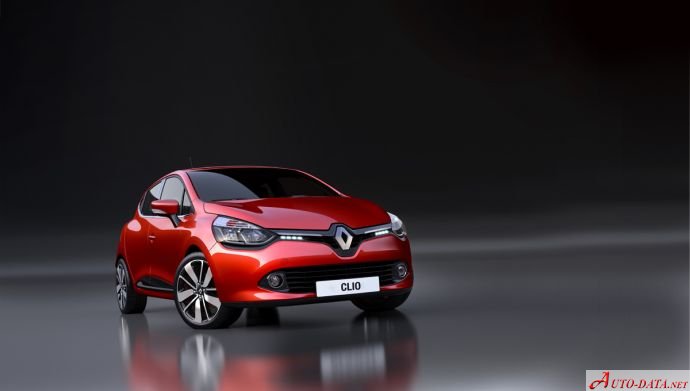
The Clio IV ushered in a new era of design for Renault, departing from the more conservative styling of its predecessor. Penned by Laurens van den Acker, its design language was characterized by softer lines, more sculpted flanks, and a prominent front grille featuring a large Renault lozenge badge. The five-door hatchback body type, measuring 159.92 inches (4062 mm) in length, 69.96 inches (1777 mm) in width, and 57.01 inches (1448 mm) in height, gave it a dynamic and youthful appearance. Its 101.93-inch (2589 mm) wheelbase contributed to a stable ride and a surprisingly spacious cabin for its class. The rear door handles were cleverly integrated into the C-pillars, creating the illusion of a sportier three-door profile while retaining the practicality of a five-door.
Inside, the Clio IV offered a modern and ergonomic cabin. While specific feature lists varied by trim level, standard safety equipment included an Anti-lock Braking System (ABS) with electronic brakeforce distribution. The car featured a comfortable seating arrangement for five occupants, making it a versatile option for small families or individuals. The steering system utilized an electric power steering rack and pinion setup, providing light and precise control, particularly beneficial for navigating tight city streets and parking. Suspension duties were handled by an independent McPherson strut system with coil springs and an anti-roll bar at the front, offering a comfortable yet composed ride. Braking was managed by ventilated discs at the front, ensuring confident stopping power. Depending on the trim, the vehicle came with tire sizes such as 185/65 R15 or 195/55 R16, mounted on 15-inch or 16-inch wheel rims.
Technical Specifications: Renault Clio IV (Phase I) 1.5 Energy dCi (90 Hp) Start&Stop
| Category | Specification |
|---|---|
| General Information | |
| Brand | Renault |
| Model | Clio IV (Phase I) |
| Type (Engine) | 1.5 Energy dCi (90 Hp) Start&Stop |
| Production Start | 2012 |
| Production End | 2016 |
| Powertrain Architecture | Internal Combustion Engine |
| Body Type | Hatchback |
| Seats | 5 |
| Doors | 5 |
| Performance Specs | |
| Fuel Consumption (Urban) | 4.1 l/100 km (57.4 US mpg) |
| Fuel Consumption (Extra Urban) | 3.3 l/100 km (71.3 US mpg) |
| Fuel Consumption (Combined) | 3.6 l/100 km (65.3 US mpg) |
| Fuel Type | Diesel |
| Acceleration 0-60 mph | 11.1 sec |
| Acceleration 0-100 km/h | 11.7 sec |
| Maximum Speed | 112.47 mph (181 km/h) |
| Emission Standard | Euro 5 |
| Weight-to-Power Ratio | 11.9 kg/Hp (84 Hp/tonne) |
| Weight-to-Torque Ratio | 4.9 kg/Nm (205.4 Nm/tonne) |
| Engine Specs | |
| Power | 90 Hp @ 4000 rpm |
| Power per Liter | 61.6 Hp/l |
| Torque | 220 Nm (162.26 lb.-ft.) @ 1750 rpm |
| Engine Layout | Front, Transverse |
| Engine Model/Code | K9K 628 |
| Engine Displacement | 1461 cm³ (1.5 liters / 89.16 cu. in.) |
| Number of Cylinders | 4 |
| Engine Configuration | Inline |
| Number of Valves per Cylinder | 2 |
| Fuel Injection System | Diesel Commonrail |
| Engine Aspiration | Turbocharger, Intercooler |
| Engine Oil Capacity | 4.5 l (4.76 US qt) |
| Coolant Capacity | 5 l (5.28 US qt) |
| Engine Systems | Start & Stop System, Particulate filter |
| Space, Volume and Weights | |
| Kerb Weight | 1071 kg (2361.15 lbs) |
| Max. Weight | 1658 kg (3655.26 lbs) |
| Max Load | 587 kg (1294.11 lbs) |
| Fuel Tank Capacity | 45 l (11.89 US gal) |
| Dimensions | |
| Length | 4062 mm (159.92 in.) |
| Width | 1777 mm (69.96 in.) |
| Height | 1448 mm (57.01 in.) |
| Wheelbase | 2589 mm (101.93 in.) |
| Drivetrain, Brakes and Suspension Specs | |
| Drivetrain Architecture | Internal Combustion Engine drives the front wheels |
| Drive Wheel | Front Wheel Drive |
| Number of Gears & Type | 5 gears, Manual Transmission |
| Front Suspension | Independent, McPherson with coil spring and anti-roll bar |
| Front Brakes | Ventilated Discs |
| Assisting Systems | ABS (Anti-lock Braking System) |
| Steering Type | Steering rack and pinion |
| Power Steering | Electric Steering |
| Tire Sizes | 185/65 R15 88t; 195/55 R16 87H |
| Wheel Rim Sizes | 15; 16 |
Legacy & Market Impact of the Renault Clio IV (Phase I)
The Renault Clio IV (Phase I) represented a pivotal moment for Renault, particularly in its primary European market. It successfully built upon the Clio’s decades-long reputation for being a versatile, stylish, and economical small car. In a segment dominated by formidable rivals such as the Ford Fiesta, Volkswagen Polo, Peugeot 208, and Opel Corsa, the Clio IV managed to stand out, frequently topping sales charts in various European countries. Its bold new design, which was a significant departure from its more conservative predecessors, resonated strongly with consumers, injecting a sense of desirability into what is often considered a utilitarian class of vehicles.
The 1.5 Energy dCi (90 Hp) Start&Stop variant, in particular, played a crucial role in its market success. Its outstanding fuel economy, low CO2 emissions, and compliance with Euro 5 standards made it an attractive option for environmentally conscious buyers and those looking to minimize running costs in regions with high fuel prices and stringent emissions regulations. This made it a popular choice not only for private owners but also for large fleet purchases and rental companies, further bolstering its presence on European roads. The Start&Stop technology, once a premium feature, became a more common expectation in this segment, and the Clio’s seamless implementation contributed to its appeal.
From a mechanical standpoint, the Clio IV continued Renault’s tradition of offering a comfortable ride and agile handling, well-suited to both urban commuting and longer highway journeys. The electric power steering provided ease of maneuverability, while the well-tuned suspension offered a good balance between comfort and dynamism. Its robust and proven K9K engine, developed over many years, was known for its reliability and efficiency, further enhancing the car’s reputation as a dependable choice.
The Clio IV’s legacy is one of successful revitalization. It not only maintained but significantly enhanced the Clio’s status as a segment leader. It effectively showcased Renault’s renewed commitment to design, technology, and efficiency, influencing subsequent models in the Renault lineup. While never crossing the Atlantic to the American market, its impact on the global automotive landscape, particularly in defining what a modern, stylish, and efficient supermini could be, is undeniable. The Clio IV remains a testament to Renault’s ability to produce highly competitive and desirable vehicles for its core markets.