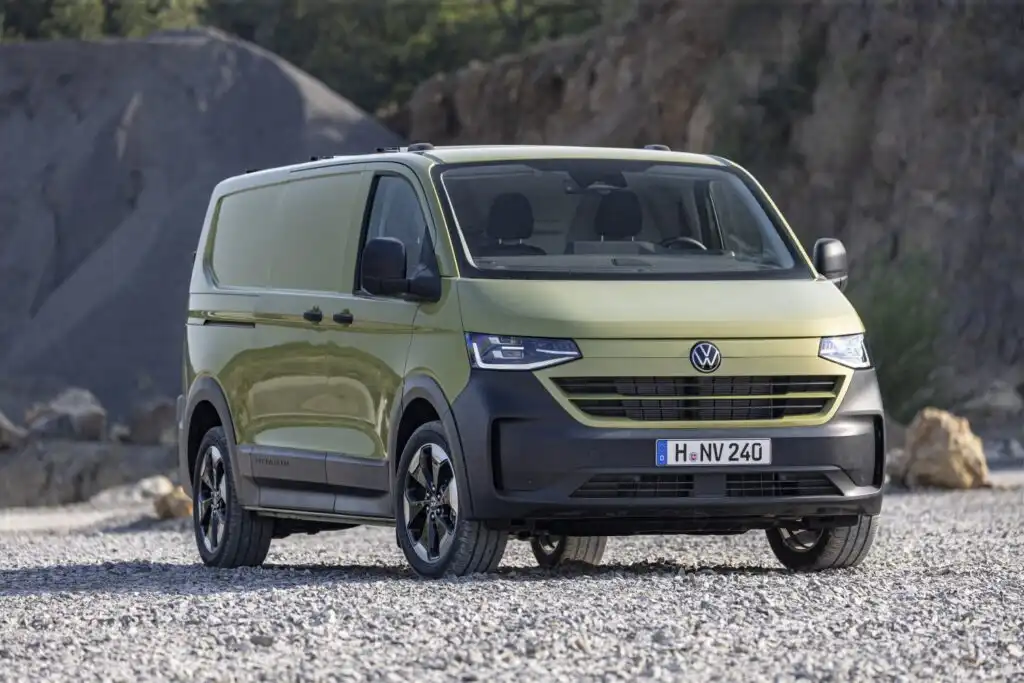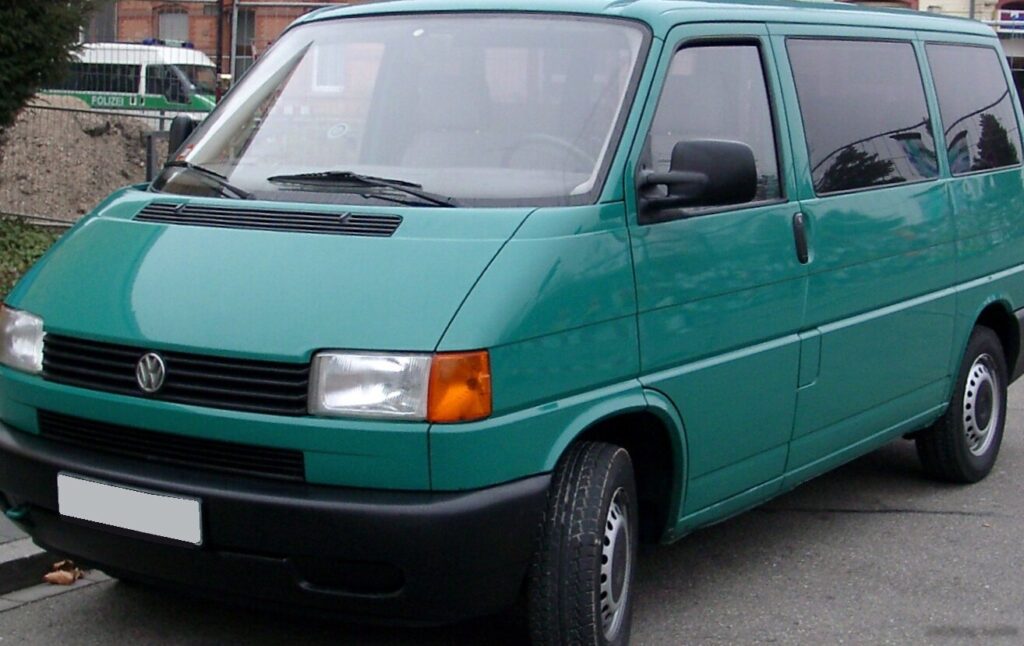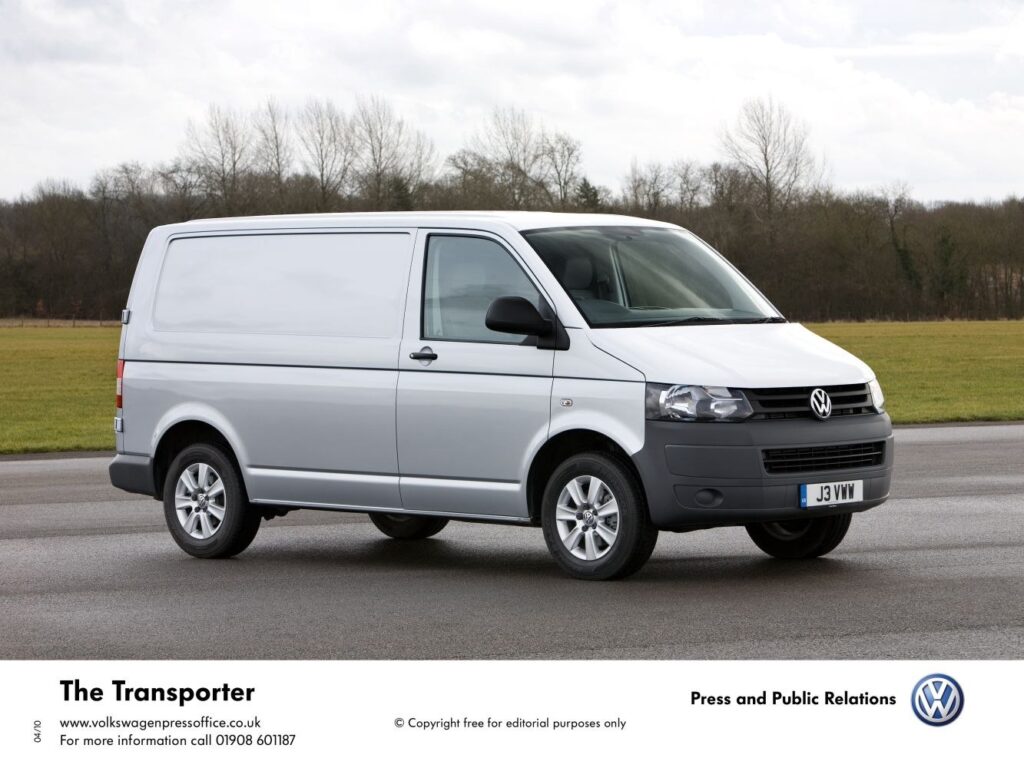
The Volkswagen Transporter (T5, facelift 2009) Panel Van 2.0 TDI BMT (140 Hp) L2H1: A European Workhorse
The Volkswagen Transporter (T5, facelift 2009) Panel Van represents a significant chapter in the storied history of Volkswagen’s iconic commercial vehicle line. Produced from 2012 to 2015, this particular variant, the 2.0 TDI BMT (140 Hp) L2H1, was a key offering within the T5 generation, which itself ran from 2003 to 2015. The “T5” designation refers to the fifth generation of the Transporter, while “facelift 2009” indicates the mid-cycle refresh that brought updated styling, improved engines, and enhanced technology. As a panel van, it was engineered primarily for utilitarian purposes, serving as a versatile and reliable workhorse across Europe and other international markets where it is a ubiquitous sight. While not officially sold in the United States, the Transporter series holds a legendary status globally, known for its durability, practicality, and efficiency, embodying Volkswagen’s engineering prowess in the light commercial vehicle segment. The L2H1 designation signifies a long wheelbase (L2) and a standard roof height (H1), optimizing cargo capacity without compromising maneuverability or urban access.
Engine and Performance of the Volkswagen Transporter (T5, facelift 2009) Panel Van
Powering this particular Volkswagen Transporter (T5, facelift 2009) Panel Van variant is a robust 2.0-liter (1968 cm3 or 120.09 cu. in.) inline-four turbo-diesel engine. Coded EA189 / CAAC, this powerplant is a testament to Volkswagen’s commitment to efficient and powerful diesel technology. It generates a respectable 140 horsepower at 3500 rpm, delivering a power-per-liter figure of 71.1 Hp/l, which is commendable for a commercial vehicle engine. More critically for a van, the torque output is substantial, peaking at 340 Nm (250.77 lb.-ft.) across a broad and usable range of 1750-2500 rpm. This low-end torque is crucial for hauling heavy loads and providing confident acceleration, even when fully laden.
The engine’s architecture features a front, transverse layout with a DOHC (Double Overhead Camshaft) valvetrain and 4 valves per cylinder, ensuring optimal airflow and combustion. Fuel is delivered via a common rail diesel injection system, further enhancing efficiency and reducing emissions. A turbocharger with an intercooler boosts performance, providing crisp throttle response and power delivery. Mated to a 6-speed manual transmission, the powertrain sends power to the front wheels, a configuration that offers good traction and simplifies maintenance.
Performance figures reflect its utilitarian purpose rather than outright speed, yet they are more than adequate for daily operations. The van can accelerate from 0 to 60 mph in a calculated 11.6 seconds (0-100 km/h in 12.2 seconds) and reach a maximum speed of 107.5 mph (173 km/h). Fuel efficiency, particularly important for commercial operators, is a strong suit thanks to Volkswagen’s BlueMotion Technology (BMT). Combined fuel consumption is rated at an impressive 34.1 – 32.7 US mpg (6.9-7.2 l/100 km), with extra-urban figures reaching 40.6 – 38.6 US mpg (5.8-6.1 l/100 km). These figures are aided by features like a Start & Stop System and a particulate filter, which also help the vehicle meet Euro 5 emission standards, with CO2 emissions ranging from 182-189 g/km.
Design and Features: The Practicality of the Volkswagen Transporter (T5, facelift 2009) Panel Van
The design of the Volkswagen Transporter (T5, facelift 2009) Panel Van prioritizes functionality and durability. As a panel van, its primary purpose is cargo transport, and the L2H1 configuration provides a generous maximum trunk space of 6700 liters (236.61 cu. ft.). With an overall length of 208.35 inches (5292 mm) and a width of 74.96 inches (1904 mm, 89.88 inches including mirrors), the L2H1 offers a substantial cargo area while maintaining a relatively compact footprint for urban environments. The standard roof height of 78.35 inches (1990 mm) allows access to most multi-story parking garages and height-restricted areas.
The vehicle features a 4-5 door configuration, typically with sliding side doors for easy cargo access and rear barn doors or a tailgate. The cabin is designed for 2-3 occupants, with a focus on ergonomics and hard-wearing materials suitable for commercial use. The facelift introduced subtle exterior updates, including revised headlights, grille, and bumpers, giving it a more modern and cohesive look compared to the pre-facelift T5.
Underneath, the Transporter T5 employs an independent suspension system both front and rear, featuring McPherson struts with coil springs and an anti-roll bar at the front, and independent coil springs with a transverse stabilizer and trailing arms at the rear. This setup is designed to provide a comfortable ride quality even when unladen, while also offering excellent stability and handling under heavy loads. Braking is handled by ventilated discs all around (308×29.5 mm front, 294×22 mm rear), complemented by an Anti-lock Braking System (ABS) for enhanced safety and control in various conditions. Hydraulic power steering ensures ease of maneuverability, particularly in tight urban spaces, despite the vehicle’s size. The robust construction and thoughtful engineering contribute to a maximum payload capacity of 983-1027 kg (2167.14 – 2264.15 lbs) and a substantial permitted trailer load with brakes of 2500 kg (5511.56 lbs).
Technical Specifications
| Category | Specification | US/Imperial Equivalent |
|---|---|---|
| General Information | ||
| Brand | Volkswagen | |
| Model | Transporter | |
| Generation | Transporter (T5, facelift 2009) Panel Van | |
| Type (Engine) | 2.0 TDI BMT (140 Hp) L2H1 | |
| Start of Production | 2012 year | |
| End of Production | 2015 year | |
| Powertrain Architecture | Internal Combustion engine | |
| Body type | Van | |
| Seats | 2-3 | |
| Doors | 4-5 | |
| Performance Specs | ||
| Fuel consumption (economy) – urban (NEDC) | 8.8-9.1 l/100 km | 26.7 – 25.8 US mpg |
| Fuel consumption (economy) – extra urban (NEDC) | 5.8-6.1 l/100 km | 40.6 – 38.6 US mpg |
| Fuel consumption (economy) – combined (NEDC) | 6.9-7.2 l/100 km | 34.1 – 32.7 US mpg |
| CO2 emissions (NEDC) | 182-189 g/km | |
| Fuel Type | Diesel | |
| Acceleration 0 – 60 mph | 11.6 sec | |
| Acceleration 0 – 100 km/h | 12.2 sec | |
| Maximum speed | 173 km/h | 107.5 mph |
| Emission standard | Euro 5 | |
| Weight-to-power ratio | 12.7 kg/Hp, 79 Hp/tonne | |
| Weight-to-torque ratio | 5.2 kg/Nm, 191.8 Nm/tonne | |
| Engine Specs | ||
| Power | 140 Hp @ 3500 rpm | |
| Power per liter | 71.1 Hp/l | |
| Torque | 340 Nm @ 1750-2500 rpm | 250.77 lb.-ft. @ 1750-2500 rpm |
| Engine layout | Front, Transverse | |
| Engine Model/Code | EA189 / CAAC | |
| Engine displacement | 1968 cm3 | 120.09 cu. in. |
| Number of cylinders | 4 | |
| Engine configuration | Inline | |
| Cylinder Bore | 81 mm | 3.19 in. |
| Piston Stroke | 95.5 mm | 3.76 in. |
| Compression ratio | 16.5:1 | |
| Number of valves per cylinder | 4 | |
| Fuel injection system | Diesel Commonrail | |
| Engine aspiration | Turbocharger, Intercooler | |
| Valvetrain | DOHC | |
| Engine oil capacity | 7 l | 7.4 US qt |
| Coolant | 11 l | 11.62 US qt |
| Engine systems | Start & Stop System, Particulate filter | |
| Space, Volume and Weights | ||
| Kerb Weight | 1773-2217 kg | 3908.8 – 4887.65 lbs. |
| Max. weight | 2800-3200 kg | 6172.94 – 7054.79 lbs. |
| Max load | 983-1027 kg | 2167.14 – 2264.15 lbs. |
| Trunk (boot) space – maximum | 6700 l | 236.61 cu. ft. |
| Fuel tank capacity | 80 l | 21.13 US gal |
| Max. roof load | 100 kg | 220.46 lbs. |
| Permitted trailer load with brakes (12%) | 2500 kg | 5511.56 lbs. |
| Permitted trailer load without brakes | 750 kg | 1653.47 lbs. |
| Permitted towbar download | 100 kg | 220.46 lbs. |
| Dimensions | ||
| Length | 5292 mm | 208.35 in. |
| Width | 1904 mm | 74.96 in. |
| Width including mirrors | 2283 mm | 89.88 in. |
| Height | 1990 mm | 78.35 in. |
| Wheelbase | 3400 mm | 133.86 in. |
| Front overhang | 896 mm | 35.28 in. |
| Rear overhang | 996 mm | 39.21 in. |
| Ride height (ground clearance) | 201 mm | 7.91 in. |
| Minimum turning circle (turning diameter) | 13.2 m | 43.31 ft. |
| Approach angle | 21° | |
| Departure angle | 17° | |
| Ramp-over (brakeover) angle | 12° | |
| Drivetrain, Brakes and Suspension Specs | ||
| Drivetrain Architecture | The Internal combustion engine (ICE) drives the front wheels of the vehicle. | |
| Drive wheel | Front wheel drive | |
| Number of gears and type of gearbox | 6 gears, manual transmission | |
| Front suspension | Independent, type McPherson with coil spring and anti-roll bar | |
| Rear suspension | Independent coil spring, Transverse stabilizer, Trailing arm | |
| Front brakes | Ventilated discs, 308×29.5 mm | |
| Rear brakes | Ventilated discs, 294×22 mm | |
| Assisting systems | ABS (Anti-lock braking system) | |
| Steering type | Steering rack and pinion | |
| Power steering | Hydraulic Steering | |
| Tires size | 215/65 R16 | |
| Wheel rims size | 6.5J x 16 | |
Legacy and Market Impact of the Volkswagen Transporter (T5, facelift 2009) Panel Van
The Volkswagen Transporter series, often referred to as the “Bus” or “Microbus” in its passenger variants, holds an almost unparalleled legacy in the automotive world, stretching back to the original Type 2 in 1950. The T5 generation, and specifically the facelifted 2009 models like the 2.0 TDI BMT (140 Hp) L2H1 Panel Van, continued this tradition of excellence in the commercial vehicle sector. In its primary markets of Europe, Australia, and parts of Asia, the T5 Transporter was a dominant force, competing fiercely with rivals such as the Ford Transit, Mercedes-Benz Vito, Renault Trafic, and Fiat Ducato.
Its reputation was built on a foundation of reliability, robust build quality, and a diverse range of configurations catering to virtually any commercial need. The T5 facelift, with its updated engines and BlueMotion Technology, underscored Volkswagen’s commitment to efficiency and reduced environmental impact, which became increasingly important for fleet operators and businesses facing stricter emission regulations. The 2.0 TDI engine, in particular, was praised for its blend of power and fuel economy, making it a cost-effective choice for long-distance deliveries and demanding urban routes alike.
The Transporter’s strong residual values and extensive dealer network further cemented its appeal. It was not just a van; it was an integral tool for countless small businesses, tradespeople, and logistics companies. Its adaptability meant it could be configured for various specialized uses, from refrigerated transport to mobile workshops. The T5 generation, including the Volkswagen Transporter (T5, facelift 2009) Panel Van, paved the way for its successor, the T6, by refining the platform and setting new benchmarks for comfort, safety, and driver assistance in the light commercial vehicle segment. Its enduring presence on roads worldwide, even years after its production ceased, is a testament to its design, engineering, and the indelible mark it left on the global commercial vehicle landscape.