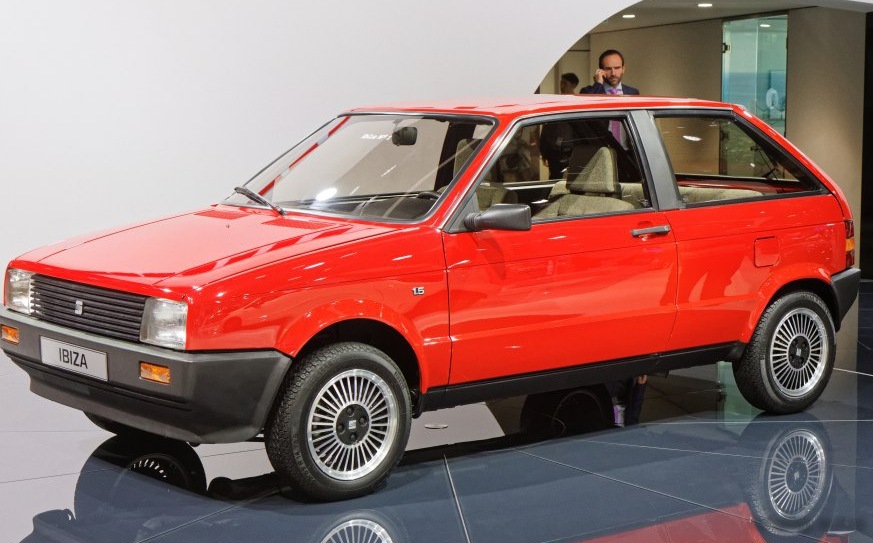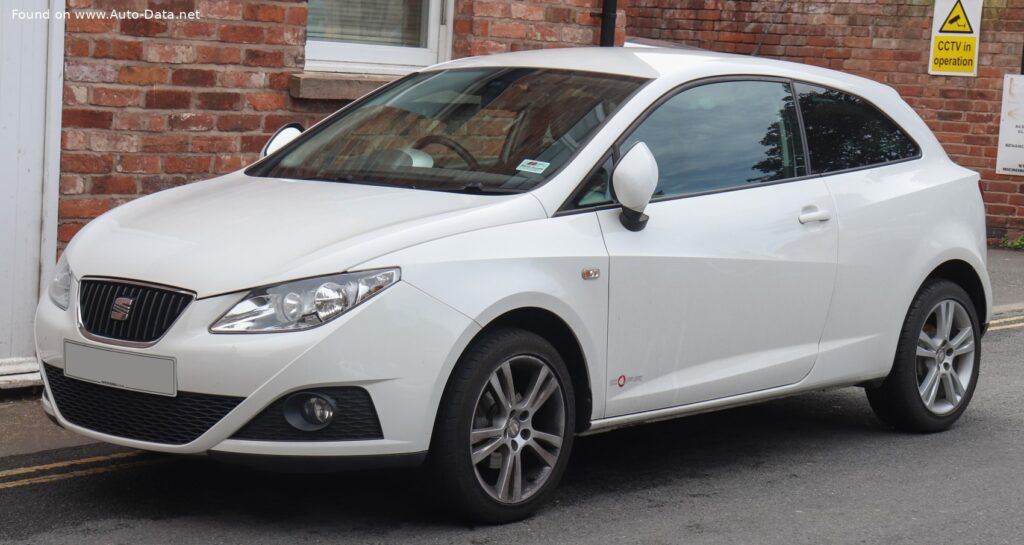
Introduction to the Seat Ibiza IV SC 1.4 (85 Hp)
The Seat Ibiza IV SC 1.4 (85 Hp) represents a key offering from the Spanish automaker SEAT within the highly competitive European supermini segment. Launched in 2008 as part of the fourth generation (internal code 6J) of the popular Ibiza model line, the “SC” designation stands for “SportCoupé,” signaling its three-door, more dynamically styled variant. This generation of the Ibiza was significant for SEAT, showcasing a sharper design language by Luc Donckerwolke and benefiting from its robust Volkswagen Group PQ25 platform, shared with contemporaries like the Volkswagen Polo Mk5 and Audi A1.
Positioned as a youthful and sporty alternative to its more conservative platform siblings, the Ibiza IV SC aimed to capture a demographic appreciative of spirited aesthetics and agile handling. The 1.4-liter engine variant, producing 85 horsepower, served as a workhorse in the lineup, offering a balance of everyday usability, reasonable fuel economy, and sufficient performance for urban and suburban commuting. Produced from 2008 to 2012, this iteration of the Ibiza SC cemented SEAT’s reputation for delivering stylish, well-engineered vehicles with a distinctive Spanish flair, particularly appealing to drivers in its primary European markets.
Engine and Performance: The Heart of the Seat Ibiza IV SC 1.4 (85 Hp)
Under the hood, the Seat Ibiza IV SC 1.4 (85 Hp) featured a naturally aspirated 1.4-liter (1390 cm3 or 84.82 cubic inches) inline-four gasoline engine. This powerplant, known by engine codes BXW or CGGB, was a familiar and reliable unit within the Volkswagen Group’s small car portfolio. With a DOHC (Double Overhead Camshaft) valvetrain and multi-port manifold injection, it was designed for efficiency and smooth power delivery.
The engine produced 85 horsepower (Hp) at 5000 revolutions per minute (rpm), translating to a power-per-liter output of 61.2 Hp/l. Torque peaked at 132 Newton meters (Nm), or 97.36 pound-feet (lb.-ft.), available at 3800 rpm. This torque delivery, relatively low in the rev range for a naturally aspirated engine, ensured decent responsiveness in city driving conditions. Power was sent to the front wheels via a standard 5-speed manual transmission, a common setup for superminis of this era, optimizing both performance and fuel economy.
In terms of acceleration, the Ibiza IV SC 1.4 (85 Hp) could sprint from 0 to 60 miles per hour (mph) in an estimated 11.2 seconds, with 0 to 62 mph (100 km/h) taking 11.8 seconds. Its maximum speed was approximately 110 mph (177 km/h). While not a performance leader, these figures were competitive for its class, offering adequate pace for daily driving and occasional highway journeys. The car’s relatively light curb weight of 2204.62 pounds (1000 kg) contributed to its nimble feel and a respectable weight-to-power ratio of 11.8 kg/Hp.
Fuel efficiency was a strong suit for this variant, adhering to the Euro 5 emissions standard. Combined fuel consumption (NEDC) was rated at 39.9 US miles per gallon (mpg), or 5.9 liters per 100 kilometers. Urban driving saw consumption figures around 29.4 US mpg (8 l/100 km), while extra-urban cycles could achieve an impressive 50 US mpg (4.7 l/100 km). These figures made the Ibiza 1.4 an economical choice for European buyers, balancing performance with running costs. CO2 emissions were rated at 139 g/km, a decent figure for its time.
Design and Features of the {original_focus_keyword}
The Seat Ibiza IV SC 1.4 (85 Hp) was a standout in its segment thanks to its distinctive design, penned by Luc Donckerwolke, formerly of Lamborghini. The “SC” (SportCoupé) designation highlighted its three-door body style, which offered a more dynamic and coupe-like profile compared to the standard five-door hatchback. This design philosophy was characterized by sharp creases, a prominent “Arrow Design” front fascia with angular headlights and a trapezoidal grille, and a rising shoulder line that gave the car a sense of forward motion. The overall aesthetic was modern, sporty, and unmistakably Spanish, setting it apart from its more conservative rivals.
Despite its sporty exterior, the Ibiza IV SC was designed with practicality in mind for its primary market. The vehicle’s dimensions—158.82 inches (4034 mm) in length, 66.65 inches (1693 mm) in width, and 56.22 inches (1428 mm) in height—made it maneuverable in tight urban environments. The wheelbase of 97.2 inches (2469 mm) contributed to a stable ride, while a minimum turning circle of 34.38 feet (10.48 m) aided parking.
Inside, the cabin reflected SEAT’s focus on functionality and a youthful appeal. While the data provided indicates an unusual “3 Seats” configuration, the Ibiza SC typically offered seating for four, with a focus on driver engagement. The instrument panel was clear and intuitive, and material quality was a step up from previous generations, though still aligned with its supermini positioning. Standard features for the era included power steering (electric, rack and pinion), and a focus on safety with systems like ABS (Anti-lock Braking System). The trunk space was practical for a car of its size, offering a minimum of 10.03 cubic feet (284 liters) and expandable to 32.84 cubic feet (930 liters) with the rear seats folded, making it versatile for shopping or weekend trips.
The suspension setup comprised independent McPherson struts with coil springs and an anti-roll bar at the front, paired with a semi-dependent beam with a stabilizer for lateral stability at the rear. This configuration provided a good balance between ride comfort and agile handling. Braking was handled by ventilated discs at the front (256×22 mm) and drum brakes at the rear (200×40 mm), a typical arrangement for a vehicle of this class and performance level. The car typically rode on 185/60 R15 tires with 6J x 15 wheels, with an option for larger 215/45 R16 tires on 7J x 16 rims for enhanced grip and visual appeal.
Technical Specifications
| Category | Specification |
|---|---|
| General Information | |
| Brand | Seat |
| Model | Ibiza |
| Generation | Ibiza IV SC |
| Type (Engine) | 1.4 (85 Hp) |
| Start of production | 2008 year |
| End of production | 2012 year |
| Powertrain Architecture | Internal Combustion engine |
| Body type | Coupe |
| Seats | 3 |
| Doors | 5 |
| Performance Specs | |
| Fuel consumption (economy) – urban (NEDC) | 8 l/100 km (29.4 US mpg) |
| Fuel consumption (economy) – extra urban (NEDC) | 4.7 l/100 km (50 US mpg) |
| Fuel consumption (economy) – combined (NEDC) | 5.9 l/100 km (39.9 US mpg) |
| CO2 emissions (NEDC) | 139 g/km |
| Fuel Type | Petrol (Gasoline) |
| Acceleration 0 – 60 mph | 11.2 sec |
| Acceleration 0 – 100 km/h | 11.8 sec |
| Maximum speed | 109.98 mph (177 km/h) |
| Emission standard | Euro 5 |
| Weight-to-power ratio | 11.8 kg/Hp (85 Hp/tonne) |
| Weight-to-torque ratio | 7.6 kg/Nm (132 Nm/tonne) |
| Engine Specs | |
| Power | 85 Hp @ 5000 rpm |
| Power per liter | 61.2 Hp/l |
| Torque | 132 Nm @ 3800 rpm (97.36 lb.-ft. @ 3800 rpm) |
| Engine layout | Front, Transverse |
| Engine Model/Code | BXW, CGGB |
| Engine displacement | 1390 cm3 (84.82 cu. in.) |
| Number of cylinders | 4 |
| Engine configuration | Inline |
| Cylinder Bore | 3.01 in. (76.5 mm) |
| Piston Stroke | 2.98 in. (75.6 mm) |
| Compression ratio | 10.5:1 |
| Number of valves per cylinder | 4 |
| Fuel injection system | Multi-port manifold injection |
| Engine aspiration | Naturally aspirated engine |
| Valvetrain | DOHC |
| Engine oil capacity | 3.2 l (3.38 US qt) |
| Coolant | 5.6 l (5.92 US qt) |
| Space, Volume and Weights | |
| Kerb Weight | 2204.62 lbs. (1000 kg) |
| Max. weight | 3364.25 lbs. (1526 kg) |
| Max load | 1159.63 lbs. (526 kg) |
| Trunk (boot) space – minimum | 10.03 cu. ft. (284 l) |
| Trunk (boot) space – maximum | 32.84 cu. ft. (930 l) |
| Fuel tank capacity | 11.89 US gal (45 l) |
| Max. roof load | 165.35 lbs. (75 kg) |
| Permitted trailer load with brakes (12%) | 2204.62 lbs. (1000 kg) |
| Permitted trailer load without brakes | 1168.45 lbs. (530 kg) |
| Permitted towbar download | 110.23 lbs. (50 kg) |
| Dimensions | |
| Length | 158.82 in. (4034 mm) |
| Width | 66.65 in. (1693 mm) |
| Height | 56.22 in. (1428 mm) |
| Wheelbase | 97.2 in. (2469 mm) |
| Front track | 57.68 in. (1465 mm) |
| Rear (Back) track | 57.36 in. (1457 mm) |
| Front overhang | 33.39 in. (848 mm) |
| Rear overhang | 28.23 in. (717 mm) |
| Minimum turning circle (turning diameter) | 34.38 ft. (10.48 m) |
| Drivetrain, Brakes and Suspension Specs | |
| Drivetrain Architecture |

|