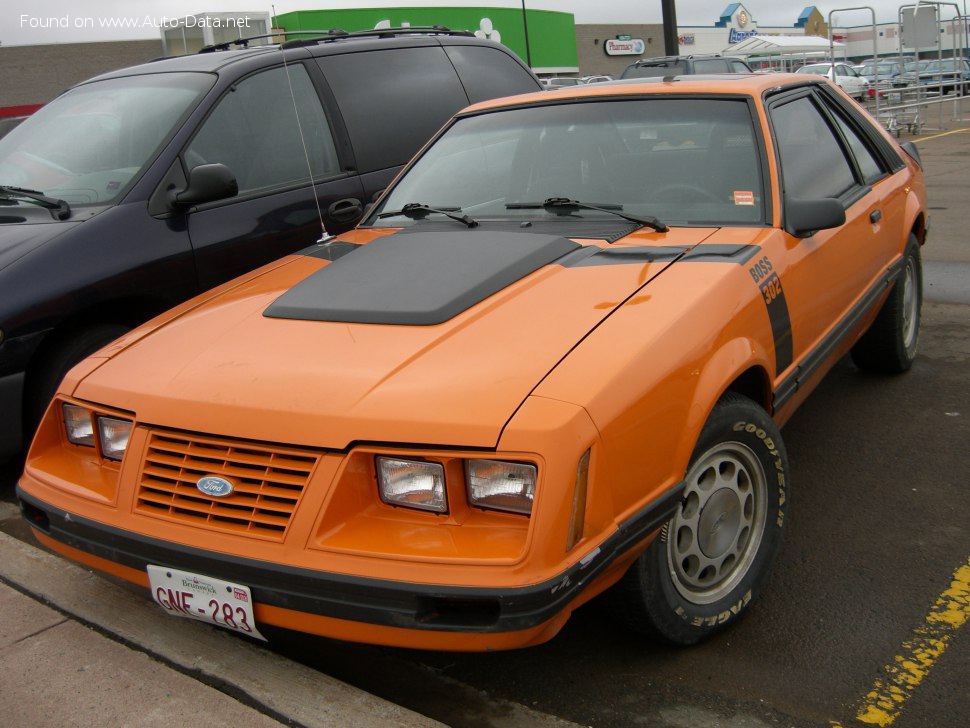
Introduction to the Ford Mustang III 4.9 V8 (228 Hp)
The Ford Mustang, an undisputed icon of American automotive culture, entered its third generation in 1979, a lineage often affectionately referred to as the “Fox Body.” This generation marked a significant departure from its predecessors, moving towards a more contemporary and aerodynamic design while retaining the essential spirit of accessible performance. The specific iteration, the Ford Mustang III 4.9 V8 (228 Hp), produced from 1983 to 1993, represents a pivotal moment in the Fox Body’s history, particularly for its re-establishment of the V8 engine as a true performance contender after the challenges of the 1970s.
Launched in 1983, this particular model year and engine combination brought a much-needed injection of horsepower and torque to the Mustang lineup, solidifying its position in the highly competitive pony car segment. It was a direct response to market demands for more exhilarating performance, a trend that was slowly but surely re-emerging after years of emissions regulations and fuel crises had stifled automotive power. The Fox Body platform itself was celebrated for its lightweight construction, versatility, and excellent handling characteristics, making it a favorite among enthusiasts for both street driving and motorsports. The 4.9 V8 variant, in particular, became synonymous with the resurgence of American muscle, offering a compelling blend of raw power and a relatively compact, nimble package for its era.
Powertrain and Performance: The Heart of the Ford Mustang III
The Robust 4.9 V8 Engine
At the core of the Ford Mustang III‘s appeal was its venerable 4.9-liter (301.58 cubic inch) V8 engine. This naturally aspirated, multi-port manifold injected powerhouse was a direct descendant of Ford’s long-standing small-block V8 family, refined for the 1980s to deliver a more potent and efficient output than its immediate predecessors. Producing a robust 228 horsepower at 4200 revolutions per minute (rpm) and a substantial 300.19 lb.-ft. of torque at a lower 3200 rpm, this engine provided the Mustang with formidable acceleration and a thrilling exhaust note that was quintessential V8.
The engine featured a classic V-engine configuration with eight cylinders, each equipped with two valves, a design known for its durability and torque delivery. Its front, longitudinal layout contributed to the car’s balanced weight distribution and traditional rear-wheel-drive architecture. With a bore of 4 inches and a stroke of 3 inches, coupled with a 9:1 compression ratio, the engine was optimized for a blend of power and everyday drivability, running on readily available gasoline. The inclusion of multi-port manifold injection, rather than a carburetor, was a significant technological upgrade for its time, improving fuel atomization, throttle response, and overall engine efficiency, albeit still far from modern standards.
Driving Dynamics and Performance Figures
Power was channeled to the rear wheels via a standard 5-speed manual transmission, offering drivers an engaging and direct connection to the car’s performance. This combination allowed the Ford Mustang III 4.9 V8 (228 Hp) to achieve a top speed of 136.7 mph, a highly respectable figure for a mainstream performance car of the early 1980s. The car’s kerb weight of 3042.38 lbs resulted in a weight-to-power ratio of 6.1 kg/Hp (or approximately 13.45 lbs/Hp), underscoring its ability to deliver spirited acceleration.
While performance was a priority, fuel economy, though not stellar by today’s standards, was also a consideration. The 4.9 V8 achieved an estimated 11.8 US mpg in urban driving conditions and a more palatable 19.6 US mpg on the highway, reflecting the compromises inherent in a large displacement V8 engine from that era. The 15.32 US gallon fuel tank provided a decent cruising range. The hydraulic power steering, utilizing a steering rack and pinion system, offered precise control, while the inclusion of an Anti-lock Braking System (ABS) was an advanced safety feature for its time, enhancing braking performance and stability.
Design and Features: The Iconic Fox Body Silhouette
The Ford Mustang III, known universally as the Fox Body Mustang, introduced a design language that was a radical departure from the larger, more ornate Mustangs of the 1970s. Its sleek, aerodynamic profile, characterized by sharp lines and a relatively compact footprint, defined a new era for the pony car. The specific model detailed here is a classic 2-door coupe, designed to seat four occupants, embodying the traditional sports coupe aesthetic.
Measuring 179.53 inches in length, 68.31 inches in width, and 51.97 inches in height, with a wheelbase of 100.59 inches, the Fox Body was a well-proportioned vehicle that struck a balance between road presence and agility. The front and rear track widths of 56.69 inches and 57.09 inches, respectively, contributed to its stable stance. The design prioritized functionality, with a relatively low cowl and large glass areas providing good visibility. The trunk space was surprisingly generous for a coupe, offering 30.02 cubic feet of cargo volume, making it more practical than some of its predecessors.
From a features standpoint, the 1983 Ford Mustang III 4.9 V8 offered a blend of performance-oriented equipment and emerging technologies. Standard disc brakes on both front and rear axles provided confident stopping power, further augmented by the optional or standard ABS, a significant safety advancement for the early ’80s. The suspension system, featuring coil springs at both the front and rear, was tuned to provide a sporty yet compliant ride. The 225/55 ZR16 tires provided ample grip, reflecting the car’s performance aspirations. Inside, the cabin was driver-focused, with instrumentation designed for clear readability and controls placed within easy reach, reflecting the pragmatic approach to performance that defined the Fox Body era.
Technical Specifications
| Category | Specification |
|---|---|
| Brand | Ford |
| Model | Mustang |
| Generation | Mustang III (Fox Body) |
| Type (Engine) | 4.9 V8 (228 Hp) |
| Start of Production | 1983 year |
| End of Production | 1993 year |
| Powertrain Architecture | Internal Combustion Engine |
| Body Type | Coupe |
| Seats | 4 |
| Doors | 2 |
| Fuel Type | Petrol (Gasoline) |
| Fuel Consumption (Urban) | 11.8 US mpg |
| Fuel Consumption (Extra Urban) | 19.6 US mpg |
| Maximum Speed | 136.7 mph |
| Weight-to-Power Ratio | 6.1 kg/Hp |
| Power | 228 Hp @ 4200 rpm |
| Power per Liter | 46.1 Hp/l |
| Torque | 300.19 lb.-ft. @ 3200 rpm |
| Engine Layout | Front, Longitudinal |
| Engine Displacement | 4.9 l (301.58 cu. in.) |
| Number of Cylinders | 8 |
| Engine Configuration | V-engine |
| Cylinder Bore | 4 in. |
| Piston Stroke | 3 in. |
| Compression Ratio | 9:1 |
| Number of Valves per Cylinder | 2 |
| Fuel Injection System | Multi-port manifold injection |
| Engine Aspiration | Naturally aspirated engine |
| Engine Oil Capacity | 4.97 US qt |
| Coolant Capacity | 14.05 US qt |
| Kerb Weight | 3042.38 lbs |
| Trunk (Boot) Space – Minimum | 30.02 cu. ft. |
| Fuel Tank Capacity | 15.32 US gal |
| Length | 179.53 in. |
| Width | 68.31 in. |
| Height | 51.97 in. |
| Wheelbase | 100.59 in. |
| Front Track | 56.69 in. |
| Rear Track | 57.09 in. |
| Drivetrain Architecture | Rear Wheel Drive (ICE drives rear wheels) |
| Drive Wheel | Rear wheel drive |
| Number of Gears and Gearbox Type | 5 gears, manual transmission |
| Front Suspension | Coil spring |
| Rear Suspension | Coil spring |
| Front Brakes | Disc |
| Rear Brakes | Disc |
| Assisting Systems | ABS (Anti-lock braking system) |
| Steering Type | Steering rack and pinion |
| Power Steering | Hydraulic Steering |
| Tires Size | 225/55 ZR16 |
Legacy and Market Impact of the Ford Mustang III
The Ford Mustang III, particularly the 4.9 V8 variant, carved out an indelible legacy in American automotive history. It wasn’t just another generation of Mustang; it was the generation that revitalized the brand and set the stage for modern performance. The Fox Body platform, with its unibody construction and MacPherson strut front suspension, was remarkably versatile and lightweight for its time, contributing significantly to its handling prowess and widespread acceptance.
This generation of Mustang is often credited with bringing the muscle car back from the brink during a period when performance cars were struggling with emissions regulations and rising fuel costs. The 4.9 V8, with its respectable 228 horsepower, offered a compelling alternative to its domestic competitors, primarily the Chevrolet Camaro and Pontiac Firebird, which were also undergoing their own transformations in the 1980s. The Fox Body Mustang distinguished itself with its more European-influenced styling (at least initially) and its reputation for being a highly tunable and affordable performance machine. Enthusiasts quickly discovered the engine’s potential for aftermarket modifications, further solidifying its status as a drag strip hero and street legend.
Throughout its long production run from 1983 to 1993, the Fox Body Mustang continued to evolve, but the spirit of accessible V8 performance, championed by models like the 4.9 V8 (228 Hp), remained constant. It became a cultural icon, appearing in countless films, television shows, and music videos, cementing its place in popular culture. Its affordability, coupled with its performance capabilities and customization potential, made it a favorite among a wide demographic, from young enthusiasts to seasoned gearheads.
Today, the Fox Body Mustang, especially the V8 models, remains highly sought after by collectors and performance enthusiasts. Its simple, robust mechanicals, combined with its distinctive styling and significant historical impact, ensure its continued relevance. It represents a crucial chapter in the Mustang story, a bridge between the classic muscle car era and the sophisticated performance machines of the 21st century, proving that an American icon could adapt and thrive in changing times while staying true to its roots. The Ford Mustang III 4.9 V8 (228 Hp) stands as a testament to Ford’s commitment to delivering exhilarating performance to the masses, a tradition that continues to define the Mustang nameplate.