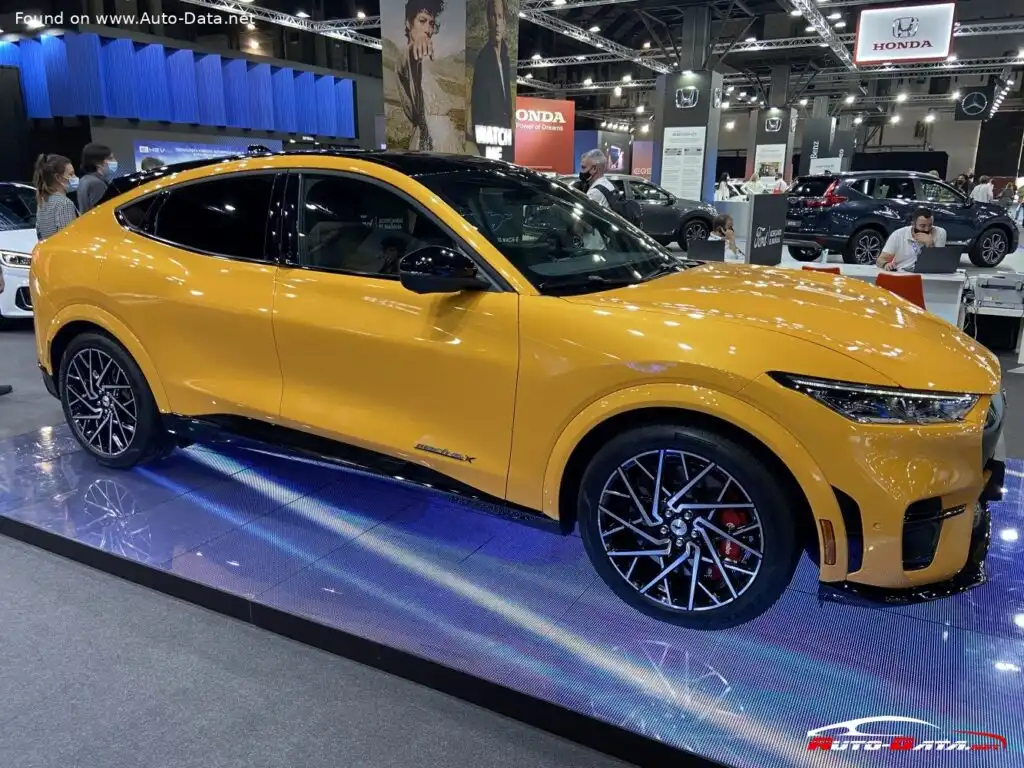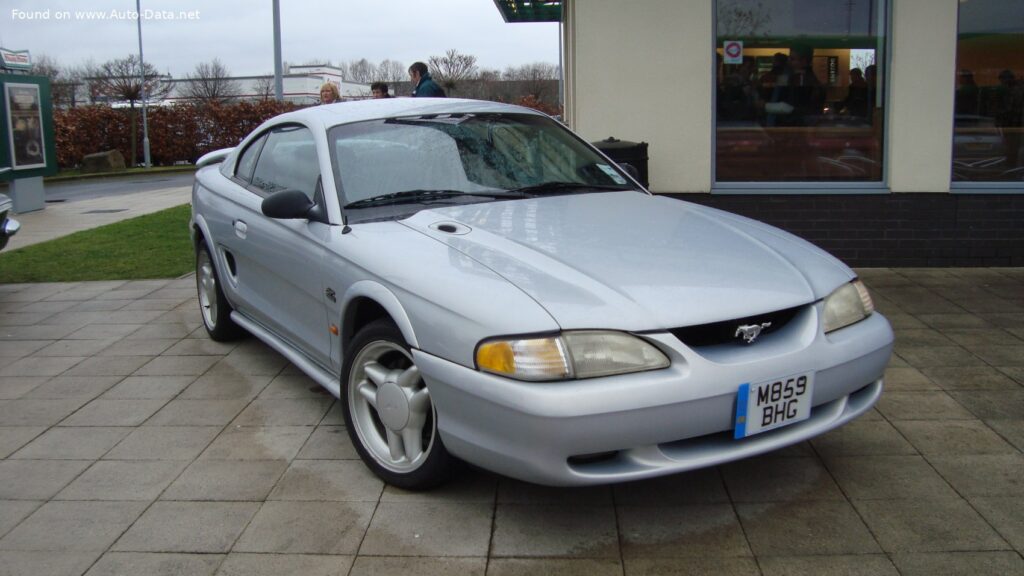
Ford Mustang IV 3.8 V6 (152 Hp)
The Ford Mustang IV, often referred to by its internal codename “SN95,” marked a significant evolution for the iconic American pony car. Introduced for the 1994 model year, this fourth-generation Mustang represented a complete redesign from its long-running Fox-body predecessor, boasting a more aerodynamic and contemporary aesthetic, along with numerous mechanical enhancements. The Ford Mustang IV 3.8 V6 (152 Hp) served as the accessible entry point into the Mustang lineup from its start of production in 1993 until 1997, offering a blend of classic Mustang styling, rear-wheel-drive dynamics, and an economical V6 engine option. Positioned as a stylish and sporty coupe, it aimed to attract a broad demographic, providing an appealing alternative to more expensive V8 models while retaining the Mustang’s inherent appeal in the American sports coupe market segment.
The Fourth Generation: Ford Mustang IV
The development of the SN95 generation began in the late 1980s, culminating in its public debut in December 1993. Ford’s objective was to modernize the Mustang’s image while staying true to its heritage. Unlike previous generations, which shared platforms with more mundane sedans, the SN95 was built on an updated version of the Fox platform, known as the “Fox-4” platform, specifically tailored for the Mustang. This allowed for improved handling, ride comfort, and structural rigidity. The design language was a radical departure, moving away from the boxy lines of the Fox-body to a more rounded, flowing, and aggressive silhouette, incorporating styling cues reminiscent of earlier Mustangs, such as the prominent side scoops and tri-bar taillights. The introduction of the Ford Mustang IV was a critical moment for the brand, ensuring its relevance in a market increasingly dominated by imported sports coupes and domestic performance sedans.
Powertrain and Performance of the Ford Mustang IV
Under the hood of the entry-level Ford Mustang IV 3.8 V6 (152 Hp) was Ford’s venerable Essex V6 engine. Specifically, the 3.8-liter (3797 cm3 or 231.71 cubic inches) naturally aspirated V-engine was a workhorse, known for its reliability and decent torque delivery, especially at lower RPMs. This engine, with an internal code often associated with the Essex / 994 series, was configured with two valves per cylinder and utilized a multi-port manifold injection system for efficient fuel delivery. It produced 152 horsepower at 4000 RPM, which, while not comparable to its V8 brethren, provided sufficient power for daily driving and a spirited feel. More impressively, the engine delivered a robust 291 Nm (214.63 lb.-ft.) of torque at a relatively low 2750 RPM, contributing to its responsive acceleration from a standstill and good highway passing capability.
Power was sent to the rear wheels via a standard 5-speed manual transmission, emphasizing the driver-centric nature of the Mustang. This drivetrain architecture, with its front, longitudinal engine layout and rear-wheel drive, maintained the classic American muscle/pony car formula. The vehicle’s weight-to-power ratio stood at 9.1 kg/Hp (109.4 Hp/tonne), and its weight-to-torque ratio was 4.8 kg/Nm (209.4 Nm/tonne), indicating a balanced performance profile for its segment. Fuel economy figures for the 3.8 V6 were respectable for its time, with an urban consumption of approximately 19.9 US mpg and an extra-urban (highway) rating of around 29.8 US mpg, making it a more practical choice than the thirstier V8 models.
Design Evolution and Interior Features
The exterior design of the Ford Mustang IV was a bold leap forward. Its sleek, rounded lines and aggressive stance gave it a modern appeal while still being instantly recognizable as a Mustang. The two-door coupe body style maintained the classic proportions, measuring 181.5 inches in length, 71.65 inches in width, and 53.15 inches in height, with a wheelbase of 101.18 inches. These dimensions contributed to a more planted and stable road presence compared to its predecessor. The standard tire size was 205/65 R15, offering a good balance of grip and ride comfort.
Inside, the SN95 Mustang offered a driver-focused cockpit. The interior was also significantly updated, featuring a dual-cowl dashboard design that echoed classic Mustangs and provided a more contemporary feel. The 4-seat configuration, with bucket seats up front and a smaller bench in the rear, was typical for a pony car. Trunk space was a practical 10.95 cubic feet (310 liters), adequate for weekend trips or groceries. Key features for the era included available power windows, door locks, and mirrors, air conditioning, and a multi-speaker sound system. Safety was also enhanced with the inclusion of an Anti-lock Braking System (ABS), a significant improvement for the time. The steering system was a responsive rack and pinion setup with hydraulic power steering, providing direct feedback to the driver. The suspension featured a wishbone setup at the front and a coil spring arrangement at the rear, contributing to improved handling dynamics. Braking duties were handled by ventilated discs at the front and solid discs at the rear, ensuring confident stopping power.
Technical Specifications
| Category | Specification | Value |
|---|---|---|
| General Information | Brand | Ford |
| Model | Mustang | |
| Generation | Mustang IV | |
| Engine Type | 3.8 V6 (152 Hp) | |
| Start of Production | 1993 year | |
| End of Production | 1997 year | |
| Powertrain Architecture | Internal Combustion engine | |
| Body Type | Coupe | |
| Seats | 4 | |
| Doors | 2 | |
| Performance Specs | ||
| Fuel Consumption (Urban) | 11.8 l/100 km (19.9 US mpg) | |
| Fuel Consumption (Extra Urban) | 7.9 l/100 km (29.8 US mpg) | |
| Fuel Type | Petrol (Gasoline) | |
| Weight-to-Power Ratio | 9.1 kg/Hp (109.4 Hp/tonne) | |
| Weight-to-Torque Ratio | 4.8 kg/Nm (209.4 Nm/tonne) | |
| Engine Specs | ||
| Power | 152 Hp @ 4000 rpm | |
| Power per Liter | 40 Hp/l | |
| Torque | 291 Nm @ 2750 rpm (214.63 lb.-ft. @ 2750 rpm) | |
| Engine Layout | Front, Longitudinal | |
| Engine Model/Code | Essex / 994 | |
| Engine Displacement | 3797 cm3 (231.71 cu. in.) | |
| Number of Cylinders | 6 | |
| Engine Configuration | V-engine | |
| Cylinder Bore | 96.8 mm (3.81 in.) | |
| Piston Stroke | 86 mm (3.39 in.) | |
| Compression Ratio | 9.1:1 | |
| Number of Valves per Cylinder | 2 | |
| Fuel Injection System | Multi-port manifold injection | |
| Engine Aspiration | Naturally aspirated engine | |
| Engine Oil Capacity | 4.7 l (4.97 US qt) | |
| Coolant Capacity | 11.2 l (11.83 US qt) | |
| Space, Volume and Weights | ||
| Kerb Weight | 1390 kg (3064.43 lbs.) | |
| Trunk (Boot) Space – Minimum | 310 l (10.95 cu. ft.) | |
| Fuel Tank Capacity | 59 l (15.59 US gal) | |
| Dimensions | ||
| Length | 4610 mm (181.5 in.) | |
| Width | 1820 mm (71.65 in.) | |
| Height | 1350 mm (53.15 in.) | |
| Wheelbase | 2570 mm (101.18 in.) | |
| Front Track | 1540 mm (60.63 in.) | |
| Rear (Back) Track | 1500 mm (59.06 in.) | |
| Drivetrain, Brakes and Suspension Specs | ||
| Drivetrain Architecture | Internal combustion engine (ICE) drives the rear wheels. | |
| Drive Wheel | Rear wheel drive | |
| Number of Gears and Type of Gearbox | 5 gears, manual transmission | |
| Front Suspension | Wishbone | |
| Rear Suspension | Coil spring | |
| Front Brakes | Ventilated discs | |
| Rear Brakes | Disc | |
| Assisting Systems | ABS (Anti-lock braking system) | |
| Steering Type | Steering rack and pinion | |
| Power Steering | Hydraulic Steering | |
| Tires Size | 205/65 R15 | |
Legacy and Market Impact of the Ford Mustang IV
The Ford Mustang IV, particularly the 3.8 V6 model, played a crucial role in the Mustang’s enduring legacy. It served as the accessible entry point for countless enthusiasts, offering the allure of a Mustang without the higher price tag and insurance costs associated with the V8 GT models. This affordability, combined with its striking new design and improved refinement, helped broaden the Mustang’s appeal during the mid-to-late 1990s. While not a powerhouse, the 3.8 V6 provided a reliable and enjoyable driving experience, making it a popular choice for daily commuting and weekend cruises alike.
In the American market, the SN95 Mustang primarily competed with its long-standing rivals, the Chevrolet Camaro and Pontiac Firebird, both of which also offered V6 entry-level models. While the Mustang V6 might have been less powerful than some of its V6 competitors in raw horsepower, its classic rear-wheel-drive layout, distinctive styling, and strong brand identity gave it a unique edge. It also faced competition from various Japanese sports coupes, but the Mustang’s distinctly American character and heritage ensured its continued popularity.
The SN95 generation, including the 3.8 V6 variant, is historically significant for bridging the gap between the long-lived Fox-body and the retro-futuristic S197 Mustang of 2005. It modernized the Mustang’s image for a new era while laying the groundwork for future generations. Its reputation today is that of a solid, customizable platform, offering good value in the used car market for those seeking a classic American pony car experience. The 3.8 V6 remains a testament to Ford’s commitment to offering a broad range of options within the Mustang family, ensuring that the legendary nameplate continued to thrive and evolve through different automotive landscapes.