The Opel Rekord E (facelift 1982) 2.0 S Automatic: A European Mainstay
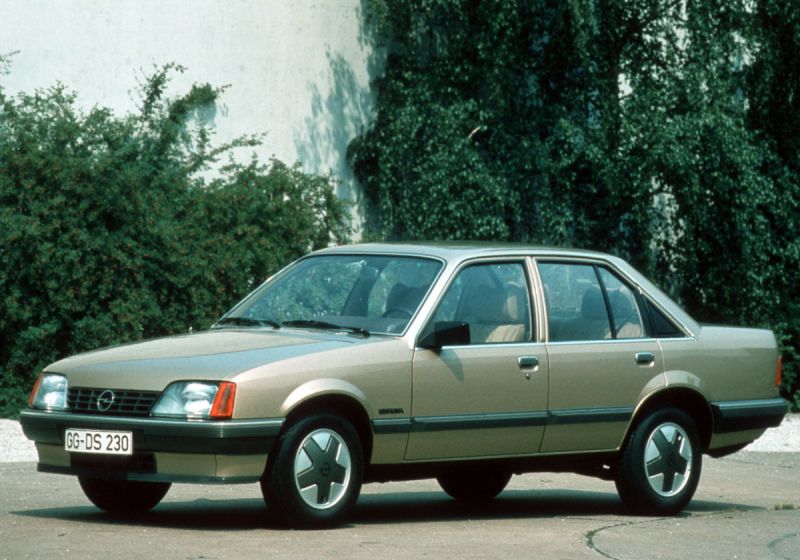
The Opel Rekord E, specifically the facelifted model introduced in 1982, represents a significant chapter in European automotive history. As a prominent mid-size car from German manufacturer Opel, a subsidiary of General Motors at the time, the Rekord E served as a workhorse for families and businesses across the continent. This particular variant, the Opel Rekord E (facelift 1982) 2.0 S Automatic, embodies the practical, robust, and moderately comfortable ethos that characterized many European sedans of the early 1980s. While never officially sold in the United States, its design and engineering principles reflect a global influence from GM, adapted to European tastes and regulations. It competed in a fiercely contested segment, offering a sensible balance of space, performance, and economy for its era, making it a ubiquitous sight on European roads during its production run from 1982 to 1984.
Engine and Performance of the Opel Rekord E (facelift 1982)
Powering the Opel Rekord E (facelift 1982) 2.0 S Automatic was Opel’s well-regarded 2.0-liter (1979 cm³ or 120.77 cu. in.) inline-four engine, designated by the code 20S. This naturally aspirated unit featured a single overhead camshaft (SOHC) and a carbureted fuel injection system, a common setup for mainstream vehicles of the period. It produced a respectable 98 horsepower at 5400 rpm, delivering a power-per-liter figure of 49.5 hp/l, which was competitive for a non-performance-oriented family sedan. Torque output stood at 153 Nm (112.85 lb.-ft.) at 3800 rpm, indicating a powerplant designed for accessible low-to-mid-range grunt rather than high-revving excitement.
Mated to this engine was a 3-speed automatic transmission, a configuration chosen for its ease of use and smooth power delivery, catering to the comfort-oriented driver. The drivetrain architecture was traditional, with the engine driving the rear wheels, a layout favored for its robust nature and balanced handling characteristics. While the 3-speed automatic might seem rudimentary by modern standards, it offered a relaxed driving experience, particularly in urban environments and on the then-developing highway networks of Europe.
In terms of performance, the Rekord E 2.0 S Automatic provided adequate, if not exhilarating, acceleration. It could accelerate from 0 to 60 mph in an estimated 13.3 seconds, with 0 to 100 km/h (0-62 mph) taking 14 seconds. The maximum speed was rated at 175 km/h (108.74 mph). These figures positioned the Rekord as a capable cruiser, perfectly suited for the daily commute or longer family trips. Fuel economy for the combined cycle was stated at 12.9 l/100 km, translating to approximately 18.2 US mpg, which was a reasonable figure for a carbureted 2.0-liter engine with an automatic transmission in the early 1980s. The generous 17.17 US gallon fuel tank capacity further enhanced its touring capabilities.
Design and Features
The Opel Rekord E (facelift 1982) retained the fundamental silhouette of its predecessor but incorporated subtle yet effective styling updates to keep it fresh against newer competitors. As a four-door sedan, it offered practical and conventional styling, prioritizing interior space and visibility over flamboyant aesthetics. Its dimensions were substantial for a European mid-size car: 183.15 inches in length, 67.95 inches in width, and 55.91 inches in height, with a wheelbase of 105.04 inches. These proportions contributed to a spacious cabin capable of comfortably seating five occupants.
The facelift typically involved revisions to the front grille, headlights, taillights, and bumpers, giving the car a more contemporary look. The design was characterized by clean lines and a relatively low drag coefficient of 0.36 for its time, contributing to both fuel efficiency and reduced wind noise. Inside, the Rekord E offered a straightforward and functional cockpit. While luxury features were minimal, the emphasis was on durability and ergonomic simplicity. Large windows ensured excellent all-around visibility, a crucial safety feature in an era before extensive electronic driver aids. The trunk space was a commendable 490 liters (17.3 cu. ft.), making it highly practical for family vacations or hauling groceries.
Safety features, by early 1980s standards, included a robust body structure, seatbelts, and a dual-circuit braking system. The front brakes were ventilated discs, providing good stopping power, while the rear utilized drum brakes, a cost-effective and adequate solution for the rear axle of a vehicle in this class. The minimum turning circle of 35.43 feet indicated decent maneuverability for its size, an important consideration for European city driving.
Technical Specifications: Opel Rekord E (facelift 1982) 2.0 S Automatic
| Category | Specification |
|---|---|
| General Information | |
| Brand | Opel |
| Model | Rekord E (facelift 1982) |
| Type | 2.0 S (98 Hp) Automatic |
| Production Start | 1982 |
| Production End | 1984 |
| Body Type | Sedan |
| Doors / Seats | 4 Doors / 5 Seats |
| Performance Specs | |
| Fuel Type | Petrol (Gasoline) |
| Fuel Consumption (Combined) | 12.9 l/100 km (18.2 US mpg) |
| Acceleration 0-60 mph | 13.3 sec |
| Acceleration 0-100 km/h (0-62 mph) | 14 sec |
| Maximum Speed | 175 km/h (108.74 mph) |
| Weight-to-Power Ratio | 11.8 kg/Hp (84.5 Hp/tonne) |
| Weight-to-Torque Ratio | 7.6 kg/Nm (131.9 Nm/tonne) |
| Engine Specs | |
| Power | 98 Hp @ 5400 rpm |
| Torque | 153 Nm (112.85 lb.-ft.) @ 3800 rpm |
| Engine Model/Code | 20S |
| Engine Displacement | 1979 cm³ (120.77 cu. in.) |
| Number of Cylinders | 4, Inline |
| Cylinder Bore | 95 mm (3.74 in.) |
| Piston Stroke | 69.8 mm (2.75 in.) |
| Compression Ratio | 9:1 |
| Valves per Cylinder | 2 |
| Fuel Injection System | Carburetor |
| Engine Aspiration | Naturally aspirated |
| Valvetrain | SOHC |
| Engine Oil Capacity | 3.8 l (4.02 US qt) |
| Coolant Capacity | 6.1 l (6.45 US qt) |
| Space, Volume and Weights | |
| Kerb Weight | 1160 kg (2557.36 lbs) |
| Max. Weight | 1685 kg (3714.79 lbs) |
| Max Load | 525 kg (1157.43 lbs) |
| Trunk (Boot) Space – Minimum | 490 l (17.3 cu. ft.) |
| Fuel Tank Capacity | 65 l (17.17 US gal) |
| Dimensions | |
| Length | 4652 mm (183.15 in.) |
| Width | 1726 mm (67.95 in.) |
| Height | 1420 mm (55.91 in.) |
| Wheelbase | 2668 mm (105.04 in.) |
| Front Track | 1435 mm (56.5 in.) |
| Rear Track | 1412 mm (55.59 in.) |
| Ride Height (Ground Clearance) | 140 mm (5.51 in.) |
| Drag Coefficient (Cd) | 0.36 |
| Minimum Turning Circle | 10.8 m (35.43 ft.) |
| Drivetrain, Brakes and Suspension | |
| Drivetrain Architecture | Internal Combustion engine drives the rear wheels. |
| Drive Wheel | Rear wheel drive |
| Number of Gears / Gearbox Type | 3 gears, automatic transmission |
| Front Brakes | Ventilated discs |
| Rear Brakes | Drum |
Legacy and Market Impact
The Opel Rekord E, particularly its facelifted version from 1982, enjoyed a strong reputation in its primary European markets for its reliability, durability, and straightforward engineering. It was a car that didn’t aspire to be flashy but excelled at being a dependable means of transport, whether for the daily commute, family duties, or as a fleet vehicle for businesses and government agencies. Its robust construction and ease of maintenance contributed to its popularity and longevity, with many Rekord models serving their owners for well over a decade.
In the highly competitive European mid-size segment of the early 1980s, the Rekord E faced a formidable array of rivals. Key competitors included the Ford Granada (and later the Ford Sierra), the Volkswagen Passat, the Peugeot 505, and to some extent, more premium offerings like the Volvo 240, BMW 3 Series, and Mercedes-Benz W123. The Rekord carved out its niche by offering a balance of traditional rear-wheel-drive dynamics, generous interior space, and competitive pricing, often undercutting its more premium German counterparts while offering a more substantial feel than some of its French or Italian rivals.
The Opel Rekord E (facelift 1982) 2.0 S Automatic played a crucial role in maintaining Opel’s market share in the bread-and-butter family car segment. It was a testament to GM’s strategy of offering regionally tailored vehicles that resonated with local consumer preferences. While the Rekord nameplate would eventually be replaced by the more aerodynamically styled Omega in 1986, the E generation left a lasting impression as a symbol of practical, no-nonsense German engineering. Its enduring presence on European roads well into the 1990s underscored its robust build quality and the trust it garnered from its owners. Today, it is remembered as a classic example of a mainstream European sedan that prioritized utility and dependability, representing a significant era in Opel’s storied history.