Toyota Proace Compact II 2.0 D-4D (177 Hp) Automatic: A European Utility Champion
The Toyota Proace Compact II 2.0 D-4D (177 Hp) Automatic, produced from September 2016 to October 2021, represents a crucial offering in the European light commercial vehicle (LCV) and multi-purpose vehicle (MPV) segments. As part of the second generation of the Proace, this particular variant, with its “Compact” designation, was engineered to provide an optimal balance of maneuverability, cargo capacity, and passenger comfort within urban environments. Developed through a joint venture between Toyota and PSA Group (now Stellantis), the Proace shares its platform and many components with its French siblings, the Citroën Jumpy/Dispatch and Peugeot Expert/Traveller. Unlike many Toyota models readily available in the United States, the Proace is specifically tailored for the European market, where demand for versatile, efficient, and compact vans is substantial. This model, equipped with a potent 2.0-liter D-4D diesel engine and an advanced automatic transmission, positioned itself as a sophisticated option for businesses requiring reliable transport and for families seeking a practical, spacious vehicle without the bulk of larger vans.
Engine & Performance: The Power Behind the Toyota Proace Compact II
At the heart of the Toyota Proace Compact II 2.0 D-4D (177 Hp) Automatic lies a robust and efficient 2.0-liter (1997 cm³, 121.86 cu. in.) inline-four diesel engine, designated with the model code 4WZ-FHV. This powerplant, featuring a common rail fuel injection system, is augmented by a turbocharger and an intercooler, enabling it to deliver an impressive 177 horsepower (Hp) and a substantial 295.02 lb.-ft. (400 Nm) of torque, peaking at a accessible 2000 rpm. With a power output of 88.6 Hp per liter, this engine demonstrated a remarkable blend of responsiveness and fuel efficiency, a critical factor for European operators facing stringent emission regulations and high fuel costs.
The engine’s design incorporates four valves per cylinder, optimizing airflow for combustion and contributing to its strong performance and relatively clean operation. Mated to an advanced 8-speed automatic transmission, the powertrain architecture ensures smooth power delivery to the front wheels, enhancing both driving comfort and fuel economy. This automatic gearbox was a significant upgrade, offering precise shifts and intelligent gear selection to keep the engine within its optimal operating range, whether navigating busy city streets or cruising on the highway. The inclusion of a particulate filter was standard, helping the vehicle meet the strict Euro 6 emission standard, underscoring Toyota’s commitment to environmental responsibility in its European offerings.
Fuel economy figures for the Proace Compact II 2.0 D-4D (177 Hp) Automatic were highly competitive for its segment. In urban driving, it achieved between 30.9 and 32.2 US mpg (7.3-7.6 l/100 km). On extra-urban routes, these figures improved significantly to 42-44.4 US mpg (5.3-5.6 l/100 km). The combined cycle offered a respectable 37.3-39.2 US mpg (6.0-6.3 l/100 km), with CO2 emissions ranging from 159-166 g/km. These figures highlight the vehicle’s engineering prowess in balancing performance with economic operation, making it an attractive proposition for both commercial and private users.
Design & Features: Practicality Meets Modernity in the Toyota Proace Compact II
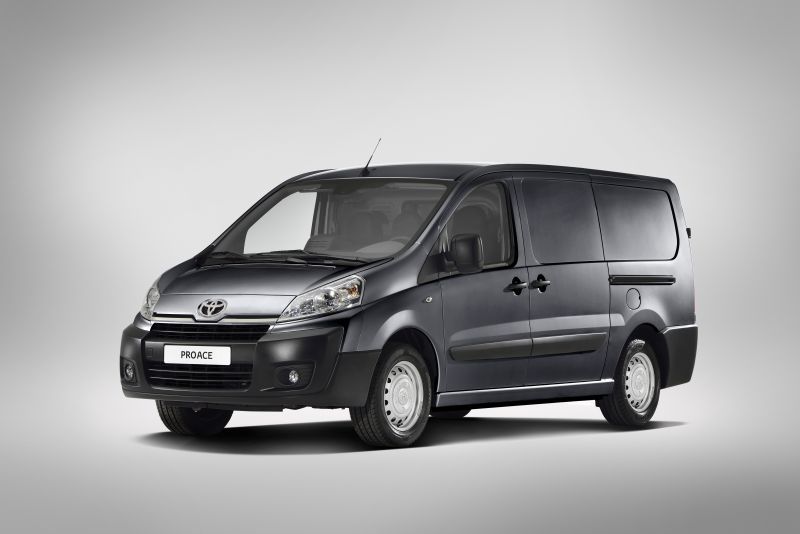
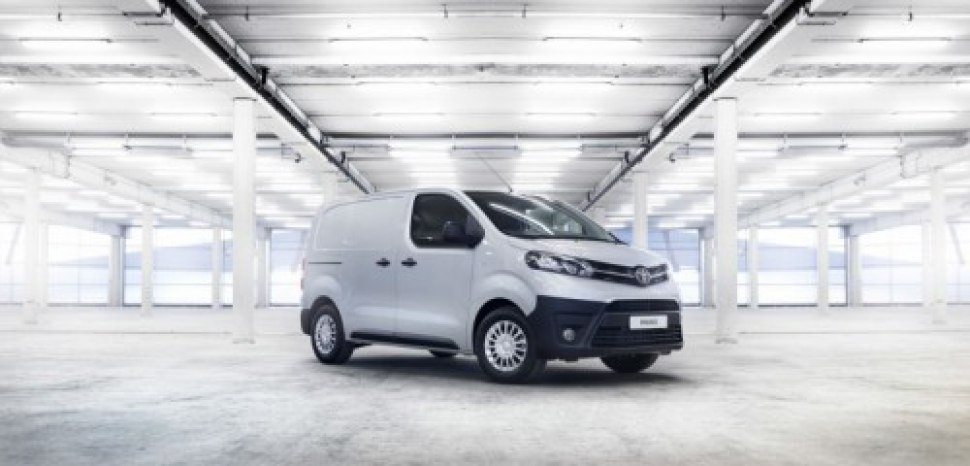
The Toyota Proace Compact II adopted a modern and functional design, characteristic of contemporary European minivans and light commercial vehicles. Its “Compact” moniker signifies its shorter wheelbase and overall length compared to other Proace variants, making it particularly adept at maneuvering in tight urban spaces. With a length of 181.46 inches (4609 mm), a width of 75.59 inches (1920 mm), and a height of 75 inches (1905 mm), it struck an ideal balance between exterior compactness and interior spaciousness.
Designed as a minivan, this variant typically featured four doors and a three-seat configuration, prioritizing cargo space or versatile seating for specific commercial applications. The body type, while utilitarian, incorporated clean lines and a contemporary front fascia that aligned with Toyota’s global design language. The vehicle’s architecture, with its front-wheel-drive setup and independent McPherson front suspension coupled with a wishbone rear suspension, provided a comfortable ride and stable handling, essential for carrying both passengers and cargo.
Interior versatility was a key selling point. The trunk (boot) space was impressive, ranging from a minimum of 57.67 cubic feet (1633 liters) to a maximum of 119.96 cubic feet (3397 liters) with seats folded or removed, offering substantial capacity for various uses. Further enhancing its utility, the Proace Compact II boasted a generous fuel tank capacity of 18.23 US gallons (69 liters), providing a good range between refills. It also offered robust towing capabilities, with a permitted trailer load of 4409.25 lbs. (2000 kg) with brakes and 1653.47 lbs. (750 kg) without, alongside a maximum roof load of 308.65-374.79 lbs. (140-170 kg).
Standard features included disc brakes at both the front and rear, complemented by an Anti-lock Braking System (ABS) for enhanced safety. The steering system was a rack and pinion type, assisted by electric power steering, which provided light and precise control, particularly beneficial during parking and low-speed maneuvers. The vehicle was typically fitted with tire sizes ranging from 215/65 R16 to 225/55 R17, mounted on 16-inch or 17-inch wheel rims, ensuring adequate grip and ride comfort.
Technical Specifications: Toyota Proace Compact II 2.0 D-4D (177 Hp) Automatic
| Category | Specification |
|---|---|
| Brand | Toyota |
| Model | Proace Compact II |
| Type (Engine) | 2.0 D-4D (177 Hp) Automatic |
| Production Start | September, 2016 |
| Production End | October, 2021 |
| Powertrain Architecture | Internal Combustion Engine |
| Body Type | Minivan |
| Seats | 3 |
| Doors | 4 |
| Performance Specs | |
| Fuel Consumption (Urban) | 7.3-7.6 l/100 km (30.9-32.2 US mpg) |
| Fuel Consumption (Extra Urban) | 5.3-5.6 l/100 km (42-44.4 US mpg) |
| Fuel Consumption (Combined) | 6.0-6.3 l/100 km (37.3-39.2 US mpg) |
| CO2 Emissions | 159-166 g/km |
| Fuel Type | Diesel |
| Emission Standard | Euro 6 |
| Engine Specs | |
| Power | 177 Hp |
| Power per liter | 88.6 Hp/l |
| Torque | 400 Nm (295.02 lb.-ft.) @ 2000 rpm |
| Engine Model/Code | 4WZ-FHV |
| Engine Displacement | 1997 cm³ (121.86 cu. in.) |
| Number of Cylinders | 4 |
| Engine Configuration | Inline |
| Valves per Cylinder | 4 |
| Fuel Injection System | Diesel Commonrail |
| Engine Aspiration | Turbocharger, Intercooler |
| Engine Oil Capacity | 6 liters (6.34 US qt) |
| Engine Systems | Particulate filter |
| Space, Volume & Weights | |
| Trunk Space (Minimum) | 1633-1978 liters (57.67-69.85 cu. ft.) |
| Trunk Space (Maximum) | 3397 liters (119.96 cu. ft.) |
| Fuel Tank Capacity | 69 liters (18.23 US gal) |
| Max. Roof Load | 140-170 kg (308.65-374.79 lbs.) |
| Permitted Trailer Load (with brakes 12%) | 2000 kg (4409.25 lbs.) |
| Permitted Trailer Load (without brakes) | 750 kg (1653.47 lbs.) |
| Permitted Towbar Download | 72 kg (158.73 lbs.) |
| Dimensions | |
| Length | 4609 mm (181.46 in.) |
| Width | 1920 mm (75.59 in.) |
| Height | 1905 mm (75 in.) |
| Wheelbase | 2925 mm (115.16 in.) |
| Front Track | 1627 mm (64.06 in.) |
| Rear Track | 1600 mm (62.99 in.) |
| Drivetrain, Brakes & Suspension Specs | |
| Drivetrain Architecture | Front-wheel drive; Internal combustion engine drives front wheels. |
| Drive Wheel | Front-wheel drive |
| Number of Gears & Gearbox Type | 8 gears, automatic transmission |
| Front Suspension | Independent type McPherson |
| Rear Suspension | Wishbone |
| Front Brakes | Disc |
| Rear Brakes | Disc |
| Assisting Systems | ABS (Anti-lock Braking System) |
| Steering Type | Steering rack and pinion |
| Power Steering | Electric Steering |
| Tire Size | 215/65 R16; 225/55 R17 |
| Wheel Rims Size | 16; 17 |
Legacy & Market Impact of the Toyota Proace Compact II
The Toyota Proace Compact II, particularly the 2.0 D-4D (177 Hp) Automatic variant, carved out a significant niche in the highly competitive European LCV and MPV markets. Its primary market impact stemmed from its position as a reliable, efficient, and versatile vehicle for small businesses, delivery services, and even as a capable family hauler. By leveraging the established platform and powertrain expertise of the PSA Group, Toyota was able to offer a compelling product that benefited from economies of scale and a proven design, while still upholding its brand’s reputation for quality and durability.
In its segment, the Proace Compact II competed directly with its platform siblings, the Citroën Jumpy/Dispatch and Peugeot Expert/Traveller, as well as other strong contenders like the Volkswagen Transporter, Ford Transit Custom, Renault Trafic, and Mercedes-Benz Vito. What set the Proace apart was often its strong dealer network, Toyota’s perceived reliability, and in some markets, more favorable warranty terms. The “Compact” designation specifically targeted urban professionals and smaller families who needed a vehicle that could navigate narrow city streets and tight parking spaces with ease, a common challenge in European cities.
Its historical significance lies in Toyota’s strategy to bolster its presence in the European commercial vehicle sector. While Toyota is a dominant force in passenger cars globally, its LCV offerings in Europe had historically been less diverse. The Proace, through this strategic alliance, allowed Toyota to offer a full range of vans without the immense R&D costs of developing a completely new platform from scratch. The 2.0 D-4D (177 Hp) Automatic variant, in particular, offered a premium driving experience for a commercial vehicle, with its powerful diesel engine and smooth automatic transmission appealing to those who prioritized comfort and ease of driving, especially for long distances or frequent stop-and-go traffic.
The Proace Compact II’s legacy is one of smart collaboration, practical design, and consistent performance. It demonstrated that a compact van could offer robust utility without sacrificing modern amenities, efficiency, or drivability. Its success contributed to Toyota’s overall market share in Europe and solidified its position as a serious contender in the multifaceted light commercial vehicle segment, proving that even a vehicle not sold in the US could have a profound global impact in its intended markets.