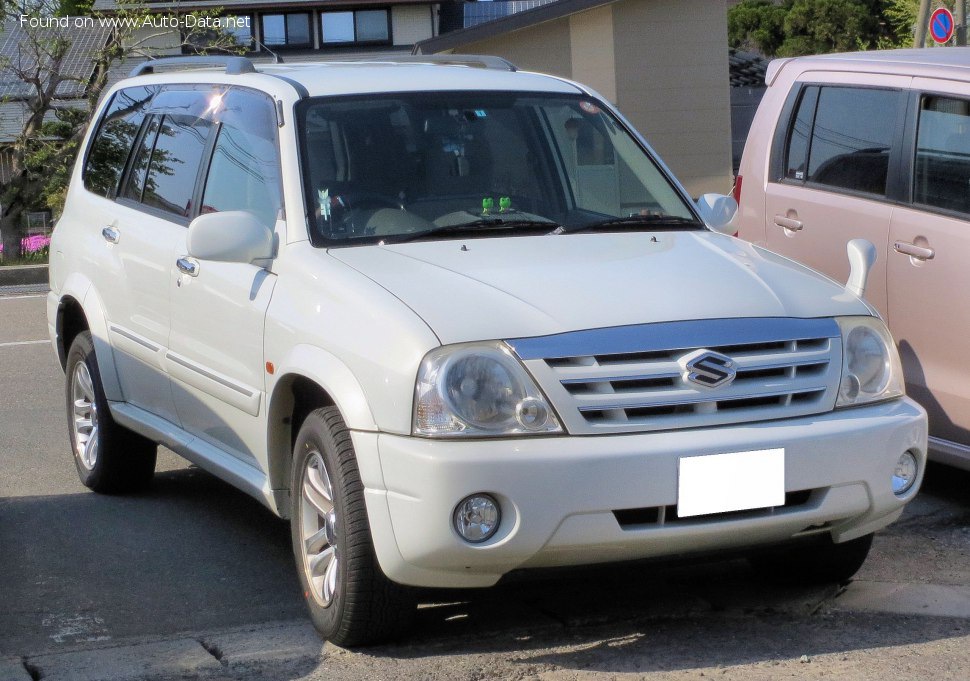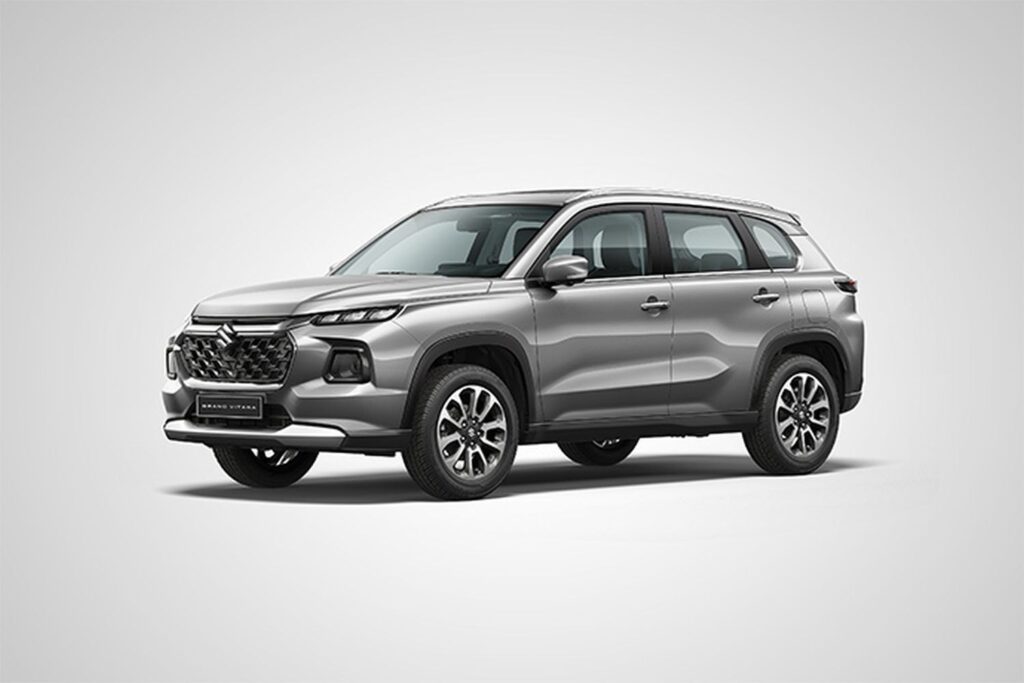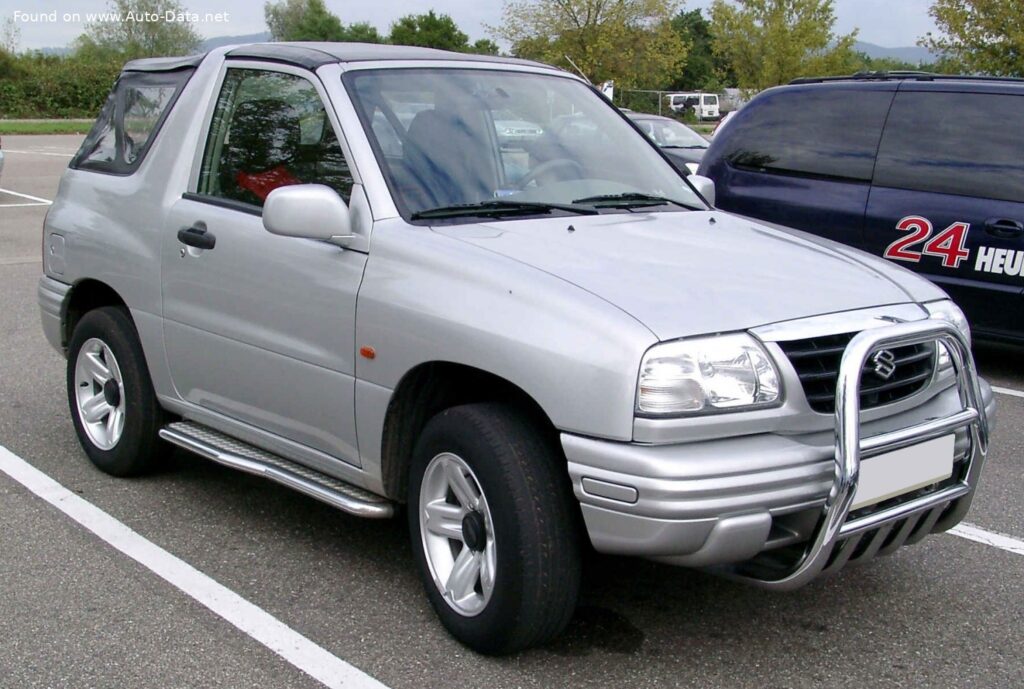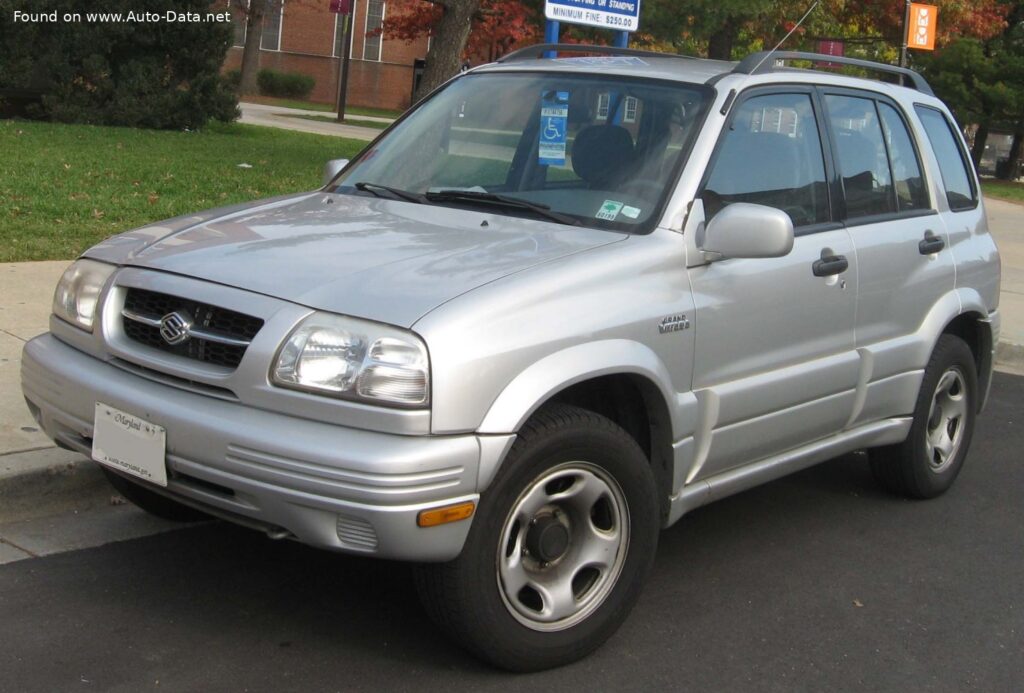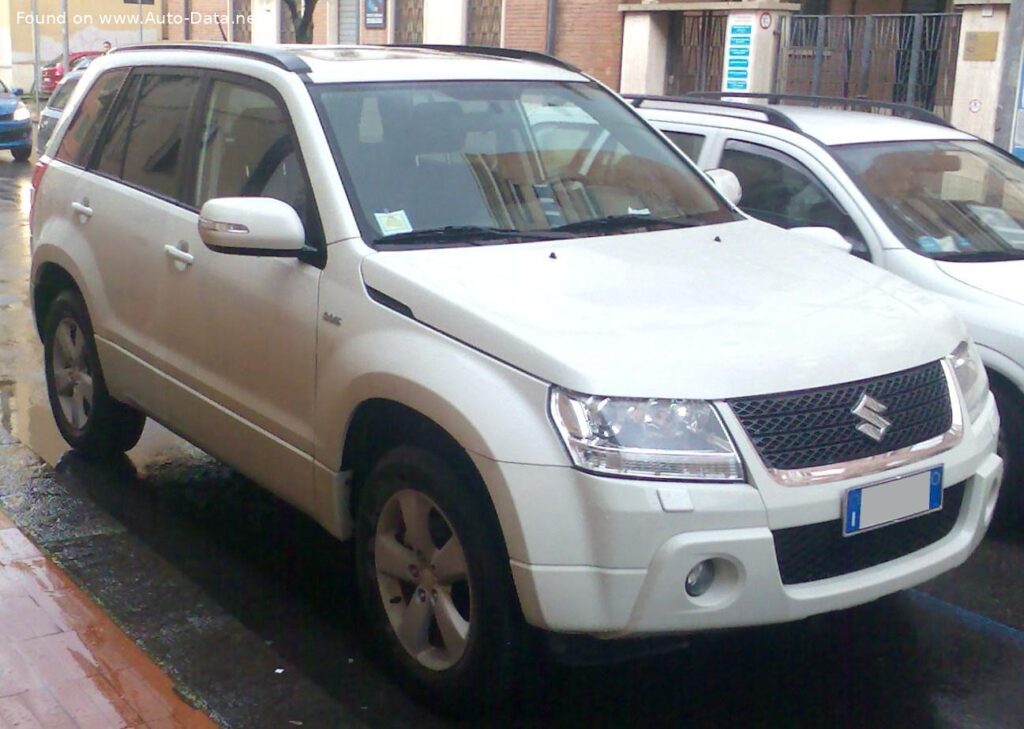
The Suzuki Grand Vitara II (facelift 2008): A Global Contender in the Compact SUV Segment
The Suzuki Grand Vitara, a name synonymous with rugged capability and compact utility, represents a significant chapter in the evolution of the sport utility vehicle. The second generation, introduced in 2005, marked a departure from its predecessor’s more traditional body-on-frame construction, adopting a unibody design with an integrated ladder frame for enhanced rigidity and improved on-road dynamics, while still retaining substantial off-road prowess. The specific variant under review, the Suzuki Grand Vitara II (facelift 2008) 5 Door 2.4 (169 Hp) AWD, represents a mid-cycle refresh that brought updated aesthetics, refined interiors, and, critically, a more potent and efficient engine option to its global markets, including North America, Europe, and Asia. Produced from September 2008 to May 2010, this iteration solidified the Grand Vitara’s position as a versatile and value-oriented alternative in the increasingly competitive compact SUV landscape.
Positioned to cater to a diverse range of buyers, from urban commuters seeking a higher driving position and practical cargo space to adventurous individuals needing genuine all-wheel-drive capability for light off-roading or challenging weather conditions, the Grand Vitara II (facelift 2008) aimed for a balanced approach. It bridged the gap between softer, car-based crossovers and more traditional, truck-like SUVs, offering a unique blend of comfort, safety, and durability that resonated with consumers worldwide.
Engine & Performance: Powering the Suzuki Grand Vitara II (facelift 2008)
At the heart of the Suzuki Grand Vitara II (facelift 2008) 5 Door 2.4 (169 Hp) AWD model was the newly introduced J24B 2.4-liter inline-four gasoline engine. This naturally aspirated powerplant was a significant upgrade over previous offerings, delivering a robust 169 horsepower at 6000 rpm and a healthy 167.43 lb.-ft. of torque at 3800 rpm. The engine featured a multi-port fuel injection system and Variable Valve Timing (VVT), contributing to its efficiency and responsiveness across the rev range. With a compression ratio of 10:1 and four valves per cylinder, the J24B engine was designed for a blend of performance and fuel economy, meeting Euro 4 emission standards.
Power was delivered to all four wheels via a permanent all-wheel-drive system, which was a hallmark of the Grand Vitara’s rugged character, distinguishing it from many front-wheel-drive biased crossovers of its time. The standard transmission for this specific variant was a 5-speed manual gearbox, offering drivers direct control and engagement. This combination allowed the Grand Vitara to accelerate from 0 to 60 mph in a respectable 11.1 seconds, with a top speed of 114.95 mph. While not a performance leader, these figures were more than adequate for daily driving and highway cruising, especially considering the vehicle’s off-road potential. Fuel efficiency was rated at a combined 26.1 US mpg (9.0 l/100 km), with urban consumption at 20.6 US mpg and extra-urban at 30.9 US mpg, making it a reasonably economical choice for its class and capabilities.
Design & Features: Practicality Meets Purpose
The exterior design of the Suzuki Grand Vitara II (facelift 2008) maintained the robust and purposeful aesthetic of the second generation, with subtle updates to the grille, front bumper, and taillights that modernized its appearance. As a 5-door SUV, it offered practical access to both front and rear seating, accommodating five occupants comfortably. Its dimensions, with a length of 180.12 inches, a width of 74.02 inches, and a height of 66.73 inches, provided a commanding road presence without being overly cumbersome for urban environments. A generous wheelbase of 103.94 inches contributed to a stable ride, while the 8.07-inch ground clearance highlighted its off-road credentials, allowing it to tackle uneven terrain with confidence.
Inside, the Grand Vitara focused on functionality and durability. The five-seat configuration offered ample headroom and legroom for its class. Cargo capacity was a strong suit, with a minimum trunk space of 26.77 cubic feet, expandable to an impressive 48.95 cubic feet with the rear seats folded, making it highly versatile for hauling gear, groceries, or luggage. The vehicle featured independent McPherson struts at the front and an independent multi-link suspension at the rear, providing a comfortable ride on pavement and capable articulation off-road. Braking was handled by ventilated discs at both the front and rear, complemented by an Anti-lock Braking System (ABS) for enhanced safety. The electric power steering, a rack and pinion system, offered light and responsive handling, aiding maneuverability in tight spaces. Standard tire sizes ranged from 215/70 R16 to 225/60 R18, mounted on corresponding wheel rims, contributing to both aesthetics and performance.
Technical Specifications
| Category | Specification |
|---|---|
| General Information | |
| Brand | Suzuki |
| Model | Grand Vitara |
| Generation | Grand Vitara II (facelift 2008) 5 Door |
| Type (Engine) | 2.4 (169 Hp) AWD |
| Start of Production | September, 2008 |
| End of Production | May, 2010 |
| Powertrain Architecture | Internal Combustion Engine |
| Body Type | SUV |
| Seats | 5 |
| Doors | 5 |
| Performance Specs | |
| Fuel Consumption (Urban) | 20.6 US mpg (11.4 l/100 km) |
| Fuel Consumption (Extra Urban) | 30.9 US mpg (7.6 l/100 km) |
| Fuel Consumption (Combined) | 26.1 US mpg (9.0 l/100 km) |
| CO2 Emissions (NEDC) | 208 g/km |
| Fuel Type | Gasoline (Petrol) |
| Acceleration 0-60 mph | 11.1 sec |
| Maximum Speed | 114.95 mph (185 km/h) |
| Emission Standard | Euro 4 |
| Weight-to-Power Ratio | 9.2 kg/Hp |
| Weight-to-Torque Ratio | 6.8 kg/Nm |
| Engine Specs | |
| Power | 169 hp @ 6000 rpm |
| Power per liter | 70.6 Hp/l |
| Torque | 167.43 lb.-ft. @ 3800 rpm (227 Nm) |
| Engine Layout | Front, Longitudinal |
| Engine Model/Code | J24B |
| Engine Displacement | 2393 cm3 (146.03 cu. in.) |
| Number of Cylinders | 4 |
| Engine Configuration | Inline |
| Cylinder Bore | 3.62 in. (92 mm) |
| Piston Stroke | 3.54 in. (90 mm) |
| Compression Ratio | 10:1 |
| Number of Valves per Cylinder | 4 |
| Fuel Injection System | Multi-port manifold injection |
| Engine Aspiration | Naturally aspirated engine |
| Valvetrain | VVT |
| Engine Oil Capacity | 5.07 US qt (4.8 l) |
| Coolant Capacity | 7.71 US qt (7.3 l) |
| Space, Volume and Weights | |
| Curb Weight | 3421.57 – 3648.65 lbs. (1552-1655 kg) |
| Max. Weight (GVWR) | 4629.71 lbs. (2100 kg) |
| Max Load | 981.06 – 1208.13 lbs. (445-548 kg) |
| Trunk Space (Minimum) | 26.77 cu. ft. (758 l) |
| Trunk Space (Maximum) | 48.95 cu. ft. (1386 l) |
| Fuel Tank Capacity | 17.44 US gal (66 l) |
| Permitted Trailer Load with Brakes | 4078.55 lbs. (1850 kg) |
| Permitted Trailer Load without Brakes | 1653.47 lbs. (750 kg) |
| Permitted Towbar Download | 187.39 lbs. (85 kg) |
| Dimensions | |
| Length | 180.12 in. (4575 mm) |
| Width | 74.02 in. (1880 mm) |
| Height | 66.73 in. (1695 mm) |
| Wheelbase | 103.94 in. (2640 mm) |
| Front Track | 60.63 in. (1540 mm) |
| Rear Track | 61.81 in. (1570 mm) |
| Ride Height (Ground Clearance) | 8.07 in. (205 mm) |
| Minimum Turning Circle | 36.09 ft. (11 m) |
| Drivetrain, Brakes and Suspension Specs | |
| Drivetrain Architecture | Permanent All-Wheel Drive (ICE drives all four wheels) |
| Drive Wheel | All-wheel drive (4×4) |
| Number of Gears and Type of Gearbox | 5 gears, manual transmission |
| Front Suspension | Independent type McPherson |
| Rear Suspension | Independent multi-link suspension |
| Front Brakes | Ventilated discs |
| Rear Brakes | Ventilated discs |
| Assisting Systems | ABS (Anti-lock braking system) |
| Steering Type | Steering rack and pinion |
| Power Steering | Electric Steering |
| Tires Size | 215/70 R16 99H; 225/65 R17 101H; 225/60 R18 100H |
| Wheel Rims Size | 6.5J x 16; 6.5J x 17; 7.0J x 18 |
Legacy & Market Impact of the Suzuki Grand Vitara II (facelift 2008)
The Suzuki Grand Vitara II (facelift 2008), particularly with the 2.4-liter engine and permanent AWD, carved out a distinct niche in the global compact SUV market. While many competitors, such as the Toyota RAV4, Honda CR-V, and Nissan X-Trail (Rogue in the US), were increasingly adopting car-like platforms and prioritizing on-road comfort and fuel efficiency, the Grand Vitara retained a more rugged character. Its integrated ladder frame and genuine all-wheel-drive system (often with a low-range transfer case in some markets, though not specified for this exact variant) offered a level of off-road capability that few rivals could match in its price segment.
This unique selling proposition resonated strongly in markets where challenging terrain, adverse weather, or the need for towing capacity (with a permitted trailer load of 4078.55 lbs. with brakes) was a significant factor for buyers. While it might not have been the softest riding or most technologically advanced interior compared to some rivals, its reputation for reliability, durability, and mechanical simplicity made it a favored choice among those seeking a dependable workhorse or an adventure-ready vehicle. In North America, where Suzuki’s automotive presence eventually waned, the Grand Vitara was appreciated by a loyal following for its robust build and genuine utility.
Globally, the Grand Vitara competed effectively by offering a compelling value proposition, combining reasonable operating costs with a go-anywhere attitude. Its compact footprint made it maneuverable in urban settings, while its ground clearance and AWD system provided confidence on unpaved roads or during winter conditions. The 2008 facelift, with its improved engine, helped keep the model competitive and relevant during its production run, solidifying its legacy as a practical, capable, and often underestimated player in the compact SUV segment.