The Seat Ibiza IV SC 1.9 TDI (105 Hp) DPF: A European Sporty Subcompact
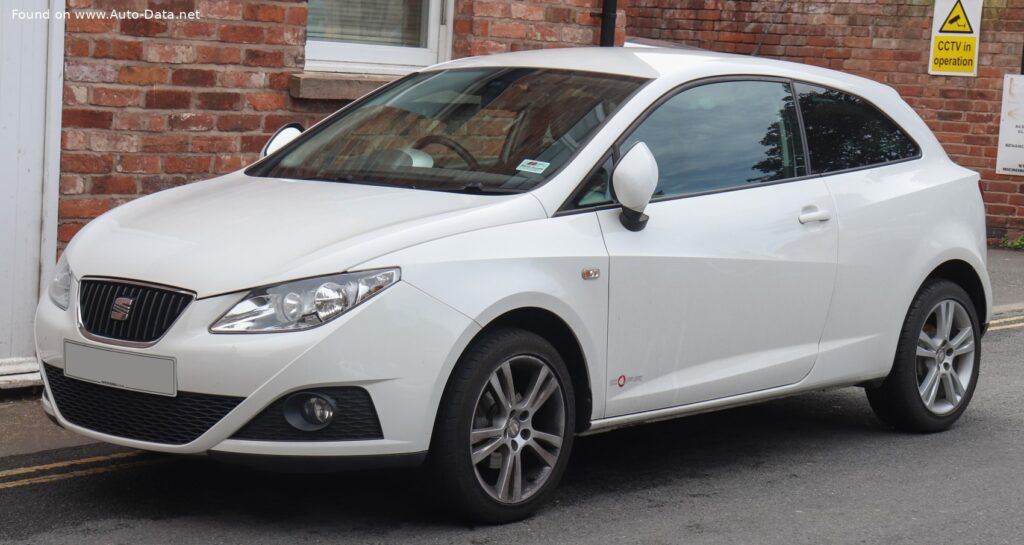
The Seat Ibiza IV SC 1.9 TDI (105 Hp) DPF represents a significant iteration of Seat’s popular subcompact model, the Ibiza. Launched in 2008 as part of the fourth generation (internal code 6J), the Ibiza IV SC, or “SportCoupé,” was a distinctive 3-door variant that emphasized a more dynamic and youthful appeal compared to its 5-door hatchback sibling. As a product of Seat, the Spanish marque within the Volkswagen Group, this model was primarily targeted at the European market, where subcompact vehicles and efficient diesel powertrains hold considerable importance. Produced from 2008 to 2009 with this specific engine configuration, the Ibiza IV SC 1.9 TDI (105 Hp) DPF combined Seat’s characteristic sporty design language with the Volkswagen Group’s proven diesel technology, offering a compelling package of performance, economy, and practicality for its segment.
While the Seat brand has never officially entered the United States market, the Ibiza plays a crucial role in the European automotive landscape, consistently ranking among the best-selling cars in its class. The IV generation, designed under the leadership of Luc Donckerwolke, was praised for its sharp styling and improved driving dynamics. This particular 1.9 TDI variant, equipped with a Diesel Particulate Filter (DPF), was a testament to the era’s focus on both fuel efficiency and increasingly stringent emissions standards, even for a performance-oriented diesel.
Powertrain and Performance
At the heart of the Seat Ibiza IV SC 1.9 TDI (105 Hp) DPF was a robust and widely recognized 1.9-liter (1896 cm3 or 115.7 cubic inches) turbodiesel engine, identified by the EA188 / BLS code. This inline four-cylinder engine, with a SOHC (Single Overhead Camshaft) valvetrain and two valves per cylinder, was a workhorse in the Volkswagen Group’s diesel lineup for many years, renowned for its reliability and strong low-end torque. The engine employed a pump-nozzle (unit injector) fuel injection system, a technology favored by Volkswagen at the time for its precise fuel delivery.
The turbocharger, combined with an intercooler, allowed the engine to produce a respectable 105 horsepower at 4000 rpm. More impressively, it generated a substantial 177.01 lb.-ft. (240 Nm) of torque at a low 1900 rpm. This torque figure was particularly beneficial for everyday driving, providing strong acceleration and effortless cruising, especially on European highways. Power was sent to the front wheels via a slick-shifting 5-speed manual transmission, a common and efficient choice for this class of vehicle.
Performance figures for the Ibiza IV SC 1.9 TDI were competitive for its segment. It could accelerate from 0 to 60 mph in a brisk 9.9 seconds and reach a maximum speed of 116.2 mph. However, where this powertrain truly shone was in its fuel economy. Under the NEDC (New European Driving Cycle) testing, it achieved an impressive combined fuel consumption of 52.3 US mpg (4.5 l/100 km). Even in urban settings, it managed 39.2 US mpg (6 l/100 km), while extra-urban driving could yield up to 63.6 US mpg (3.7 l/100 km). These figures underscore the efficiency benefits of diesel engines in Europe, making it an economical choice for commuters and long-distance drivers alike.
The inclusion of a Diesel Particulate Filter (DPF) was a crucial environmental feature, allowing the vehicle to meet the Euro 4 emission standard by trapping harmful soot particles from the exhaust gases. This commitment to reducing emissions was increasingly important during this period as environmental regulations tightened across Europe.
Design, Ergonomics, and Features
The Seat Ibiza IV SC stood out with its “SportCoupé” designation, signifying a more dynamic and aggressive styling approach compared to the standard 5-door hatchback. The 3-door body type, while less practical for passenger access to the rear, imbued the car with a sleeker profile and a sportier stance. The design language, characterized by sharp lines, pronounced wheel arches, and a distinctive “arrow design” front end, gave the Ibiza a youthful and energetic presence on the road. Despite its compact exterior dimensions—measuring 158.82 inches in length, 66.65 inches in width, and 56.22 inches in height—the Ibiza IV SC offered a surprisingly spacious interior for its class, accommodating five occupants, albeit with the expected compromises in rear legroom for a subcompact coupe.
Inside, the cabin reflected Seat’s commitment to modern ergonomics and functionality. The dashboard layout was intuitive, with controls logically placed for ease of use. Material quality, while not luxurious, was durable and well-assembled, typical of Volkswagen Group products. The trunk space offered a versatile capacity, ranging from 10.03 cubic feet (284 liters) with all seats up to a generous 32.84 cubic feet (930 liters) with the rear seats folded, making it practical for daily errands and weekend trips.
Underneath, the Ibiza IV SC featured a well-engineered chassis designed for agile handling. The front suspension utilized an independent McPherson strut setup with coil springs and an anti-roll bar, providing precise steering and good road holding. The rear featured a semi-dependent beam with a stabilizer for lateral stability, a cost-effective and space-efficient solution common in this segment. Braking performance was handled by ventilated discs at the front (288×25 mm) and solid discs at the rear (232×9 mm), complemented by an Anti-lock Braking System (ABS) for enhanced safety. The electric power steering system offered light effort at low speeds for easy maneuvering and firmer feedback at higher speeds, contributing to a confident driving experience. The car was offered with tire sizes 185/60 R15 or 215/45 R16, mounted on 6J x 15 or 7J x 16 wheel rims, respectively, allowing for a choice between comfort and sportier aesthetics.
Technical Specifications
| General Information | |
|---|---|
| Brand | Seat |
| Model | Ibiza |
| Generation | Ibiza IV SC |
| Type (Engine) | 1.9 TDI (105 Hp) DPF |
| Start of production | 2008 year |
| End of production | 2009 year |
| Powertrain Architecture | Internal Combustion engine |
| Body type | Coupe |
| Seats | 5 |
| Doors | 3 |
| Performance Specs | |
| Fuel consumption (economy) – urban (NEDC) | 39.2 US mpg (6 l/100 km) |
| Fuel consumption (economy) – extra urban (NEDC) | 63.6 US mpg (3.7 l/100 km) |
| Fuel consumption (economy) – combined (NEDC) | 52.3 US mpg (4.5 l/100 km) |
| CO2 emissions (NEDC) | 119 g/km |
| Fuel Type | Diesel |
| Acceleration 0 – 60 mph | 9.9 sec |
| Acceleration 0 – 100 km/h | 10.4 sec |
| Maximum speed | 116.2 mph (187 km/h) |
| Emission standard | Euro 4 |
| Weight-to-power ratio | 10.5 kg/Hp, 95.5 Hp/tonne |
| Weight-to-torque ratio | 4.6 kg/Nm, 218.2 Nm/tonne |
| Engine Specs | |
| Power | 105 Hp @ 4000 rpm. |
| Power per liter | 55.4 Hp/l |
| Torque | 177.01 lb.-ft. (240 Nm) @ 1900 rpm. |
| Engine layout | Front, Transverse |
| Engine Model/Code | EA188 / BLS |
| Engine displacement | 1.9 liters (1896 cm3, 115.7 cu. in.) |
| Number of cylinders | 4 |
| Engine configuration | Inline |
| Cylinder Bore | 3.13 in. (79.5 mm) |
| Piston Stroke | 3.76 in. (95.5 mm) |
| Compression ratio | 18.5:1 |
| Number of valves per cylinder | 2 |
| Fuel injection system | Pump-nozzle (Unit Injector) |
| Engine aspiration | Turbocharger, Intercooler |
| Valvetrain | SOHC |
| Engine oil capacity | 4.54 US qt (4.3 l) |
| Coolant | 8.45 US qt (8 l) |
| Engine systems | Particulate filter |
| Space, Volume and Weights | |
| Kerb Weight | 2425.08 lbs. (1100 kg) |
| Max. weight | 3529.6 lbs. (1601 kg) |
| Max load | 1104.52 lbs. (501 kg) |
| Trunk (boot) space – minimum | 10.03 cu. ft. (284 l) |
| Trunk (boot) space – maximum | 32.84 cu. ft. (930 l) |
| Fuel tank capacity | 11.89 US gal (45 l) |
| Max. roof load | 165.35 lbs. (75 kg) |
| Permitted trailer load with brakes (12%) | 2645.55 lbs. (1200 kg) |
| Permitted trailer load without brakes | 1278.68 lbs. (580 kg) |
| Permitted towbar download | 110.23 lbs. (50 kg) |
| Dimensions | |
| Length | 158.82 in. (4034 mm) |
| Width | 66.65 in. (1693 mm) |
| Height | 56.22 in. (1428 mm) |
| Wheelbase | 97.2 in. (2469 mm) |
| Front track | 57.68 in. (1465 mm) |
| Rear (Back) track | 57.36 in. (1457 mm) |
| Front overhang | 33.39 in. (848 mm) |
| Rear overhang | 28.23 in. (717 mm) |
| Minimum turning circle (turning diameter) | 34.38 ft. (10.48 m) |
| Drivetrain, Brakes and Suspension Specs | |
| Drivetrain Architecture | The Internal combustion engine (ICE) drives the front wheels of the vehicle. |
| Drive wheel | Front wheel drive |
| Number of gears and type of gearbox | 5 gears, manual transmission |
| Front suspension | Independent, type McPherson with coil spring and anti-roll bar |
| Rear suspension | Semi-dependent beam with stabilizer lateral stability |
| Front brakes | Ventilated discs, 288×25 mm |
| Rear brakes | Disc, 232×9 mm |
| Assisting systems | ABS (Anti-lock braking system) |
| Steering type | Steering rack and pinion |
| Power steering | Electric Steering |
| Tires size | 185/60 R15; 215/45 R16 |
| Wheel rims size | 6J x 15; 7J x 16 |
Market Position and Legacy
In the highly competitive European subcompact (B-segment) market, the Seat Ibiza IV SC 1.9 TDI (105 Hp) DPF carved out a niche for itself as a sporty and economical option. Seat, often positioned as the more passionate and youthful brand within the Volkswagen Group, aimed to appeal to younger buyers or those seeking a more engaging driving experience than what might be offered by its platform siblings, like the Volkswagen Polo or Skoda Fabia. Its main competitors included popular models such as the Ford Fiesta, Renault Clio, Peugeot 207, Opel Corsa, and Fiat Grande Punto, all vying for market share with their own blend of style, performance, and efficiency.
The 1.9 TDI engine, in particular, contributed significantly to the Ibiza’s reputation. This specific powertrain was celebrated across Europe for its robust nature, impressive fuel economy, and strong torque delivery, making it ideal for both urban commutes and longer journeys. The DPF system ensured that the engine met the prevailing Euro 4 emissions standards, showcasing Seat’s adherence to environmental regulations while still offering the benefits of diesel power. The “SC” moniker, emphasizing its SportCoupé nature, highlighted its design-led appeal and dynamic character, which resonated well with a segment of buyers looking for a more distinctive and less utilitarian subcompact.
The Ibiza IV generation, including the SC variant, was generally well-received for its sharp handling, comfortable ride (for its class), and attractive styling. Its mechanical underpinnings, shared with other successful VW Group models, contributed to its reputation for reliability and solid build quality. While the 1.9 TDI engine was eventually phased out in favor of smaller, more advanced 1.6-liter TDI units to meet stricter Euro 5 and Euro 6 standards, the 1.9 TDI (105 Hp) DPF model remains a testament to a period when this engine was a benchmark for efficiency and performance in its class. Its legacy lies in demonstrating that a compact, stylish, and fun-to-drive car could also be remarkably fuel-efficient and environmentally conscious for its time, securing its place as a significant model in Seat’s history and the broader European automotive landscape.