The Opel Rekord E (Facelift 1982) 2.2 D Automatic: A European Workhorse
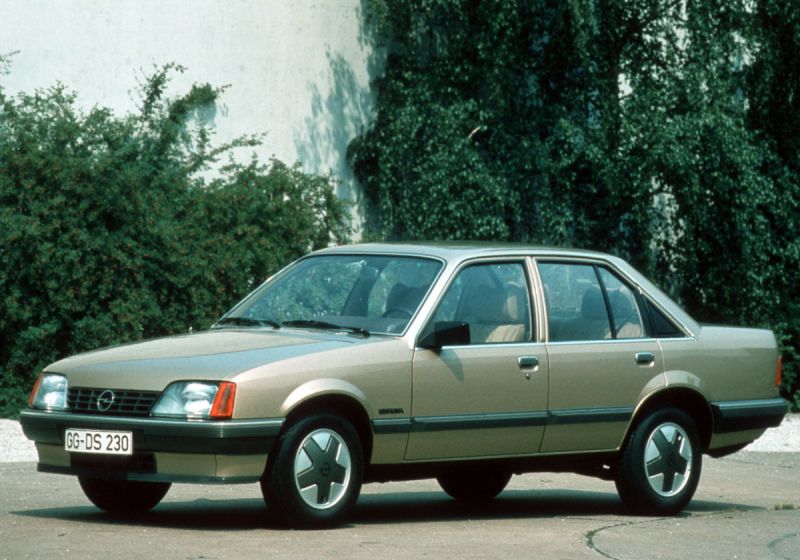
The Opel Rekord E (facelift 1982) represents a significant chapter in the history of European mid-size sedans, particularly for the German automaker Opel. Produced by General Motors’ German subsidiary, the Rekord line had been a staple in the European market for decades, known for its robust construction, practicality, and affordability. The E-generation, launched in 1977, received a substantial facelift in 1982, bringing updated styling and revised powertrains. The variant under scrutiny here, the Opel Rekord E (facelift 1982) 2.2 D (71 Hp) Automatic, was a diesel-powered sedan aimed squarely at the economy-conscious family and fleet buyer, produced from August 1983 to September 1986.
Positioned as a mainstream executive car in its primary European markets, the Rekord E competed in a fiercely contested segment. While never officially sold in the United States, its design philosophy and engineering principles echoed those of its American GM cousins, albeit adapted to European tastes and regulations. This particular model, with its naturally aspirated diesel engine and automatic transmission, embodied the era’s focus on fuel efficiency and durability, albeit at the expense of outright performance, a common trade-off for diesel vehicles of the early 1980s.
Engine & Performance: The Heart of the Opel Rekord E (Facelift 1982)
Under the hood of the Opel Rekord E (facelift 1982) 2.2 D lay the robust 23D engine, an inline four-cylinder diesel unit. With an engine displacement of 2,260 cubic centimeters (approximately 137.9 cubic inches or 2.3 liters), this powerplant was designed for longevity and economical operation rather than exhilarating speed. It produced a modest 71 horsepower at 4,400 revolutions per minute, a figure that, even for its time, underscored its utilitarian purpose. Torque was rated at 135 Newton-meters (99.57 pound-feet) at a relatively low 2,400 rpm, providing decent pulling power suitable for everyday driving and carrying loads.
The engine featured a SOHC (Single Overhead Camshaft) valvetrain with two valves per cylinder and utilized a precombustion chamber injection system, a common technology for naturally aspirated diesels of the era, known for its smoother, albeit less efficient, combustion compared to direct injection systems that would become prevalent later. The high compression ratio of 22:1 was typical for diesel engines, ensuring efficient ignition without spark plugs.
Mated to this diesel engine was a 3-speed automatic transmission, a common choice for comfort and convenience in the mid-1980s. While offering ease of driving, this transmission, combined with the modest engine output, contributed to leisurely performance figures. The Rekord 2.2 D Automatic accelerated from 0 to 60 miles per hour in a rather relaxed 21.4 seconds, with 0 to 62 mph (100 km/h) taking 22.5 seconds. Its top speed was approximately 96.31 mph (155 km/h). These figures clearly indicate that the vehicle was not intended for spirited driving but rather for comfortable, long-distance cruising with an emphasis on fuel economy.
Indeed, fuel efficiency was a strong suit for this Rekord variant. Its combined fuel consumption was rated at 7.6 liters per 100 kilometers, which translates to a respectable 30.9 US miles per gallon. This economy, coupled with a generous 17.17 US gallon (65-liter) fuel tank, provided a substantial cruising range, making it an attractive option for taxi operators, company fleets, and families covering significant distances across Europe.
Design & Features: Practicality and European Aesthetics
The Opel Rekord E (facelift 1982) maintained its predecessor’s sensible and somewhat conservative styling, characteristic of German automotive design of the period. The facelift introduced a more aerodynamic front fascia, improved headlights, and subtly revised taillights, giving it a slightly more modern appearance than the pre-facelift model. Its four-door sedan body type was the quintessential family car configuration, offering spacious accommodation for five occupants.
Measuring 183.15 inches (4,652 mm) in length, 67.95 inches (1,726 mm) in width, and 55.91 inches (1,420 mm) in height, the Rekord E provided a substantial footprint for its class. The wheelbase of 105.04 inches (2,668 mm) contributed to a stable ride and ample interior room. The design prioritized passenger comfort and cargo capacity, boasting a minimum trunk space of 17.3 cubic feet (490 liters), which was competitive for the segment and made it highly practical for family vacations or professional use.
From a technological standpoint, the Rekord E reflected the standard features of its time. Safety equipment would have included basic seatbelts for all occupants and a robust body structure designed to meet European crash standards. Driver aids were minimal by today’s standards, focusing on fundamental necessities. The vehicle featured ventilated disc brakes at the front and drum brakes at the rear, a common and cost-effective setup for a rear-wheel-drive sedan of its caliber. Its drag coefficient (Cd) of 0.36 was considered reasonably good for a sedan in the early 1980s, contributing to its fuel efficiency.
The interior, while not luxurious, was functional and durable, designed to withstand years of use. Materials were chosen for resilience, and the layout was straightforward, with clear instrumentation and accessible controls. The emphasis was on ergonomic simplicity and reliability, qualities highly valued by its target demographic in Europe.
Technical Specifications
| Category | Specification |
|---|---|
| Brand | Opel |
| Model | Rekord E (facelift 1982) 2.2 D (71 Hp) Automatic |
| Production Start | August, 1983 |
| Production End | September, 1986 |
| Body Type | Sedan |
| Doors | 4 |
| Seats | 5 |
| Performance | |
| Fuel Type | Diesel |
| Combined Fuel Consumption | 7.6 l/100 km (30.9 US mpg) |
| Acceleration 0-60 mph | 21.4 sec |
| Acceleration 0-62 mph (100 km/h) | 22.5 sec |
| Maximum Speed | 96.31 mph (155 km/h) |
| Weight-to-power ratio | 17.7 kg/Hp (56.3 Hp/tonne) |
| Weight-to-torque ratio | 9.3 kg/Nm (107.1 Nm/tonne) |
| Engine Specs | |
| Power | 71 Hp @ 4400 rpm |
| Torque | 135 Nm (99.57 lb.-ft.) @ 2400 rpm |
| Engine Model/Code | 23D |
| Engine Displacement | 2,260 cm³ (137.91 cu. in. / 2.3 liters) |
| Number of Cylinders | 4, Inline |
| Cylinder Bore | 92 mm (3.62 in.) |
| Piston Stroke | 85 mm (3.35 in.) |
| Compression Ratio | 22:1 |
| Valves per Cylinder | 2 |
| Fuel Injection System | Precombustion chamber injection |
| Engine Aspiration | Naturally aspirated |
| Valvetrain | SOHC |
| Engine Oil Capacity | 5.5 l (5.81 US qt) |
| Coolant Capacity | 11.5 l (12.15 US qt) |
| Dimensions & Weights | |
| Kerb Weight | 1,260 kg (2,777.82 lbs) |
| Max. Weight | 1,780 kg (3,924.23 lbs) |
| Max Load | 520 kg (1,146.4 lbs) |
| Trunk (boot) Space – minimum | 490 l (17.3 cu. ft.) |
| Fuel Tank Capacity | 65 l (17.17 US gal) |
| Permitted Trailer Load with brakes (12%) | 1,100 kg (2,425.08 lbs) |
| Length | 4,652 mm (183.15 in.) |
| Width | 1,726 mm (67.95 in.) |
| Height | 1,420 mm (55.91 in.) |
| Wheelbase | 2,668 mm (105.04 in.) |
| Front Track | 1,435 mm (56.5 in.) |
| Rear Track | 1,412 mm (55.59 in.) |
| Ride Height (Ground Clearance) | 140 mm (5.51 in.) |
| Drag Coefficient (Cd) | 0.36 |
| Minimum Turning Circle | 10.8 m (35.43 ft.) |
| Drivetrain, Brakes & Suspension | |
| Drivetrain Architecture | Rear-wheel drive, Internal Combustion Engine (ICE) |
| Drive Wheel | Rear wheel drive |
| Number of Gears & Type | 3 gears, automatic transmission |
| Front Brakes | Ventilated discs |
| Rear Brakes | Drum |
Legacy & Market Impact
The Opel Rekord E, particularly its diesel variants like the 2.2 D, carved out a significant niche in the European automotive landscape of the 1980s. It was a car that represented reliability, affordability, and practical transportation for millions. Its reputation as a dependable workhorse made it a popular choice for families, small businesses, and government fleets across Germany and other European nations.
In its segment, the Rekord E faced stiff competition from other European manufacturers. Key rivals included the Ford Granada (which became the Scorpio later in the decade), the Peugeot 505, the Renault 20/30 (later 25), and to some extent, the more upmarket Mercedes-Benz W123/W124 and BMW 5 Series. While the Rekord couldn’t match the premium aura or dynamic prowess of its luxury German counterparts, it offered a compelling value proposition that resonated with a broader market. Its robust mechanicals, generous interior space, and competitive pricing ensured its continued success.
The Rekord E’s legacy is one of consistent performance in its intended role. It was not a car that broke new ground in terms of technology or design, but rather perfected the formula of a reliable, comfortable, and economical family sedan. Its rear-wheel-drive architecture, a hallmark of Opel’s larger models for decades, provided predictable handling characteristics and simplified maintenance, further cementing its appeal to the pragmatic buyer.
The Rekord line eventually concluded its production run in 1986, making way for the all-new Opel Omega. The Omega carried forward many of the Rekord’s core values but introduced more modern styling, improved aerodynamics, and advanced technology. However, the Rekord E, especially in its facelifted form and with its enduring diesel options, remains a classic example of European automotive engineering from an era focused on durability, economy, and straightforward functionality. Today, surviving examples are cherished by enthusiasts for their classic lines and the nostalgic connection to a bygone era of motoring.