Introduction: The Mitsubishi Lancer Fiore II 1.4 (70 Hp)
The Mitsubishi Lancer Fiore II represents a pivotal chapter in the storied history of Mitsubishi Motors, particularly within the compact sedan segment. Produced for a brief but impactful period between 1983 and 1984, the Lancer Fiore II was the second generation of a distinct model line within the broader Lancer family, primarily targeting the Japanese Domestic Market (JDM) and select export territories in Asia and Europe. While the Lancer nameplate eventually gained global recognition, particularly in North America through various iterations, the Fiore II was a more specialized offering, distinguished by its focus on economy, practicality, and reliability in an era defined by a global shift towards more fuel-efficient and accessible personal transportation.
Emerging in the early 1980s, the Mitsubishi Lancer Fiore II 1.4 (70 Hp) was a direct response to the burgeoning demand for compact family sedans that offered a balance of affordability, low running costs, and sufficient space for small families. It served as a testament to Mitsubishi’s engineering prowess, delivering a robust and dependable vehicle designed to navigate congested urban landscapes and provide comfortable inter-city travel. This generation of the Lancer continued to build upon the foundation laid by its predecessor, refining its mechanical package and adopting the contemporary styling cues of the era, which favored clean lines and functional aesthetics.
Unlike some of its more aggressively marketed siblings or future performance-oriented descendants, the Lancer Fiore II was a workhorse, designed to be an everyday companion. Its relatively modest 1.4-liter engine, producing 70 horsepower, was perfectly aligned with its mission: to provide dependable motivation without excessive fuel consumption. As an international automotive expert, it’s crucial to understand that while this specific model might not be instantly recognizable to many American consumers, its underlying principles and engineering contributed significantly to Mitsubishi’s global reputation and its eventual success in diverse markets worldwide. It was a foundational model that helped solidify the brand’s image as a producer of durable and value-driven automobiles.
Engine and Performance: Powering the Lancer Fiore II
The heart of the Mitsubishi Lancer Fiore II 1.4 (70 Hp) was its naturally aspirated 1.4-liter gasoline engine. In the context of the early 1980s, an output of 70 horsepower from such an engine was considered a competent, if not exhilarating, figure for a compact sedan. This powertrain was meticulously engineered for efficiency and longevity, two characteristics that were paramount for consumers during a period of fluctuating fuel prices and increasing environmental awareness. Mitsubishi’s focus was on delivering a smooth, reliable power delivery that was suitable for daily commuting and typical family duties.
The engine’s design likely emphasized simplicity, making it easier and more affordable to maintain. Components were robust, reflecting the Japanese automotive industry’s commitment to quality and durability. While specific torque figures are not provided, it can be inferred that the engine generated sufficient low-end torque to facilitate comfortable urban driving and reasonable acceleration from a standstill, without needing to constantly rev the engine high. The naturally aspirated design meant predictable power delivery and a lower complexity compared to turbocharged alternatives, which were still less common in mainstream compacts at the time.
Paired with what would typically be a manual transmission (though an automatic option was often available in such models), the 1.4-liter engine allowed the Lancer Fiore II to achieve commendable fuel economy figures. This was a significant selling point in its primary markets, where economic operation was often prioritized over outright speed. The driving experience would have been characterized by a comfortable ride and predictable handling, perfectly suited to its role as a practical family sedan. The powertrain architecture, centered around an internal combustion engine, was the standard for the era, and Mitsubishi executed it with characteristic precision, ensuring a dependable and fuss-free ownership experience for the Mitsubishi Lancer Fiore II.
Design and Features: The Lancer Fiore II Aesthetic
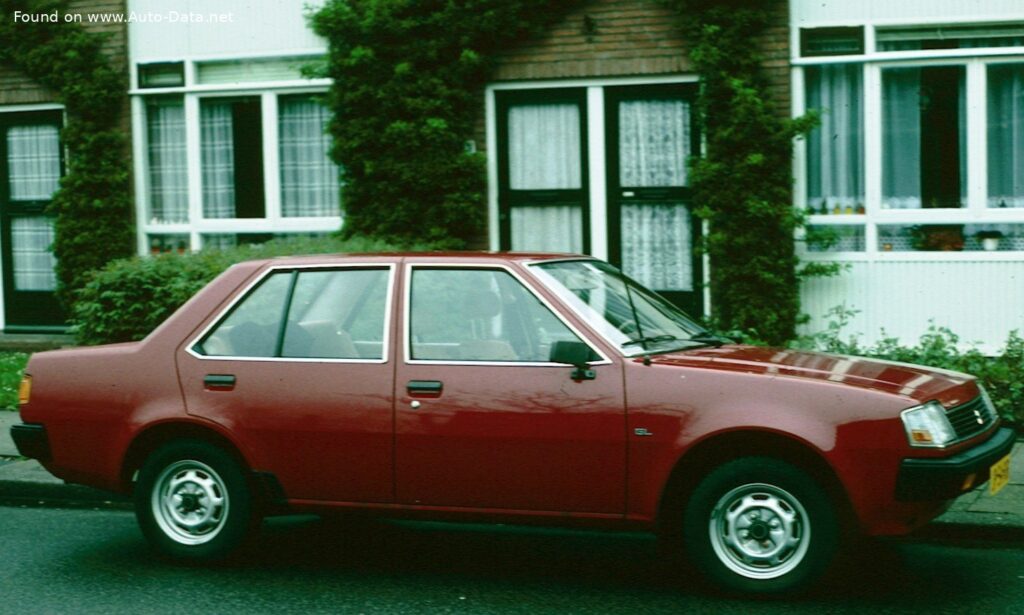
The design of the Mitsubishi Lancer Fiore II was a quintessential example of early 1980s automotive styling. Adopting a classic sedan body type, it featured clean, angular lines that were both aerodynamic for the period and efficient in terms of interior packaging. The aesthetic prioritized functionality and a sense of understated elegance over flamboyant styling cues. Its compact dimensions made it agile in city traffic and easy to park, while still providing a surprisingly spacious interior for its class.
The exterior of the Lancer Fiore II would have featured a modest grille, often incorporating the distinctive Mitsubishi three-diamond logo, flanked by rectangular headlights. Chrome accents were common on bumpers and window surrounds, adding a touch of class without being ostentatious. The overall silhouette was boxy but purposeful, contributing to excellent visibility from the driver’s seat. Body panels were designed for durability and ease of repair, further enhancing its appeal as an economical choice.
Inside, the Lancer Fiore II focused on practicality and user-friendliness. The cabin was laid out logically, with clear instrumentation and easily accessible controls. Materials, while not luxurious, were chosen for their durability and ease of cleaning, capable of withstanding the rigors of family life. Seats were typically upholstered in hard-wearing fabric, designed to offer comfort on longer journeys. Features would have been relatively basic by modern standards, reflecting the era and the car’s market positioning. Common amenities included a basic AM/FM radio, manual windows, and perhaps an optional air conditioning system. Power steering might have been an option or standard on higher trims, contributing to easier maneuverability. Safety features, while rudimentary compared to today’s standards, would have included a robust unibody construction, seatbelts for all occupants, and a focus on structural integrity in collisions—hallmarks of responsible Japanese automotive engineering of the time. The emphasis was on a reliable, comfortable, and straightforward driving environment.
Technical Specifications: Mitsubishi Lancer Fiore II 1.4 (70 Hp)
Below are the detailed technical specifications for the Mitsubishi Lancer Fiore II 1.4 (70 Hp), providing a snapshot of its engineering and capabilities.
| Category | Specification |
|---|---|
| Brand | Mitsubishi |
| Model | Lancer |
| Generation | Lancer Fiore II |
| Type (Engine) | 1.4 (70 Hp) |
| Start of production | 1983 year |
| End of production | 1984 year |
| Powertrain Architecture | Internal Combustion engine |
| Body type | Sedan |
| Fuel Type | Petrol (Gasoline) |
| Power | 70 Hp |
| Engine aspiration | Naturally aspirated engine |
Legacy and Market Impact: The Mitsubishi Lancer Fiore II’s Place in History
The Mitsubishi Lancer Fiore II 1.4 (70 Hp), despite its relatively short production run, played an important role in Mitsubishi’s strategy during the early 1980s. It solidified the brand’s reputation for producing reliable, economical, and practical compact cars, particularly in its primary markets of Japan and other Asian countries. While not a direct competitor in the North American market under the “Fiore II” moniker, its underlying engineering and design principles were often shared with other Mitsubishi models or rebadged vehicles sold globally, contributing to the company’s broader international presence.
In its home market and export regions, the Lancer Fiore II faced stiff competition from other Japanese automotive giants. Rivals such as the Toyota Corolla, Nissan Sunny (known as Sentra in North America), and Honda Civic were all vying for dominance in the compact sedan segment. The Fiore II distinguished itself through its robust build quality, competitive pricing, and Mitsubishi’s growing reputation for durability. It was often chosen by buyers who valued long-term reliability and low operating costs over flashier designs or high-performance capabilities.
The legacy of the Lancer Fiore II is deeply intertwined with the evolution of the Lancer nameplate itself. It was a crucial step in the lineage that would eventually spawn a diverse range of vehicles, from basic economy cars to the rally-bred Lancer Evolution series. The Fiore II demonstrated Mitsubishi’s ability to create a competent, mass-market vehicle that could serve as a reliable foundation for future innovations. Its emphasis on a simple, naturally aspirated engine and a practical sedan body laid the groundwork for future generations of Lancers that continued to be mainstays in various global markets.
Today, the Mitsubishi Lancer Fiore II is considered a classic example of early 1980s Japanese automotive engineering. While not a collector’s item in the same vein as some exotic sports cars, it is remembered by enthusiasts and former owners for its unwavering dependability and straightforward design. It represents an era when cars were built with a clear purpose: to provide accessible, efficient, and reliable transportation. The Fiore II, therefore, stands as a quiet but significant contributor to Mitsubishi’s global narrative, embodying the brand’s commitment to quality and value that resonated with millions of customers worldwide. Its impact, though subtle, was foundational in shaping Mitsubishi’s identity as a reputable international automaker.