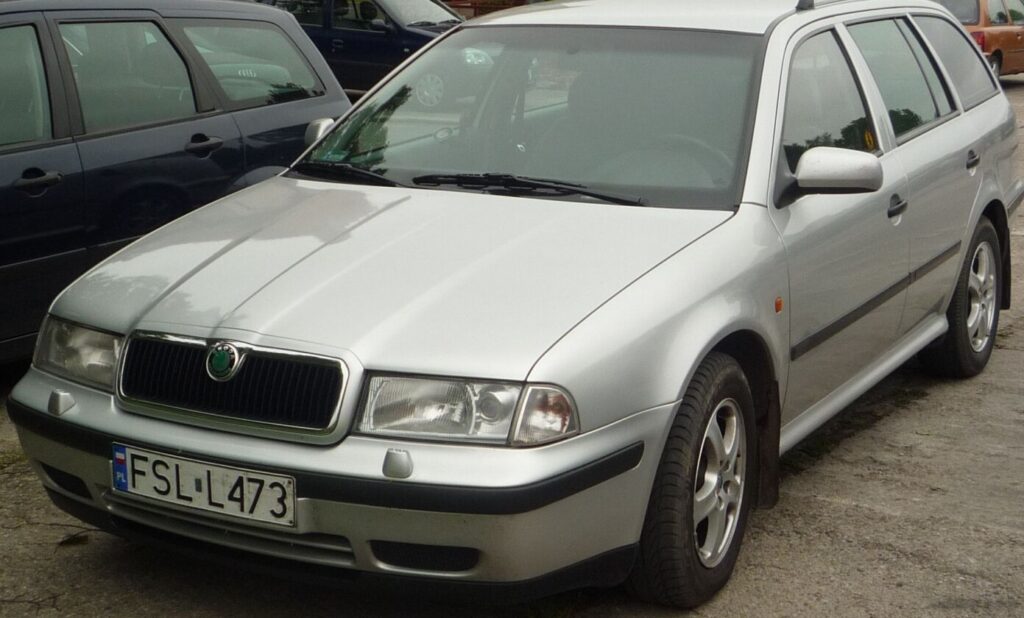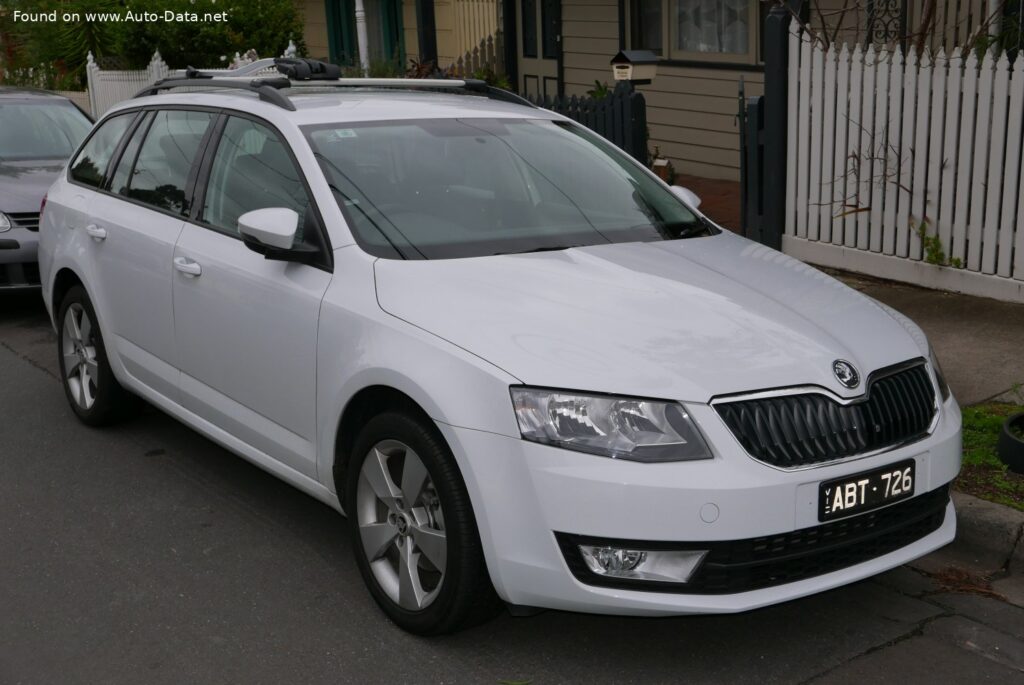
Skoda Octavia III Combi 2.0 TDI (150 Hp) DSG: A European Workhorse
The Skoda Octavia III Combi 2.0 TDI (150 Hp) DSG represents a pivotal model in the Czech automaker’s modern history, solidifying its reputation for offering exceptional practicality, efficiency, and value within the highly competitive European compact segment. Produced between 2013 and 2017, this third-generation Octavia, particularly in its Combi (station wagon) guise, became a cornerstone of Skoda’s lineup, appealing to a broad spectrum of buyers from families to fleet operators across the continent. While Skoda models are not typically sold in the United States, the Octavia’s engineering prowess, derived from its Volkswagen Group parentage, showcases the brand’s capability to deliver sophisticated and robust vehicles for its primary markets in Europe and beyond. This particular variant, equipped with a potent 2.0-liter turbocharged diesel engine and a smooth DSG automatic transmission, epitomized the blend of performance and fuel economy that many European consumers sought.
Engine and Performance: The Heart of the Skoda Octavia III Combi 2.0 TDI (150 Hp) DSG
At the core of the Skoda Octavia III Combi 2.0 TDI (150 Hp) DSG lies a robust and highly efficient 2.0-liter (1968 cm3 or 120.09 cu. in.) inline-four turbocharged diesel engine, identified by internal codes such as EA288, CKFC, CRMB, or CYKA. This advanced powerplant is a testament to Volkswagen Group’s expertise in diesel technology, featuring a common rail fuel injection system, a turbocharger, and an intercooler to optimize combustion and power delivery. The DOHC (Double Overhead Camshaft) valvetrain with four valves per cylinder ensures efficient airflow and exhaust scavenging.
This engine generates a respectable 150 horsepower, peaking between 3500 and 4000 rpm, translating to a power-per-liter output of 76.2 HP/l. More significantly for a diesel, it produces a substantial 236.02 lb.-ft. (320 Nm) of torque, available across a broad rev range from 1750 to 3000 rpm. This wide torque band is crucial for effortless acceleration and strong pulling power, particularly when the vehicle is loaded or towing. The engine’s layout is front, transverse, driving the front wheels, a common and efficient configuration for compact vehicles.
Power is channeled through a sophisticated 6-speed DSG (Direct Shift Gearbox) automatic transmission. This dual-clutch unit is renowned for its rapid and seamless gear changes, contributing to both the vehicle’s lively performance and its impressive fuel efficiency. The Octavia III Combi 2.0 TDI (150 Hp) DSG accelerates from 0 to 60 mph in a brisk 8.3 seconds, with a top speed of 132.35 mph (213 km/h).
Fuel economy was a major selling point for this diesel variant. According to NEDC (New European Driving Cycle) figures, the vehicle achieved 43.6 US mpg (5.4 l/100 km) in urban driving, an outstanding 57.4 US mpg (4.1 l/100 km) on the extra-urban cycle, and a combined average of 52.3 US mpg (4.5 l/100 km). With CO2 emissions of just 119 g/km, it met the Euro 5 emission standard, further enhanced by a standard Start & Stop System and a particulate filter, showcasing its commitment to environmental responsibility for its era.
Design and Features: Practicality Meets Refinement
The Skoda Octavia III Combi, classified as a station wagon (or estate in Europe), was designed with practicality and spaciousness at its forefront. Measuring 183.43 inches (4659 mm) in length, 71.42 inches (1814 mm) in width (79.41 inches or 2017 mm including mirrors), and 57.68 inches (1465 mm) in height, with a wheelbase of 105.75 inches (2686 mm), the Octavia Combi offered substantial interior room. Its design ethos, while unmistakably Skoda, shared underlying architectural elements with its Volkswagen Group stablemates, particularly the VW Golf, but presented a more conservative and elegant aesthetic.
The five-door, five-seat configuration provided excellent versatility. One of the Octavia Combi’s most celebrated features was its cavernous trunk space. With the rear seats in place, it offered a generous 21.54 cu. ft. (610 liters) of cargo volume, expanding to an impressive 61.45 cu. ft. (1740 liters) with the rear seats folded down. This made it a class leader in cargo capacity, a significant draw for families and professionals alike. The maximum load capacity was 1421.98 lbs. (645 kg), and it could tow up to 3527.4 lbs. (1600 kg) with brakes, highlighting its robust utility.
Underneath, the Octavia utilized a tried-and-true suspension setup: an independent McPherson strut system with coil springs and an anti-roll bar at the front, and a coil spring torsion beam at the rear. This configuration provided a comfortable ride while maintaining predictable handling characteristics. Braking duties were handled by ventilated discs at the front and solid discs at the rear, augmented by an Anti-lock Braking System (ABS) for enhanced safety. The electric power steering system offered light and precise control, making urban maneuvers and highway cruising equally effortless. Various tire and wheel options were available, ranging from 195/65 R15 to 225/45 R17, contributing to both aesthetics and driving dynamics.
Technical Specifications
| Category | Specification | Value |
|---|---|---|
| General Information | ||
| Brand | Skoda | |
| Model | Octavia | |
| Generation | Octavia III Combi | |
| Type (Engine) | 2.0 TDI (150 Hp) DSG | |
| Production Start | 2013 year | |
| Production End | 2017 year | |
| Powertrain Architecture | Internal Combustion engine | |
| Body Type | Station wagon (estate) | |
| Seats | 5 | |
| Doors | 5 | |
| Performance Specs | ||
| Fuel Consumption (Urban, NEDC) | 5.4 l/100 km (43.6 US mpg) | |
| Fuel Consumption (Extra Urban, NEDC) | 4.1 l/100 km (57.4 US mpg) | |
| Fuel Consumption (Combined, NEDC) | 4.5 l/100 km (52.3 US mpg) | |
| CO2 Emissions (NEDC) | 119 g/km | |
| Fuel Type | Diesel | |
| Acceleration 0 – 60 mph | 8.3 sec | |
| Maximum Speed | 132.35 mph (213 km/h) | |
| Emission Standard | Euro 5 | |
| Weight-to-Power Ratio | 8.6 kg/Hp (115.7 Hp/tonne) | |
| Weight-to-Torque Ratio | 4.1 kg/Nm (246.7 Nm/tonne) | |
| Engine Specs | ||
| Power | 150 Hp @ 3500-4000 rpm | |
| Power per liter | 76.2 Hp/l | |
| Torque | 236.02 lb.-ft. (320 Nm) @ 1750-3000 rpm | |
| Engine Layout | Front, Transverse | |
| Engine Model/Code | EA288 / CKFC, CRMB, CYKA | |
| Engine Displacement | 120.09 cu. in. (1968 cm3) | |
| Number of Cylinders | 4 | |
| Engine Configuration | Inline | |
| Cylinder Bore | 3.19 in. (81 mm) | |
| Piston Stroke | 3.76 in. (95.5 mm) | |
| Compression Ratio | 16.2:1 | |
| Valves per Cylinder | 4 | |
| Fuel Injection System | Diesel Commonrail | |
| Engine Aspiration | Turbocharger, Intercooler | |
| Valvetrain | DOHC | |
| Engine Oil Capacity | 4.86 US qt (4.6 l) | |
| Coolant Capacity | 12.26 US qt (11.6 l) | |
| Engine Systems | ||
| Start & Stop System | Yes | |
| Particulate Filter | Yes | |
| Space, Volume and Weights | ||
| Kerb Weight | 2859.4 lbs. (1297 kg) | |
| Max. Weight | 4281.38 lbs. (1942 kg) | |
| Max Load | 1421.98 lbs. (645 kg) | |
| Trunk (Boot) Space – Minimum | 21.54 cu. ft. (610 l) | |
| Trunk (Boot) Space – Maximum | 61.45 cu. ft. (1740 l) | |
| Fuel Tank Capacity | 13.21 US gal (50 l) | |
| Max. Roof Load | 165.35 lbs. (75 kg) | |
| Permitted Trailer Load with Brakes (12%) | 3527.4 lbs. (1600 kg) | |
| Permitted Trailer Load without Brakes | 1499.14 lbs. (680 kg) | |
| Permitted Towbar Download | 165.35 lbs. (75 kg) | |
| Dimensions | ||
| Length | 183.43 in. (4659 mm) | |
| Width | 71.42 in. (1814 mm) | |
| Width Including Mirrors | 79.41 in. (2017 mm) | |
| Height | 57.68 in. (1465 mm) | |
| Wheelbase | 105.75 in. (2686 mm) | |
| Front Track | 60.75 in. (1543 mm) | |
| Rear (Back) Track | 59.61 in. (1514 mm) | |
| Front Overhang | 34.88 in. (886 mm) | |
| Rear Overhang | 42.8 in. (1087 mm) | |
| Ride Height (Ground Clearance) | 5.51 in. (140 mm) | |
| Drag Coefficient (Cd) | 0.304 | |
| Minimum Turning Circle (Turning Diameter) | 36.25 ft. (11.05 m) | |
| Approach Angle | 13.9° | |
| Departure Angle | 12.2° | |
| Drivetrain, Brakes and Suspension Specs | ||
| Drivetrain Architecture | The Internal combustion engine (ICE) drives the front wheels of the vehicle. | |
| Drive Wheel | Front wheel drive | |
| Number of Gears and Type of Gearbox | 6 gears, automatic transmission DSG | |
| Front Suspension | Independent, type McPherson with coil spring and anti-roll bar | |
| Rear Suspension | Coil spring, Torsion | |
| Front Brakes | Ventilated discs | |
| Rear Brakes | Disc | |
| Assisting Systems | ABS (Anti-lock braking system) | |
| Steering Type | Steering rack and pinion | |
| Power Steering | Electric Steering | |
| Tires Size | 195/65 R15; 205/55 R16; 225/45 R17 | |
| Wheel Rims Size | 6J x 15; 6.5J x 16; 7.5J x 17 | |
Legacy and Market Impact of the Skoda Octavia III Combi
The Skoda Octavia III Combi, and particularly the 2.0 TDI (150 Hp) DSG variant, carved out a significant niche in the European automotive landscape. Skoda, having been revitalized under Volkswagen Group ownership, had firmly established itself as a brand synonymous with clever engineering, robust build quality, and exceptional value for money. The Octavia, often dubbed the “sensible choice,” perfectly embodied these attributes.
In its primary markets, the Octavia Combi faced stiff competition from rivals such as the Volkswagen Golf Variant, Ford Focus Estate, Opel Astra Sports Tourer, and the Peugeot 308 SW. However, the Octavia consistently stood out due to its superior interior space, especially its class-leading trunk capacity, which often rivaled vehicles from a segment above. This practical advantage, combined with the proven efficiency and reliability of Volkswagen Group powertrains, made it an irresistible proposition for many European consumers.
The 2.0 TDI (150 Hp) DSG model was particularly popular among those who covered high mileages, such as business users and families embarking on long trips. Its strong torque delivery made it an ideal tow vehicle, further enhancing its versatility. The seamless operation of the DSG transmission added a layer of refinement and convenience that was highly valued.
The Octavia’s success during this period helped to further elevate Skoda’s brand image, moving it beyond merely being a budget alternative to Volkswagen, towards being a respected competitor offering compelling products in its own right. Its reputation for reliability, low running costs, and a strong residual value contributed to its widespread appeal. The third-generation Octavia Combi played a crucial role in Skoda’s growth trajectory, cementing its position as a major player in the European compact family car segment and leaving a lasting legacy as a highly capable and practical vehicle.