Toyota Corona EXiV 1.8i (115 Hp): A Niche Japanese Hardtop Sedan
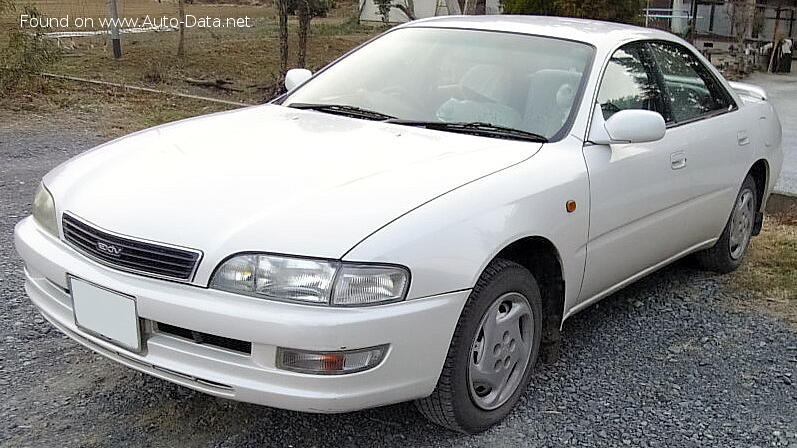
The Toyota Corona EXiV 1.8i (115 Hp) represents a distinct chapter in Toyota’s extensive history, specifically tailored for the Japanese domestic market (JDM). Launched in 1989, the Corona EXiV was not merely another variant of the long-running Corona line, but a stylish, four-door hardtop sedan designed to appeal to a younger, more design-conscious demographic. This first-generation EXiV, produced until 1993, carved out a unique niche, blending the practicality of a sedan with the sleek, pillarless aesthetics typically found in coupes. It sat on the T180 platform, shared with the Carina ED, and was positioned as a “personal luxury” vehicle, offering a sportier and more upscale alternative to the standard Corona without encroaching on the larger, more traditional Mark II or Chaser models. While never officially sold in the United States, the Corona EXiV exemplifies late 1980s and early 1990s Japanese automotive trends, emphasizing style, advanced features for its class, and Toyota’s renowned reliability.
Engine and Performance Characteristics of the Toyota Corona EXiV 1.8i (115 Hp)
Under the hood, the Toyota Corona EXiV 1.8i (115 Hp) was equipped with a robust and efficient powertrain designed for smooth daily driving. The variant in focus utilized an inline four-cylinder engine from Toyota’s 1S-E family, specifically the 1S-EL, 1S-ELU, or 1S-E models, known for their durability and respectable performance. With a displacement of 1.8 liters (1762 cm³ or 107.52 cubic inches), this naturally aspirated engine delivered 115 horsepower at a relatively accessible 5400 revolutions per minute (rpm). Torque output stood at 114.32 lb-ft (155 Nm), peaking at a low 2800 rpm, which contributed to its excellent drivability and responsiveness in urban environments and during highway cruising.
This engine featured a multi-port manifold injection fuel system, a sophisticated setup for its era that ensured precise fuel delivery and improved efficiency compared to carbureted systems. The valvetrain was a Double Overhead Camshaft (DOHC) configuration with four valves per cylinder, a forward-thinking design choice that allowed for better breathing and higher power output for its size. The engine’s layout was front, transverse, driving the front wheels through a standard 5-speed manual transmission. This front-wheel-drive architecture was typical for compact and mid-size sedans of the period, offering good packaging efficiency and predictable handling.
With a curb weight of 2755.78 pounds (1250 kg), the Corona EXiV 1.8i boasted a weight-to-power ratio of approximately 24.03 pounds per horsepower (10.9 kg/Hp), indicating a sprightly character for its class. The power per liter stood at 65.3 Hp/l, showcasing a well-engineered balance between performance and fuel economy. The engine’s bore of 3.19 inches (81 mm) and piston stroke of 3.37 inches (85.5 mm), combined with a compression ratio of 9.5:1, further contributed to its efficient combustion and smooth operation.
Design and Key Features
The defining characteristic of the Toyota Corona EXiV was its “hardtop sedan” body style. This meant it featured frameless door windows and, crucially, no B-pillar when all windows were lowered, creating an expansive, open-air feeling reminiscent of a coupe. This design was a popular trend in Japan during the late 1980s and early 1990s, offering a blend of sporty aesthetics and the practicality of four doors and five seats. The sleek profile was further enhanced by its dimensions: a length of 177.36 inches (4505 mm), a width of 66.54 inches (1690 mm), and a relatively low height of 51.97 inches (1320 mm). The wheelbase measured 99.41 inches (2525 mm), providing a stable ride and ample interior space for its class.
Inside, the Corona EXiV offered a comfortable and well-appointed cabin. While specific interior features would vary by trim, typical amenities for a Japanese domestic market car of this stature in 1989 would include power windows, air conditioning, a quality audio system, and comfortable cloth upholstery. The dashboard design would have been functional and ergonomic, reflecting Toyota’s commitment to user-friendly interfaces.
In terms of safety and chassis, the Corona EXiV 1.8i was equipped with ventilated disc brakes at the front, providing effective stopping power, while the rear utilized drum brakes, a common and cost-effective solution for cars in this segment at the time. A significant safety feature for 1989 was the availability of an Anti-lock Braking System (ABS), which greatly enhanced control during emergency braking maneuvers. The car rode on 185/65 R14 tires fitted to 6.0J x 14-inch wheel rims, a setup that prioritized ride comfort and efficiency over aggressive handling, aligning with its “personal luxury” positioning. The front and rear track widths (57.68 inches and 56.3 inches, respectively) contributed to its stable footprint, and a minimum turning circle of 30.84 feet (9.4 m) ensured good maneuverability in tight city streets.
Technical Specifications: Toyota Corona EXiV 1.8i (115 Hp)
| General Information | |
|---|---|
| Brand | Toyota |
| Model | Corona EXiV |
| Type (Engine) | 1.8i (115 Hp) |
| Start of Production | 1989 year |
| End of Production | 1993 year |
| Powertrain Architecture | Internal Combustion Engine |
| Body Type | Sedan (Hardtop) |
| Seats | 5 |
| Doors | 4 |
| Performance Specifications | |
| Fuel Type | Petrol (Gasoline) |
| Weight-to-Power Ratio | 24.03 lbs/Hp (10.9 kg/Hp) |
| Power per Tonne | 92 Hp/tonne |
| Weight-to-Torque Ratio | 8.1 kg/Nm |
| Torque per Tonne | 124 Nm/tonne |
| Engine Specifications | |
| Power | 115 Hp @ 5400 rpm |
| Power per Liter | 65.3 Hp/l |
| Torque | 114.32 lb-ft (155 Nm) @ 2800 rpm |
| Engine Layout | Front, Transverse |
| Engine Model/Code | 1S-EL, 1S-ELU, 1S-E |
| Engine Displacement | 1.8 L (1762 cm³, 107.52 cu. in.) |
| Number of Cylinders | 4 |
| Engine Configuration | Inline |
| Cylinder Bore | 3.19 in (81 mm) |
| Piston Stroke | 3.37 in (85.5 mm) |
| Compression Ratio | 9.5:1 |
| Number of Valves per Cylinder | 4 |
| Fuel Injection System | Multi-port manifold injection |
| Engine Aspiration | Naturally aspirated |
| Valvetrain | DOHC |
| Space, Volume, and Weights | |
| Kerb Weight | 2755.78 lbs (1250 kg) |
| Dimensions | |
| Length | 177.36 in (4505 mm) |
| Width | 66.54 in (1690 mm) |
| Height | 51.97 in (1320 mm) |
| Wheelbase | 99.41 in (2525 mm) |
| Front Track | 57.68 in (1465 mm) |
| Rear Track | 56.3 in (1430 mm) |
| Minimum Turning Circle | 30.84 ft (9.4 m) |
| Drivetrain, Brakes, and Suspension | |
| Drivetrain Architecture | Front-wheel drive (ICE drives front wheels) |
| Drive Wheel | Front-wheel drive |
| Number of Gears and Type of Gearbox | 5 gears, Manual Transmission |
| Front Brakes | Ventilated discs |
| Rear Brakes | Drum |
| Assisting Systems | ABS (Anti-lock braking system) |
| Tires Size | 185/65 R14 |
| Wheel Rims Size | 6.0J x 14 |
Legacy and Market Impact
The Toyota Corona EXiV, particularly the 1.8i (115 Hp) variant, left a notable legacy within the Japanese domestic market as a stylish and reliable compact hardtop sedan. It represented a period when Japanese manufacturers were experimenting with diverse body styles to cater to specific consumer tastes, moving beyond purely utilitarian designs. The EXiV’s primary appeal was its unique “pillarless” design, which offered a sense of elegance and sportiness that set it apart from its more conventional sedan counterparts.
In its home market, the Corona EXiV competed with a range of domestic rivals also vying for the attention of younger, upwardly mobile buyers. Key competitors included Nissan’s Presea, Honda’s Integra 4-door hardtop, and Mazda’s Persona/Capella C2. These cars all shared a similar philosophy: offering coupe-like aesthetics and a slightly more premium feel within a compact sedan footprint. The EXiV’s reputation benefited immensely from Toyota’s legendary reliability and build quality, ensuring strong resale values and a loyal customer base.
Historically, the Corona EXiV is significant as a testament to the creativity and market segmentation strategies employed by Japanese automakers in the late 20th century. While the hardtop sedan trend eventually faded due to evolving safety standards (which made pillarless designs more challenging to engineer for rollover protection) and shifts in consumer preference towards more robust body structures and later, SUVs, the EXiV remains a charming example of its era. It demonstrated Toyota’s capability to innovate in design and offer specialized products for distinct market segments, contributing to the brand’s image as both a mass-market leader and a purveyor of stylish, well-engineered vehicles. For collectors and enthusiasts of JDM classics, the Corona EXiV represents a unique blend of Toyota practicality, late-80s technology, and distinctive Japanese styling.