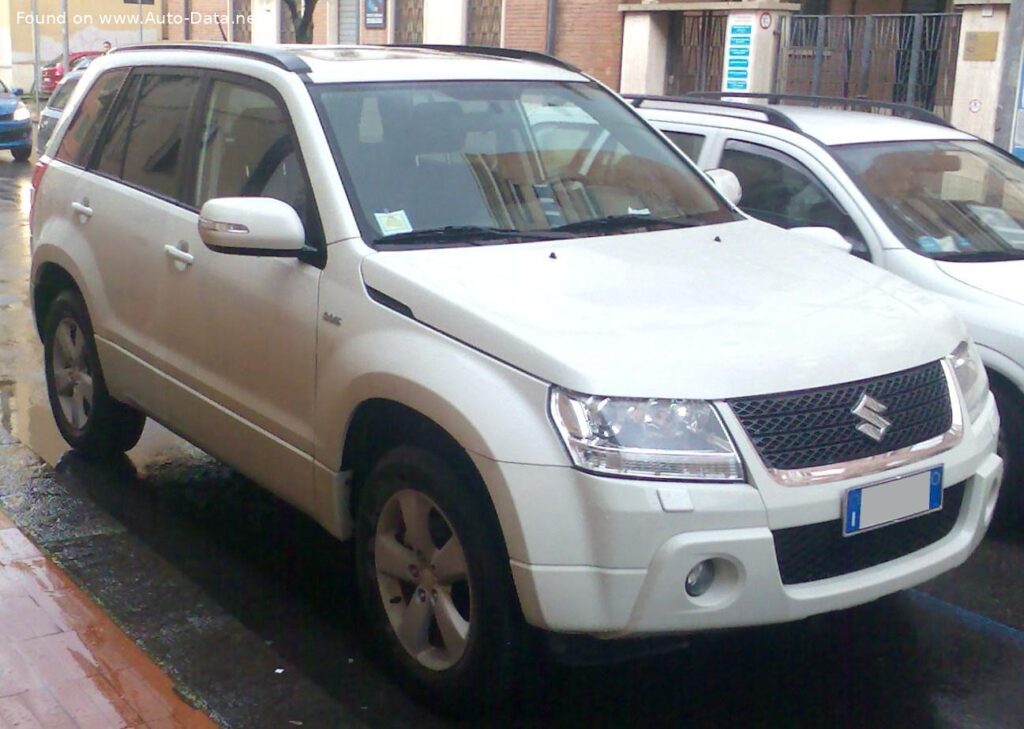
The Suzuki Grand Vitara II (facelift 2008) 2.4 AWD Automatic: A Global Contender
The Suzuki Grand Vitara II (facelift 2008) represents a significant iteration of Suzuki’s long-standing compact SUV lineage, blending traditional off-road capability with modern on-road refinement. Introduced as a mid-cycle refresh for the second-generation model, which debuted in 2005, the 2008 facelift brought a series of enhancements, most notably a new powertrain option in the form of a 2.4-liter engine. This particular variant, equipped with a 5-door body, the 2.4-liter (169 horsepower) engine, and an all-wheel-drive automatic transmission, positioned the Grand Vitara as a versatile player in the highly competitive global compact SUV segment from its production start in September 2008 through May 2010.
Suzuki, a brand with a deep heritage in producing capable and reliable four-wheel-drive vehicles, designed the Grand Vitara II to appeal to a broad audience. Unlike many of its contemporaries that were transitioning to purely car-based unibody platforms, the Grand Vitara retained a more robust architecture, featuring an integrated ladder frame into its unibody construction. This unique approach aimed to offer a better compromise between the ruggedness required for off-pavement excursions and the comfort expected for daily commuting. While sold in various markets worldwide, including North America, Europe, and Asia, the Grand Vitara maintained its reputation as a practical and dependable choice for those seeking a compact SUV with genuine utility.
The Evolution of the Suzuki Grand Vitara II (facelift 2008): A Blend of Ruggedness and Refinement
The Suzuki Vitara nameplate first appeared in 1988, quickly establishing itself as a popular compact SUV known for its nimble size and surprising off-road prowess. Over the years, it evolved, growing in size and sophistication, leading to the introduction of the second-generation Grand Vitara in 2005. This generation marked a significant departure from its predecessors, adopting a more contemporary design and a chassis that, while still robust, was engineered for improved on-road manners. The 2008 facelift further refined this package, addressing consumer feedback and incorporating updated styling cues and, crucially, more potent and efficient engine options.
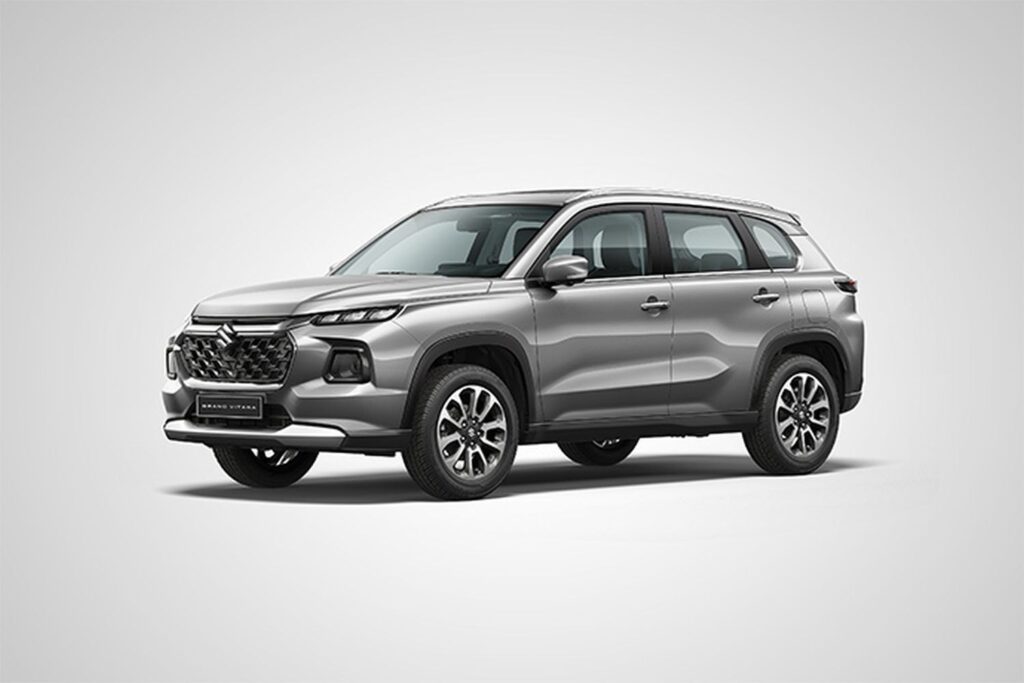
The 2008 refresh was more than just a cosmetic update; it aimed to enhance the vehicle’s competitive edge. Exterior changes included a redesigned front fascia, grille, and headlights, giving the Grand Vitara a fresher, more modern appearance. Inside, improvements were made to materials and ergonomics, contributing to a more comfortable and user-friendly cabin environment. However, the most impactful change for this specific variant was the introduction of the new 2.4-liter engine, which offered a compelling balance of power and fuel efficiency for its class. This commitment to continuous improvement helped the Grand Vitara maintain its relevance in a segment where new models and updates were frequent.
Engine and Performance
At the heart of the Suzuki Grand Vitara II (facelift 2008) 5 Door 2.4 AWD Automatic lies the J24B engine, a naturally aspirated 2.4-liter inline-four gasoline unit. This engine was a significant upgrade, providing a robust 169 horsepower at 6000 rpm and a healthy 167.43 lb.-ft. of torque at 3800 rpm. With a displacement of 2393 cubic centimeters (146.03 cubic inches), the engine featured a 10:1 compression ratio, multi-port manifold fuel injection, and a VVT (Variable Valve Timing) valvetrain, which optimized valve operation for better power delivery across the rev range and improved fuel efficiency.
Power was delivered to all four wheels via a conventional 4-speed automatic transmission. While some competitors offered more gears, Suzuki’s choice reflected a focus on durability and simplicity, characteristics often valued in vehicles intended for diverse driving conditions. The permanent all-wheel-drive system ensured consistent traction, whether navigating challenging weather or light off-road trails. Performance figures for this setup included an acceleration time from 0 to 60 mph in a respectable 11.4 seconds, with a top speed reaching 108.74 mph.
In terms of fuel economy, the Grand Vitara 2.4 AWD Automatic offered a combined rating of 24.2 US mpg (9.7 liters per 100 km) according to NEDC standards. Urban driving yielded approximately 18.8 US mpg (12.5 l/100 km), while extra-urban conditions saw it achieve around 29 US mpg (8.1 l/100 km). With CO2 emissions of 225 g/km, the vehicle met the Euro 4 emission standard, reflecting its compliance with contemporary environmental regulations for its time. The engine’s layout was front, longitudinal, contributing to a balanced weight distribution and traditional SUV feel.
Design and Features
The Suzuki Grand Vitara II (facelift 2008) maintained its distinctive 5-door SUV body type, designed for both practicality and a rugged aesthetic. Its dimensions—180.12 inches in length, 74.02 inches in width, and 66.73 inches in height—provided a substantial road presence without being overly cumbersome. The wheelbase measured 103.94 inches, contributing to a stable ride, while the generous 8.07 inches of ground clearance underscored its potential for venturing beyond paved roads. The design language was clean and functional, with a focus on durability.
Inside, the Grand Vitara offered comfortable seating for five occupants. The cabin was designed with practicality in mind, featuring durable materials and a straightforward layout. Cargo versatility was a key strength, with a minimum trunk space of 26.77 cubic feet (758 liters) that could expand significantly to 48.95 cubic feet (1386 liters) with the rear seats folded, making it suitable for families and adventurers alike. The vehicle also boasted a substantial towing capacity, capable of pulling up to 4078.55 lbs (1850 kg) with brakes, highlighting its utility.
Underneath, the Grand Vitara utilized an independent McPherson strut front suspension and an independent multi-link rear suspension, a setup that provided a comfortable ride on diverse surfaces while maintaining composure. Braking duties were handled by ventilated discs at both the front and rear, complemented by an Anti-lock Braking System (ABS) for enhanced safety. The steering system was a rack and pinion type, assisted by electric power steering, offering ease of maneuverability with a minimum turning circle of 36.09 feet (11 meters). The vehicle came with various tire and wheel options, including 215/70 R16, 225/65 R17, and 225/60 R18, allowing for customization based on preference for ride comfort or handling.
Technical Specifications
| Specification | Value |
|---|---|
| Brand | Suzuki |
| Model | Grand Vitara |
| Generation | Grand Vitara II (facelift 2008) 5 Door |
| Type (Engine) | 2.4 (169 Hp) AWD Automatic |
| Start of production | September, 2008 |
| End of production | May, 2010 |
| Powertrain Architecture | Internal Combustion engine |
| Body type | SUV |
| Seats | 5 |
| Doors | 5 |
| Fuel consumption (economy) – urban (NEDC) | 12.5 l/100 km (18.8 US mpg) |
| Fuel consumption (economy) – extra urban (NEDC) | 8.1 l/100 km (29 US mpg) |
| Fuel consumption (economy) – combined (NEDC) | 9.7 l/100 km (24.2 US mpg) |
| CO2 emissions (NEDC) | 225 g/km |
| Fuel Type | Petrol (Gasoline) |
| Acceleration 0 – 60 mph | 11.4 sec |
| Maximum speed | 108.74 mph (175 km/h) |
| Emission standard | Euro 4 |
| Weight-to-power ratio | 9.3 kg/Hp, 107.8 Hp/tonne |
| Weight-to-torque ratio | 6.9 kg/Nm, 144.9 Nm/tonne |
| Power | 169 Hp @ 6000 rpm. |
| Power per liter | 70.6 Hp/l |
| Torque | 167.43 lb.-ft. @ 3800 rpm (227 Nm) |
| Engine layout | Front, Longitudinal |
| Engine Model/Code | J24B |
| Engine displacement | 2393 cm3 (146.03 cu. in.) |
| Number of cylinders | 4 |
| Engine configuration | Inline |
| Cylinder Bore | 3.62 in. (92 mm) |
| Piston Stroke | 3.54 in. (90 mm) |
| Compression ratio | 10:1 |
| Number of valves per cylinder | 4 |
| Fuel injection system | Multi-port manifold injection |
| Engine aspiration | Naturally aspirated engine |
| Valvetrain | VVT |
| Engine oil capacity | 5.07 US qt (4.8 l) |
| Coolant | 7.71 US qt (7.3 l) |
| Kerb Weight | 3454.64 – 3681.72 lbs. (1567-1670 kg) |
| Max. weight | 4629.71 lbs. (2100 kg) |
| Max load | 947.99 – 1175.06 lbs. (430-533 kg) |
| Trunk (boot) space – minimum | 26.77 cu. ft. (758 l) |
| Trunk (boot) space – maximum | 48.95 cu. ft. (1386 l) |
| Fuel tank capacity | 17.44 US gal (66 l) |
| Permitted trailer load with brakes (12%) | 4078.55 lbs. (1850 kg) |
| Permitted trailer load without brakes | 1653.47 lbs. (750 kg) |
| Permitted towbar download | 187.39 lbs. (85 kg) |
| Length | 180.12 in. (4575 mm) |
| Width | 74.02 in. (1880 mm) |
| Height | 66.73 in. (1695 mm) |
| Wheelbase | 103.94 in. (2640 mm) |
| Front track | 60.63 in. (1540 mm) |
| Rear (Back) track | 61.81 in. (1570 mm) |
| Ride height (ground clearance) | 8.07 in. (205 mm) |
| Minimum turning circle (turning diameter) | 36.09 ft. (11 m) |
| Drivetrain Architecture | The Internal combustion engine (ICE) drives permanently the four wheels of the vehicle. |
| Drive wheel | All wheel drive (4×4) |
| Number of gears and type of gearbox | 4 gears, automatic transmission |
| Front suspension | Independent type McPherson |
| Rear suspension | Independent multi-link suspension |
| Front brakes | Ventilated discs |
| Rear brakes | Ventilated discs |
| Assisting systems | ABS (Anti-lock braking system) |
| Steering type | Steering rack and pinion |
| Power steering | Electric Steering |
| Tires size | 215/70 R16 99H; 225/65 R17 101H; 225/60 R18 100H |
| Wheel rims size | 6.5J x 16; 6.5J x 17; 7.0J x 18 |
Legacy and Market Impact
The Suzuki Grand Vitara II (facelift 2008), particularly with its 2.4-liter AWD automatic configuration, occupied a unique niche in the compact SUV market. While many competitors, such as the Honda CR-V, Toyota RAV4, Nissan X-Trail (known as Rogue in the US), and Subaru Forester, were increasingly moving towards more car-like unibody constructions and softer, on-road-focused dynamics, the Grand Vitara retained a more rugged character. Its integrated ladder frame provided a level of chassis rigidity and off-road capability that set it apart from many of its direct rivals, making it a compelling option for buyers who genuinely intended to venture off paved roads, even if only occasionally.
Suzuki’s long-standing reputation for building durable and dependable 4×4 vehicles further bolstered the Grand Vitara’s standing. It was often praised for its robust build quality, reliability, and value for money. In markets where harsh conditions or challenging terrains were common, the Grand Vitara was a trusted workhorse. Its permanent all-wheel-drive system, combined with decent ground clearance and independent suspension all around, offered a confident driving experience across various surfaces, from snowy roads to light trails.
However, this traditional approach also presented challenges. The 4-speed automatic transmission, while reliable, was less refined and fuel-efficient than the 5- and 6-speed units or continuously variable transmissions (CVTs) offered by some competitors. As the market shifted towards greater fuel efficiency and smoother on-road performance, the Grand Vitara’s more utilitarian aspects became less of a universal draw. Nonetheless, it cultivated a loyal following among those who appreciated its honest, no-nonsense approach to SUV design.
The Grand Vitara II’s legacy is that of a capable and often underestimated compact SUV. It represented a bridge between the traditional, body-on-frame off-roaders and the emerging class of crossover SUVs. For a period, it offered the best of both worlds for many consumers, providing comfortable daily driving with the genuine capability to tackle more demanding situations. While Suzuki eventually withdrew from the US passenger vehicle market, the Grand Vitara continued to be sold globally, evolving further in subsequent generations. The 2008 facelift 2.4 AWD Automatic model stands as a testament to Suzuki’s engineering philosophy: building practical, dependable, and capable vehicles that deliver genuine utility without unnecessary frills. It remains a respected choice for those seeking a compact SUV with a bit more grit than the average crossover.