The Renault Megane II Coupe (Phase II, 2006) RS 2.0 Turbo 16V (230 Hp): A European Hot Hatch Icon
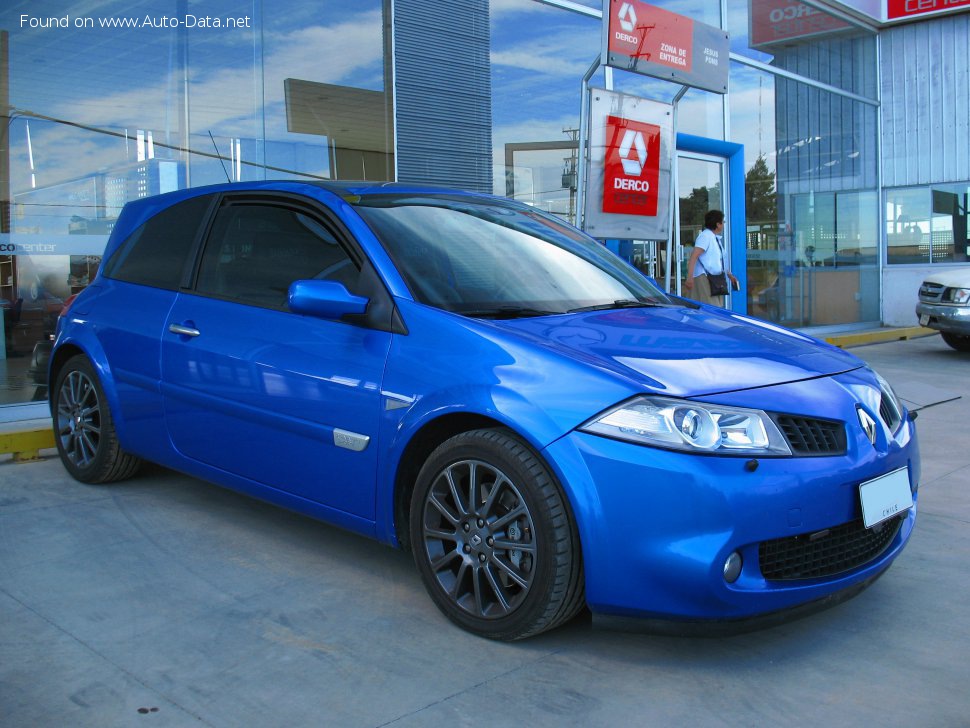
The Renault Megane II Coupe (Phase II, 2006) RS 2.0 Turbo 16V (230 Hp) represents the pinnacle of performance for the second-generation Megane lineup, specifically within its mid-cycle refresh. Launched in 2006 and produced until 2008, this high-performance variant, engineered by Renault Sport (RS), solidified Renault’s reputation for creating engaging and formidable hot hatches. While never officially sold in the United States, the Megane RS carved out a significant niche in the European market, captivating enthusiasts with its potent turbocharged engine, aggressive styling, and finely tuned chassis dynamics. It was positioned as a direct competitor to other European performance compacts, offering a blend of daily usability and track-ready capabilities in a distinctive three-door coupe body style.
Engine and Performance: The Heart of the Renault Megane II Coupe (Phase II, 2006) RS 2.0 Turbo 16V (230 Hp)
At the core of this performance machine lies the formidable F4R Turbo engine, a 2.0-liter (1998 cm³ or 121.93 cu. in.) inline-four cylinder unit, transversely mounted at the front. This powerplant, meticulously developed by Renault Sport, features a DOHC (Double Overhead Camshaft) valvetrain with 4 valves per cylinder, ensuring optimal airflow and combustion efficiency. The engine’s prowess is largely attributed to its advanced turbocharger and intercooler system, which significantly boosts output.
The F4R Turbo engine delivers a robust 230 horsepower at 5500 rpm, translating to an impressive power-per-liter ratio of 115.1 HP/l. This power is complemented by a substantial 228.64 lb.-ft. (310 Nm) of torque, available at a relatively low 3000 rpm, providing a broad and accessible powerband. This torque delivery is crucial for the car’s dynamic performance, allowing for strong acceleration from various speeds. The engine utilizes a multi-port manifold injection system and operates with a compression ratio of 9:1.
Channeling this power to the front wheels is a precise 6-speed manual transmission, a choice that underscores the Megane RS’s driver-focused philosophy. This powertrain combination enables the Megane RS 2.0 Turbo 16V (230 Hp) to accelerate from 0 to 60 mph in a swift 6.2 seconds (0-100 km/h in 6.5 seconds), with a top speed reaching 146.64 mph (236 km/h). Despite its performance credentials, the car achieved a combined fuel economy of 28 US mpg (8.4 l/100 km) and met the Euro 4 emission standard, emitting 199 g/km of CO2, which was competitive for a performance car of its era. The vehicle’s impressive weight-to-power ratio of 5.9 kg/Hp (169.7 Hp/tonne) further highlights its agility and responsiveness.
Design and Features: Aggression Meets Practicality
The Renault Megane II Coupe (Phase II, 2006) RS 2.0 Turbo 16V (230 Hp) is immediately identifiable by its distinctive three-door coupe body style, which, despite its sporty intentions, still offered five seats. The “Phase II” update brought subtle yet effective styling enhancements, refining the already bold design of the Megane II. The RS variant took this a step further with an aggressive aesthetic package that clearly distinguished it from lesser Megane models.
Key design elements included wider wheel arches to accommodate larger wheels and tires, deeper front and rear bumpers with integrated diffusers, and a sportier grille. The car’s dimensions, with a length of 166.46 inches (4228 mm), a width of 69.96 inches (1777 mm), and a height of 56.54 inches (1436 mm), contributed to its planted and muscular stance. The 18-inch alloy wheels, shod with 225/40 R18 tires, filled the wheel wells perfectly, hinting at the car’s performance capabilities.
Inside, the Megane RS balanced performance-oriented features with everyday usability. Sport seats offered enhanced lateral support, crucial during spirited driving, while unique RS badging and trim accents reinforced its special status. For its time, the car included essential safety features such as ABS (Anti-lock Braking System), a critical component for managing its significant braking power, provided by ventilated discs at the front and disc brakes at the rear. The steering system featured an electric rack and pinion setup, providing precise and responsive feedback to the driver. Practicality was not entirely overlooked, with a minimum trunk space of 11.65 cu. ft. (330 liters), expandable to 42.02 cu. ft. (1190 liters) with the rear seats folded, making it surprisingly versatile for a performance coupe.
Technical Specifications
| General Information | |
| Brand | Renault |
| Model | Megane |
| Generation | Megane II Coupe (Phase II, 2006) |
| Type (Engine) | RS 2.0 Turbo 16V (230 Hp) |
| Production Start | 2006 |
| Production End | 2008 |
| Powertrain Architecture | Internal Combustion engine |
| Body Type | Coupe |
| Seats | 5 |
| Doors | 3 |
| Performance Specifications | |
| Fuel Consumption (Urban) | 11.4 l/100 km (20.6 US mpg) |
| Fuel Consumption (Extra Urban) | 6.6 l/100 km (35.6 US mpg) |
| Fuel Consumption (Combined) | 8.4 l/100 km (28 US mpg) |
| CO2 Emissions | 199 g/km |
| Fuel Type | Petrol (Gasoline) |
| Acceleration 0-60 mph | 6.2 sec |
| Acceleration 0-100 km/h | 6.5 sec |
| Maximum Speed | 236 km/h (146.64 mph) |
| Emission Standard | Euro 4 |
| Weight-to-Power Ratio | 5.9 kg/Hp (169.7 Hp/tonne) |
| Weight-to-Torque Ratio | 4.4 kg/Nm (228.8 Nm/tonne) |
| Engine Specifications | |
| Power | 230 Hp @ 5500 rpm |
| Power per liter | 115.1 Hp/l |
| Torque | 310 Nm @ 3000 rpm (228.64 lb.-ft. @ 3000 rpm) |
| Engine Layout | Front, Transverse |
| Engine Model/Code | F4R Turbo |
| Engine Displacement | 1998 cm³ (121.93 cu. in.) |
| Number of Cylinders | 4 |
| Engine Configuration | Inline |
| Cylinder Bore | 82.7 mm (3.26 in.) |
| Piston Stroke | 93 mm (3.66 in.) |
| Compression Ratio | 9:1 |
| Valves per Cylinder | 4 |
| Fuel Injection System | Multi-port manifold injection |
| Engine Aspiration | Turbocharger, Intercooler |
| Valvetrain | DOHC |
| Engine Oil Capacity | 5.4 l (5.71 US qt) |
| Coolant Capacity | 6.5 l (6.87 US qt) |
| Space, Volume and Weights | |
| Kerb Weight | 1355 kg (2987.26 lbs) |
| Max. Weight | 1800 kg (3968.32 lbs) |
| Max Load | 445 kg (981.06 lbs) |
| Trunk Space (Minimum) | 330 l (11.65 cu. ft.) |
| Trunk Space (Maximum) | 1190 l (42.02 cu. ft.) |
| Fuel Tank Capacity | 60 l (15.85 US gal) |
| Max. Roof Load | 80 kg (176.37 lbs) |
| Permitted Trailer Load with Brakes (12%) | 1000 kg (2204.62 lbs) |
| Permitted Trailer Load without Brakes | 650 kg (1433 lbs) |
| Permitted Towbar Download | 75 kg (165.35 lbs) |
| Dimensions | |
| Length | 4228 mm (166.46 in.) |
| Width | 1777 mm (69.96 in.) |
| Width Including Mirrors | 2026 mm (79.76 in.) |
| Height | 1436 mm (56.54 in.) |
| Wheelbase | 2617 mm (103.03 in.) |
| Front Track | 1517 mm (59.72 in.) |
| Rear Track | 1521 mm (59.88 in.) |
| Front Overhang | 857 mm (33.74 in.) |
| Rear Overhang | 754 mm (29.69 in.) |
| Drivetrain, Brakes and Suspension Specifications | |
| Drivetrain Architecture | Front wheel drive, Internal Combustion engine |
| Drive Wheel | Front wheel drive |
| Number of Gears and Type | 6 gears, manual transmission |
| Front Suspension | Independent type McPherson |
| Rear Suspension | Torsion |
| Front Brakes | Ventilated discs |
| Rear Brakes | Disc |
| Assisting Systems | ABS (Anti-lock braking system) |
| Steering Type | Steering rack and pinion |
| Power Steering | Electric Steering |
| Tires Size | 225/40 R18 |
| Wheel Rims Size | 18 inches |
Legacy and Market Impact in Europe
The Renault Megane II Coupe (Phase II, 2006) RS 2.0 Turbo 16V (230 Hp) cemented Renault Sport’s reputation as a master of performance car engineering, particularly in the competitive European hot hatch segment. It was widely praised by automotive journalists and enthusiasts alike for its engaging driving dynamics, potent engine, and impressive chassis setup. Renault Sport’s meticulous tuning resulted in a car that offered exceptional handling, precise steering, and a surprisingly compliant ride for a performance vehicle, making it enjoyable both on challenging back roads and for daily commuting.
In its primary European market, the Megane RS faced stiff competition from established rivals such as the Ford Focus ST, Volkswagen Golf GTI, Opel/Vauxhall Astra VXR, and the Honda Civic Type R (FN2 generation). What set the Megane RS apart was often its more raw and focused driving experience, especially in its more extreme variants. The Phase II update ensured the Megane RS remained fresh and competitive, with its 230 HP output placing it among the most powerful front-wheel-drive hot hatches of its time.
Its historical significance lies in its contribution to the evolution of the hot hatch, demonstrating that front-wheel-drive cars could deliver supercar-baiting performance and handling without sacrificing practicality. The Megane RS developed a strong cult following among performance enthusiasts, who appreciated its uncompromised approach to driving pleasure. While the United States market never officially received the Megane RS, its reputation as a benchmark for European hot hatch performance resonated globally, influencing subsequent generations of performance compacts and solidifying Renault Sport’s legacy as a purveyor of true driver’s cars. The model’s success paved the way for even more extreme and acclaimed Megane RS variants in the future, building on the solid foundation laid by the Megane II RS.