The Ford Mustang IV 4.6 V8 Cobra: A New Breed of Pony Car
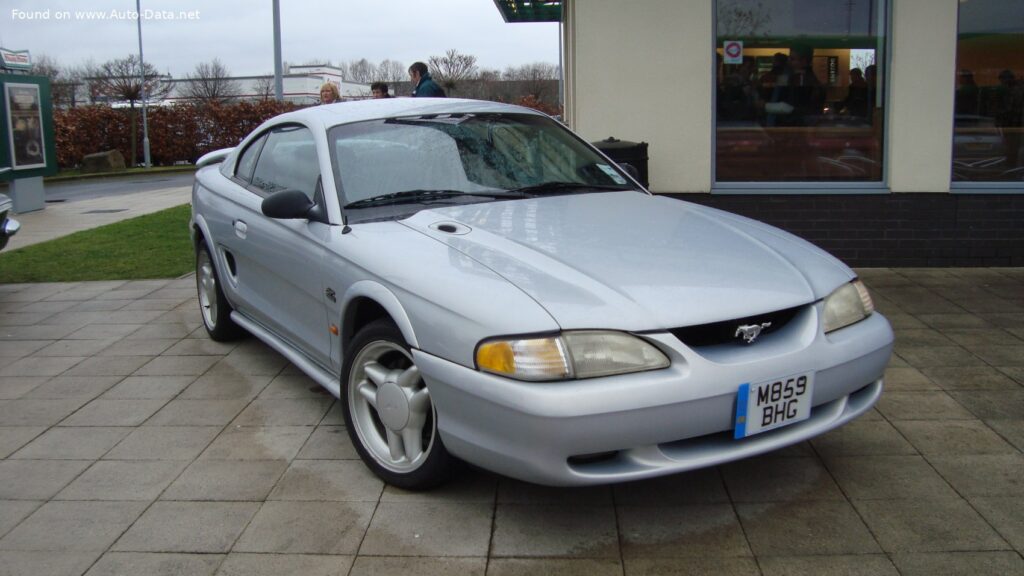
The Ford Mustang, an icon of American automotive culture, entered its fourth generation, known internally as the SN95, for the 1994 model year. This marked a significant redesign from the long-running Fox Body platform. Among the various iterations of this new generation, the Ford Mustang IV 4.6 V8 Cobra (305 Hp) stood out as the pinnacle of performance and technology, showcasing Ford’s commitment to keeping the pony car segment vibrant and competitive. Produced from 1993 (as a late 1994 model introduction) through 1997 with this specific powertrain, the Cobra variant represented the most potent and sophisticated Mustang available to the public, blending classic American muscle car ethos with modern engineering advancements.
The SN95 generation, and particularly the Cobra, was crucial for the Mustang’s evolution. It moved away from the more utilitarian roots of the Fox Body, adopting a more curvaceous, aerodynamic, and aggressive aesthetic that resonated with the changing tastes of the 1990s. The Cobra trim, developed by Ford’s Special Vehicle Team (SVT), was not merely an appearance package; it integrated substantial mechanical upgrades designed to deliver a superior driving experience. Its role was to elevate the Mustang’s performance credentials, directly challenging rivals like the Chevrolet Camaro Z28 and Pontiac Firebird Trans Am, and solidifying the Mustang’s position as a formidable force in the performance car market.
Engine and Performance Prowess
At the heart of the Ford Mustang IV 4.6 V8 Cobra (305 Hp) was its formidable 4.6-liter (4601 cm³ or 280.77 cu. in.) modular V8 engine. Unlike the traditional pushrod V8s that had powered Mustangs for decades, including the standard GT’s 5.0-liter, the Cobra’s engine featured a sophisticated Dual Overhead Cam (DOHC) valvetrain with four valves per cylinder, a significant technological leap for a mass-produced American performance car of its era. This advanced configuration allowed the engine to breathe more efficiently, contributing to its impressive power output and higher-revving nature.
The naturally aspirated V8 generated a robust 305 horsepower at 5800 rpm, a substantial figure for the mid-1990s and a considerable upgrade over the contemporary Mustang GT. Torque was equally impressive, peaking at 407 Nm (300.19 lb.-ft.) at 4800 rpm, providing strong acceleration and responsive throttle input across the powerband. The engine’s layout was front-mounted and longitudinal, driving the rear wheels through a precise 5-speed manual transmission, a setup cherished by driving enthusiasts for its direct engagement and traditional muscle car feel.
With a kerb weight of 1545 kg (3406.14 lbs), the Cobra achieved a favorable weight-to-power ratio of 5.1 kg/Hp, translating to 197.4 Hp per tonne. This combination of power and relatively low weight for a V8-powered car ensured exhilarating performance. While direct acceleration figures are not provided, contemporary road tests consistently praised the Cobra’s straight-line speed and willingness to rev. Fuel economy, while not a primary concern for performance buyers, was rated at a combined 11.3 L/100 km (20.8 US mpg), a respectable figure for a powerful V8 coupe of its time. The multi-port manifold injection system ensured efficient fuel delivery, contributing to both performance and emissions compliance.
Design Evolution and Key Features
The SN95 generation brought a fresh, contemporary look to the Mustang, and the Cobra variant amplified its aggressive stance. The body type remained a classic 2-door coupe, offering seating for four occupants, though the rear seats were, as is typical for pony cars, best suited for short trips or smaller passengers. The overall dimensions of the Mustang IV Cobra were substantial, with a length of 4636 mm (182.52 in.), a width of 1824 mm (71.81 in.), and a height of 1351 mm (53.19 in.). Its wheelbase of 2573 mm (101.3 in.) provided a stable platform, while the wider front track of 1524 mm (60 in.) and rear track of 1491 mm (58.7 in.) contributed to its planted appearance and handling characteristics.
Beyond the aesthetic, the Cobra featured a performance-tuned chassis. The front suspension utilized a wishbone design, offering improved control and steering precision compared to earlier Mustangs. The rear suspension, while still employing a coil spring setup, maintained the live axle design that was characteristic of Mustangs of this era, known for its robustness in drag racing applications. Braking performance was enhanced with disc brakes on both the front and rear axles, complemented by an Anti-lock Braking System (ABS), a crucial safety feature for a high-performance vehicle. Steering was managed by a rack and pinion system with hydraulic power assistance, providing a direct and communicative feel to the driver.
The Cobra’s performance intentions were further underscored by its tire setup: 245/45 R17, a relatively wide and low-profile tire for the period, ensuring ample grip. The exterior design incorporated specific Cobra badging, unique fascias, and often distinct wheel designs that differentiated it from the standard GT, giving it a more exclusive and menacing appearance. Inside, the driver-focused cockpit featured bolstered seats and specific instrumentation, reinforcing the car’s performance pedigree. Practicality was decent for a coupe, with a minimum trunk space of 200 liters (7.06 cu. ft.) and a fuel tank capacity of 58 liters (15.32 US gal).
Technical Specifications
| Category | Specification | Value |
|---|---|---|
| General Information | ||
| Brand | Ford | |
| Model | Mustang | |
| Generation | Mustang IV | |
| Type (Engine) | 4.6 V8 Cobra (305 Hp) | |
| Start of Production | 1993 year | |
| End of Production | 1997 year | |
| Powertrain Architecture | Internal Combustion engine | |
| Body Type | Coupe | |
| Seats | 4 | |
| Doors | 2 | |
| Performance Specs | ||
| Fuel Consumption (Combined) | 11.3 L/100 km (20.8 US mpg) | |
| Fuel Type | Petrol (Gasoline) | |
| Weight-to-Power Ratio | 5.1 kg/Hp (197.4 Hp/tonne) | |
| Weight-to-Torque Ratio | 3.8 kg/Nm (263.4 Nm/tonne) | |
| Engine Specs | ||
| Power | 305 Hp @ 5800 rpm | |
| Power per Liter | 66.3 Hp/L | |
| Torque | 407 Nm (300.19 lb.-ft.) @ 4800 rpm | |
| Engine Layout | Front, Longitudinal | |
| Engine Displacement | 4601 cm³ (280.77 cu. in.) | |
| Number of Cylinders | 8 | |
| Engine Configuration | V-engine | |
| Cylinder Bore | 90.2 mm (3.55 in.) | |
| Piston Stroke | 90 mm (3.54 in.) | |
| Compression Ratio | 9.9:1 | |
| Valves per Cylinder | 4 | |
| Fuel Injection System | Multi-port manifold injection | |
| Engine Aspiration | Naturally aspirated engine | |
| Valvetrain | DOHC | |
| Engine Oil Capacity | 5.7 L (6.02 US qt) | |
| Space, Volume and Weights | ||
| Kerb Weight | 1545 kg (3406.14 lbs) | |
| Trunk (boot) Space – minimum | 200 L (7.06 cu. ft.) | |
| Fuel Tank Capacity | 58 L (15.32 US gal) | |
| Dimensions | ||
| Length | 4636 mm (182.52 in.) | |
| Width | 1824 mm (71.81 in.) | |
| Height | 1351 mm (53.19 in.) | |
| Wheelbase | 2573 mm (101.3 in.) | |
| Front Track | 1524 mm (60 in.) | |
| Rear (Back) Track | 1491 mm (58.7 in.) | |
| Drivetrain, Brakes and Suspension Specs | ||
| Drivetrain Architecture | The Internal combustion engine (ICE) drives the rear wheels of the vehicle. | |
| Drive Wheel | Rear wheel drive | |
| Number of Gears and Type of Gearbox | 5 gears, manual transmission | |
| Front Suspension | Wishbone | |
| Rear Suspension | Coil spring | |
| Front Brakes | Disc | |
| Rear Brakes | Disc | |
| Assisting Systems | ABS (Anti-lock braking system) | |
| Steering Type | Steering rack and pinion | |
| Power Steering | Hydraulic Steering | |
| Tires Size | 245/45 R17 | |
Legacy and Market Impact
The Ford Mustang IV 4.6 V8 Cobra (305 Hp) carved out a significant niche in the American performance car landscape of the mid-1990s. As the flagship performance model of the SN95 generation, it was instrumental in maintaining the Mustang’s relevance and competitive edge against its perennial rivals, the Chevrolet Camaro and Pontiac Firebird. While the standard Mustang GT offered a more accessible V8 experience, the Cobra, developed by Ford’s Special Vehicle Team (SVT), was engineered for enthusiasts seeking higher performance, more sophisticated technology, and a distinct level of exclusivity.
The introduction of the DOHC 4.6-liter V8 in the Cobra was a pivotal moment for the Mustang. It signaled Ford’s willingness to embrace more advanced engine technology, moving beyond the venerable pushrod V8s that had defined American muscle for so long. This engine, often referred to as the “Mod Motor,” laid the groundwork for future high-performance Ford applications and demonstrated that the Mustang could evolve while staying true to its roots. The Cobra’s superior horsepower and torque figures, combined with its upgraded suspension and braking systems, made it a formidable performer on the street and track, earning it widespread praise from automotive journalists and enthusiasts alike.
In the market, the Cobra competed directly with the Chevrolet Camaro Z28 and Pontiac Firebird Trans Am, both of which offered powerful V8 engines and rear-wheel-drive dynamics. The rivalry was fierce, with each model appealing to a slightly different segment of the performance car buyer. The Cobra distinguished itself with its DOHC engine, which, while not always topping the raw torque output of its larger-displacement OHV GM rivals, offered a smoother, more refined power delivery and a higher redline. Its aggressive styling and limited production numbers also contributed to its desirability.
Today, the 1993-1997 Ford Mustang IV 4.6 V8 Cobra (305 Hp) is recognized as a significant chapter in Mustang history. It represents the bridge between the lightweight, customizable Fox Body and the retro-futuristic S197 generation that would follow. These Cobras are highly sought after by collectors and enthusiasts who appreciate their blend of classic pony car charm with a taste of modern engineering. Its legacy is one of innovation, performance, and enduring appeal, underscoring the Mustang’s ability to adapt and thrive through decades of automotive evolution.