The Toyota Corona EXiV: A Japanese Domestic Market Specialty Sedan
The Toyota Corona EXiV, specifically the 1.8i (115 Hp) Automatic variant produced between 1989 and 1993, represents a fascinating chapter in Toyota’s history, particularly within the highly competitive and diverse Japanese Domestic Market (JDM). This model was part of the T180 series, a distinct offshoot of the venerable Corona lineage, tailored to capture a specific segment of Japanese buyers looking for a more stylish, “personal luxury” sedan than the conventional Corona or Carina. While never officially imported to the United States, the Corona EXiV showcases Toyota’s engineering prowess and design philosophy during Japan’s “bubble economy” era, characterized by an emphasis on sophisticated design, advanced features, and a wide array of specialized models.
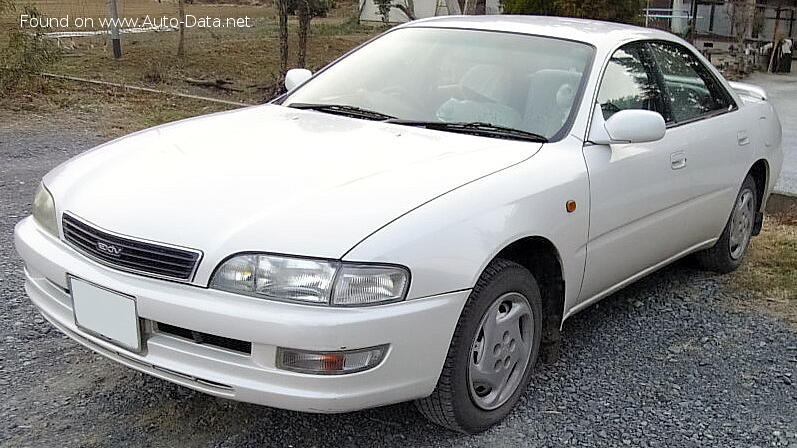
Positioned as a four-door hardtop sedan, the Corona EXiV blended coupe-like aesthetics with the practicality of a sedan. Its design aimed to appeal to younger, more affluent customers seeking a vehicle that exuded a sense of sportiness and exclusivity without sacrificing Toyota’s renowned reliability and build quality. The 1.8i (115 Hp) Automatic model served as an accessible entry point into the EXiV lineup, offering a balanced combination of performance, efficiency, and comfort for daily driving in urban and suburban environments.
Engine and Performance of the Toyota Corona EXiV 1.8i
Under the hood of the 1989-1993 Toyota Corona EXiV 1.8i Automatic resided a transversely mounted, naturally aspirated 1.8-liter (1762 cm3 or 107.52 cu. in.) inline four-cylinder engine. This powertrain, identified by the engine codes 1S-EL, 1S-ELU, or 1S-E, was a testament to Toyota’s commitment to refined and durable engineering. Despite its relatively modest displacement, the engine was capable of producing a respectable 115 horsepower at 5400 rpm. Its power per liter stood at 65.3 Hp/l, indicating an efficient use of its displacement for the era.
Crucially, the engine delivered 155 Nm (or 114.32 lb.-ft.) of torque at a low 2800 rpm. This characteristic low-end torque made the EXiV particularly well-suited for city driving, providing eager acceleration from a standstill and responsive power delivery in stop-and-go traffic. The engine’s configuration featured a DOHC (Dual Overhead Camshaft) valvetrain with 4 valves per cylinder, a relatively advanced setup for a mass-market 1.8-liter engine in the late 1980s, contributing to better breathing and overall efficiency. Fuel delivery was handled by a multi-port manifold injection system, ensuring precise fuel metering and improved combustion compared to older carburetor systems.
Power was sent to the front wheels via a 4-speed automatic transmission, prioritizing smooth shifts and ease of driving over outright performance. This choice underscored the EXiV’s positioning as a comfortable, sophisticated daily driver rather than a raw sports sedan. With a curb weight of 2755.78 lbs. (1250 kg), the vehicle achieved a weight-to-power ratio of 10.9 kg/Hp (or 92 Hp/tonne), providing adequate acceleration for its class and intended purpose. The combination of a reliable engine and a smooth automatic gearbox cemented the Toyota Corona EXiV‘s reputation for dependable, hassle-free motoring.
Design and Features
The design of the Toyota Corona EXiV was a significant departure from the more conservative styling of the standard Corona. As a four-door hardtop sedan, it featured frameless windows for all four doors, creating a sleek, pillarless appearance when all windows were lowered. This design element, popular in Japan during the late 1980s, gave the EXiV a more elegant and coupe-like profile, enhancing its “personal luxury” appeal. Its overall dimensions – 177.36 inches (4505 mm) in length, 66.54 inches (1690 mm) in width, and a low 51.97 inches (1320 mm) in height – contributed to its aerodynamic and sporty stance. The 99.41-inch (2525 mm) wheelbase provided a stable ride while maintaining a relatively compact footprint.
The exterior was characterized by smooth, flowing lines, integrated bumpers, and a relatively low hood line, typical of Japanese automotive design trends of the era that aimed for improved aerodynamics and a modern aesthetic. The 185/65 R14 tires mounted on 6.0J x 14 wheel rims provided a comfortable ride and predictable handling.
Inside, the EXiV offered a comfortable and well-appointed cabin for five occupants, reflecting its premium positioning. While specific interior features varied by trim, the EXiV generally boasted a higher level of finish and more amenities than its standard Corona counterparts. For safety, the 1989-1993 model incorporated ventilated disc brakes at the front and drum brakes at the rear, a common setup for its class. Notably, the inclusion of ABS (Anti-lock Braking System) as an assisting system was a significant safety feature for a car of its segment and era, offering improved control during emergency braking situations. The drivetrain architecture was front-wheel drive, ensuring predictable handling and efficient packaging.
Technical Specifications
| Category | Specification | US Equivalent |
|---|---|---|
| Brand | Toyota | |
| Model | Corona EXiV | |
| Generation | Corona EXiV (T180 series) | |
| Type (Engine) | 1.8i (115 Hp) Automatic | |
| Start of Production | 1989 year | |
| End of Production | 1993 year | |
| Powertrain Architecture | Internal Combustion engine | |
| Body type | Sedan (4-door hardtop) | |
| Seats | 5 | |
| Doors | 4 | |
Performance Specs |
||
| Fuel Type | Petrol (Gasoline) | |
| Weight-to-power ratio | 10.9 kg/Hp | 92 Hp/tonne |
| Weight-to-torque ratio | 8.1 kg/Nm | 124 Nm/tonne |
Engine Specs |
||
| Power | 115 Hp @ 5400 rpm | |
| Power per liter | 65.3 Hp/l | |
| Torque | 155 Nm @ 2800 rpm | 114.32 lb.-ft. @ 2800 rpm |
| Engine layout | Front, Transverse | |
| Engine Model/Code | 1S-EL, 1S-ELU, 1S-E | |
| Engine displacement | 1762 cm3 | 1.8 Liters (107.52 cu. in.) |
| Number of cylinders | 4 | |
| Engine configuration | Inline | |
| Cylinder Bore | 81 mm | 3.19 in. |
| Piston Stroke | 85.5 mm | 3.37 in. |
| Compression ratio | 9.5:1 | |
| Number of valves per cylinder | 4 | |
| Fuel injection system | Multi-port manifold injection | |
| Engine aspiration | Naturally aspirated engine | |
| Valvetrain | DOHC | |
Space, Volume and Weights |
||
| Kerb Weight | 1250 kg | 2755.78 lbs. |
Dimensions |
||
| Length | 4505 mm | 177.36 in. |
| Width | 1690 mm | 66.54 in. |
| Height | 1320 mm | 51.97 in. |
| Wheelbase | 2525 mm | 99.41 in. |
| Front track | 1465 mm | 57.68 in. |
| Rear (Back) track | 1430 mm | 56.3 in. |
| Minimum turning circle (turning diameter) | 9.4 m | 30.84 ft. |
Drivetrain, Brakes and Suspension Specs |
||
| Drivetrain Architecture | The Internal combustion engine (ICE) drives the front wheels of the vehicle. | Front-wheel drive |
| Drive wheel | Front wheel drive | |
| Number of gears and type of gearbox | 4 gears, automatic transmission | |
| Front brakes | Ventilated discs | |
| Rear brakes | Drum | |
| Assisting systems | ABS (Anti-lock braking system) | |
| Tires size | 185/65 R14 | |
| Wheel rims size | 6.0J x 14 | |
Legacy and Market Impact
The Toyota Corona EXiV, particularly during its 1989-1993 production run, played a distinctive role in the Japanese automotive landscape. It was a product of Japan’s economic boom, where manufacturers explored niche segments and offered a dizzying array of models to cater to increasingly specific consumer tastes. The EXiV was not merely a rebadged Corona; it carved out its own identity as a more upscale, stylish, and youth-oriented alternative to the traditional family sedan.
Its primary competitors in the Japanese market included other “hardtop” sedans and coupes from rival manufacturers, such as the Nissan Presea, Honda Accord Inspire, and even Toyota’s own Carina ED. These vehicles all aimed for a similar demographic: buyers who desired the elegance and sportiness of a coupe but still needed the practicality of four doors. The EXiV differentiated itself with Toyota’s unimpeachable reputation for quality, reliability, and low running costs.
While its performance figures from the 1.8i (115 Hp) Automatic might seem modest by today’s standards, they were perfectly adequate for the Japanese market, where urban congestion and strict speed limits often rendered high-performance vehicles impractical. Instead, the EXiV’s appeal lay in its sophisticated design, comfortable interior, and ease of use, making it a popular choice for young professionals and small families.
The legacy of the Toyota Corona EXiV is one of quiet success within its intended market. It contributed to Toyota’s image as a versatile automaker capable of producing not just reliable workhorses, but also stylish and desirable “personal” cars. Though largely unknown in the United States, the EXiV, like many other JDM specialty vehicles of its era, represents a period of immense creativity and diversity in Japanese automotive design and engineering. It stands as a testament to Toyota’s ability to identify and cater to specific market demands with tailored, high-quality products, even if those products never crossed international borders. Today, these models are appreciated by enthusiasts for their unique styling, robust engineering, and as tangible artifacts of a vibrant automotive era.