The Opel Rekord E (facelift 1982) 2.2 E (115 Hp) Automatic: A European Mid-Size Icon
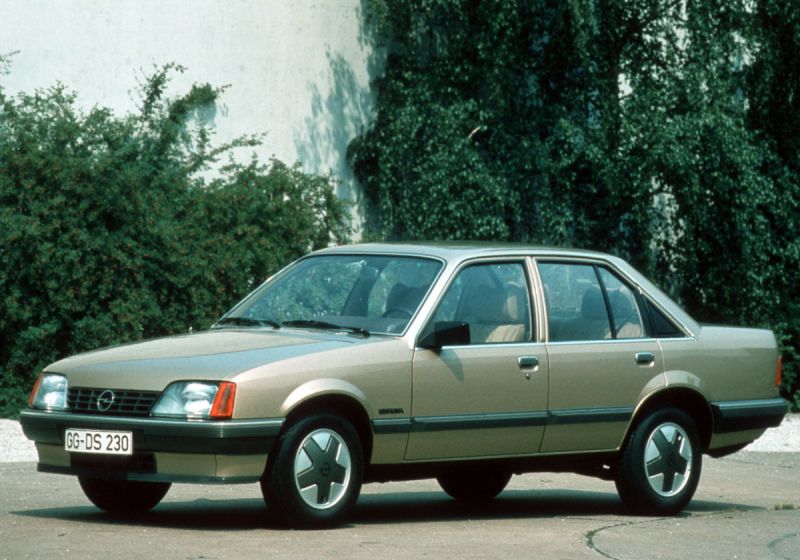
The Opel Rekord E, particularly the post-facelift model from 1982, represents a significant chapter in European automotive history. As a cornerstone of Opel’s lineup, a prominent German manufacturer under the General Motors (GM) umbrella, the Rekord served as a popular mid-size to executive sedan and wagon across Europe for decades. The generation E, specifically the variant produced between September 1984 and August 1986, with its 2.2 E (115 Hp) Automatic powertrain, showcased Opel’s commitment to offering robust, comfortable, and well-equipped vehicles for the mainstream European market. While never officially sold in the United States under the Opel badge, the Rekord’s engineering and design philosophies often mirrored those found in contemporary GM models globally, adapted for European tastes and regulations. This particular model, the Opel Rekord E (facelift 1982) 2.2 E (115 Hp) Automatic, was a practical and capable four-door sedan, offering a blend of performance, economy, and traditional rear-wheel-drive dynamics.
Engine and Performance
At the heart of the Opel Rekord E (facelift 1982) 2.2 E (115 Hp) Automatic was its 2.2-liter (2197 cm3 or 134.07 cu. in.) inline four-cylinder engine, designated by the engine code 22E. This naturally aspirated gasoline (petrol) unit was a testament to Opel’s engineering prowess during the era, featuring a Single Overhead Camshaft (SOHC) valvetrain with two valves per cylinder. Fuel delivery was managed by a multi-port manifold injection system, a modern feature for the mid-1980s that contributed to improved fuel efficiency and smoother power delivery compared to carbureted setups.
The engine produced a respectable 115 horsepower at 4800 rpm, delivering a power-to-liter ratio of 52.3 horsepower per liter. Torque output stood at 182 Nm, or 134.24 lb.-ft., available at a relatively low 2800 rpm, which ensured strong pulling power and easy drivability in everyday conditions. This power was channeled to the rear wheels via a three-speed automatic transmission, a common offering in European cars of this period, prioritizing comfort and ease of use over outright performance or complex gearing.
Performance figures for the sedan were competitive for its class, with an acceleration time from 0 to 60 mph (0-97 km/h) calculated at 10.9 seconds. The vehicle could reach a maximum speed of 112.47 mph (181 km/h). Fuel economy was rated at 26.4 US mpg (8.9 l/100 km) in combined driving, a reasonable figure for a mid-size sedan with an automatic transmission in the 1980s. The Rekord’s powertrain architecture, featuring a front, longitudinally mounted engine driving the rear wheels, provided a balanced chassis and predictable handling characteristics, appreciated by European drivers.
Design and Features
The Opel Rekord E (facelift 1982) represented a modernization of its predecessor’s design, moving towards a more aerodynamic and contemporary aesthetic. The facelift in 1982 introduced subtle yet effective changes, including revised front and rear styling, aimed at reducing the drag coefficient and updating its visual appeal. The result was a sleek, understated four-door sedan with a drag coefficient (Cd) of 0.36, quite respectable for its time and indicative of the growing emphasis on aerodynamic efficiency in automotive design.
Measuring 183.15 inches (4652 mm) in length, 67.95 inches (1726 mm) in width, and 55.91 inches (1420 mm) in height, the Rekord E offered generous interior space for five occupants. Its wheelbase of 105.04 inches (2668 mm) contributed to a comfortable ride and stable road manners. The sedan boasted a substantial minimum trunk space of 17.3 cu. ft. (490 liters), making it a practical choice for families and business users alike, capable of accommodating significant luggage.
Standard features for the 2.2 E model included hydraulic power steering, which made maneuvering the 2645.55 lbs. (1200 kg) curb weight vehicle easier. For safety, the Rekord E was available with an Anti-lock Braking System (ABS), a cutting-edge feature for a non-luxury vehicle in the mid-1980s, significantly enhancing braking performance and control in adverse conditions. Braking was handled by ventilated discs at the front and traditional drum brakes at the rear. The suspension setup consisted of an independent McPherson type at the front and a coil spring arrangement at the rear, providing a comfortable yet competent ride quality, well-suited for varied European road conditions. The Rekord E’s design emphasized durability, ease of maintenance, and functionality, hallmarks of Opel’s philosophy for its volume sellers.
Technical Specifications
| Opel Rekord E (facelift 1982) 2.2 E (115 Hp) Automatic – Full Specifications | |
|---|---|
| General Information | |
| Brand | Opel |
| Model | Rekord |
| Generation | Rekord E (facelift 1982) |
| Type (Engine) | 2.2 E (115 Hp) Automatic |
| Start of Production | September, 1984 |
| End of Production | August, 1986 |
| Powertrain Architecture | Internal Combustion engine |
| Body Type | Sedan |
| Seats | 5 |
| Doors | 4 |
| Performance Specs | |
| Fuel Consumption (combined) | 8.9 l/100 km (26.4 US mpg) |
| Fuel Type | Petrol (Gasoline) |
| Acceleration 0 – 60 mph | 10.9 sec |
| Maximum Speed | 112.47 mph (181 km/h) |
| Weight-to-Power Ratio | 10.4 kg/Hp (95.8 Hp/tonne) |
| Weight-to-Torque Ratio | 6.6 kg/Nm (151.7 Nm/tonne) |
| Engine Specs | |
| Power | 115 Hp @ 4800 rpm |
| Power per Liter | 52.3 Hp/l |
| Torque | 182 Nm (134.24 lb.-ft.) @ 2800 rpm |
| Engine Layout | Front, Longitudinal |
| Engine Model/Code | 22E |
| Engine Displacement | 2197 cm3 (134.07 cu. in.) |
| Number of Cylinders | 4 |
| Engine Configuration | Inline |
| Cylinder Bore | 95 mm (3.74 in.) |
| Piston Stroke | 77.5 mm (3.05 in.) |
| Compression Ratio | 9.4:1 |
| Valves per Cylinder | 2 |
| Fuel Injection System | Multi-port manifold injection |
| Engine Aspiration | Naturally aspirated engine |
| Valvetrain | SOHC |
| Engine Oil Capacity | 3.8 l (4.02 US qt) |
| Coolant Capacity | 10 l (10.57 US qt) |
| Dimensions, Volume, and Weights | |
| Kerb Weight | 1200 kg (2645.55 lbs.) |
| Max. Weight | 1705 kg (3758.88 lbs.) |
| Max Load | 505 kg (1113.33 lbs.) |
| Trunk (boot) Space – Minimum | 490 l (17.3 cu. ft.) |
| Fuel Tank Capacity | 65 l (17.17 US gal) |
| Length | 4652 mm (183.15 in.) |
| Width | 1726 mm (67.95 in.) |
| Height | 1420 mm (55.91 in.) |
| Wheelbase | 2668 mm (105.04 in.) |
| Front Track | 1435 mm (56.5 in.) |
| Rear Track | 1412 mm (55.59 in.) |
| Ride Height (Ground Clearance) | 140 mm (5.51 in.) |
| Drag Coefficient (Cd) | 0.36 |
| Minimum Turning Circle | 10.8 m (35.43 ft.) |
| Drivetrain, Brakes, and Suspension Specs | |
| Drivetrain Architecture | The Internal Combustion Engine (ICE) drives the rear wheels of the vehicle. |
| Drive Wheel | Rear wheel drive |
| Number of Gears and Type of Gearbox | 3 gears, automatic transmission |
| Front Suspension | Independent type McPherson |
| Rear Suspension | Coil spring |
| Front Brakes | Ventilated discs |
| Rear Brakes | Drum |
| Assisting Systems | ABS (Anti-lock braking system) |
| Power Steering | Hydraulic Steering |
Legacy and Market Impact
The Opel Rekord E, particularly its facelifted version from 1982, holds a significant place in the European automotive landscape of the 1980s. It was a quintessential mid-size executive car, known for its reliability, spaciousness, and straightforward engineering. In an era where European manufacturers were fiercely competitive, the Rekord E carved out a strong niche as a practical, no-nonsense vehicle suitable for both family duties and corporate fleets. Its robust construction and ease of maintenance contributed to its reputation as a durable workhorse, a quality highly valued by consumers.
The 2.2 E engine variant, with its 115 horsepower, placed it among the more capable options within the Rekord lineup, offering a good balance of performance for highway cruising and sufficient power for overtaking, without compromising too heavily on fuel economy. The availability of a 3-speed automatic transmission further broadened its appeal, especially among buyers who prioritized comfort and convenience in urban driving. The inclusion of ABS as an available feature was a progressive step for a car in this segment during the mid-80s, highlighting Opel’s commitment to safety innovation.
Competitors in its primary European market included models like the Ford Granada (which would later become the Scorpio), the Peugeot 505, the Volvo 240/740 series, and even some variants of the BMW 3-Series and Mercedes-Benz 190E, though the Rekord typically competed on a more value-oriented proposition. It successfully bridged the gap between smaller, more economical cars and the larger, more luxurious Opel Senator/Monza models.
The Rekord E’s legacy is tied to its role as a dependable and ubiquitous presence on European roads. It was a car that embodied the practical, engineering-focused ethos of Opel. While it may not have garnered the same enthusiast following as some of its performance-oriented contemporaries, its enduring popularity and widespread sales solidified its position as a cultural icon in many European countries. The Rekord E ultimately paved the way for the Opel Omega (Vauxhall Carlton in the UK), which succeeded it in 1986, carrying forward many of its core values of practicality, comfort, and traditional rear-wheel-drive dynamics into the next generation of Opel’s mid-size offerings. Today, well-preserved examples of the Opel Rekord E (facelift 1982) 2.2 E (115 Hp) Automatic are appreciated by classic car enthusiasts for their classic 1980s styling, robust mechanics, and a touch of nostalgic charm.