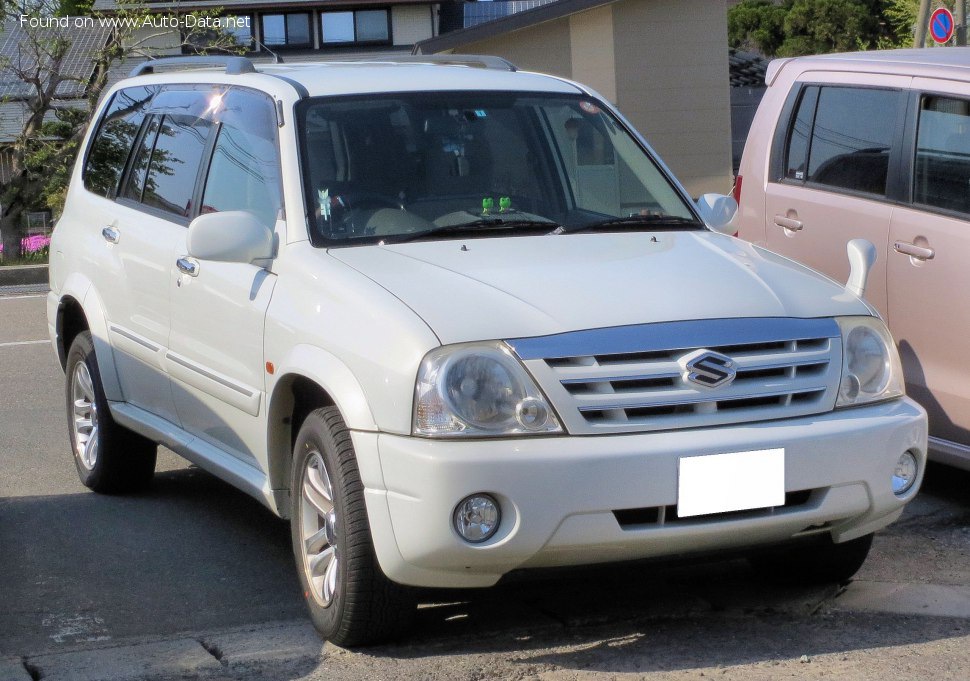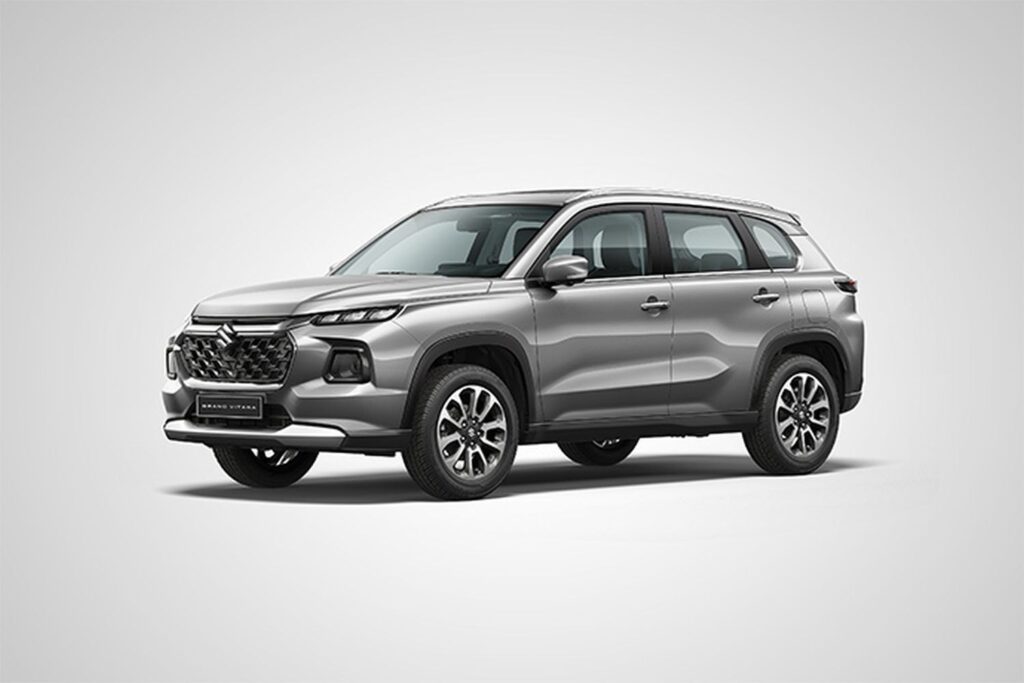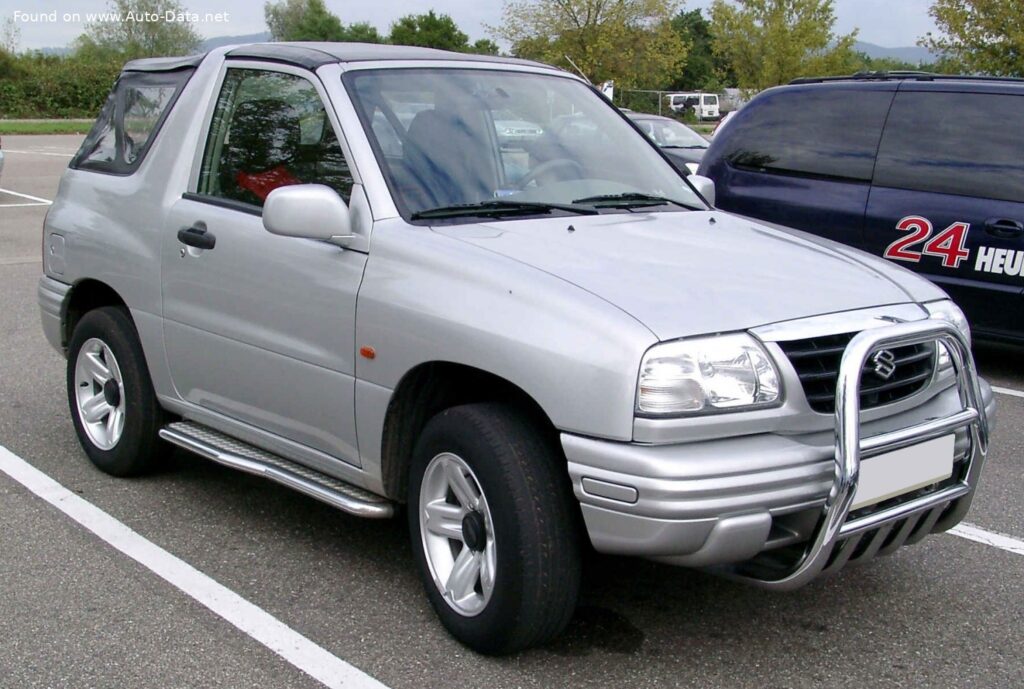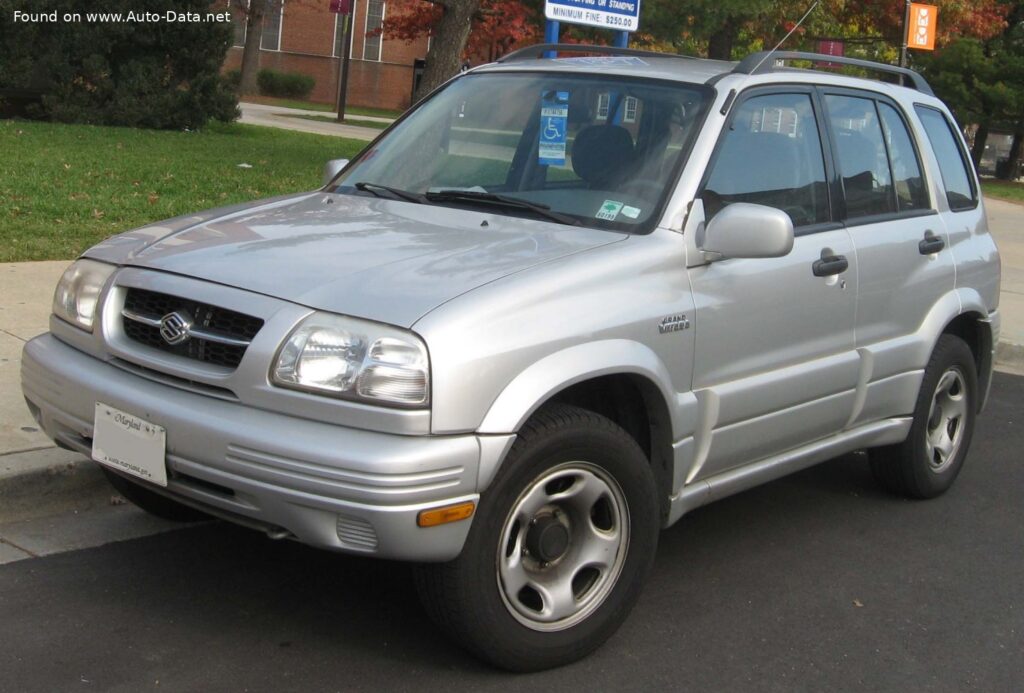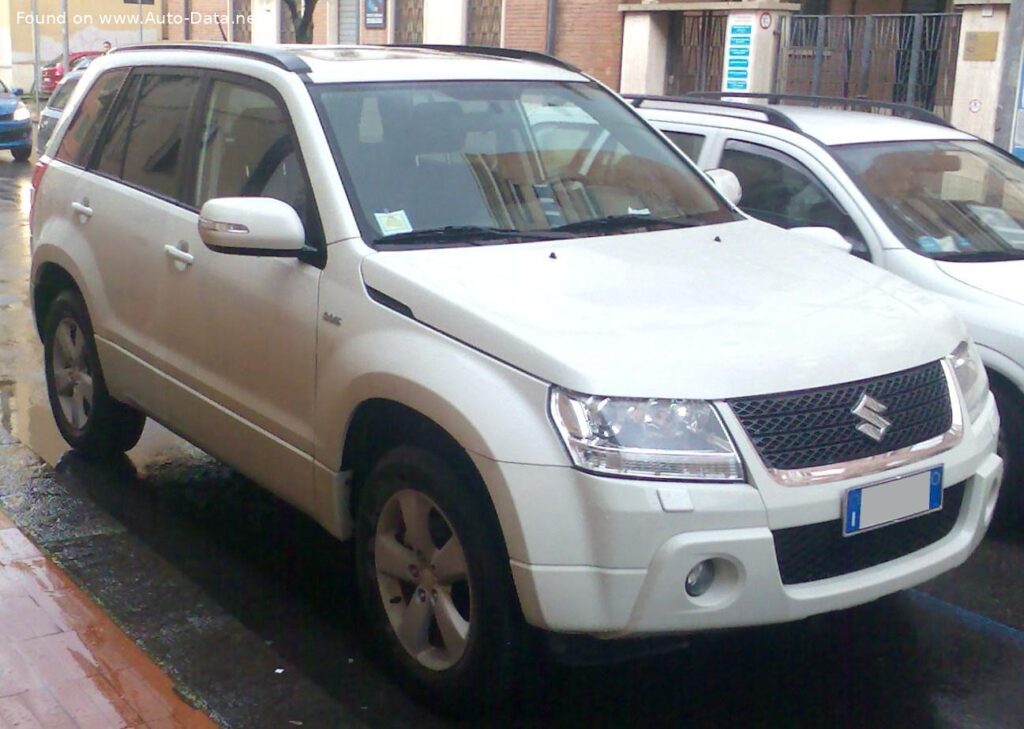
Introduction: The Suzuki Grand Vitara II (facelift 2008) 5 Door 2.4 (169 Hp) AWD Automatic
The Suzuki Grand Vitara II, specifically the facelifted 2008 model with the 2.4-liter engine, all-wheel drive, and automatic transmission, represents a significant chapter in Suzuki’s long-standing tradition of producing capable and reliable compact SUVs. Launched into production in May 2010 and continuing until December 2012, this iteration of the Grand Vitara built upon the second generation’s foundation, refining its blend of on-road civility and genuine off-road prowess. Unlike many of its soft-roader contemporaries, the Grand Vitara II maintained a more rugged, truck-like character, making it a distinctive choice in the increasingly crowded compact SUV segment across various global markets, including North America, Europe, and Asia.
Positioned as a versatile five-door SUV, the Suzuki Grand Vitara II (facelift 2008) 5 Door 2.4 (169 Hp) AWD Automatic offered seating for five and a permanent all-wheel-drive system, distinguishing it from front-wheel-drive biased crossovers. Its powertrain architecture, centered around an internal combustion engine driving all four wheels, underscored its commitment to utility and adventure. This model aimed to provide a compelling package for consumers seeking a vehicle capable of handling diverse driving conditions, from urban commutes to challenging unpaved trails, without compromising on practicality or Suzuki’s renowned dependability.
Engine and Performance: Powering the Suzuki Grand Vitara II (facelift 2008) 5 Door 2.4 (169 Hp) AWD Automatic
At the heart of this Grand Vitara variant was Suzuki’s J24B engine, a 2.4-liter naturally aspirated inline-four gasoline unit. This powerplant was engineered to deliver a balance of sufficient power for daily driving and the necessary torque for off-road excursions. It produced a respectable 169 horsepower at 6000 rpm, which, for its class and era, provided adequate acceleration and highway cruising capability. Torque output stood at 227 Nm (167.43 lb.-ft.) at a relatively accessible 3800 rpm, ensuring responsive acceleration from a standstill and ample pulling power when navigating challenging terrain or towing.
With an engine displacement of 2393 cubic centimeters (146.03 cu. in.), the J24B featured a robust design with four cylinders, an inline configuration, and four valves per cylinder, enhanced by Variable Valve Timing (VVT) for optimized efficiency and power delivery across the rev range. Fuel was supplied via a multi-port manifold injection system, contributing to its Euro 5 emissions standard compliance. The engine’s compression ratio of 10:1 was typical for naturally aspirated gasoline engines of its time, balancing performance with fuel economy.
Power was transmitted through a 4-speed automatic transmission, a common choice for SUVs of this period, prioritizing durability and smooth shifts over a greater number of ratios. The permanent all-wheel-drive (AWD) system ensured consistent traction and stability in varied conditions, a hallmark of the Grand Vitara’s off-road credibility. Performance figures included an acceleration from 0 to 60 mph in 11.4 seconds and a top speed of 108.74 mph (175 km/h). While not a performance leader, these numbers were competitive within its segment, emphasizing its utility-focused design. Fuel efficiency, according to the NEDC combined cycle, was rated at 9.7 liters per 100 kilometers, or approximately 24.2 US mpg, with CO2 emissions of 225 g/km. This demonstrated a reasonable balance for an AWD SUV with genuine off-road capabilities.
Design and Features: Form Meets Function
The 2008 facelift brought subtle yet effective updates to the Grand Vitara II’s exterior, maintaining its distinctive, robust aesthetic. As a five-door SUV, it presented a purposeful stance, blending a contemporary look with traditional SUV cues. Its dimensions—180.12 inches (4575 mm) in length, 74.02 inches (1880 mm) in width, and 66.73 inches (1695 mm) in height—positioned it squarely within the compact SUV category, offering a manageable footprint for urban driving while providing substantial interior space.
A key differentiator was its impressive 8.07 inches (205 mm) of ground clearance, which, combined with its permanent AWD system, hinted at its genuine off-road aspirations. This was further supported by independent suspension all around, featuring MacPherson struts at the front and a multi-link setup at the rear, designed to provide a comfortable ride on pavement while offering articulation and control over uneven terrain. Braking performance was handled by ventilated discs on both the front and rear axles, complemented by an Anti-lock Braking System (ABS) for enhanced safety and control during emergency stops. Steering was a rack-and-pinion setup with electric power steering, offering ease of maneuverability at low speeds and a stable feel on the highway.
Inside, the Grand Vitara II was designed with practicality and comfort in mind for its five occupants. The cabin layout was straightforward and functional, utilizing durable materials suitable for a vehicle intended for both daily use and adventurous outings. Cargo versatility was a strong suit, with a minimum trunk space of 26.77 cubic feet (758 liters) that could expand significantly to 48.95 cubic feet (1386 liters) with the rear seats folded, accommodating a substantial amount of gear. The vehicle also boasted a fuel tank capacity of 17.44 US gallons (66 liters), providing a decent cruising range. Depending on the trim, tire sizes ranged from 215/70 R16 to 225/60 R18, mounted on corresponding wheel rims, allowing for a balance of on-road grip and off-road resilience.
Technical Specifications: Suzuki Grand Vitara II (facelift 2008) 5 Door 2.4 (169 Hp) AWD Automatic
| Category | Specification | Value |
|---|---|---|
| General Information | Brand | Suzuki |
| Model | Grand Vitara | |
| Generation | Grand Vitara II (facelift 2008) 5 Door | |
| Type (Engine) | 2.4 (169 Hp) AWD Automatic | |
| Start of Production | May, 2010 | |
| End of Production | December, 2012 | |
| Powertrain Architecture | Internal Combustion engine | |
| Body type | SUV | |
| Seats | 5 | |
| Doors | 5 | |
| Performance Specs | Fuel Consumption (Urban, NEDC) | 12.5 l/100 km (18.8 US mpg) |
| Fuel Consumption (Extra Urban, NEDC) | 8.1 l/100 km (29 US mpg) | |
| Fuel Consumption (Combined, NEDC) | 9.7 l/100 km (24.2 US mpg) | |
| CO2 Emissions (NEDC) | 225 g/km | |
| Fuel Type | Petrol (Gasoline) | |
| Acceleration 0 – 60 mph | 11.4 sec | |
| Acceleration 0 – 100 km/h | 12 sec | |
| Maximum Speed | 175 km/h (108.74 mph) | |
| Emission Standard | Euro 5 | |
| Weight-to-Power Ratio | 9.4 kg/Hp (106.7 Hp/tonne) | |
| Weight-to-Torque Ratio | 7 kg/Nm (143.3 Nm/tonne) | |
| Engine Specs | Power | 169 Hp @ 6000 rpm |
| Power per Liter | 70.6 Hp/l | |
| Torque | 227 Nm @ 3800 rpm (167.43 lb.-ft. @ 3800 rpm) | |
| Engine Layout | Front, Longitudinal | |
| Engine Model/Code | J24B | |
| Engine Displacement | 2393 cm3 (146.03 cu. in.) | |
| Number of Cylinders | 4 | |
| Engine Configuration | Inline | |
| Cylinder Bore | 92 mm (3.62 in.) | |
| Piston Stroke | 90 mm (3.54 in.) | |
| Compression Ratio | 10:1 | |
| Number of Valves per Cylinder | 4 | |
| Fuel Injection System | Multi-port manifold injection | |
| Engine Aspiration | Naturally aspirated engine | |
| Valvetrain | VVT | |
| Engine Oil Capacity | 4.8 l (5.07 US qt) | |
| Coolant Capacity | 7.3 l (7.71 US qt) | |
| Space, Volume and Weights | Kerb Weight | 1584-1651 kg (3492.12 – 3639.83 lbs.) |
| Max. Weight | 2100 kg (4629.71 lbs.) | |
| Max Load | 449-516 kg (989.88 – 1137.59 lbs.) | |
| Trunk (boot) Space – Minimum | 758 l (26.77 cu. ft.) | |
| Trunk (boot) Space – Maximum | 1386 l (48.95 cu. ft.) | |
| Fuel Tank Capacity | 66 l (17.44 US gal) | |
| Permitted Trailer Load with Brakes (12%) | 1700 kg (3747.86 lbs.) | |
| Permitted Trailer Load without Brakes | 750 kg (1653.47 lbs.) | |
| Permitted Towbar Download | 85 kg (187.39 lbs.) | |
| Dimensions | Length | 4575 mm (180.12 in.) |
| Width | 1880 mm (74.02 in.) | |
| Height | 1695 mm (66.73 in.) | |
| Wheelbase | 2640 mm (103.94 in.) | |
| Front Track | 1540 mm (60.63 in.) | |
| Rear (Back) Track | 1570 mm (61.81 in.) | |
| Ride Height (Ground Clearance) | 205 mm (8.07 in.) | |
| Minimum Turning Circle (Turning Diameter) | 11 m (36.09 ft.) | |
| Drivetrain, Brakes and Suspension Specs | Drivetrain Architecture | Permanent All-Wheel Drive (4×4) |
| Drive Wheel | All wheel drive (4×4) | |
| Number of Gears and Type of Gearbox | 4 gears, automatic transmission | |
| Front Suspension | Independent type McPherson | |
| Rear Suspension | Independent multi-link suspension | |
| Front Brakes | Ventilated discs | |
| Rear Brakes | Ventilated discs | |
| Assisting Systems | ABS (Anti-lock braking system) | |
| Steering Type | Steering rack and pinion | |
| Power Steering | Electric Steering | |
| Tires Size | 215/70 R16 99H; 225/65 R17 101H; 225/60 R18 100H | |
| Wheel Rims Size | 6.5J x 16; 6.5J x 17; 7.0J x 18 |
Legacy and Market Impact
The Suzuki Grand Vitara II (facelift 2008) 5 Door 2.4 (169 Hp) AWD Automatic held a unique position in the global automotive landscape. While many manufacturers were shifting towards more car-like unibody crossovers with optional all-wheel drive, the Grand Vitara steadfastly retained its body-on-frame derived architecture (an integrated ladder frame into a unibody structure, often referred to as a “built-in ladder frame”), along with a robust permanent all-wheel-drive system, giving it a distinct advantage in terms of off-road capability and durability. This commitment to its roots earned it a reputation for ruggedness, reliability, and genuine adventure readiness, qualities that Suzuki had cultivated over decades with models like the Samurai and the original Vitara/Sidekick.
In markets like North America, where it competed against popular models such as the Honda CR-V, Toyota RAV4, Ford Escape, and Subaru Forester, the Grand Vitara often appealed to a niche segment of buyers who desired more than just a comfortable family hauler. Its permanent 4×4 system, coupled with a low-range transfer case in some higher trims (though not explicitly listed for this specific 4-speed automatic variant), made it a more capable option for light to moderate off-roading, towing, or navigating harsh winter conditions. This set it apart from rivals that typically offered simpler, on-demand AWD systems.
Globally, the Grand Vitara was a strong performer in regions where challenging road conditions were common, or where its robust build quality and reliability were highly valued. It was seen as a practical, no-nonsense SUV that delivered on its promises without excessive frills. Its legacy is one of a dependable workhorse, a testament to Suzuki’s engineering prowess in compact 4×4 vehicles. While Suzuki eventually withdrew from the mainstream U.S. automotive market, the Grand Vitara remains a celebrated