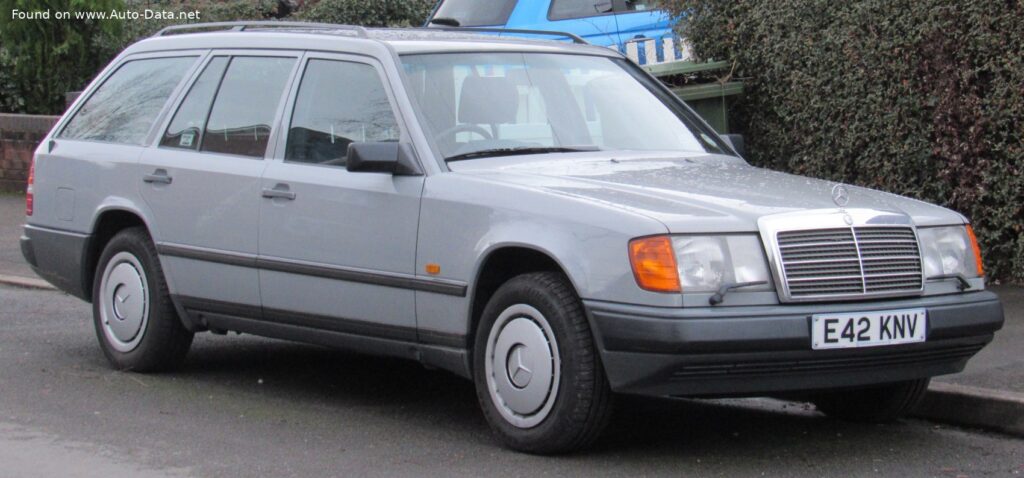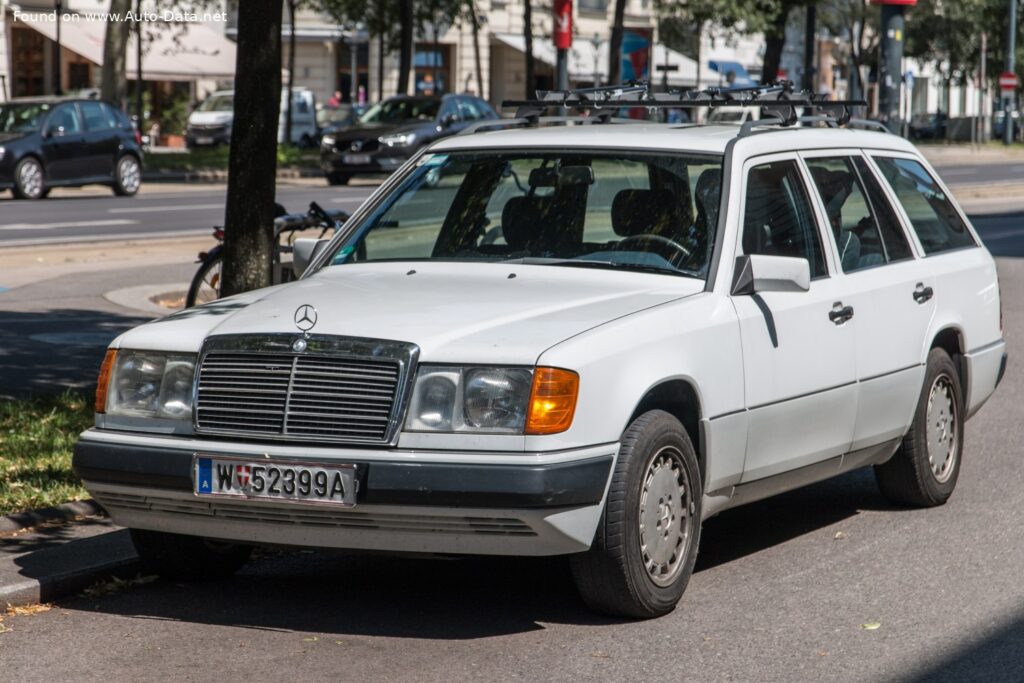
The Enduring Legacy of the Mercedes-Benz S124 (Facelift 1989) 230 TE Automatic
The Mercedes-Benz W124 series, produced from 1984 to 1996, stands as a monumental achievement in automotive engineering, revered for its uncompromising build quality, sophisticated design, and exceptional durability. Among its various body styles, the S124 station wagon (or “estate” in European parlance) carved out a significant niche, offering unparalleled practicality without sacrificing the luxury and driving refinement expected of a Mercedes-Benz. This article focuses on a particularly notable variant, the Mercedes-Benz S124 (facelift 1989) 230 TE Automatic, a model that represented a mid-cycle refresh and solidified the W124’s reputation as a benchmark in the executive car segment.
Introduced in September 1989 as part of the broader W124 facelift, the 230 TE Automatic was a critical offering for Mercedes-Benz, especially in its primary European markets. It combined the robust and efficient M102 inline-four engine with the versatility of a station wagon, providing a compelling package for families and professionals alike. Though not as widely sold in the United States as its sedan counterparts, the S124 wagon maintained a strong presence and influence, celebrated by enthusiasts for its unique blend of utility and classic Mercedes-Benz engineering. Its production ran until October 1992, making these facelifted models a significant chapter in the W124’s illustrious history.
Engine and Performance: The Heart of the Mercedes-Benz S124 (Facelift 1989) 230 TE Automatic
At the core of the Mercedes-Benz S124 (facelift 1989) 230 TE Automatic was the venerable M102 E 23 (code 102.982) engine. This naturally aspirated, multi-port manifold injected inline-four gasoline (petrol) engine boasted a displacement of 2298 cubic centimeters (approximately 2.3 liters or 140.23 cubic inches). Known for its robust construction and reliability, the M102 delivered a respectable 132 horsepower at 5100 rpm and a solid 146.04 lb.-ft. of torque at 3500 rpm. With a compression ratio of 9:1 and a SOHC (Single Overhead Camshaft) valvetrain with two valves per cylinder, this engine was designed for smooth, consistent power delivery rather than outright blistering speed.
Power was sent to the rear wheels via a 4-speed automatic transmission, a common and well-regarded setup for Mercedes-Benz vehicles of this era. This drivetrain architecture contributed to the car’s balanced handling characteristics and comfortable cruising ability. Despite its substantial curb weight of 3262.84 lbs., the 230 TE Automatic was capable of accelerating from 0 to 60 mph in a respectable 10.5 seconds, reaching a top speed of 119.92 mph. These figures were competitive for a luxury station wagon in the late 1980s and early 1990s, demonstrating that practicality did not necessitate sluggish performance.
Fuel economy, while not the primary focus for a luxury vehicle of its time, was reasonable for its class. The 230 TE achieved an estimated 20.3 US mpg in urban driving conditions and an impressive 30.9 US mpg on the highway, reflecting Mercedes-Benz’s commitment to engineering efficiency even in larger vehicles. The engine’s layout, positioned longitudinally at the front, ensured optimal weight distribution and contributed to the W124’s renowned driving dynamics.
Design and Features: Form Meets Function
The S124 body style is an exemplary demonstration of functional design, embodying Mercedes-Benz’s philosophy of timeless elegance and practical utility. The facelift in 1989 brought subtle but significant changes, including body-colored side cladding (often referred to as “Sacco panels” after designer Bruno Sacco), which modernized the aesthetic and gave the car a more cohesive appearance. The Mercedes-Benz S124 (facelift 1989) 230 TE Automatic retained the W124’s characteristic clean lines and understated presence, which have allowed it to age gracefully and remain appealing to this day.
As a station wagon, the S124 offered immense practicality. Its five-door, five-seat configuration provided ample space for passengers and cargo. With a length of 187.6 inches, a width of 68.5 inches, and a height of 58.62 inches, it commanded a significant road presence while offering a spacious interior. The generous 110.24-inch wheelbase contributed to a smooth ride and stable handling, hallmarks of the W124 chassis.
Safety and comfort features were advanced for its era. The S124 came equipped with an Anti-lock Braking System (ABS) as standard, significantly enhancing stopping power and control in emergency situations. The suspension system was particularly sophisticated, featuring wishbones at the front and an independent multi-link setup at the rear. This multi-link rear suspension, a pioneering design for its time, provided an exceptional balance of ride comfort, handling precision, and load-carrying capability, a crucial attribute for a station wagon. Braking was handled by ventilated discs at the front and solid discs at the rear, ensuring confident deceleration. Power steering, utilizing a cone worm with recirculation balls system, offered precise and effortless maneuverability. The vehicle rode on 195/65 R15 tires mounted on 6.5J x 15-inch wheel rims, providing a comfortable ride and adequate grip.
Technical Specifications
| Category | Specification |
|---|---|
| Brand | Mercedes-Benz |
| Model | W124 |
| Generation | S124 (facelift 1989) |
| Type (Engine) | 230 TE (132 Hp) Automatic |
| Production Start | September, 1989 |
| Production End | October, 1992 |
| Body type | Station wagon (estate) |
| Seats | 5 |
| Doors | 5 |
| Performance | |
| Fuel Consumption (Urban) | 20.3 US mpg (11.6 l/100 km) |
| Fuel Consumption (Extra Urban) | 30.9 US mpg (7.6 l/100 km) |
| Fuel Type | Petrol (Gasoline) |
| Acceleration 0 – 60 mph | 10.5 sec |
| Maximum Speed | 119.92 mph (193 km/h) |
| Weight-to-power ratio | 11.2 kg/Hp |
| Weight-to-torque ratio | 7.5 kg/Nm |
| Engine Specs | |
| Power | 132 Hp @ 5100 rpm |
| Torque | 146.04 lb.-ft. @ 3500 rpm (198 Nm) |
| Engine Layout | Front, Longitudinal |
| Engine Model/Code | M 102 E 23 / 102.982 |
| Engine Displacement | 2.3 liters (2298 cm³, 140.23 cu. in.) |
| Number of Cylinders | 4, Inline |
| Cylinder Bore | 3.76 in. (95.5 mm) |
| Piston Stroke | 3.16 in. (80.2 mm) |
| Compression Ratio | 9:1 |
| Valves per Cylinder | 2 |
| Fuel Injection System | Multi-port manifold injection |
| Engine Aspiration | Naturally aspirated |
| Valvetrain | SOHC |
| Engine Oil Capacity | 4.76 US qt (4.5 l) |
| Coolant Capacity | 8.98 US qt (8.5 l) |
| Dimensions & Weights | |
| Kerb Weight | 3262.84 lbs. (1480 kg) |
| Max. Weight | 4629.71 lbs. (2100 kg) |
| Max Load | 1366.87 lbs. (620 kg) |
| Fuel Tank Capacity | 19.02 US gal (72 l) |
| Length | 187.6 in. (4765 mm) |
| Width | 68.5 in. (1740 mm) |
| Height | 58.62 in. (1489 mm) |
| Wheelbase | 110.24 in. (2800 mm) |
| Front Track | 58.94 in. (1497 mm) |
| Rear Track | 58.94 in. (1497 mm) |
| Drivetrain, Brakes & Suspension | |
| Drivetrain Architecture | Rear-wheel drive, Internal Combustion Engine |
| Drive Wheel | Rear wheel drive |
| Gearbox | 4 gears, automatic transmission |
| Front Suspension | Wishbone |
| Rear Suspension | Independent multi-link suspension |
| Front Brakes | Ventilated discs |
| Rear Brakes | Disc |
| Assisting Systems | ABS (Anti-lock braking system) |
| Steering Type | Cone worm with recirculation balls |
| Power Steering | Hydraulic Steering |
| Tires (Front/Rear) | 195/65 R15 |
| Wheel Rims (Front/Rear) | 6.5J x 15 |
Legacy and Market Impact
The Mercedes-Benz W124, and particularly its S124 station wagon variant, holds a revered place in automotive history. The Mercedes-Benz S124 (facelift 1989) 230 TE Automatic is a prime example of the brand’s commitment to “over-engineering” during an era often considered the zenith of Mercedes-Benz build quality. These vehicles were designed and built to last for decades, often exceeding half a million miles with proper maintenance. This reputation for exceptional longevity and reliability has cemented the W124’s status as a modern classic and a highly sought-after used car.
In its primary European markets, the S124 wagon was incredibly popular, serving as the quintessential family car for the affluent, a reliable workhorse for businesses, and even a favored taxi in some regions due to its robust nature and spacious interior. Its competitors included the BMW 5 Series Touring (E34 generation) and the Audi 100 Avant (C3/C4 generations), but the Mercedes-Benz S124 often stood out for its blend of ride comfort, advanced suspension, and perceived build quality. While not a volume seller in the United States compared to its sedan stablemates, the S124 wagons that did make it across the Atlantic were (and still are) highly prized by enthusiasts looking for a practical, durable, and understated luxury vehicle.
The W124 platform, including the S124, helped to define the executive car segment for a generation. Its design language influenced subsequent Mercedes-Benz models, and its engineering principles laid the groundwork for future advancements in vehicle safety and dynamics. Today, the 230 TE Automatic is celebrated not just for its historical significance but also for its continued usability. Its classic styling, comfortable interior, and dependable mechanicals make it a practical and enjoyable classic car for daily driving or weekend excursions. The enduring appeal of the Mercedes-Benz S124 (facelift 1989) 230 TE Automatic is a testament to Mercedes-Benz’s golden era of engineering, where quality, durability, and timeless design were paramount.