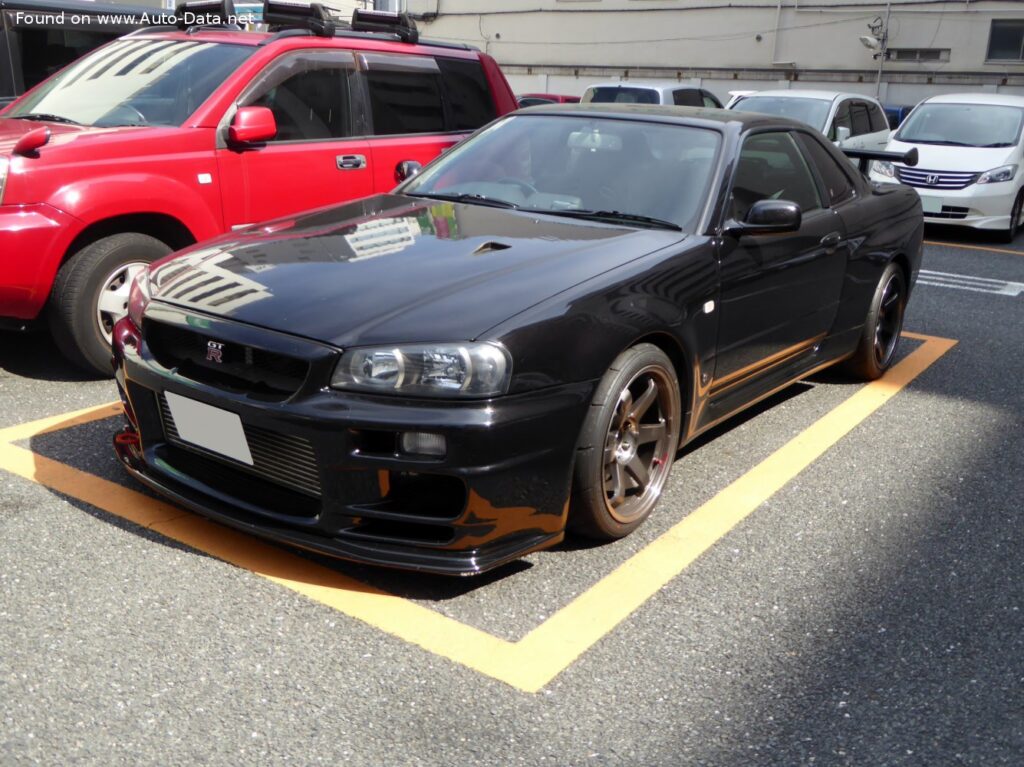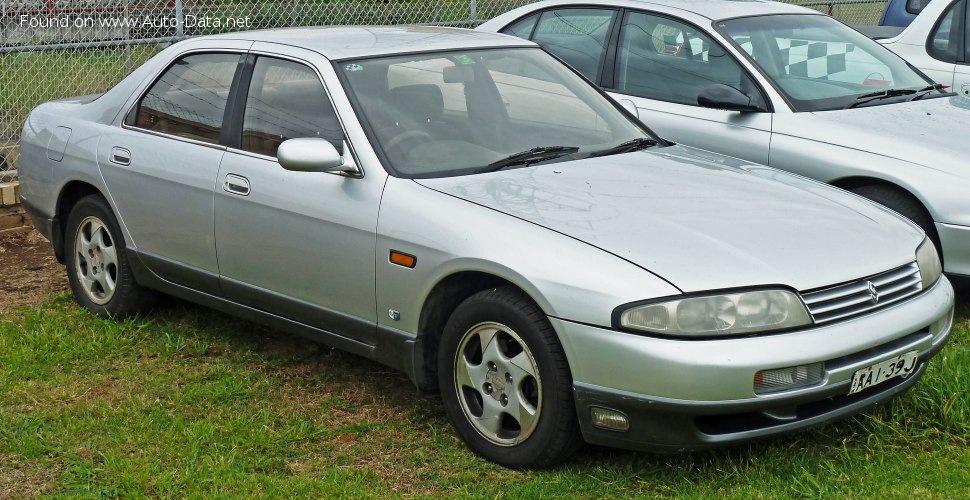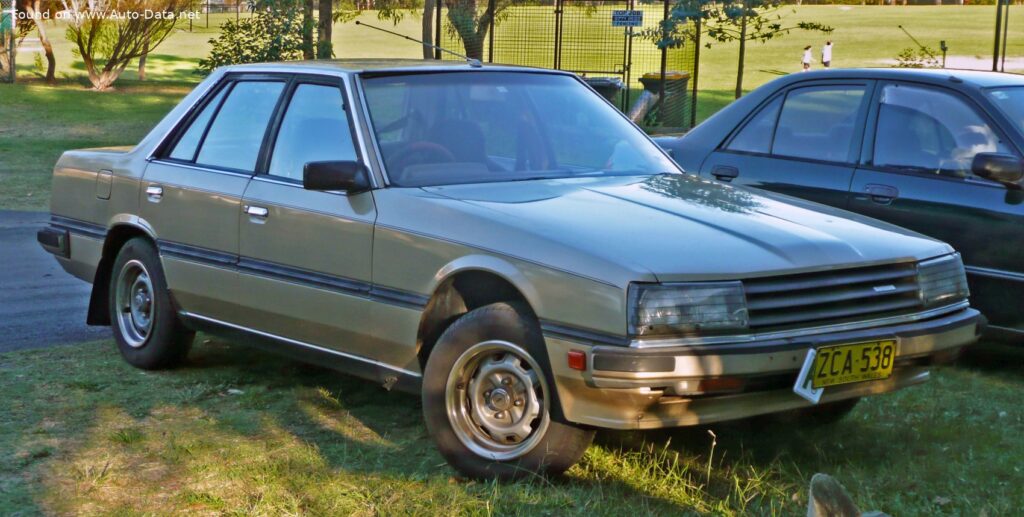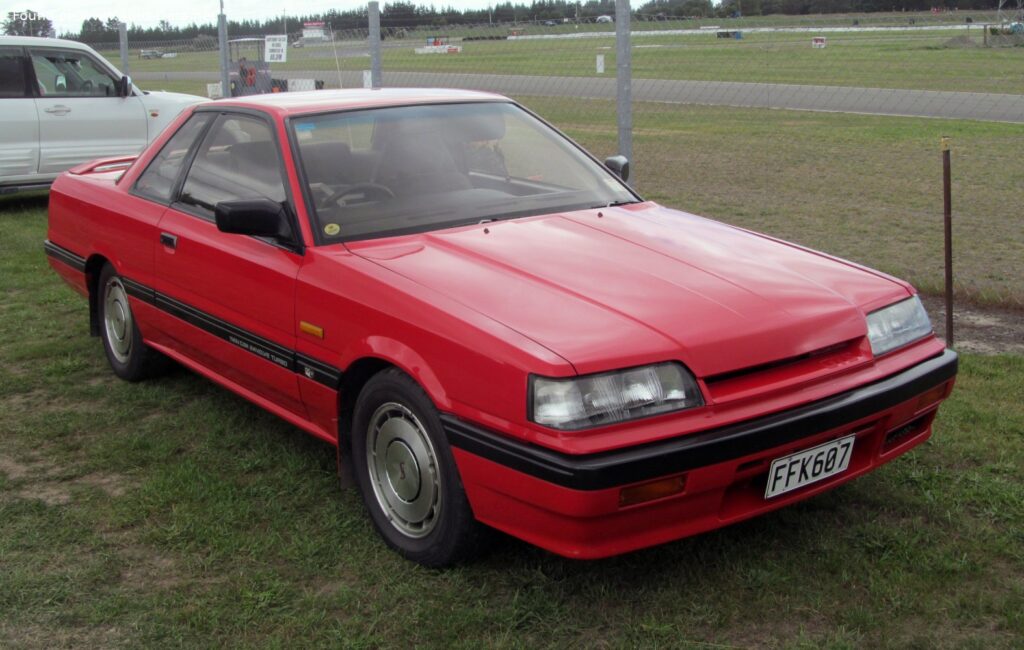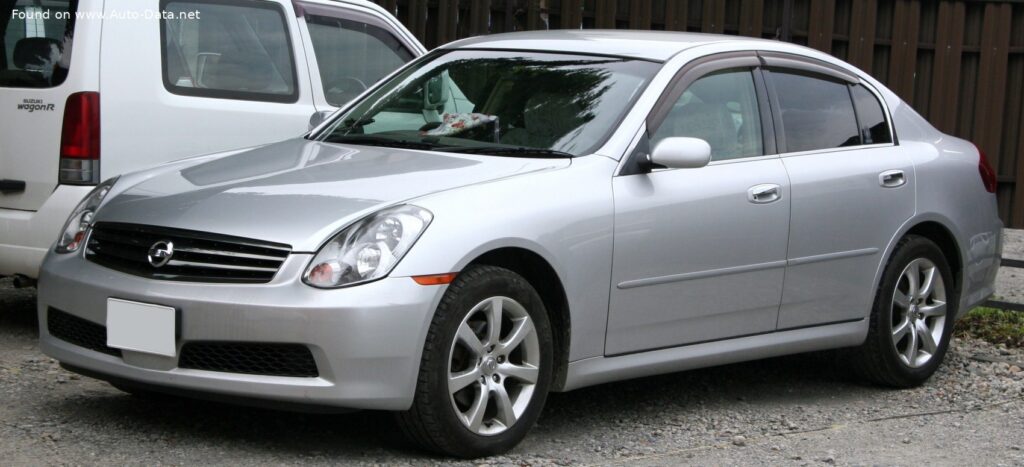
The Nissan Skyline XI (V35) 2.5 i V6 24V GT: A New Horizon for the Skyline Legacy
The Nissan Skyline, a name synonymous with performance and innovation, underwent a significant transformation with the introduction of its eleventh generation, the V35. Launched in 2001, the Nissan Skyline XI (V35) 2.5 i V6 24V GT represented a pivotal shift in the model’s design philosophy and market positioning. While previous generations, particularly the R32 through R34, had cemented the Skyline’s reputation as a high-performance sports car, often associated with the legendary GT-R moniker, the V35 embraced a more sophisticated, luxury-oriented executive sports sedan identity. This generation marked a strategic move by Nissan to broaden the Skyline’s appeal, aligning it more closely with global premium market trends and paving the way for its successful export as the Infiniti G35 in North America and other regions.
The V35 Skyline, produced from 2001 to 2006, was built on Nissan’s new FM (Front Midship) platform, a highly advanced architecture designed to optimize weight distribution and handling. This platform placed the engine further back in the chassis, behind the front axle line, contributing to a near 50/50 weight balance. The 2.5 i V6 24V GT variant, the subject of this article, was a core offering in the Japanese domestic market (JDM), emphasizing a blend of refined power, comfort, and dynamic driving characteristics suitable for both daily commuting and spirited touring. Its introduction was met with mixed reactions from traditional Skyline enthusiasts, who mourned the departure from the previous generation’s more aggressive, tuner-friendly aesthetic and the absence of a direct GT-R variant within the V35 lineup. Nevertheless, the V35 proved to be a commercially successful model, redefining what a Skyline could be for a new era.
Powertrain and Performance of the Nissan Skyline XI (V35) 2.5 i V6 24V GT
At the heart of the Nissan Skyline XI (V35) 2.5 i V6 24V GT lies the acclaimed VQ25DD engine, a member of Nissan’s highly regarded VQ series of V6 engines. This particular iteration is a 2.5-liter (2495 cm3 or 152.25 cubic inches) naturally aspirated V6 unit, featuring a DOHC (Double Overhead Camshaft) valvetrain with 4 valves per cylinder. A significant technological highlight for its time was the direct injection fuel system, which allowed for more precise fuel delivery, improved combustion efficiency, and better throttle response. With a compression ratio of 11:1, this engine was designed for optimal performance on premium gasoline.
The VQ25DD engine in the Skyline V35 2.5 i V6 24V GT delivered a respectable 215 horsepower at 6400 rpm, providing ample power for its class. Torque output stood at 199.14 lb.-ft. (270 Nm) at a relatively accessible 4400 rpm, ensuring a strong mid-range pull. Power was transmitted to the rear wheels via a 4-speed automatic transmission, a common setup for luxury sedans of that period, prioritizing smooth shifts and comfortable cruising. While a 4-speed automatic might seem modest by today’s standards, it was well-suited to the car’s intended character, offering a balance of efficiency and responsiveness.
In terms of outright performance, the Skyline V35 2.5 i V6 24V GT was capable of reaching a top speed of approximately 130.49 mph (210 km/h). Its weight-to-power ratio of 6.7 kg/Hp (148.3 Hp/tonne) indicated a lively performance for its size. Fuel economy was rated at an efficient 28.3 US mpg (8.3 l/100 km) on the combined cycle, a commendable figure for a powerful V6 sedan of the early 2000s, especially considering its rear-wheel-drive architecture. The overall powertrain package delivered a refined and engaging driving experience, characterized by the VQ engine’s renowned smoothness and a pleasing exhaust note.
Design and Features
The exterior design of the Nissan Skyline XI (V35) represented a radical departure from its predecessors. Gone were the sharp, angular lines and distinct quad taillights that had become iconic elements of the Skyline. Instead, the V35 adopted a more fluid, organic, and contemporary aesthetic, characterized by sweeping curves, a longer wheelbase, and a less aggressive front fascia. The sedan body type, with its four doors and seating for five, underscored its new role as a more mature and comfortable executive vehicle. With a length of 184.06 inches (4675 mm), a width of 68.9 inches (1750 mm), and a height of 57.87 inches (1470 mm), the V35 had a substantial presence on the road, further accentuated by its generous 112.2-inch (2850 mm) wheelbase.
Inside, the V35 Skyline offered a well-appointed and ergonomically designed cabin. Nissan prioritized comfort and convenience, with higher-quality materials and a more luxurious feel than previous generations. Features for the era included automatic climate control, a sophisticated audio system, and available leather upholstery. Safety was also a key consideration, with standard features such as ABS (Anti-lock Braking System) providing enhanced stopping power and stability. The car’s robust chassis and wishbone suspension setup at both the front and rear contributed to a comfortable ride quality while maintaining competent handling dynamics. Ventilated disc brakes on all four wheels ensured confident braking performance. The hydraulic power steering system, employing a rack and pinion setup, offered precise and communicative feedback to the driver, enhancing the overall driving experience. The trunk space was practical for a sedan of its size, offering 16.77 cubic feet (475 liters) of cargo capacity.
Technical Specifications
| Category | Specification |
|---|---|
| Brand | Nissan |
| Model | Skyline |
| Generation | Skyline XI (V35) |
| Type (Engine) | 2.5 i V6 24V GT (215 Hp) |
| Start of production | 2001 year |
| End of production | 2006 year |
| Powertrain Architecture | Internal Combustion engine |
| Body type | Sedan |
| Seats | 5 |
| Doors | 4 |
| Performance Specs | |
| Fuel consumption (combined) | 8.3 l/100 km (28.3 US mpg) |
| Fuel Type | Petrol (Gasoline) |
| Maximum speed | 210 km/h (130.49 mph) |
| Weight-to-power ratio | 6.7 kg/Hp (148.3 Hp/tonne) |
| Weight-to-torque ratio | 5.4 kg/Nm (186.2 Nm/tonne) |
| Engine Specs | |
| Power | 215 Hp @ 6400 rpm |
| Power per liter | 86.2 Hp/l |
| Torque | 199.14 lb.-ft. (270 Nm) @ 4400 rpm |
| Engine layout | Front, Longitudinal |
| Engine Model/Code | VQ25DD |
| Engine displacement | 2495 cm3 (2.5 liters / 152.25 cu. in.) |
| Number of cylinders | 6 |
| Engine configuration | V-engine |
| Cylinder Bore | 85 mm (3.35 in.) |
| Piston Stroke | 73.3 mm (2.89 in.) |
| Compression ratio | 11:1 |
| Number of valves per cylinder | 4 |
| Fuel injection system | Direct injection |
| Engine aspiration | Naturally aspirated engine |
| Valvetrain | DOHC |
| Engine oil capacity | 4.7 l (4.97 US qt) |
| Space, Volume and Weights | |
| Kerb Weight | 1450 kg (3196.7 lbs.) |
| Trunk (boot) space – minimum | 475 l (16.77 cu. ft.) |
| Fuel tank capacity | 80 l (21.13 US gal) |
| Dimensions | |
| Length | 4675 mm (184.06 in.) |
| Width | 1750 mm (68.9 in.) |
| Height | 1470 mm (57.87 in.) |
| Wheelbase | 2850 mm (112.2 in.) |
| Front track | 1510 mm (59.45 in.) |
| Rear (Back) track | 1515 mm (59.65 in.) |
| Drivetrain, Brakes and Suspension Specs | |
| Drivetrain Architecture | The Internal combustion engine (ICE) drives the rear wheels of the vehicle. |
| Drive wheel | Rear wheel drive |
| Number of gears and type of gearbox | 4 gears, automatic transmission |
| Front suspension | Wishbone |
| Rear suspension | Wishbone |
| Front brakes | Ventilated discs |
| Rear brakes | Ventilated discs |
| Assisting systems | ABS (Anti-lock braking system) |
| Steering type | Steering rack and pinion |
| Power steering | Hydraulic Steering |
| Tires size | 205/65 R16 |
Legacy and Market Impact of the Nissan Skyline XI (V35)
The Nissan Skyline XI (V35) holds a unique and somewhat controversial place in the illustrious history of the Skyline nameplate. For many long-time enthusiasts, particularly those outside Japan who associated the Skyline primarily with the high-performance GT-R models, the V35’s shift towards a more luxurious, executive sports sedan persona was a departure from tradition. The absence of a turbocharged inline-six engine and the iconic quad taillights, coupled with its more rounded styling, led some to feel that the V35 had lost its “Skyline soul.”
However, from Nissan’s strategic perspective, the V35 was a resounding success. It allowed the Skyline to evolve and compete in a broader market segment, particularly in Japan, where it faced rivals such as the Toyota Mark II/Chaser, Honda Accord Inspire, and various European executive sedans. Crucially, the V35 formed the basis for the first-generation Infiniti G35, which was introduced to the North American market in 2002. This move effectively brought the Skyline lineage to the United States under the premium Infiniti brand, offering a compelling rear-wheel-drive sports sedan that quickly gained a strong following for its performance, handling, and value proposition. The G35, sharing its platform and core mechanicals with the V35 Skyline, became a strong competitor to established luxury sports sedans like the BMW 3 Series and Mercedes-Benz C-Class.
The 2.5 i V6 24V GT variant, with its naturally aspirated VQ25DD engine and automatic transmission, exemplified the V35’s refined character. It offered a smooth, comfortable, and capable driving experience for the Japanese market, where such attributes were highly valued in its segment. While it may not have delivered the raw, unadulterated performance thrills of its R34 GT-R predecessor, it provided a sophisticated and engaging drive that was well-suited to its target audience. The V35’s legacy is ultimately one of adaptation and expansion. It successfully broadened the Skyline’s appeal, modernized its image, and laid the groundwork for its global presence as the Infiniti G35/Q50, proving that the Skyline name could thrive even as it evolved beyond its traditional performance niche.