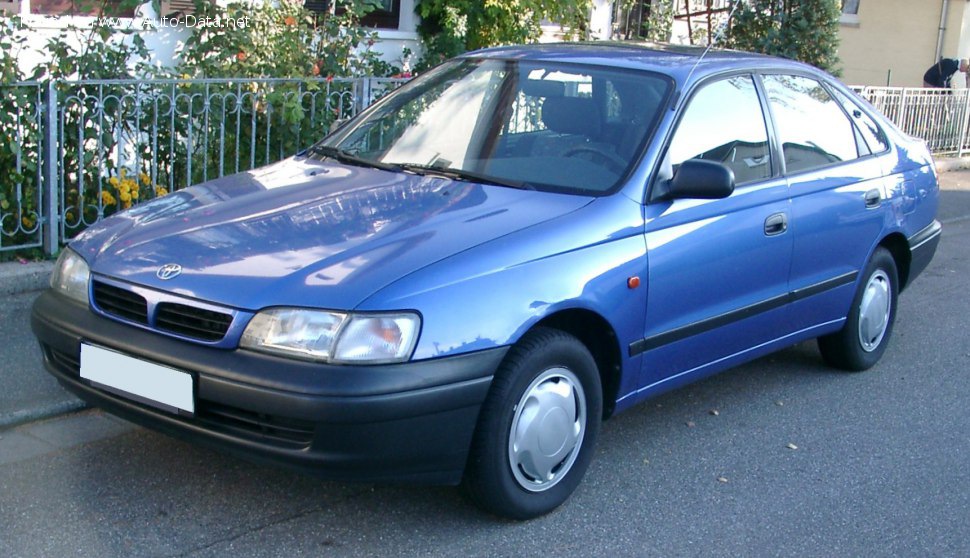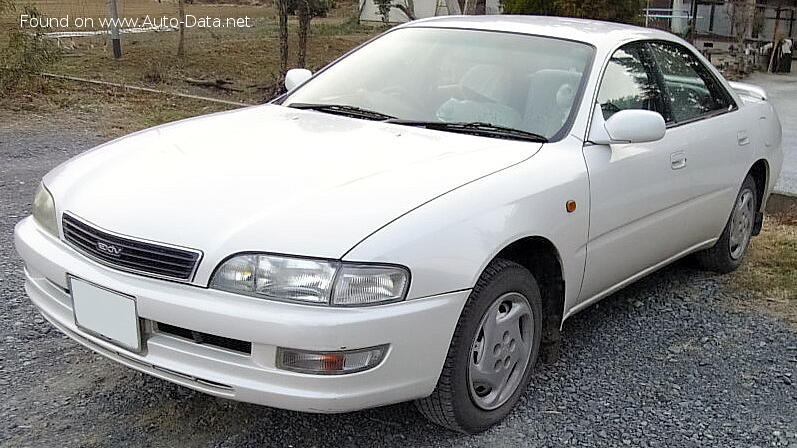
The Toyota Corona EXiV 1.8i Automatic represents a distinctive chapter in Toyota’s extensive history, particularly within the Japanese domestic market (JDM). Launched in 1993, this model was part of the second generation of the Corona EXiV, a series designed to appeal to buyers seeking a sportier, more stylish alternative to the conventional Corona sedan. Positioned as a “hardtop” sedan, the EXiV distinguished itself with its pillarless door design, offering a sleek, coupe-like profile while retaining the practicality of a four-door vehicle. The 1.8i Automatic variant, equipped with a 125 horsepower engine, was a popular choice, balancing dependable performance with commendable fuel efficiency for its era. It aimed to blend sophisticated aesthetics with Toyota’s renowned reliability and build quality, carving out a niche in Japan’s competitive mid-size sedan segment.
The Toyota Corona EXiV: A Stylish Niche in the JDM
The Toyota Corona EXiV, an acronym for “Extra Impressive View,” was introduced to the Japanese market in 1989, built on the same platform as the Toyota Carina ED. Both models were Toyota’s answer to a growing demand for stylish, low-slung sedans that offered a sportier feel than traditional family cars. The second generation, introduced in 1993, further refined this concept, presenting a more aerodynamic and contemporary design. While the standard Corona was a global workhorse, the EXiV was exclusively tailored for Japanese consumers, reflecting the nuanced tastes and market trends prevalent in Japan during the 1990s. Its unique styling, often referred to as a “four-door hardtop,” provided an open, airy cabin feel when all windows were lowered, a design flourish that was highly fashionable at the time.
Engine and Performance of the Toyota Corona EXiV 1.8i Automatic
Under the hood, the Toyota Corona EXiV 1.8i Automatic featured Toyota’s robust 4S-FE engine. This naturally aspirated, inline four-cylinder powerplant had a displacement of 1.8 liters (1794 cm³ or 109.48 cubic inches). Equipped with a Double Overhead Camshaft (DOHC) valvetrain and multi-port manifold injection, the 4S-FE was engineered for a balance of smooth operation, reliability, and fuel economy. It produced a respectable 125 horsepower at 6000 rpm, which was ample for daily driving and highway cruising. The engine delivered 118.75 lb.-ft. of torque at 4200 rpm, providing a responsive feel, especially in urban environments.
Power was channeled to the front wheels via a 4-speed automatic transmission, a common and convenient choice for a sedan of this class in the 1990s. This setup contributed to a comfortable driving experience, prioritizing ease of use over outright performance. Despite its automatic gearbox, the EXiV 1.8i still offered a lively character, with a weight-to-power ratio of approximately 20.5 pounds per horsepower (9.3 kg/Hp). Fuel efficiency was a notable strong suit, with an impressive extra-urban economy of 54.7 US mpg (4.3 liters/100 km) and an urban rating of 29 US mpg (8.1 liters/100 km), making it an economical choice for its segment and era.
Design and Features
The design of the Toyota Corona EXiV was its defining characteristic. As a four-door sedan with seating for five, it maintained practicality, but its “hardtop” styling set it apart. The absence of B-pillars (when the windows were down) created a sleek, uninterrupted window line that mimicked a coupe, giving the car an elegant and somewhat sporty appearance. The overall dimensions—177.17 inches in length, 68.5 inches in width, and a low 52.17 inches in height—contributed to its dynamic stance. The wheelbase measured 99.8 inches, providing a stable ride and a reasonably spacious cabin for its class.
Inside, Toyota applied its typical philosophy of ergonomic design and quality materials. While not a luxury vehicle, the EXiV offered a comfortable and well-appointed interior, with features geared towards convenience and user-friendliness. Safety features for the 1990s included a standard Anti-lock Braking System (ABS), which was a significant advancement for mid-range sedans at the time. The braking system comprised ventilated discs at the front for improved stopping power and heat dissipation, complemented by drum brakes at the rear. The car rode on 185/70 R14 tires, mounted on 6.0J x 14-inch wheel rims, providing a comfortable and predictable ride characteristic of Toyota sedans.
Technical Specifications: Toyota Corona EXiV 1.8i (125 Hp) Automatic (1993-1998)
The following table details the technical specifications for the Toyota Corona EXiV 1.8i (125 Hp) Automatic:
| Category | Specification |
|---|---|
| Brand | Toyota |
| Model | Corona EXiV |
| Type (Engine) | 1.8i (125 Hp) Automatic |
| Production Years | 1993 – 1998 |
| Body Type | Sedan |
| Seats | 5 |
| Doors | 4 |
| Performance Specs | |
| Fuel Consumption (Urban) | 29 US mpg (8.1 l/100 km) |
| Fuel Consumption (Extra Urban) | 54.7 US mpg (4.3 l/100 km) |
| Fuel Type | Petrol (Gasoline) |
| Weight-to-Power Ratio | 20.5 lbs/Hp (9.3 kg/Hp) |
| Weight-to-Torque Ratio | 15.8 lbs/lb.-ft. (7.2 kg/Nm) |
| Engine Specs | |
| Power | 125 Hp @ 6000 rpm |
| Power per Liter | 69.7 Hp/l |
| Torque | 118.75 lb.-ft. @ 4200 rpm (161 Nm) |
| Engine Layout | Front, Transverse |
| Engine Model/Code | 4S-FE |
| Engine Displacement | 1.8 Liters (1794 cm³, 109.48 cu. in.) |
| Number of Cylinders | 4 |
| Engine Configuration | Inline |
| Cylinder Bore | 3.11 in. (79 mm) |
| Piston Stroke | 3.6 in. (91.5 mm) |
| Compression Ratio | 10:1 |
| Valves per Cylinder | 4 |
| Fuel Injection System | Multi-port manifold injection |
| Engine Aspiration | Naturally aspirated |
| Valvetrain | DOHC |
| Engine Oil Capacity | 4.12 US qt (3.9 l) |
| Coolant Capacity | 6.97 US qt (6.6 l) |
| Space, Volume, and Weights | |
| Kerb Weight | 2557.36 lbs. (1160 kg) |
| Fuel Tank Capacity | 15.85 US gal (60 l) |
| Dimensions | |
| Length | 177.17 in. (4500 mm) |
| Width | 68.5 in. (1740 mm) |
| Height | 52.17 in. (1325 mm) |
| Wheelbase | 99.8 in. (2535 mm) |
| Front Track | 59.45 in. (1510 mm) |
| Rear Track | 58.66 in. (1490 mm) |
| Minimum Turning Circle | 34.12 ft. (10.4 m) |
| Drivetrain, Brakes, and Suspension Specs | |
| Drivetrain Architecture | Front-wheel drive, Internal Combustion Engine |
| Drive Wheel | Front-wheel drive |
| Gearbox | 4 gears, automatic transmission |
| Front Brakes | Ventilated discs |
| Rear Brakes | Drum |
| Assisting Systems | ABS (Anti-lock braking system) |
| Tires Size | 185/70 R14 |
| Wheel Rims Size | 6.0J x 14 |
Legacy and Market Impact
The Toyota Corona EXiV occupied a distinct place in the Japanese automotive landscape of the 1990s. Its primary competitors included other stylish JDM hardtop sedans such as its stablemate, the Toyota Carina ED, as well as the Nissan Presea and the Honda Integra SJ. The EXiV differentiated itself by offering Toyota’s hallmark reliability and build quality wrapped in a more visually appealing package than a standard sedan. It catered to a demographic that desired the practicality of a four-door car but with the flair and sportiness typically associated with a coupe.
While the Corona EXiV was never officially exported to the United States or Europe, its design philosophy and engineering contributed to Toyota’s global reputation for diverse and well-engineered vehicles. In Japan, it was well-regarded for its comfortable ride, excellent fuel economy, and the unique appeal of its hardtop design. The EXiV, along with other JDM-specific models, showcased Toyota’s ability to segment its domestic market with highly specialized products that often influenced future global design trends. Today, the Corona EXiV is remembered as a stylish and reliable example of 1990s Japanese automotive design, a testament to an era when car manufacturers experimented with distinct body styles to capture specific market niches.
The Toyota Corona EXiV 1.8i Automatic, therefore, holds a significant place in the narrative of Japanese automotive history. It represents a period of innovation in design and a commitment to offering diverse options to discerning domestic consumers. Its blend of practical dimensions, efficient powertrain, and distinctive styling ensures its legacy as a memorable and well-executed mid-size sedan.