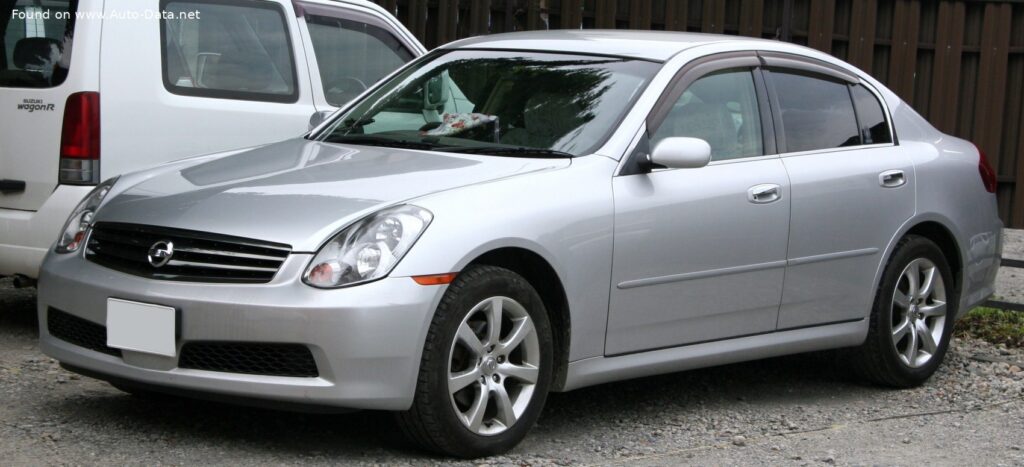
Nissan Skyline XI (V35) 3.0 i V6 24V GT (260 Hp): A New Era for a Legend
The Nissan Skyline XI (V35), produced from 2001 to 2006, marked a significant departure from its revered predecessors in the iconic Skyline lineage. This eleventh generation of the Nissan Skyline, specifically the 3.0 i V6 24V GT variant with 260 horsepower, represented a strategic shift for Nissan, moving the Skyline nameplate from its traditional performance-focused, often turbocharged, inline-six roots towards a more refined, luxury-sport sedan and coupe architecture. While primarily marketed in Japan as the Skyline, this generation gained widespread international recognition, particularly in North America, where it was rebadged and sold as the first generation Infiniti G35 sedan and coupe. This dual identity underscored Nissan’s ambition to position the V35 as a global competitor in the premium sports sedan segment, challenging established European and domestic rivals.
The V35 generation was built on Nissan’s new FM (Front Midship) platform, a sophisticated architecture designed for superior weight distribution and handling dynamics. This platform, which would also underpin other performance-oriented Nissan and Infiniti models like the 350Z and FX, signified a commitment to rear-wheel-drive performance and a more balanced chassis. The 3.0 i V6 24V GT sedan, with its natural aspiration and advanced VQ-series engine, aimed to blend spirited driving with everyday usability and comfort, appealing to a broader clientele than the more niche, high-performance GT-R models of the past. Its introduction was a bold move, polarizing long-time Skyline enthusiasts but ultimately paving the way for a new chapter in the car’s illustrious history.
Engine & Performance of the Nissan Skyline XI (V35)
Under the hood of the Nissan Skyline XI (V35) 3.0 i V6 24V GT (260 Hp) lies the acclaimed VQ30DD engine, a member of Nissan’s highly regarded VQ engine family. This specific iteration, the VQ30DD, is a 3.0-liter (2987 cm³ or 182.28 cu. in.) naturally aspirated V6 engine, featuring a sophisticated direct injection fuel system and a Double Overhead Camshaft (DOHC) valvetrain with 24 valves (four per cylinder). This configuration allowed for precise fuel delivery and efficient combustion, contributing to both its performance and relative fuel economy for the class.
The VQ30DD engine in this Skyline variant produces a robust 260 horsepower at 6400 rpm, translating to a healthy 87 horsepower per liter. Torque output stands at 239 lb-ft (324 Nm) at a relatively accessible 4800 rpm, ensuring strong mid-range acceleration. The engine is longitudinally mounted in the front, contributing to the car’s desirable front-midship weight distribution. With a compression ratio of 11:1, the engine was designed for optimal efficiency and power output from regular unleaded gasoline.
Power is channeled to the rear wheels via a 5-speed automatic transmission, a common choice for luxury-sport sedans of its era, balancing smooth shifts with responsive performance. This powertrain enables the Nissan Skyline XI (V35) to accelerate from 0 to 60 mph in a brisk 7.2 seconds (0-100 km/h in 7.6 seconds), a respectable figure for a mid-size sedan. The top speed is electronically limited to 142.92 mph (230 km/h), demonstrating its capability as a competent cruiser. Despite its performance credentials, the V35 3.0 i V6 24V GT maintained a combined fuel economy rating of 27.4 US mpg (8.6 l/100 km), a commendable figure for a powerful V6 sedan of its time. The car’s weight-to-power ratio of 5.7 kg/Hp (174.5 Hp/tonne) further underscores its balanced performance characteristics.
Design & Features
The design of the Nissan Skyline XI (V35) sedan represented a fresh, modern aesthetic for the Skyline nameplate. Breaking away from the boxier, more aggressive lines of its R32-R34 predecessors, the V35 adopted a smoother, more aerodynamic profile that aligned with contemporary luxury sedan trends. Its four-door, five-seat sedan body type offered practicality alongside its sporty intentions. With a length of 187.6 inches (4765 mm), a width of 68.9 inches (1750 mm), and a height of 57.87 inches (1470 mm), the V35 presented a substantial yet elegant stance. The long wheelbase of 112.2 inches (2850 mm) contributed significantly to both interior space and ride comfort, while also aiding in high-speed stability.
Key design elements included a distinctive front grille, sleek headlights, and a flowing roofline that culminated in a short rear deck, giving it a somewhat coupe-like appearance despite being a sedan. The interior was designed with a focus on driver engagement and passenger comfort, featuring quality materials and an ergonomic layout. Standard features for the era included automatic climate control, a premium audio system, and power-adjustable seating, reflecting its premium market positioning. The trunk capacity of 16.77 cu. ft. (475 liters) offered ample space for luggage, enhancing its practicality for daily use or longer journeys.
In terms of chassis and safety, the V35 was well-equipped. It featured an independent wishbone suspension system at both the front and rear, providing a sophisticated balance of ride comfort and agile handling. Braking power came from ventilated disc brakes on all four wheels, ensuring strong and consistent stopping performance. An Anti-lock Braking System (ABS) was standard, enhancing safety during emergency braking maneuvers. The steering system utilized a precise rack and pinion setup with hydraulic power steering, offering good feedback to the driver. The car rode on 215/55 R17 V tires, providing a good balance of grip and ride quality. These features, combined with the robust FM platform, contributed to the V35’s reputation for refined driving dynamics.
Technical Specifications
| Category | Specification | US Equivalent (Approx.) |
|---|---|---|
| General Information | ||
| Brand | Nissan | |
| Model | Skyline XI (V35) | |
| Type (Engine) | 3.0 i V6 24V GT (260 Hp) | |
| Production Start | 2001 | |
| Production End | 2006 | |
| Powertrain Architecture | Internal Combustion Engine | |
| Body Type | Sedan | |
| Seats | 5 | |
| Doors | 4 | |
| Performance Specs | ||
| Fuel Consumption (Combined) | 8.6 l/100 km | 27.4 US mpg |
| Fuel Type | Petrol (Gasoline) | |
| Acceleration 0-60 mph | 7.2 sec | |
| Maximum Speed | 230 km/h | 142.92 mph |
| Weight-to-Power Ratio | 5.7 kg/Hp | 12.57 lbs/Hp |
| Weight-to-Torque Ratio | 4.6 kg/Nm | 10.14 lbs/Nm |
| Engine Specs | ||
| Power | 260 Hp @ 6400 rpm | |
| Power per Liter | 87 Hp/l | |
| Torque | 324 Nm @ 4800 rpm | 238.97 lb.-ft. @ 4800 rpm |
| Engine Layout | Front, Longitudinal | |
| Engine Model/Code | VQ30DD | |
| Engine Displacement | 2987 cm³ | 182.28 cu. in. |
| Number of Cylinders | 6 | |
| Engine Configuration | V-engine | |
| Cylinder Bore | 93 mm | 3.66 in. |
| Piston Stroke | 73.3 mm | 2.89 in. |
| Compression Ratio | 11:1 | |
| Valves per Cylinder | 4 | |
| Fuel Injection System | Direct Injection | |
| Engine Aspiration | Naturally Aspirated | |
| Valvetrain | DOHC | |
| Engine Oil Capacity | 4.7 l | 4.97 US qt |
| Dimensions & Weights | ||
| Curb Weight | 1490 kg | 3284.89 lbs. |
| Max. Weight (GVWR) | 1765 kg | 3891.16 lbs. |
| Max Load | 275 kg | 606.27 lbs. |
| Trunk (Boot) Space | 475 l | 16.77 cu. ft. |
| Fuel Tank Capacity | 80 l | 21.13 US gal |
| Length | 4765 mm | 187.6 in. |
| Width | 1750 mm | 68.9 in. |
| Height | 1470 mm | 57.87 in. |
| Wheelbase | 2850 mm | 112.2 in. |
| Front Track | 1500 mm | 59.06 in. |
| Rear Track | 1505 mm | 59.25 in. |
| Drivetrain, Brakes & Suspension | ||
| Drivetrain Architecture | ICE drives rear wheels | |
| Drive Wheel | Rear-wheel drive | |
| Gearbox | 5-speed automatic | |
| Front Suspension | Wishbone | |
| Rear Suspension | Wishbone | |
| Front Brakes | Ventilated Discs | |
| Rear Brakes | Ventilated Discs | |
| Assisting Systems | ABS (Anti-lock Braking System) | |
| Steering Type | Rack and Pinion | |
| Power Steering | Hydraulic Steering | |
| Tire Size | 215/55 R17 V | |
Legacy & Market Impact
The Nissan Skyline XI (V35) holds a unique and somewhat controversial place in the annals of automotive history, particularly within the storied Skyline lineage. For traditionalists who cherished the raw, often turbocharged, inline-six powered Skylines like the R32, R33, and R34 GT-Rs, the V35 represented a significant departure. Its V6 engine, naturally aspirated configuration (for most models, including the 3.0 GT), and more luxurious, grand-touring focus were seen by some as a dilution of the Skyline’s performance heritage. However, this shift was a deliberate strategy by Nissan to broaden the car’s appeal and position it more directly against premium European and Japanese luxury-sport sedans.
In its primary market of Japan, the V35 Skyline competed with established rivals such as the Toyota Mark X (which succeeded the Mark II/Chaser) and the Honda Inspire/Saber. It offered a compelling blend of sophisticated rear-wheel-drive dynamics, a powerful and refined V6 engine, and a comfortable, well-appointed interior. Its modern styling and advanced FM platform provided a fresh alternative in a competitive segment.
Globally, the V35’s impact was arguably even greater through its Infiniti G35 guise in North America. The Infiniti G35 sedan and coupe were instrumental in establishing Infiniti as a credible luxury and performance brand, directly challenging the BMW 3 Series, Mercedes-Benz C-Class, and Lexus IS. The G35’s success demonstrated that the V35’s underlying architecture and powertrain were highly capable and desirable in a premium market. Its combination of strong performance, sharp handling, elegant design, and competitive pricing earned it numerous accolades, including MotorTrend’s Car of the Year in 2003. This international success undoubtedly contributed to the V35 Skyline’s overall legacy.
The Nissan Skyline XI (V35) ultimately proved to be a pivotal model. It successfully transitioned the Skyline nameplate into a new era, demonstrating that it could be both a luxurious and sporting vehicle without relying solely on the extreme performance image of its predecessors. While it may have initially alienated some purists, its broader market appeal and critical acclaim, especially as the Infiniti G35, cemented its place as a significant and influential car that reshaped perceptions of the Skyline and Nissan’s premium offerings on a global scale. Its influence can still be seen in subsequent generations of the Skyline and Infiniti G/Q series, which continued to build upon the V35’s foundation of balanced performance and luxury.