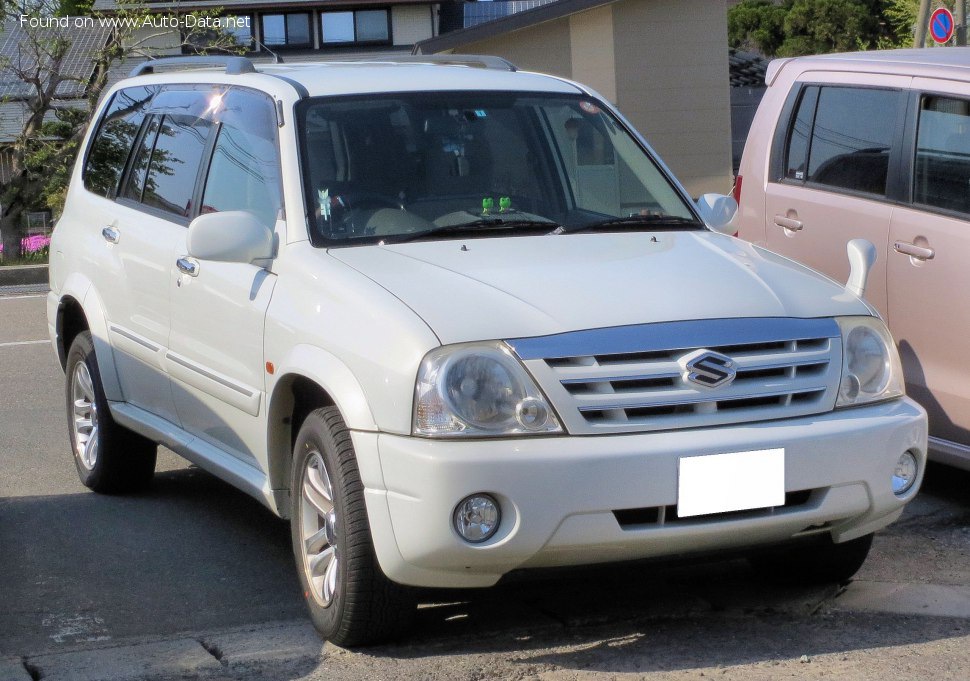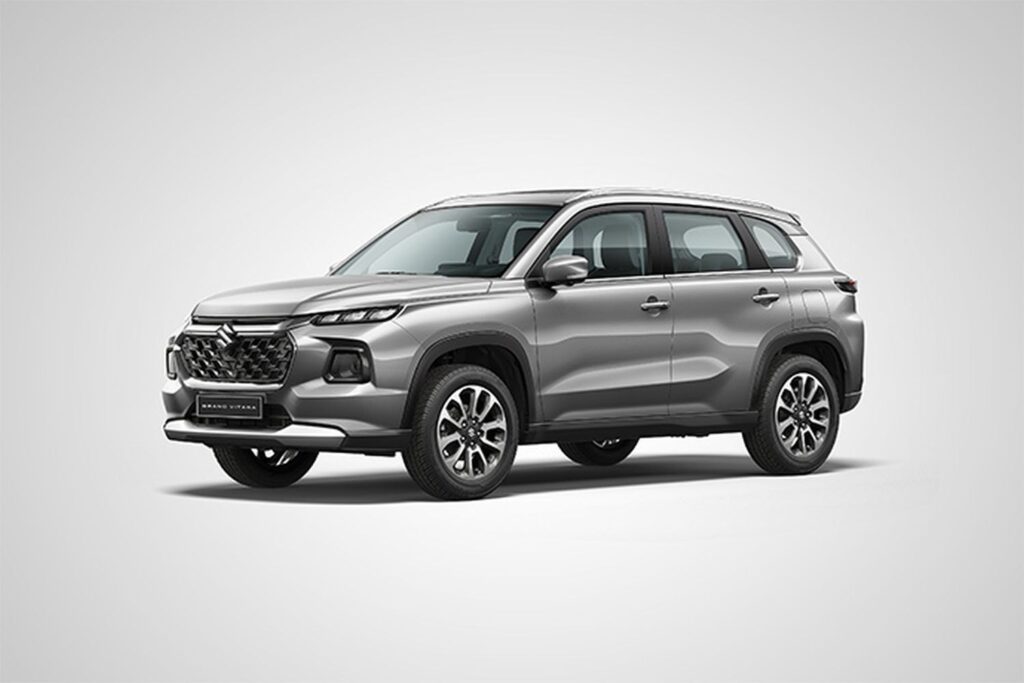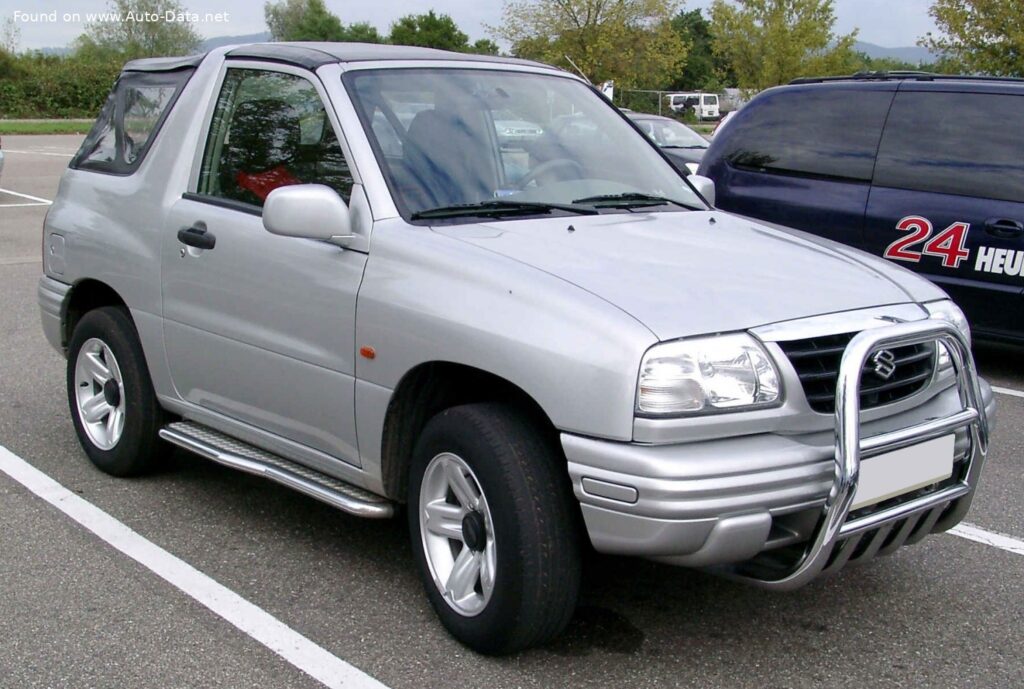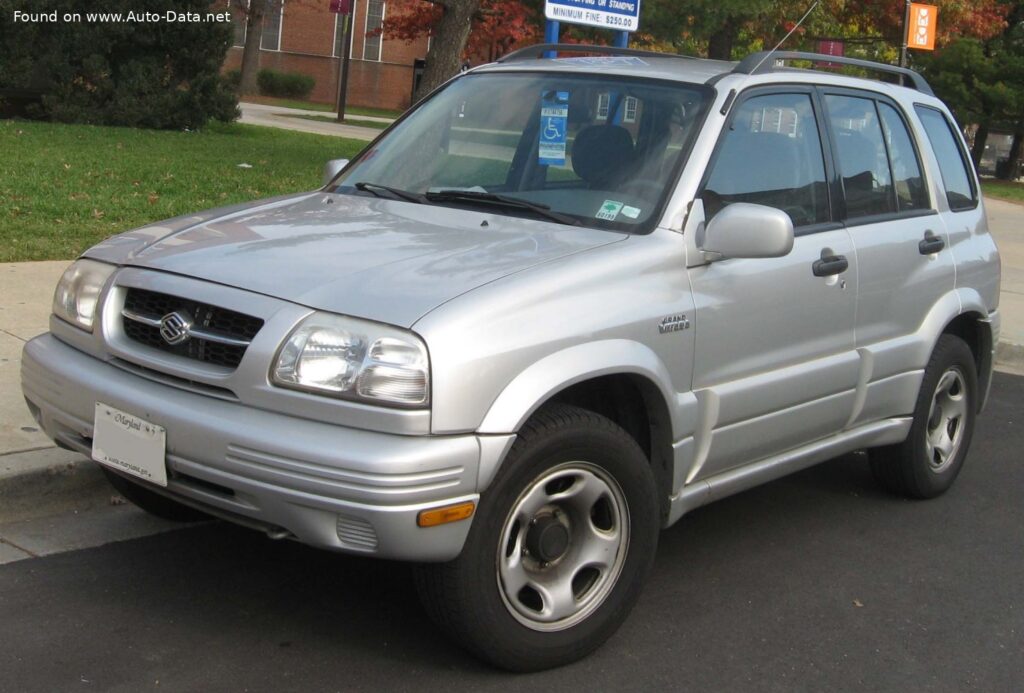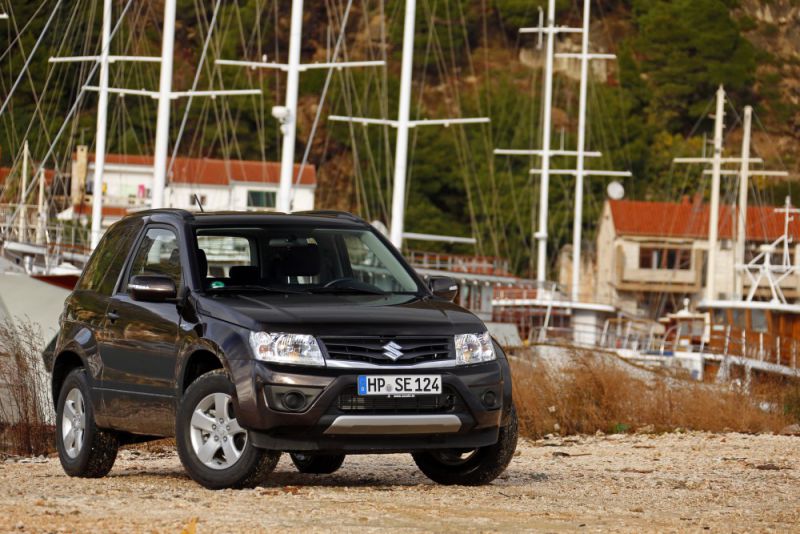
Suzuki Grand Vitara II (facelift 2012) 3 Door 2.4 (166 Hp) 4×4
The Suzuki Grand Vitara II (facelift 2012) 3 Door 2.4 (166 Hp) 4×4 represents a significant iteration of Suzuki’s long-standing commitment to producing capable and compact sport utility vehicles. Launched in 2012 as a refreshed version of the second-generation Grand Vitara, this particular variant, with its three-door configuration and 2.4-liter gasoline engine, carved out a distinct niche in international markets, particularly in Europe and Asia. Unlike the larger, five-door models often seen in the North American market, this three-door version emphasized agility, ruggedness, and a more traditional SUV approach, standing apart from the burgeoning trend of car-based crossovers. It offered a compelling blend of genuine off-road capability, facilitated by its permanent four-wheel-drive system, and everyday practicality in a compact footprint. Production for this specific model ran from 2012 to 2015, maintaining Suzuki’s reputation for reliable and robust vehicles during a transitional period for the automotive industry.
Engine and Performance
At the heart of the Suzuki Grand Vitara II (facelift 2012) 3 Door 2.4 (166 Hp) 4×4 was the J24B engine, a naturally aspirated 2.4-liter (2393 cm3 or 146.03 cu. in.) inline-four gasoline unit. This powerplant was engineered for a balance of power, durability, and efficiency, delivering 166 horsepower at 6000 rpm and a respectable 165.95 lb.-ft. of torque at 3800 rpm. Its engine layout was front-mounted and longitudinal, typical for vehicles designed with serious off-road intentions, allowing for better weight distribution and proper integration with the four-wheel-drive system. The engine featured a Double Overhead Camshaft (DOHC) valvetrain with Variable Valve Timing (VVT-i), optimizing valve lift and duration for improved performance across the rev range and better fuel economy. Fuel was delivered via a multi-port manifold injection system, a proven and reliable technology for the era.
Power was channeled through a five-speed manual transmission, offering drivers direct control and engagement, which was particularly valued by enthusiasts and those tackling challenging terrains. The permanent all-wheel-drive (4×4) system was a key differentiator, providing continuous traction to all four wheels and enhancing the vehicle’s capability on loose surfaces, snow, or light off-road trails. Performance figures included an acceleration from 0 to 60 mph in a respectable 10.6 seconds and a top speed of 111.85 mph (180 km/h).
Despite its rugged nature, the Grand Vitara II aimed for reasonable fuel economy. The combined fuel consumption was rated at 27 US mpg (8.7 liters per 100 km), with urban figures at 21.4 US mpg (11 l/100 km) and extra-urban at 31.8 US mpg (7.4 l/100 km). CO2 emissions were 201 g/km, adhering to the Euro 5 emission standard prevalent in its primary markets. These figures, while not groundbreaking for a compact vehicle, were competitive for a true 4×4 SUV of its size and capability.
Design and Features
The Suzuki Grand Vitara II (facelift 2012) 3 Door maintained the robust and purposeful design language characteristic of the Grand Vitara lineage, albeit with subtle updates for the 2012 facelift. Its body type was a compact SUV with three doors and seating for four occupants, emphasizing its agile and utilitarian character. Measuring 159.84 inches (4060 mm) in length, 71.26 inches (1810 mm) in width, and 66.73 inches (1695 mm) in height, the 3-door Grand Vitara was notably shorter and more nimble than its 5-door sibling, making it ideal for navigating tight city streets or narrow off-road trails.
The 2012 facelift typically brought minor cosmetic revisions, such as an updated front grille, revised bumper designs, and possibly new alloy wheel patterns, keeping the vehicle looking fresh. Inside, improvements might have included updated trim materials, enhanced infotainment options, or subtle ergonomic tweaks, though the core design remained functional and straightforward. The wheelbase of 96.06 inches (2440 mm) contributed to its maneuverability, while the generous ground clearance of 8.07 inches (205 mm) underscored its off-road prowess, allowing it to clear obstacles that would challenge many car-based crossovers.
Practicality was a key consideration, with a minimum trunk space of 6.5 cu. ft. (184 liters) which could expand to 18.22 cu. ft. (516 liters) with the rear seats folded, offering decent cargo capacity for its compact size. Safety features included an Anti-lock Braking System (ABS) as standard, ensuring stable braking performance. The suspension system featured an independent McPherson strut setup with coil springs and an anti-roll bar at the front, paired with an independent multi-link suspension at the rear, providing a comfortable ride on pavement while maintaining articulation and control off-road. Braking was handled by ventilated discs both front and rear, offering strong stopping power. The vehicle rode on 225/70 R16 tires mounted on 6.5J x 16 alloy wheels, a practical size for both on-road comfort and off-road durability.
Technical Specifications
| Category | Specification |
|---|---|
| General Information | |
| Brand | Suzuki |
| Model | Grand Vitara II (facelift 2012) 3 Door |
| Type (Engine) | 2.4 (166 Hp) 4×4 |
| Production Start | 2012 |
| Production End | 2015 |
| Powertrain Architecture | Internal Combustion Engine |
| Body Type | SUV |
| Seats | 4 |
| Doors | 3 |
| Performance Specs | |
| Fuel Consumption (Urban) | 21.4 US mpg (11 l/100 km) |
| Fuel Consumption (Extra Urban) | 31.8 US mpg (7.4 l/100 km) |
| Fuel Consumption (Combined) | 27 US mpg (8.7 l/100 km) |
| CO2 Emissions | 201 g/km |
| Fuel Type | Petrol (Gasoline) |
| Acceleration 0 – 60 mph | 10.6 sec |
| Maximum Speed | 111.85 mph (180 km/h) |
| Emission Standard | Euro 5 |
| Weight-to-power ratio | 9.2 kg/Hp, 109.1 Hp/tonne |
| Weight-to-torque ratio | 6.8 kg/Nm, 147.9 Nm/tonne |
| Engine Specs | |
| Power | 166 Hp @ 6000 rpm |
| Power per liter | 69.4 Hp/l |
| Torque | 165.95 lb.-ft. @ 3800 rpm (225 Nm) |
| Engine Layout | Front, Longitudinal |
| Engine Model/Code | J24B |
| Engine Displacement | 2.4 liters (2393 cm3, 146.03 cu. in.) |
| Number of Cylinders | 4 |
| Engine Configuration | Inline |
| Cylinder Bore | 3.62 in. (92 mm) |
| Piston Stroke | 3.54 in. (90 mm) |
| Compression Ratio | 10:1 |
| Valves per Cylinder | 4 |
| Fuel Injection System | Multi-port manifold injection |
| Engine Aspiration | Naturally aspirated |
| Valvetrain | DOHC – VVT-i |
| Engine Oil Capacity | 5.07 US qt (4.8 l) |
| Coolant Capacity | 7.71 US qt (7.3 l) |
| Space, Volume & Weights | |
| Kerb Weight | 3353.23 lbs. (1521 kg) |
| Max. Weight | 4122.64 lbs. (1870 kg) |
| Max Load | 769.41 lbs. (349 kg) |
| Trunk Space (Minimum) | 6.5 cu. ft. (184 l) |
| Trunk Space (Maximum) | 18.22 cu. ft. (516 l) |
| Fuel Tank Capacity | 14.53 US gal (55 l) |
| Dimensions | |
| Length | 159.84 in. (4060 mm) |
| Width | 71.26 in. (1810 mm) |
| Height | 66.73 in. (1695 mm) |
| Wheelbase | 96.06 in. (2440 mm) |
| Front Track | 60.63 in. (1540 mm) |
| Rear Track | 61.81 in. (1570 mm) |
| Ride Height (Ground Clearance) | 8.07 in. (205 mm) |
| Minimum Turning Circle | 33.46 ft. (10.2 m) |
| Drivetrain, Brakes & Suspension | |
| Drive Wheel | All-wheel drive (4×4) |
| Gearbox Type | 5 gears, manual transmission |
| Front Suspension | Independent, McPherson with coil spring and anti-roll bar |
| Rear Suspension | Independent multi-link suspension |
| Front Brakes | Ventilated discs |
| Rear Brakes | Ventilated discs |
| Assisting Systems | ABS (Anti-lock braking system) |
| Steering Type | Steering rack and pinion |
| Tires Size | 225/70 R16 102S |
| Wheel Rims Size | 6.5J x 16 |
Legacy and Market Impact
The Suzuki Grand Vitara series, and particularly the second generation, holds a significant place in the global automotive landscape, especially in markets outside North America. The Suzuki Grand Vitara II (facelift 2012) 3 Door 2.4 (166 Hp) 4×4 was a testament to Suzuki’s enduring philosophy of building robust, capable, and affordable 4×4 vehicles. In an era where many manufacturers were transitioning towards softer, car-based crossovers with limited off-road ability, the Grand Vitara remained a staunch advocate for traditional SUV virtues.
Its primary market impact was felt in regions like Europe, Australia, and parts of Asia, where there was still a demand for compact SUVs that could genuinely handle challenging terrains. Competitors in these markets included vehicles like the Toyota RAV4 (particularly its early 3-door versions), the Mitsubishi Pajero iO, and later, more budget-oriented but capable SUVs like the Dacia Duster. The Grand Vitara distinguished itself with its combination of a powerful-for-its-size 2.4-liter engine, a true 4×4 system, and independent suspension all around, offering a refined ride compared to some ladder-frame rivals, yet more ruggedness than most unibody crossovers.
The 3-door variant, in particular, was appreciated for its exceptional maneuverability and compact dimensions, making it suitable for both urban environments and tight off-road trails where larger vehicles would struggle. It garnered a reputation for reliability and durability, traits synonymous with the Suzuki brand. While its manual transmission and dedicated 4×4 system might have seemed old-fashioned to some, they were precisely what appealed to a segment of buyers who prioritized capability and driver engagement.
As the automotive industry continued its shift towards more fuel-efficient, road-biased, and often larger crossovers, the niche for compact, rugged 3-door SUVs like the Grand Vitara II began to shrink. Suzuki eventually moved towards models like the Vitara and S-Cross, which embraced the crossover philosophy more fully. However, the Grand Vitara II (facelift 2012) 3 Door 2.4 (166 Hp) 4×4 stands as a significant vehicle in Suzuki’s heritage, representing a period when genuine off-road capability was still a core offering in a compact package, cementing its legacy as a practical, dependable, and capable small SUV for adventurous drivers worldwide.